
Kosei, a revived Meibutsu
Accessories
Lid x1, Nest, Insai work; Lid box, White paulownia wood, Inscription by Matsudaira Fumai
Cover x4, Cover box, White paulownia wood inscription by Kobori Enshū
One Hikiya, rosewood, Hikiya cover case, Fursu fukuju characters
Inner box, black persimmon wood joined with letter, written by Kobori Enshū
Outer box, paulownia wood with letter, written by Matsudaira Fumai
Transmission
Kobori Enshū → Kamio Bizen-no-kami → Tsuchiya Sagami-no-kami → Matsudaira Kai-no-kami → Matsudaira Fumai
Recorded
Record of Famous Items: Kokon Meibutsu Ruishu, Enshu Meibutsu Ki, Kamio Family Utensil Detailed Record, Tsuchiya Warehouse Ledger Tea Utensil Appraisal Collection, Fushimiya Notes Famous Tea Utensil Diagram, Fushimiya Handwritten Notes, Lord Osaki’s Utensil Expense Handwritten Notes, Matsudaira Fumai Biography
Dimensions
Height: 7.0 cm Body Diameter: 7.0 cm Base Diameter: 3.5 cm Weight: 95 g
Owner
Goto Museum of Art, Tokyo
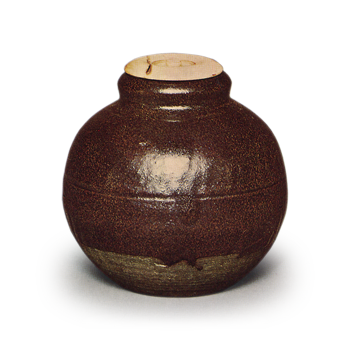
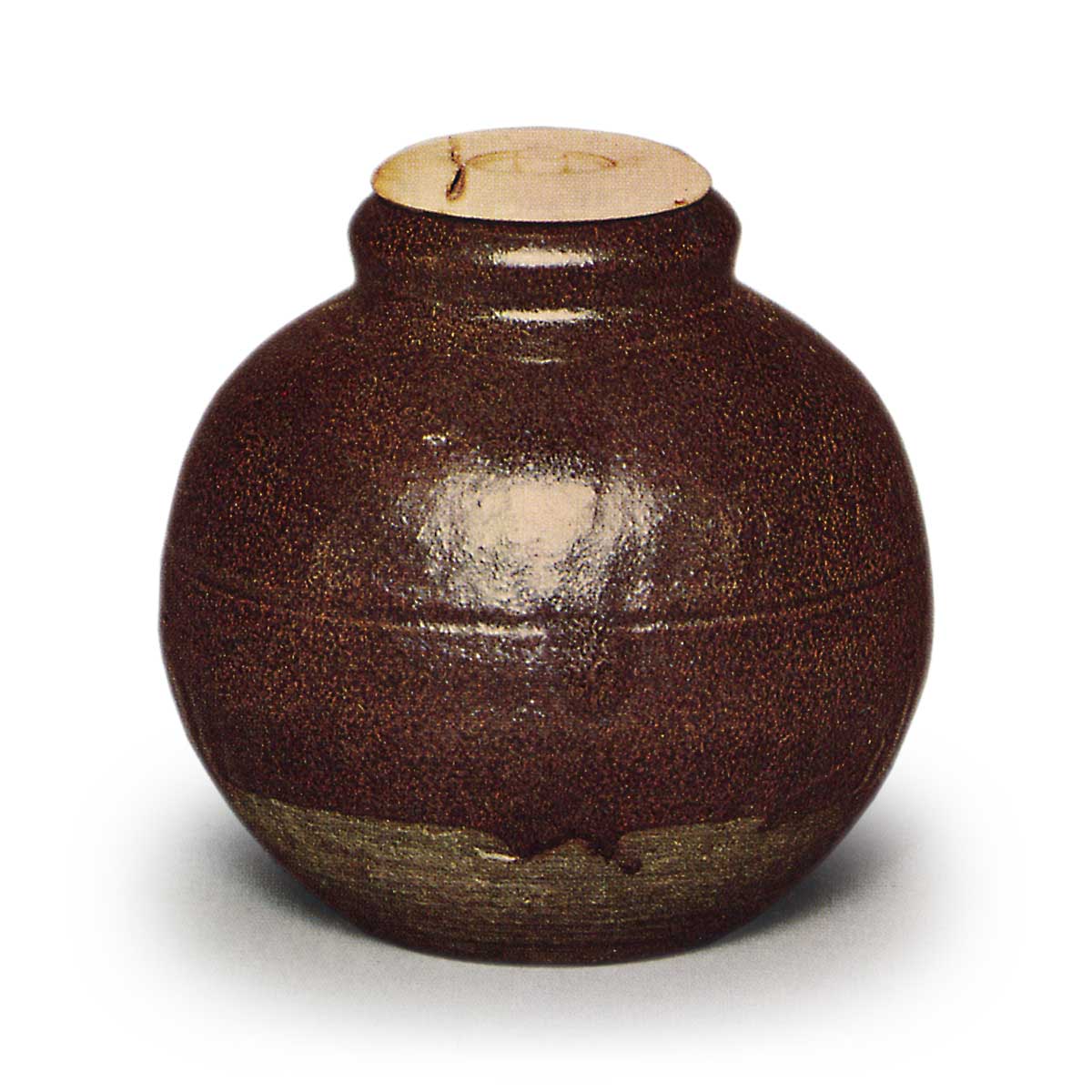
This is read as “Shunkei Kuchihōtan.”The artist, Shunkei, is said to have used the name of the original Fujishiro and later mixed in imported Chinese clay, though no definitive proof exists. It is called “Hōtan” (gourd) because the mouth shape resembles the bulge of a gourd’s top, making the entire piece appear like a gourd. Perhaps it was named by Enshū? That is the interesting part.
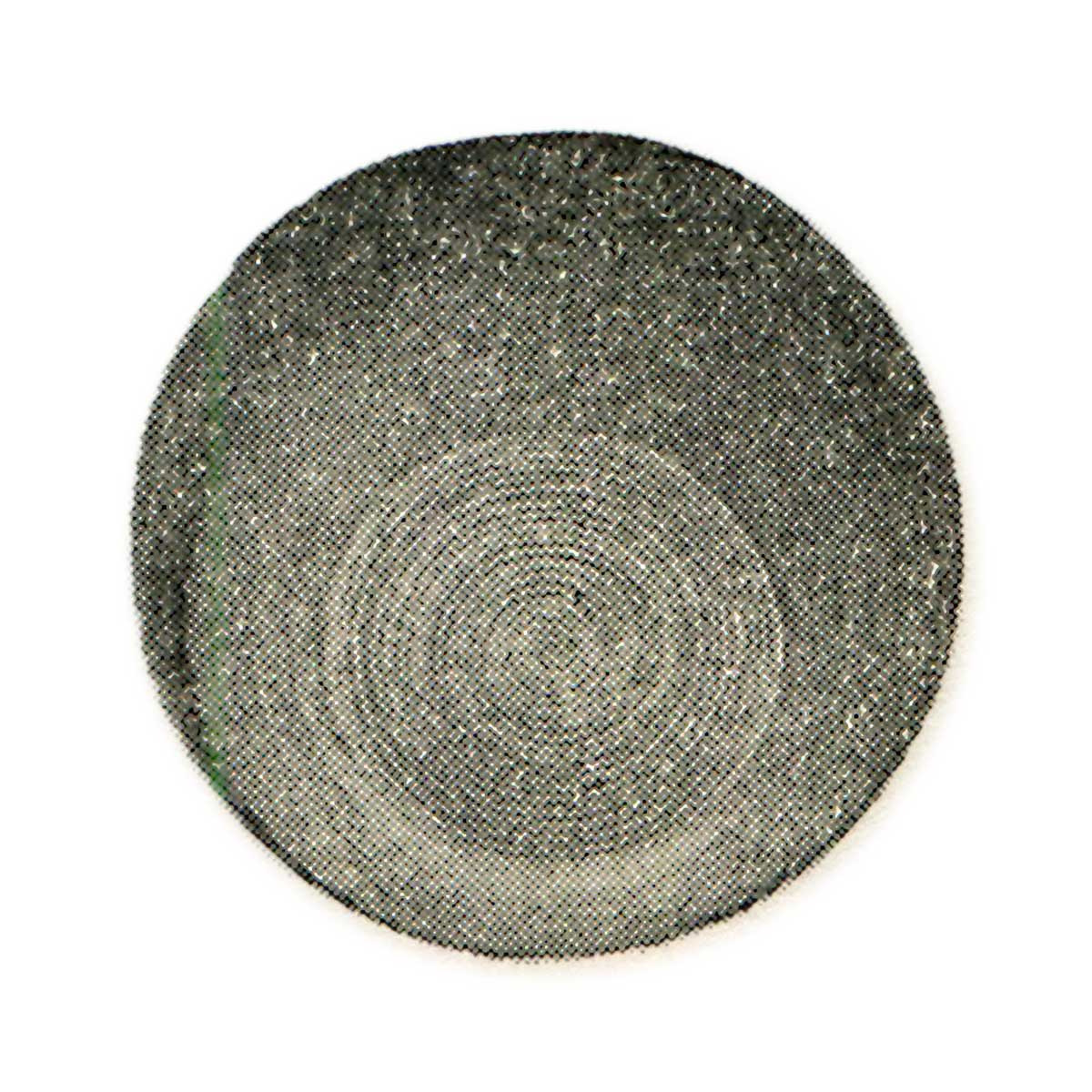
The glaze is dense like Chinese ware glaze, covering the entire dull tea-green body with a single, faint cascade reaching down to the base of the body’s ribbing. It exhibits Harukei’s characteristic earthy clay quality and the distinctive thread-cut base.
The cover cloths all appear to reflect Enshū’s taste, featuring various Meibutsu cuts in a subdued, understated style.
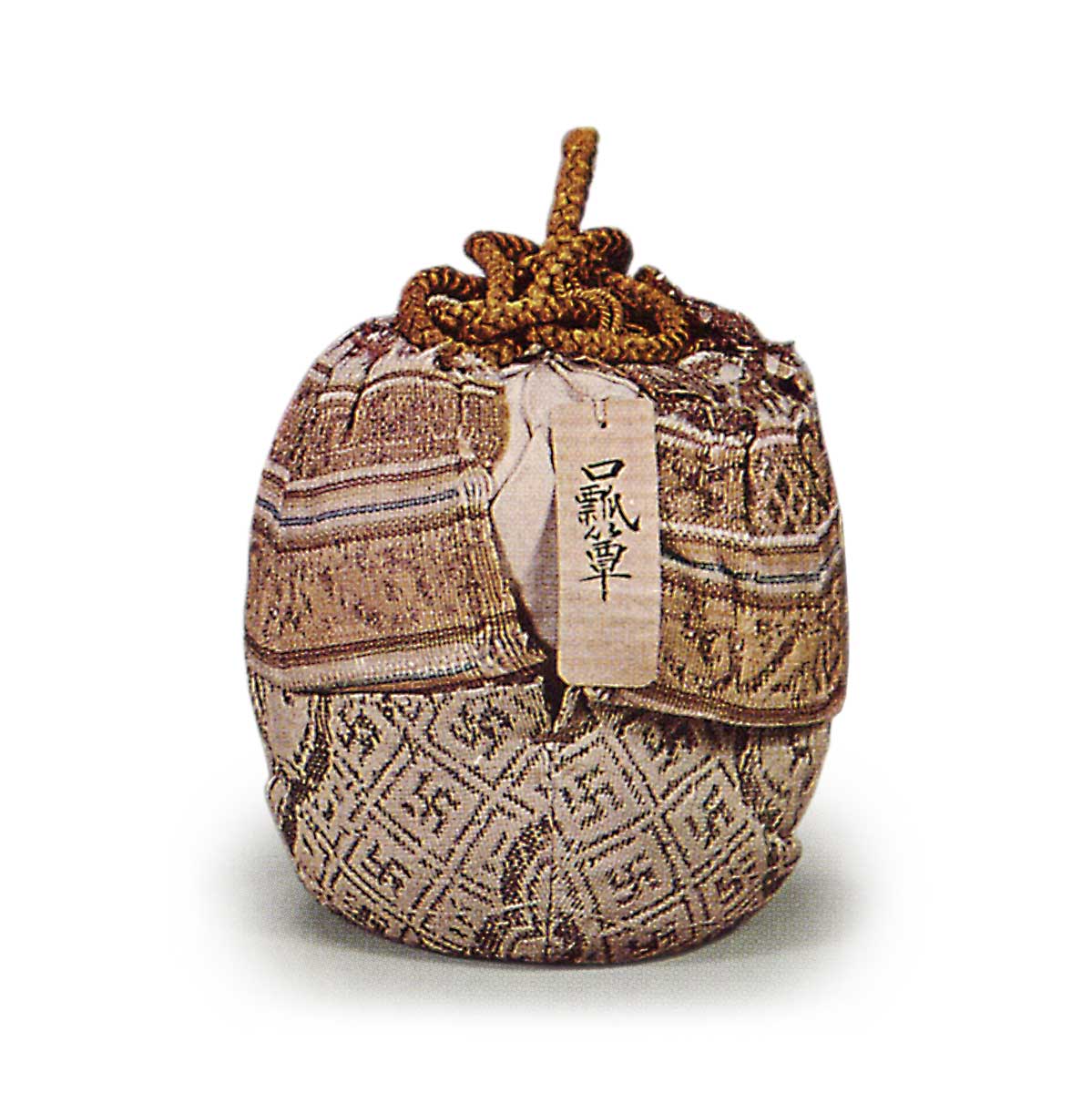
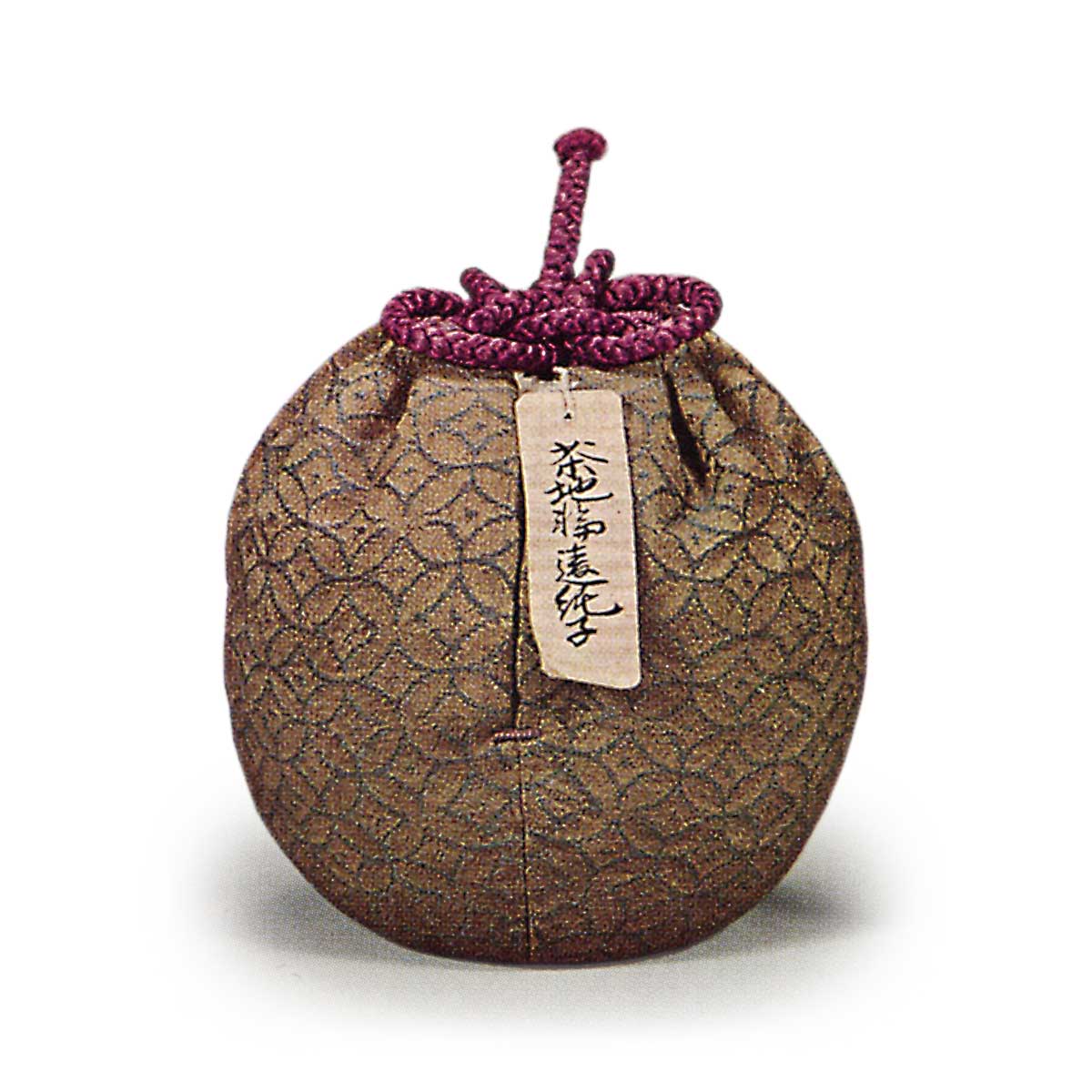
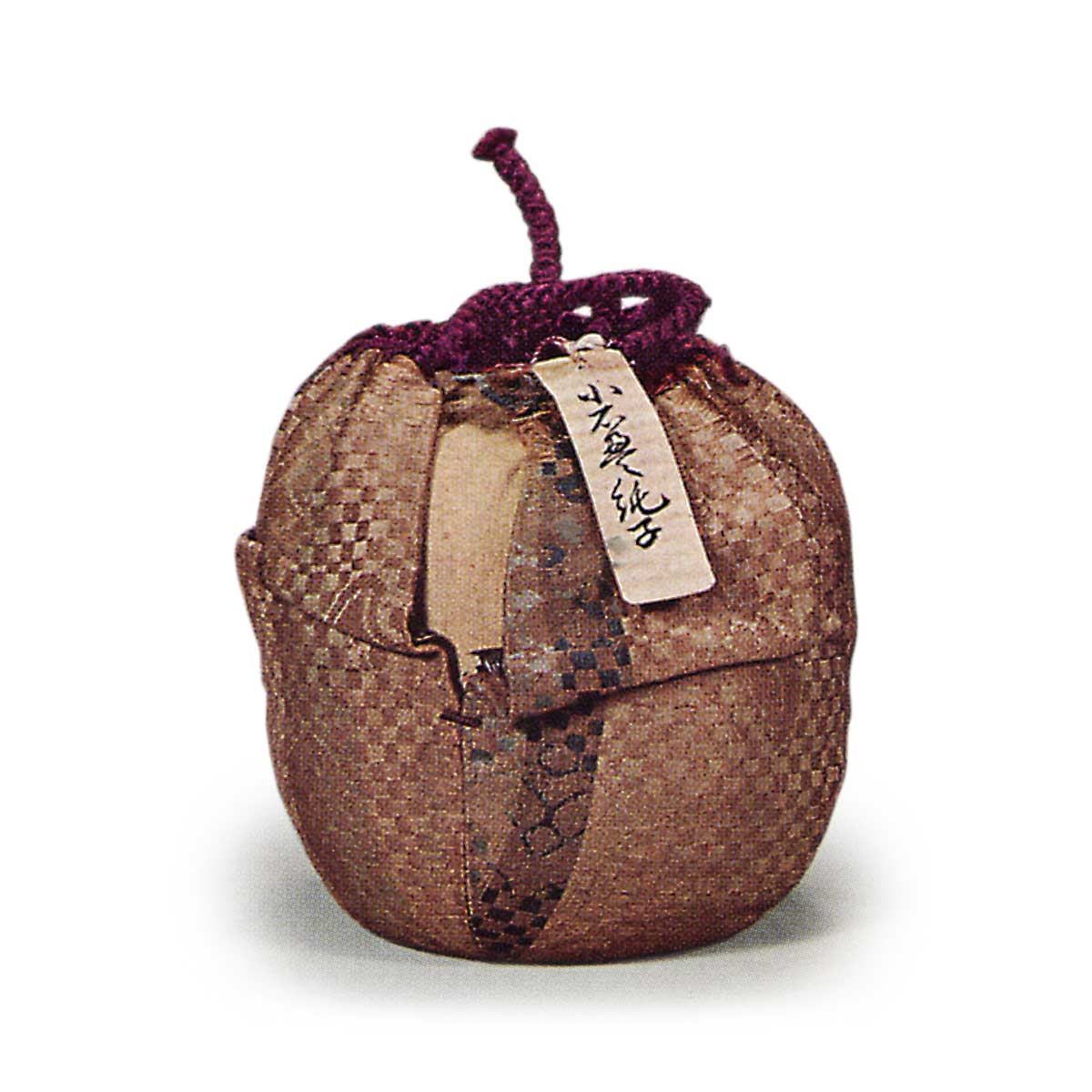
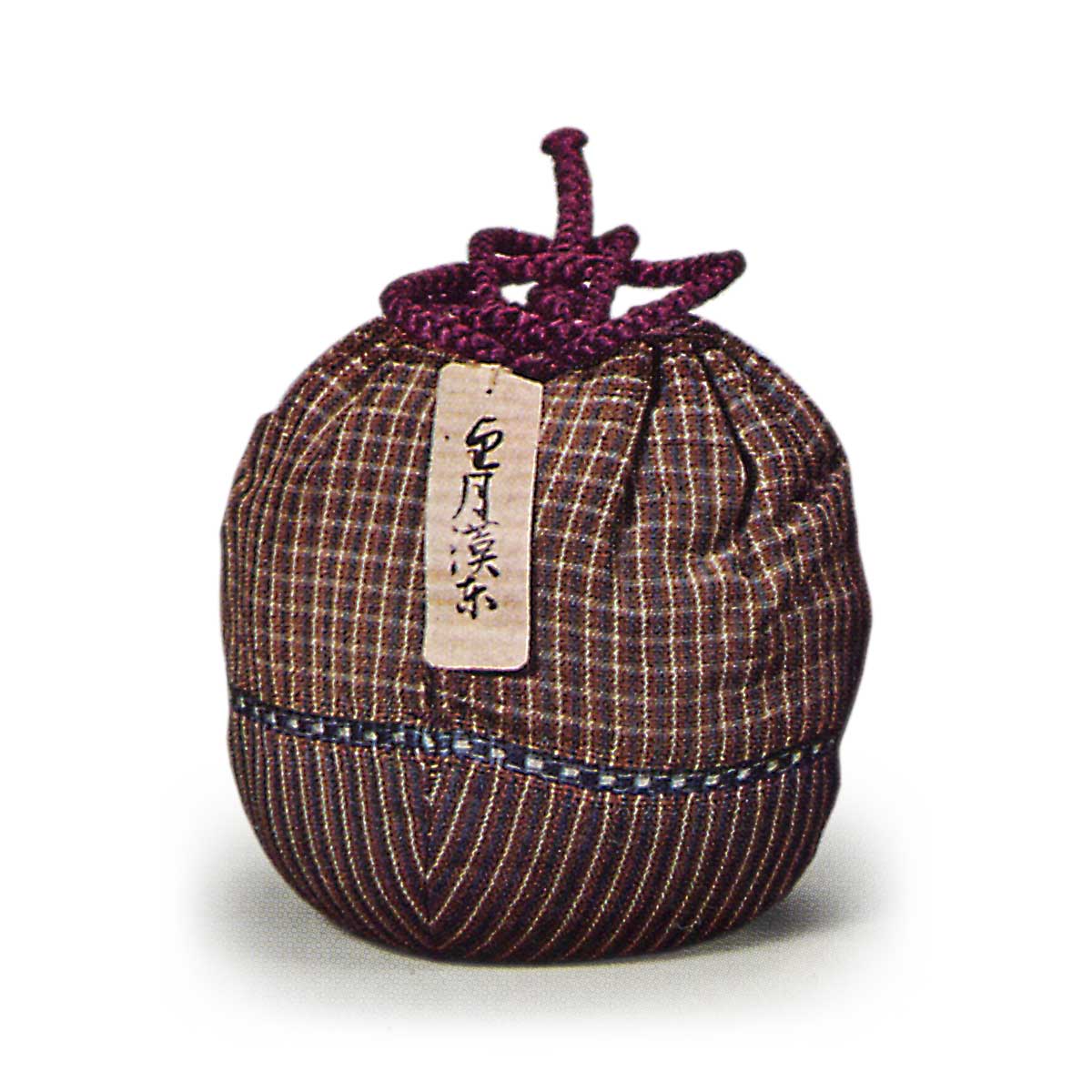
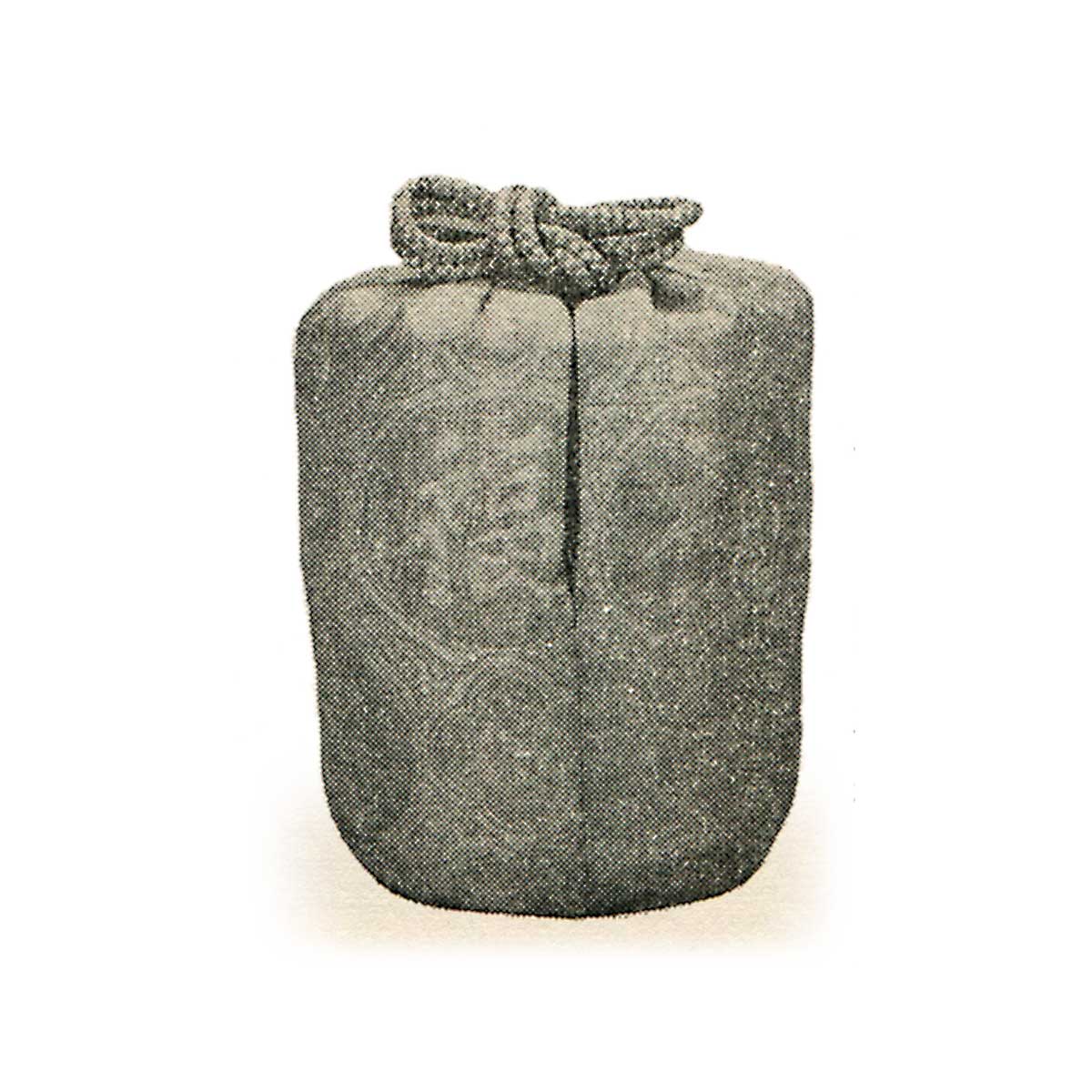
Hikiya cover, Fursu Fukuju characters
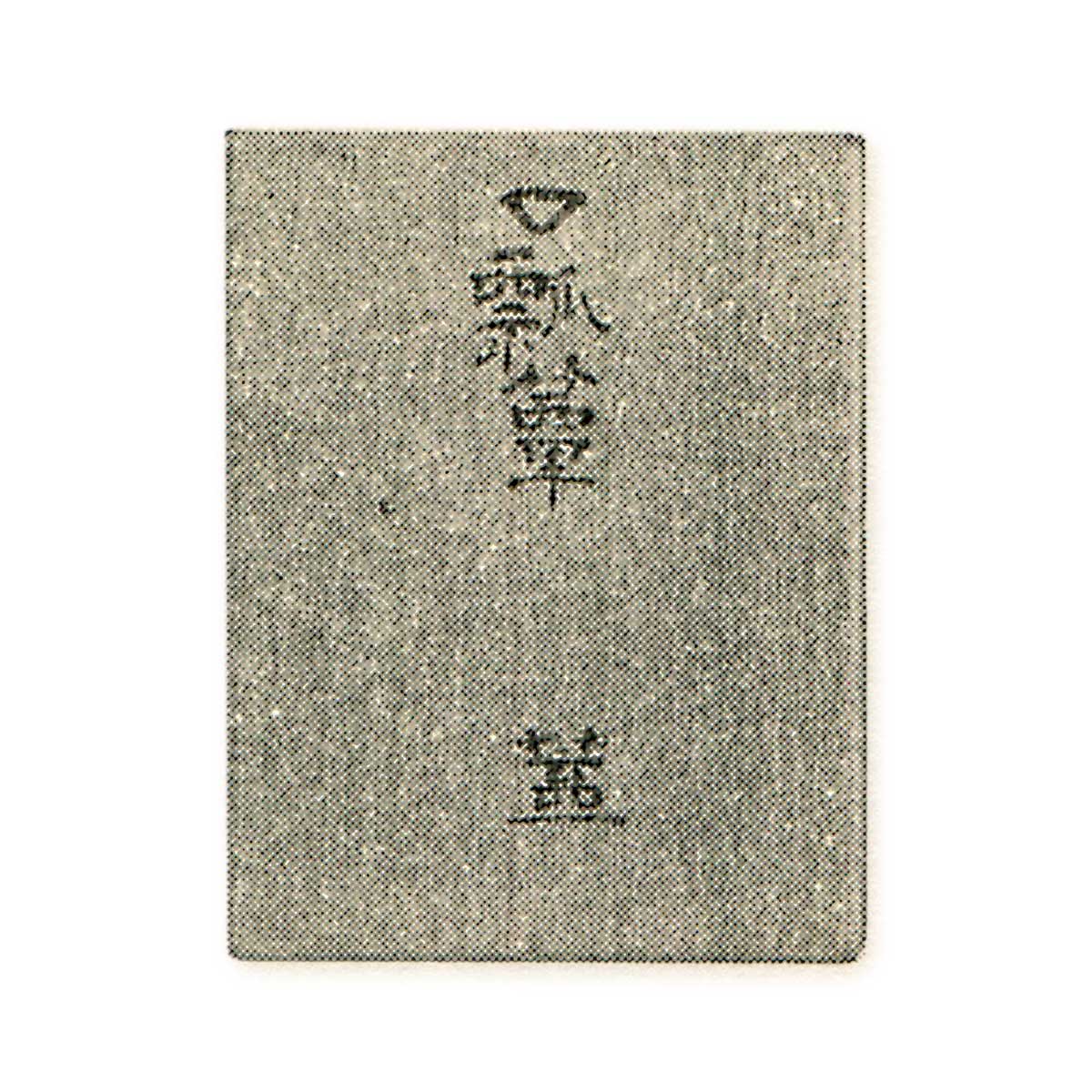
Inscription, by Matsudaira Fumai
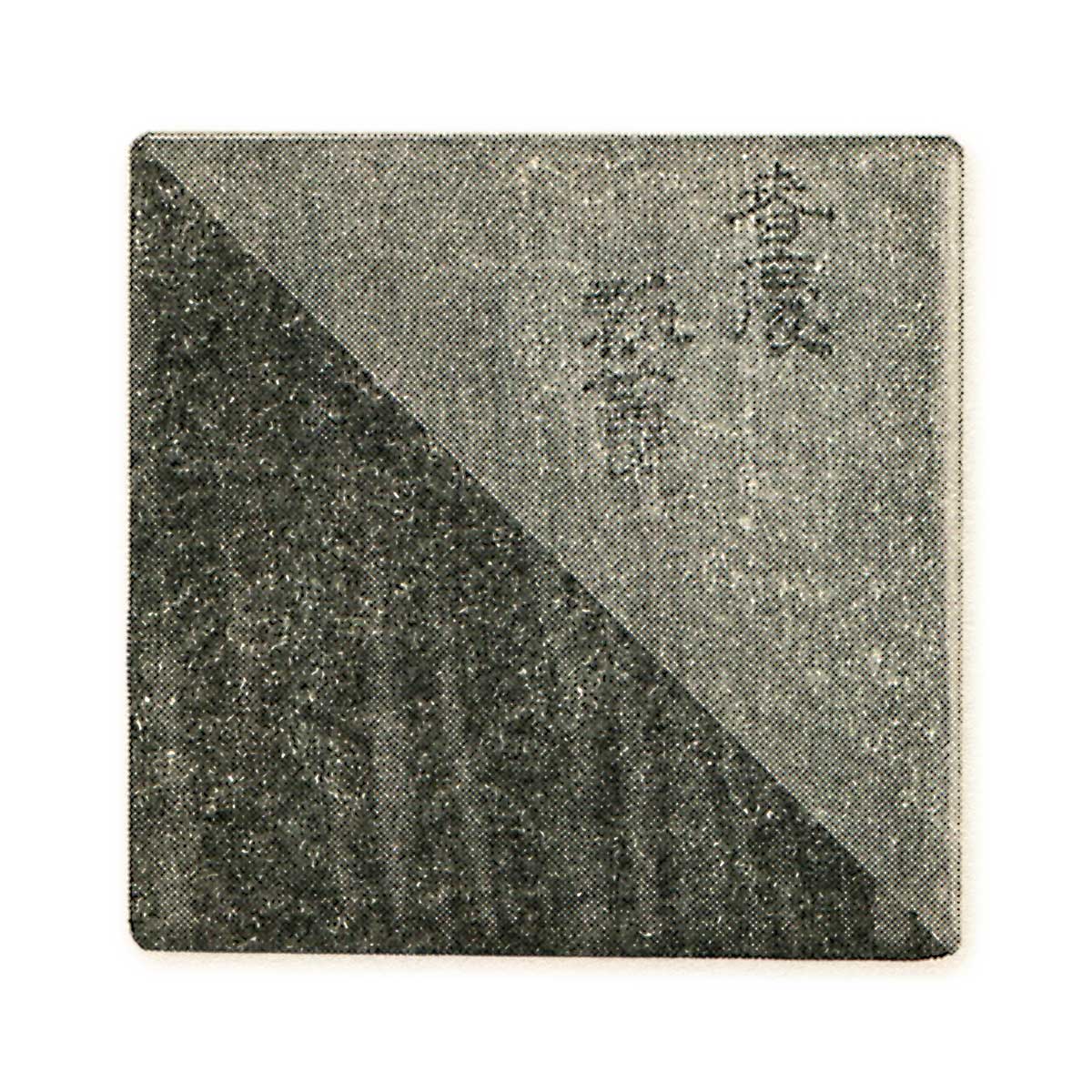
Inscription, by Kobori Enshū

