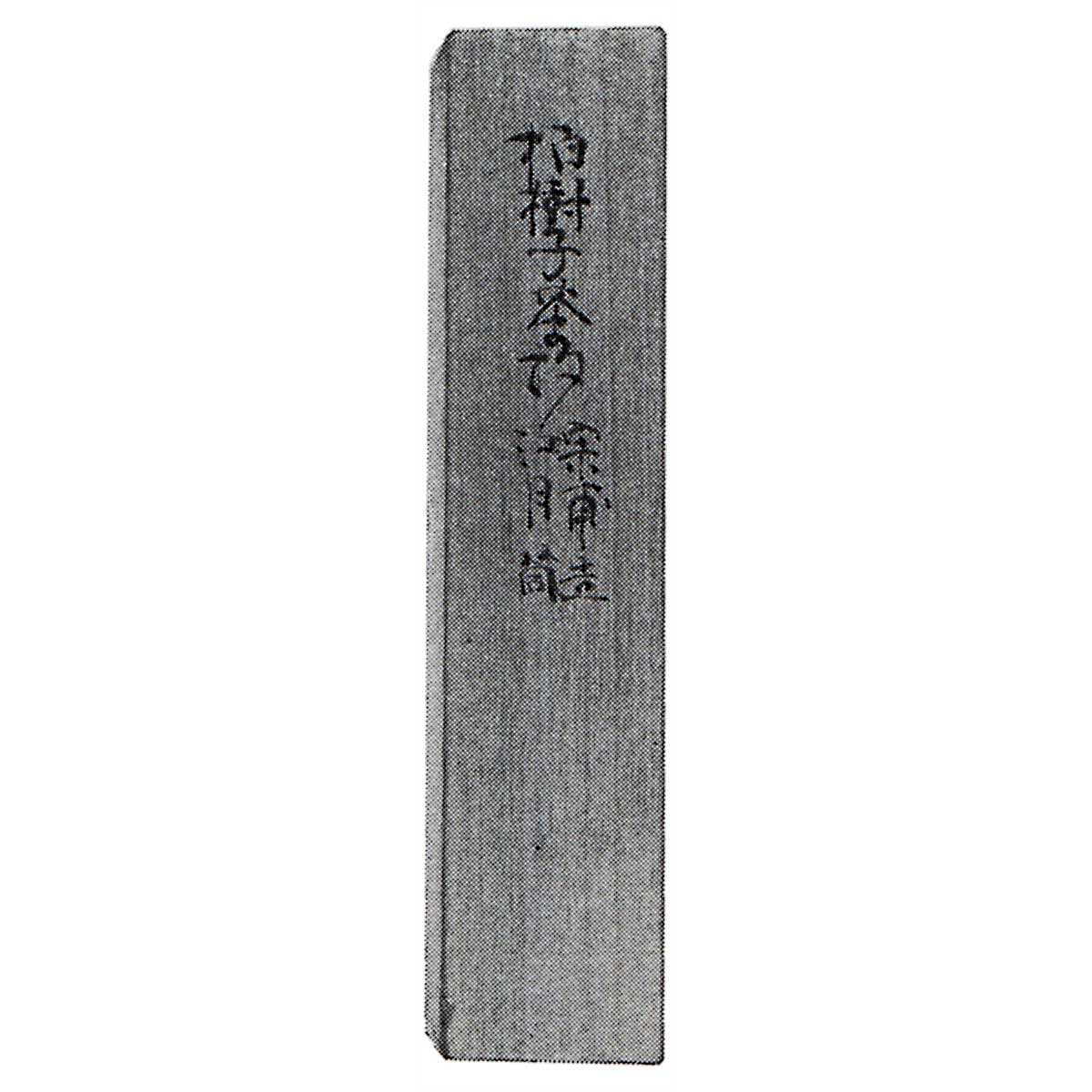
Egetsu’s Postscript
Tea Scoop
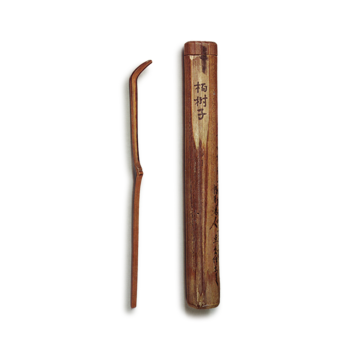
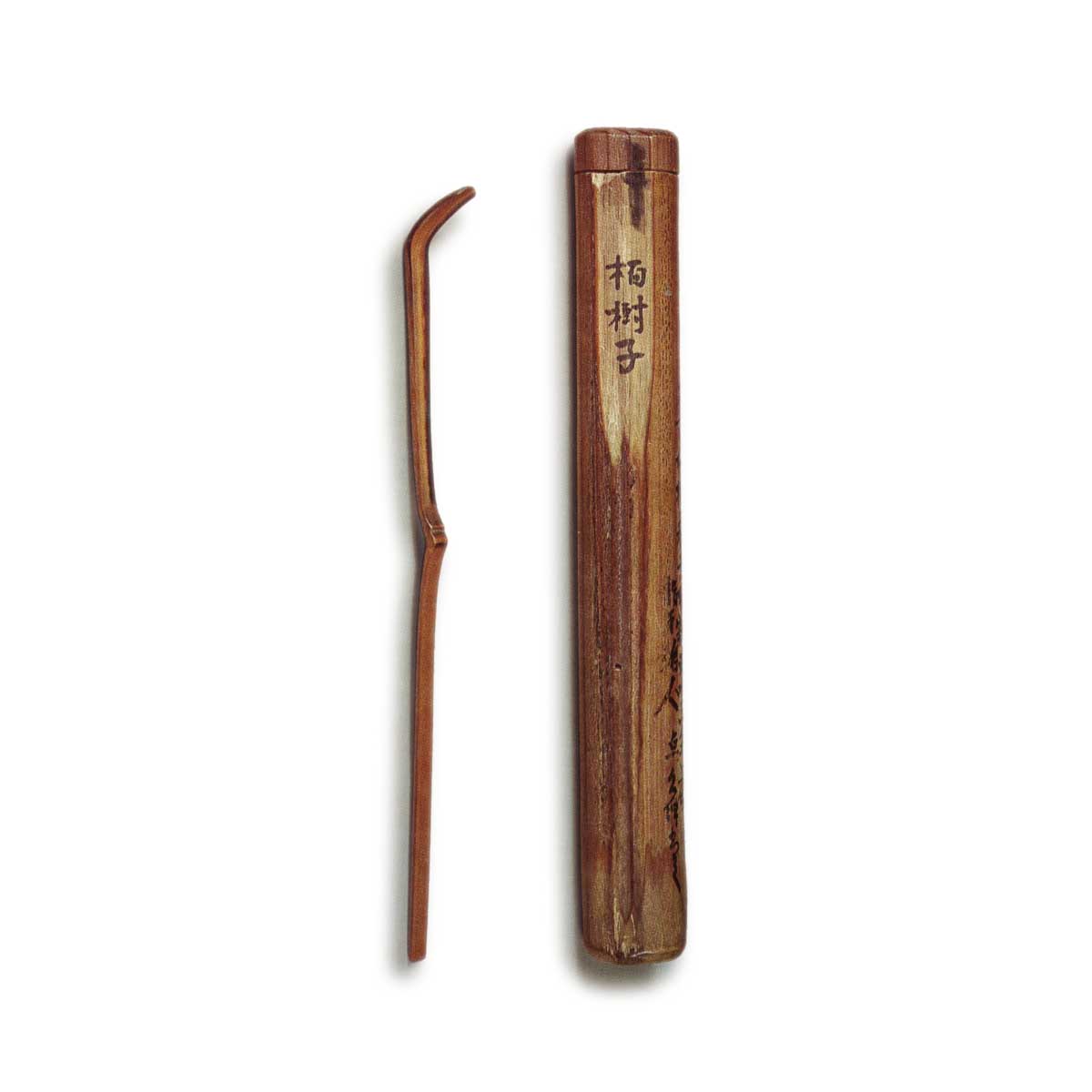
For an Enshū piece, this is a rather subdued scoop. Moreover, as bamboo from the garden before the Kōhō-an hermitage, it is truly beautiful bamboo. Beautiful stripes also run along both sides of the upper half, and the tube, made of black bamboo, is also quite exceptional for garden bamboo.
Case
Kogetsu, respecting Enshū’s artistic intent, modestly inscribed “Kashiwagi” in small characters with a chamfered edge at the upper rim. On the side extending to the back, he added the following verse:
Master of Kōhō-an, cutting bamboo near the courtyard, Crane-worker, I, Moku, one day sought to save a sinner, Master said, “This hall shall bear this inscription,” Thus I obeyed his command. An old saying goes: “Without the grace of tea, one cannot live.” I, Moku, playfully composed this short verse. The pine tree before the courtyard, Old Zhao, a close friend, Also drinks tea, Pointing to the living, Yawning, I wrote this.
Attached Items
Box: Paulownia wood, natural finish. Inscription: “Kashi-jūshi Tea Scoop, Sōhō crafted, Kōgetsu tube” by Toda Rōgin.
Inside same lid: Inscription by same hand: “Among the Kobori family’s sixteen pieces in one box, Rōgin’s secret treasure.”
Postscript
“Kashiwagi” originates from “The cypress tree in the courtyard is not the mind of the ancestral master.” When asked “How does the ancestral master return?”, Master Zhao Zhou answered with the cypress tree in the courtyard.
Recorded in
Enshū Collection Ledger (Kashiwagi Kōgetsu, right, sixteen pieces in one box) / Three Hundred Selected Tea Scoops
Dimensions
Tea Scoop
Length: 18.8 cm
Width: 0.6–1.0 cm
Thickness: 0.25 cm
Tube
Length: 21.1 cm
Width: 2.4 cm