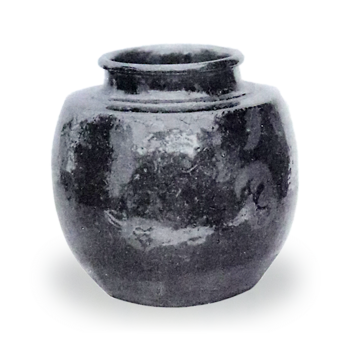
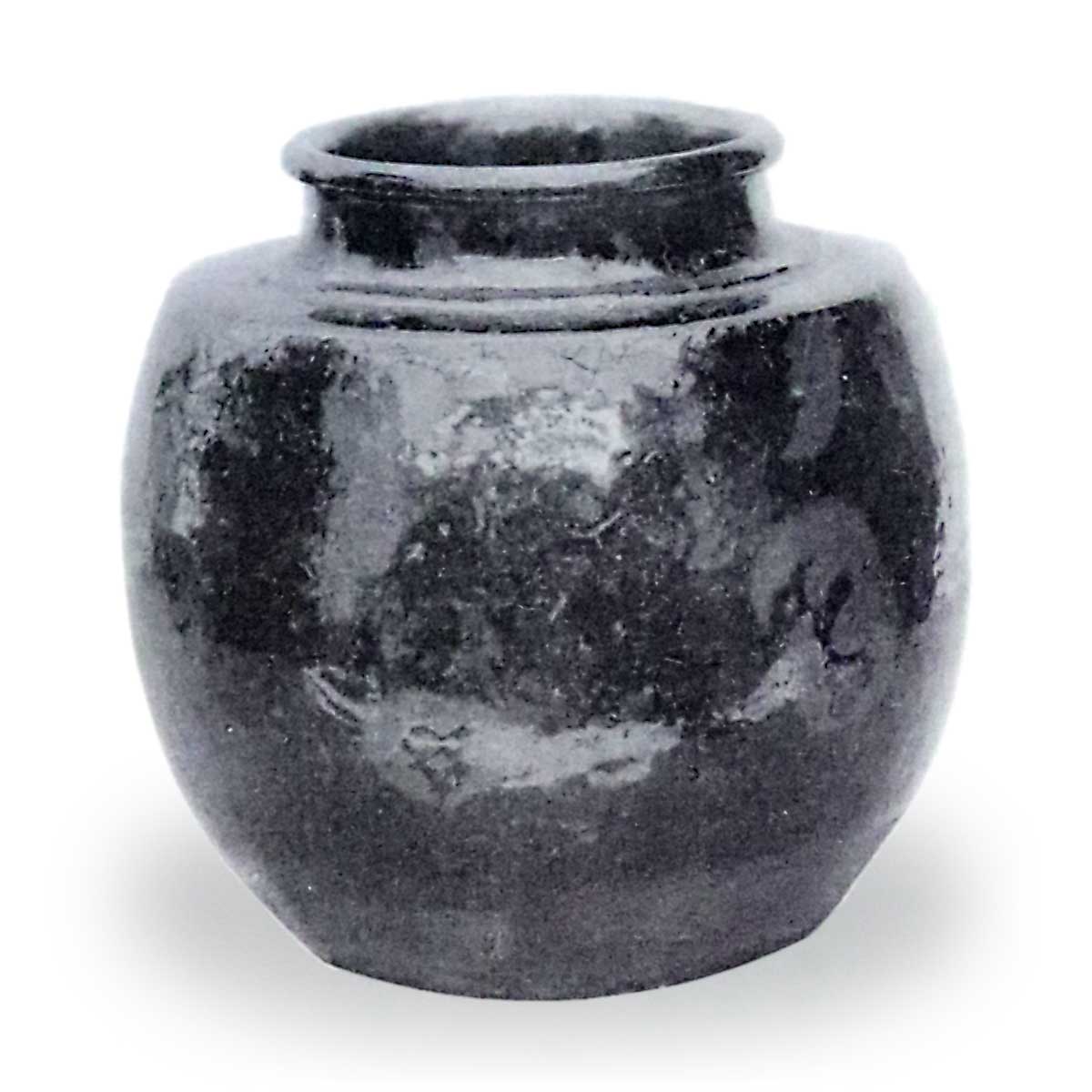
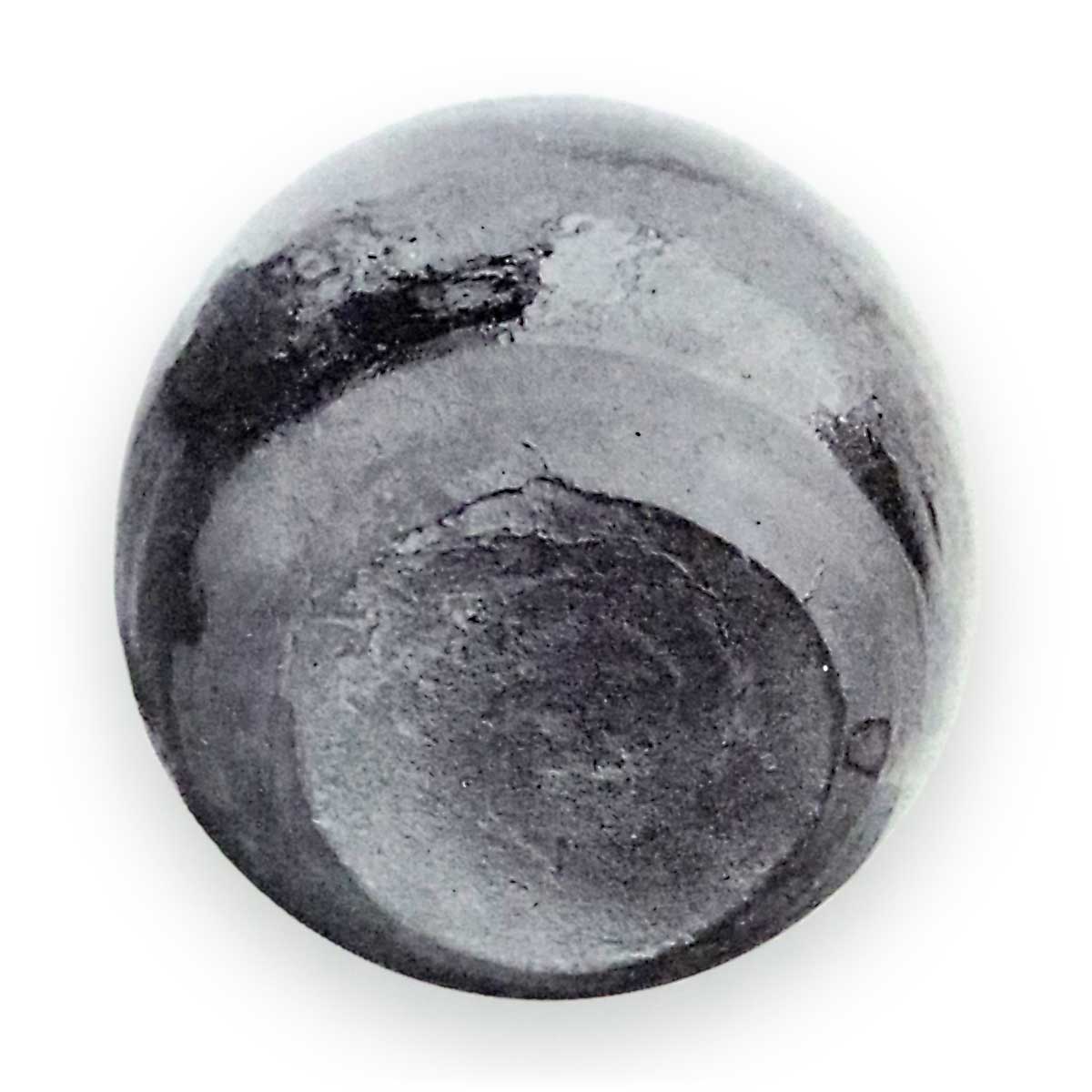
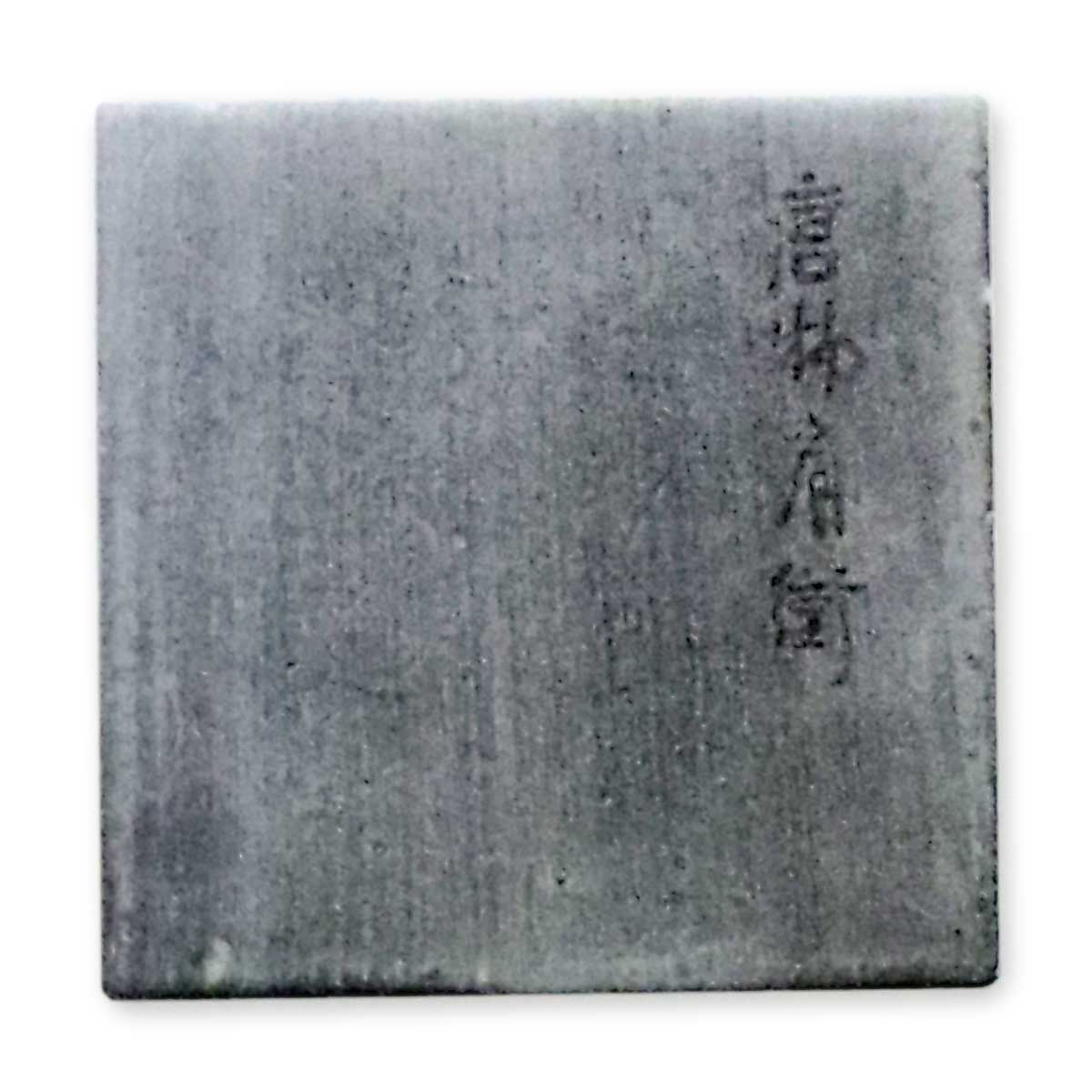
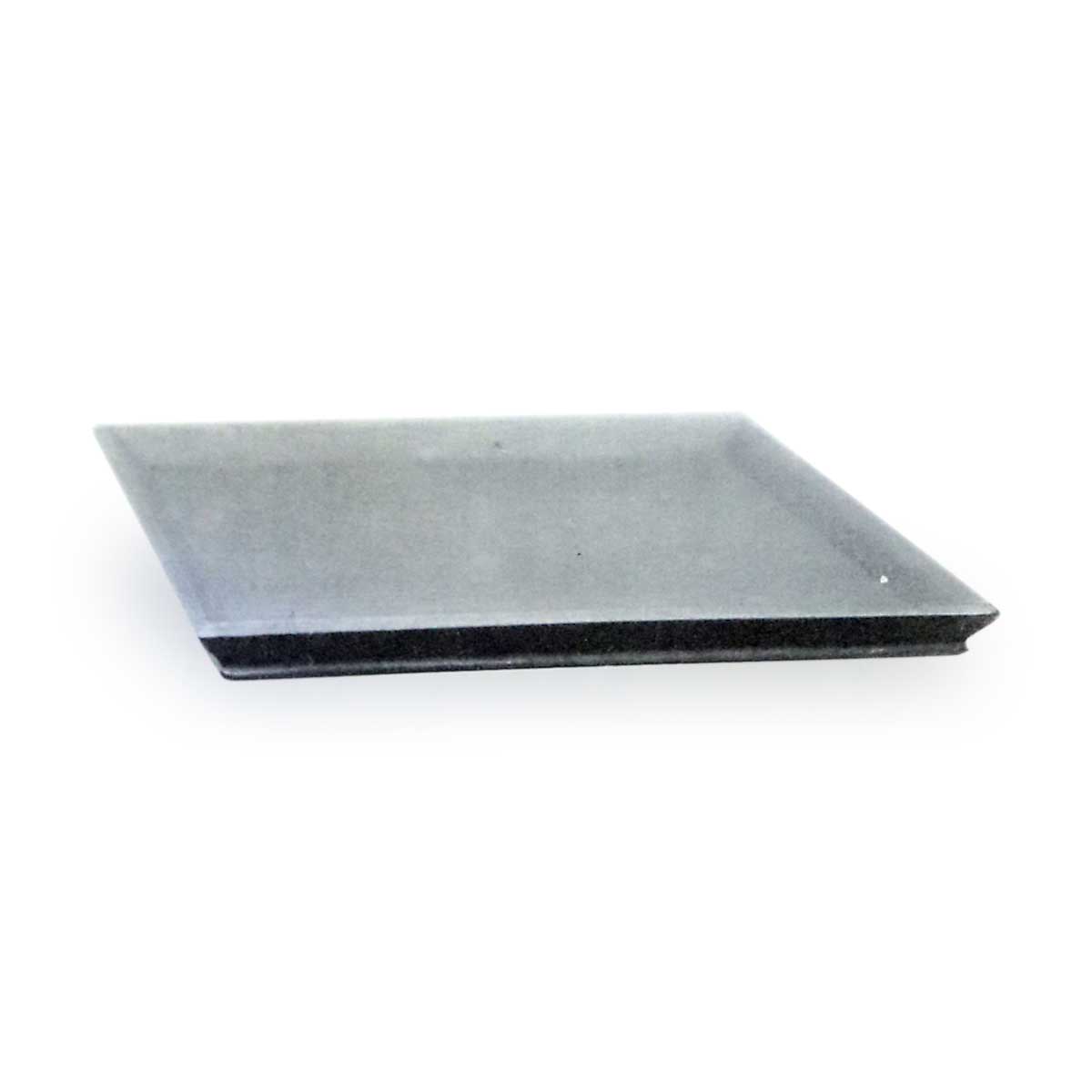
Made in China; Daimeibutsu; Also known as: Kinoshita Katatsuki or “Return to the Capital”; Collection of Count Naoaki Matsudaira
[Name]
Tanemura is also known as Tanamura according to one theory. Since the Japanese pronunciations of “Tane” and “Tana” are similar, the two names were likely confused. Matsuya Genzaburō of Nara writes in his Matsuya Nikki: “The Tanemura Katatsuki was named after Lord Tanemura of Ōmi, who owned it.” This indicates that the name derives from the owner. Later, as Kinoshita Miyauchi came to possess it, it was also called the “Kinoshita Katatsuki.” It subsequently passed into the hands of the painter Kano Tanyu. Although it was believed to have been destroyed in the Great Fire of Meireki 3 (1657), it was unexpectedly discovered in Kyoto and brought back to Edo, leading it to be known as the “Teapot Returned from the Capital.”
[Dimensions]
Height: 2 sun 7 bu
Body diameter: 2 sun 8 bu
Body circumference: 8 sun 6 bu
Mouth diameter: 1 sun 6 bu 3 rin
Base diameter: Narrowest point 1 sun 6 bu / Widest point 1 sun 6 bu 5 rin
Height of the koshiki (base): 4 bu
[Accessories]
Lids: 6 (each with a depression called a “su”)
Lid box: Unfinished paulownia wood
(Lid by Kinoshita Katatsuki, with an inscription by Lord Matsudaira Fumai)
Storage bag: Purple chirimen silk, with a purple cord
Wrapping: Purple ha-ni-bi silk with cotton padding
Bags: 4
・Honnoji Donshu (lining: pale green kaiki, cord: Enshu brown)
・Orie-mono striped Donshu (lining: kaiki, cord: Enshu brown)
・Kongō-giri (lining: purple-patterned kaiki, cord: velvet)
・Kantō-ori-tome (lining: kabechoro, cord: purple)
2 storage boxes for bags
Unfinished paulownia wood (Includes a note from Lord Fumai)
(Kinoshita Katatsuki’s pouch: Holds the three items: Honno-ji, Branch Pattern, and Kongo-giri)
Unfinished Paulownia wood (Includes a note from Lord Fumai)
(Tanemura Katatsuki’s pouch: Holds the Kanto-ori-tome)
Hikiya (a tube for storing a tea caddy): Black lacquered, with gold powder on the rim
Pouch: Purple leather, cord is Onado brown
Contents: Purple ha-ni-bi-e lined kimono
Inner box: Unfinished paulownia wood
(Contains a Chinese-style katatsuki; bears an inscription by Kano Tanyu)
A note is affixed to the underside of the lid reading, “Purchased from a certain merchant in Sakai.”
Pouch: Purple leather, with a brown cord
Outer box: Unfinished paulownia wood (boiled black finish), with a lock
The characters “Karamono-maru” (Artist unknown)
Contents: Donshu cotton-padded garment
Accompanying tray: Wisteria-patterned square tray (interior red, bottom black, rim in blue lacquer with bamboo leaf pattern)
Side length: 6 sun 5 bu 8 rin; interior flat surface: 5 sun 8 bu per side
Bag: Shibayama Donshu (lining: Donshu with wave and bird pattern; cord: pale yellow)
Inner box: Tame-nuri (Includes a gold-leaf inscription by Kobori Enshu)
Outer box: Unfinished cedar (Includes an ink inscription by Matsudaira Sekikawa, younger brother of Matsudaira Fumai)
Wrapping: Floral cloth (Lining: Brown ha-niwa silk)
[Miscellaneous Notes]
Tanamura Katatsuki by Kano Tanyu. (From Kokon Meibutsu Ruiju)
Tanamura Katatsuki Also known as “Kinoshita Katatsuki.” By Kano Tanyu. (From Meibutsu-ki)
Katatsuki Owned by Sakuma Uemon-no-jo. (From Tensho-meibutsu-ki)
Tanamura Katatsuki Formerly owned by Sakuma Jin-shichi; currently in the possession of the Kanpaku (Toyotomi Hideyoshi). (From Yamagami Soji-no-ki)
Tanemura Katatsuki: Owned by Sakuma Jinkuro. (From Higashiyama Gomono Naibetsucho)
Kinoshita Katatsuki: Kano Tanyu. (From Ganka Meibutsu Ki)
Tanebayashi: Also known by the alternative name “Tanemura.” Owned by Sakuma Jinkuro (also known as Jotei). Height: 2.7 sun, width: 2.8 sun, circumference: 8.6 sun, base: 1.7 sun, mouth: 1.6 sun, mouth height: 0.4 sun. The underglaze is a deep persimmon color, with a light persimmon color visible where the brushstrokes were applied; the overglaze is a coarse “dakatatsu” glaze (illustration of the tea caddy included). (From Manpō Zenshū)
The Matsumoto Katatsuki (Matsuya Katatsuki) and the Tanemura Katatsuki have the same dimensions. However, the Tanemura Katatsuki has a wide mouth and is rather ungainly. It bears this name because it was once owned by Lord Tanemura of Ōmi; it was later owned by Sakuma Fukansai, and is now in the possession of Prince Kinoshita? Its shape is difficult to describe. It is the sort of thing a beginner might call a “round pot,” and it is notably shorter in height. Yet it is a famous Meibutsu, renowned since ancient times and without any hidden flaws. That said, I dislike showing such an important piece to someone with only half-baked knowledge who has not seen many famous Meibutsu. Someone who has seen only four or five Katatsuki would never be able to appreciate its true value. Each one has a distinctly different shape. (From the Matsuya Nikki)
The morning of the 22nd day of the first month of Tenshō 6 (1578), Lord Sakuma Jinkurō’s tea gathering
- For the hearth: to be hung on a自在鉤 (jizai-kagi)
- For the tokonoma: a katatsuki (placed on a shihō-bon), a plain Tenmoku tea bowl with a black-lacquered stand, and a Kinran bag
(From Tsuda Sōyū’s Tea Ceremony Diary)
On the morning of October 28, Tenshō 6 (1578), a tea gathering at Lord Sakuma Jinkurō’s residence
Hoin Miyauchi brought five gold ingots and a tenmoku tea bowl with a gray glaze as gifts.
Present in the room were Hoin Miyauchi and Tsuda Sōyuki. The tea was prepared by Yamagami Sōji.
- On the tokonoma: The tenmoku tea bowl brought by Hōin as a gift, placed on a tenmoku stand.
- At the hearth: A dragonfly-shaped kettle suspended by a thin chain.
- In the mizuya’s service area: A hand bucket was placed, and the katatsuki was placed in a bag (white ground with Kinran); no tray was used.
(From Tsuda Sōyū’s Tea Ceremony Diary)
Sakuma Sōtō held the court rank of Junior Fifth Rank, Lower Grade; his common name was Jinkurō, his real name was Masakatsu, and his pen name was Fukansai. He was the son of Sakuma Nobumori, who held the title of Uemon-no-jo. Both father and son served Lord Oda Nobunaga, the Minister of the Right, and were renowned for their tea ceremony skills. He initially studied under Sōgo (a disciple of Takeno Jōō) and later became a disciple of both Takeno Jōō and Sen no Rikyū, two great tea masters. It is evident that he was able to study under both because of his long life. Considering this, Fukansai had already made a name for himself as a tea master before Rikyū’s time, yet he continued to seek instruction from Rikyū even later in life.
The Chinese-made tea caddy passed down in his family is considered a masterpiece known as the “Tanemura.” (From The Comprehensive Genealogy of Tea Masters)
Tanemura (also known as “Under the Tree”). Formerly owned by Kano Tanyu, it is currently in the collection of Lord Unshu (Matsudaira Fumai). It features a dark amber glaze with white drips (a pattern created by the glaze running down), and its glaze texture differs from that of the tea caddy known as “Zangetsu.” The bottom is flat, made of grayish-brown clay, and has a black lacquer rim. Illustrations of the accompanying items and the tea caddy itself are included. (From Rinbōkiryū)
Tang-style Tanemura Katatsuki: Also known as “Kinoshita” or “Miyako-gaeri.” The overall base color is a blackish persimmon hue, with faint traces of a “snake-scorpion” glaze. The clay is soft, and the rim is very cleanly shaped. There are three unglazed areas (hima), and the shape is slightly flattened and somewhat awkward. There is a single large vein on the shoulder, and its form is very clean. On the reverse side, where the vein is located, the Dakatsu glaze is applied sparingly. (From Meibutsu*)
Tanemura: It has an amber-colored, slightly yellowish glaze and two veins. The base is flat, and there is a large glaze pattern on the shoulder as well. It is a tea caddy that lacks the front-facing glaze pattern found on the Matsuya Katatsuki. The base glaze is persimmon-colored. (From Fushimiya Tekō)
Tanamura: A Chinese-made piece by Han. It is a Meibutsu known as Tanamura, formerly owned by Kano Tanyū. The inscription was later changed to “Return to the Capital.” The glaze patterns and atmosphere are exceptional. (From Meikirō)
Tanamura Kansaku (made in China). It is from the same period as such Meibutsu tea caddies as Nitta, Setaka, Fudo, and Gyokudo. While the way the glaze adheres is comparable to that of the Matsuya Katatsuki, it is slightly inferior in terms of the era in which it was made. (From “The Origins of Seto Pottery” by Fumai)
Tanamura Katatsuki, also known as “Return from the Capital.” Owned by Kano Tanyu. The entire piece exhibits a lapis lazuli hue, and there is a single large streak on the shoulder, located below the koshiki. Fine streaks of dakatsu glaze appear in various places; the glaze on the front is thin, and dakatsu glaze is present there as well. There are three fire marks, and one of them contains a small amount of snake-scorpion glaze. The shape is slightly flattened, and the base is raised. The turned-up rim is somewhat large, and that part is of very high quality. (Includes a description of the accompanying items.) (From Boan Bunko, Vol. 9, No. A)
During the reign of Tokugawa Iemitsu, there was a tea caddy that was highly prized; Kyogoku Yasutomo and Lord Kanamori Izumo desired it, and the price was set at 3,000 ryō (omitted). Furthermore, a tea caddy known as the “Kinoshita Katatsuki” was purchased by Hōin Tan’yū (Kano Tan’yū) from Lord Kinoshita Miyauchi-no-shōyū for 1,400 ryō; the lid and pouch were made to the taste of Kobori Enshū. (From Sakurayama Ichiyu Hoki)
Tanemura Katatsuki, also known as “Kinoshita Katatsuki.” It was once owned by Sakuma Fukansai. It is said that Kano Tanyu sought to acquire it for 10,000 ryō. During the Great Fire of Edo in the year of the Rooster (Meireki 3), a descendant of the owner discarded it by the roadside, but the tea caddy made its way to Kyoto, where Ichijō Munetada discovered it.
It is said that someone purchased it for 1,000 ryo of silver, and it was sent to Lord Makino Sado-no-kami. It is said that it was later returned to Tan’yu. (From Sekkan-so: A Guide to the Mysteries of the Tea Ceremony)
Kano Tanyu was a renowned painter who also practiced the tea ceremony with great skill. On one occasion, he paid a large sum of money to purchase a tea caddy, which he treasured and kept hidden away. When the Great Fire of the Year of the Rooster (Meireki 3) destroyed his residence at Kanda Bridge, a retainer secretly stole the tea caddy, sent it to Kyoto, and sold it off. He then lied to his master (Tanyu), telling him, “It was lost in the fire.” Later, Tan’yu bought the tea caddy back, renamed it “Return to the Capital,” and treasured it even more. It is said that it is now in the possession of the Ii Kamon-no-kami family. (From Meiryo Konan)
There was a tea caddy that Kano Tan’yu had acquired for several hundred gold pieces, and he cherished it deeply. Although he enjoyed the tea ceremony, he used only this single tea caddy to prepare tea. However, during the Great Fire of Meireki 3 (1657), (Tan’yu’s residence was also engulfed in flames. At that time, he attempted to escape the fire by tying the tea caddy, still in its box, to his neck, but) the flames were so fierce that he barely managed to escape with his life. In the process, he lost the tea caddy. After that, his heart was no longer in his work, and he lived in a state of deep melancholy. Many years later, he traveled to Kyoto to paint illustrations for restoration work at the Imperial Palace. One day, he was summoned by Lord Itakura Shūshū (a mistake for Makino Sado-no-kami), the Kyoto Shoshidai, and went to see him. Upon meeting Shūshū, the latter, in the course of reminiscing about the past, asked, “I heard that teapot was lost in the fire; what happened to it?” Tanyū replied, “I had completely forgotten about it, so I am quite taken aback that you should ask such an unexpected question.” Shūno said, “I, too, have once been served tea from that tea caddy, which is why I remembered it so clearly. I asked because I had heard that you treasured it like no other.” To this, Tanyū replied, “Please, do not speak of that matter. It unsettles my mind.”
At that moment, Shūno called for a page and ordered, “Bring that tea caddy here.” The tea caddy was brought out immediately. Shūno took it in his hands and examined it closely, “There are indeed similar objects in this world. I’ve only seen that teapot once, so I don’t remember it clearly, but I was recently shown something very similar,” he said, handing it to Tan’yu. Tan’yu took it in his hands and was greatly astonished. “This is that teapot! My goodness!” he exclaimed, and then fainted. Those around him were thrown into a commotion; they splashed water on him, and Tan’yu finally came to. Looking at the vessel once more, he said, “There is absolutely no doubt—this is my teapot. It is truly a mystery. It is something that ought not to exist in this world.” Shu Shoubu said, “Then my eyes were not deceiving me after all. This tea caddy was recently brought to me by an antique dealer. I unexpectedly recognized it as that very tea vessel, so I purchased it with the intention of returning it to you. I shall present it to you now,” and he gave it to Tan’yu. At that time, he named it “Return to the Capital.” This episode of Tan’yu fainting can truly be called a testament to genuine affection. The “Preface to the Orchid Pavilion,” written by Wang Xizhi of the Jin Dynasty in China while intoxicated, was once thought to have been lost to the world. However, when Emperor Taizong of the Tang Dynasty discovered it and showed it to his grandson, the monk Zhiyong, Zhiyong was so overjoyed at the sight that he lost his voice—a sentiment not unlike that described here. (From “Kakan Shosetsu” by Muro Kōsō)
In the first month of the Year of the Rooster (1657), during the Great Fire of Edo, the painter Kano Tanyu instructed a trusted retainer to “take this and flee, making sure to keep it safe at all costs,” and had him carry out a tea caddy he had kept in secret, known as “Tanagura” (a mistake by Tanemura). However, the retainer perished in the flames. Yet the tea caddy lay there, still in its box, right beside him.
Just then, a courier from Kyoto happened to pass by. He picked it up and, seeing that the box and bag looked unusual, thought, “This must surely be something valuable,” so he took it back to Kyoto and sold it to an antique dealer. It then passed into the hands of a dealer in Chinese antiques, and a man named Tachibana-ya Sogen purchased it. People who saw it remarked, “This is undoubtedly a Meibutsu. “If this is an item from the shogunate’s collection that was lost in the recent great fire, I fear we may face repercussions later. In any case, we should report this to the authorities,” he said, and immediately went to the Nijo government office to make a report.
The Kyoto Shoshidai at that time was Lord Makino Sado-no-kami Chikashige, who was fond of the tea ceremony and, moreover, had a keen eye for such things. “Let me take a look at it first,” he said, so Sogen brought it to him. At a single glance, Chikashige declared, “This must be the ‘Tanagura’ that Kano Tanyu brought out as his prized possession when I was invited to tea at his home in Edo some time ago.” Recalling that Tanyu had mentioned at the time that “a man from Kyoto acted as the intermediary to acquire it,” Chikashige had all of Kyoto searched to find that intermediary. A man named Munetada of the Ichijō district came forward and said, “I was the intermediary. I have even transcribed the shape and dimensions of the tea caddy.” When they showed him the notes, it was confirmed beyond a doubt that it was indeed the Tanakura. Upon inquiring at Tachibana-ya, they replied, “We purchased it for 300 kan of silver,” so Chikashige relayed these details to Tan’yu. Tan’yu was overjoyed and sent a disciple to Kyoto bearing 300 kan of silver. Since the painting had returned to Tan’yu through Chikashige’s efforts, Chikashige named it “Return to the Capital.” Later, when Chikashige traveled to Edo, Tan’yu paid him a visit to express his deep gratitude, offering, “To repay this kindness, I would like to paint any picture you desire with my own brush.”
(When Tan’yu offered, “I would like to paint any picture you desire,” Chikashige replied), “In that case, please paint Mount Fuji as a set of ten hanging scrolls.” Tanyu replied, “That has no precedent in history, and it would be difficult to divide it into ten separate paintings.” To this, Chikashige said, “You are right. My request was rather amateurish, but it seems you have not yet reached the level of a master either. A master of old would never have hesitated to take on such a task.” Tanyu then closed his eyes for a moment and pondered deeply. “Alas, I deeply regret not accepting this commission immediately. Indeed, I shall paint them. Please tell me your desired composition and dimensions.” He accepted the commission that very day, began painting the next, and splendidly completed the ten-panel pair. It is said that this masterpiece, rare in the world, is still passed down in the Makino family to this day. (From Chaji Hiroku)
Tanamura Katatsuki: During the Kanei era (1624–1644), Kano Tanyu possessed this work and treasured it as a closely guarded secret. However, it was lost in a fire, which he deeply regretted, and after searching extensively, he eventually recovered it. Consequently, he referred to it as “Tanyu-sai Returning to the Capital” and kept it hidden away. In later years, it was purchased by Lord Matsudaira Fumai; I have heard that the price was approximately 500 pieces of silver. It has long been said to be worth about 3,000 ryō of gold. (From Sekishū Hōbutsu Denrai-sho)
Tanamura: Originally owned by Tan’yu. I have heard the price was 500 pieces of silver. Its value is 5,000 ryō of gold. (From Fushimiya Chūjiro’s Memoir)
Tanamura: Purchased from Iseya Jiroemon for 600 ryō. (From Record of Purchases of the Ōsaki Domain’s Tools)
[Provenance]
It is said that this was originally owned by a certain Tanemura of Ōmi, passed through Sakuma Fukansai and Kinoshita Miyauchi-shōsuke, and then came into the hands of a certain merchant in Sakai, before Kano Tanyū purchased it for 1,400 gold pieces.
While Tan’yu kept it in his private collection, the Great Fire of Meireki in 1657 broke out. A retainer who happened to carry it out perished in the flames, but the tea caddy remained unharmed and was left lying nearby. A Kyoto courier passing by picked it up and, upon returning to Kyoto, sold it to a certain dealer in tea utensils. The story of how Makino Sado-no-kami Chikashige, the Kyoto Shoshidai, unexpectedly discovered it and returned it to Tan’yu is recorded in the miscellaneous notes. It is said that Lord Matsudaira Fumai purchased it through the mediation of Iseya Jiroemon for 600 ryō.
[Field Notes]
On May 27, 1918 (Taisho 7), I viewed the actual object at the office of the House of Count Matsudaira Naoaki in Matsue City.
The rim is thick, with a slightly shallow fold, and there is a single raised ridge along the edge of the bowl. The recessed ridge running all the way around the body is distinct and somewhat thick. The portion below the rim reveals iron-stained clay, and the flat, board-shaped base shows signs of wear. The overall piece features an amber-colored ground, over which a pale blue-green “dakatsu” glaze is applied sparsely, as if dusted with powder. On the front, the glaze flows down in two distinct layers of snake-scorpion glaze intermingling beautifully within the amber base, stopping near the base. To the right of the front, there are two areas where the glaze has not adhered, forming shapes resembling snowflakes, and there is also a small gap near the shoulder. The interior is entirely exposed clay, with distinct wheel marks running slightly high up the body and forming a swirl at the center of the base. The luster of the Dakatsu glaze, drifting like thin clouds over the amber base, is exceptionally beautiful. This tea caddy is short in stature relative to its size, with a plump and auspicious appearance.