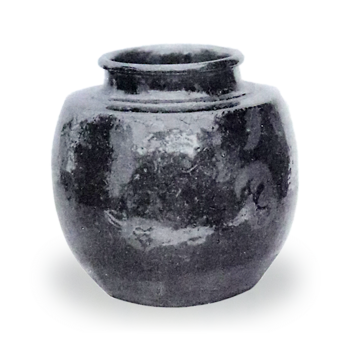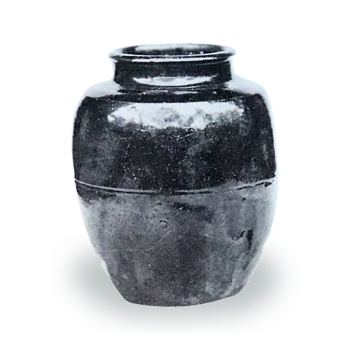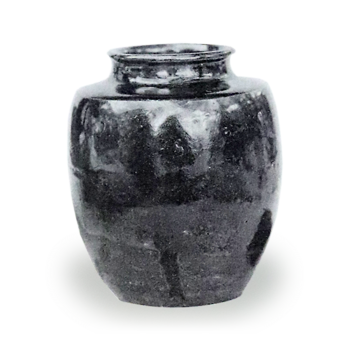
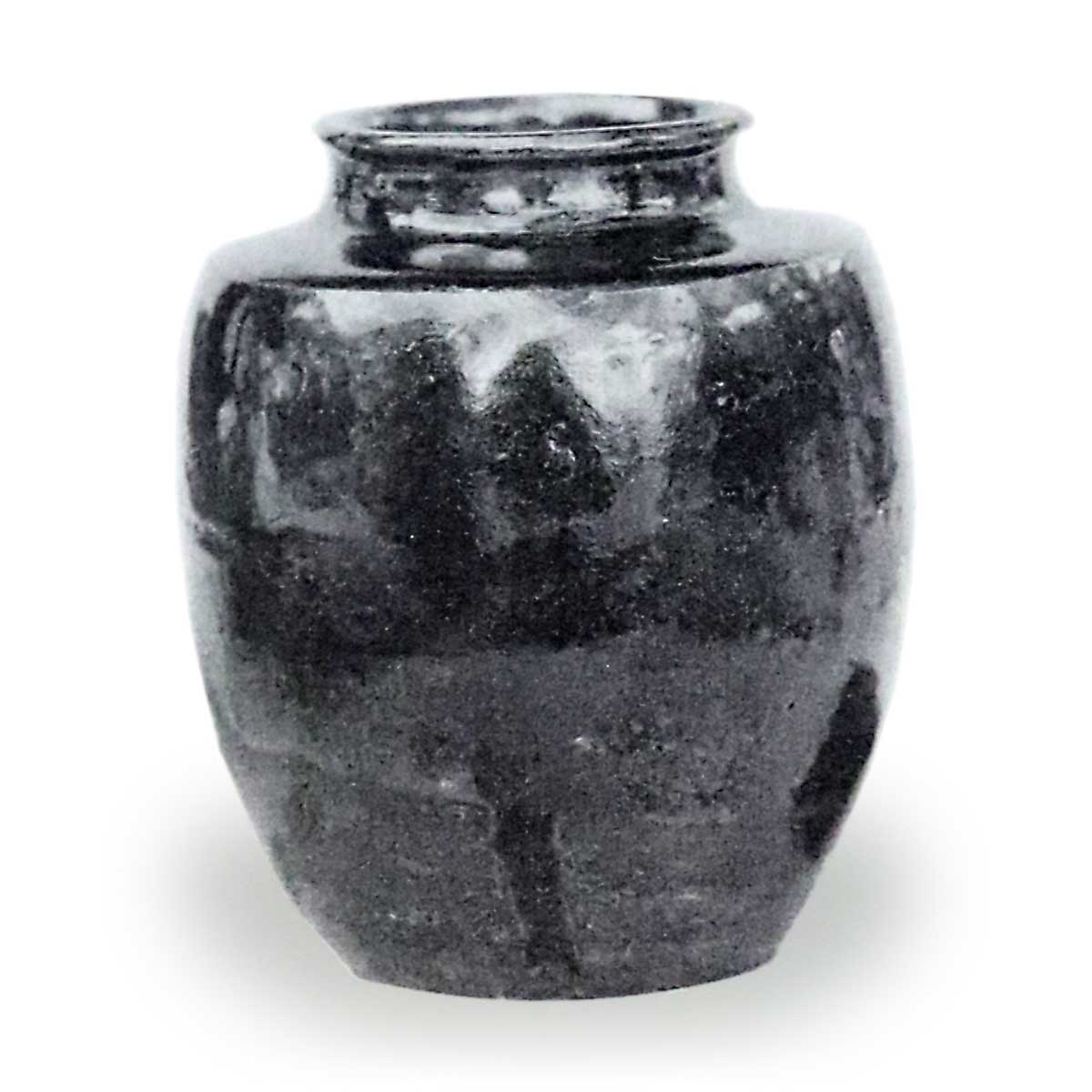
Made in China (Han-style) | Daimeibutsu | Collection of Baron Takashi Masuda
[Origin of the Name]
The book *Sōyūki* states, “The name was given based on the observation that the intricate patterns formed by the glaze drips on the front resemble the flames carried on the back of Fudō Myōō.” There is a theory that it was named after Fudō Myōō because it survived a fire during the fall of Osaka Castle, but this is likely a folk tale (a story created later).
(Note) The *Sōyūki* is held in the Ueno Library. Although the author is unclear, considering the date of its writing, it appears to be a collection of essays by Kobori Izumino-no-kami Masakata (pen name Sōyū).
[Dimensions]
Height: Approx. 8.8 cm (2 sun 9 bu)
Body diameter: Approx. 7.6 cm (2 sun 5 bu)
Mouth diameter: Approx. 4.2 cm (1 sun 4 bu)
Base diameter: Approx. 4.2 cm (1 sun 4 bu)
Shoulder width: Approx. 1.1 cm (3 bu 8 rin)
Koshiki (the raised rim of the mouth) height: Approx. 0.9 cm (3 bu)
Weight: Approx. 118.9 g (31 monme 7 bu)
【Accessories】
・Lid: 1 (made of ivory)
・Shifuku (bag for storing the tea caddy): 4
1. Taishi Koto (fabric name): Lining is yellow-green (moe-gi) Nanako weave; tying cord (o) is purple twisted cord.
2. Donshu Tamaki (fabric name): Lining is kaiki (silk fabric), and the drawstring is a purple twisted cord.
3. Kakuryu no Saki (fabric name): Lining is kabechoro (woven fabric), and the drawstring is a brown twisted cord.
4. Kinran Phoenix Pattern (fabric name): Lining is iridescent Kaiki; the cord is purple Tsugari-uchi.
・Box for the cover: Unfinished paulownia wood. Inscribed with “Fudō Katatsuki Bag No. 4.”
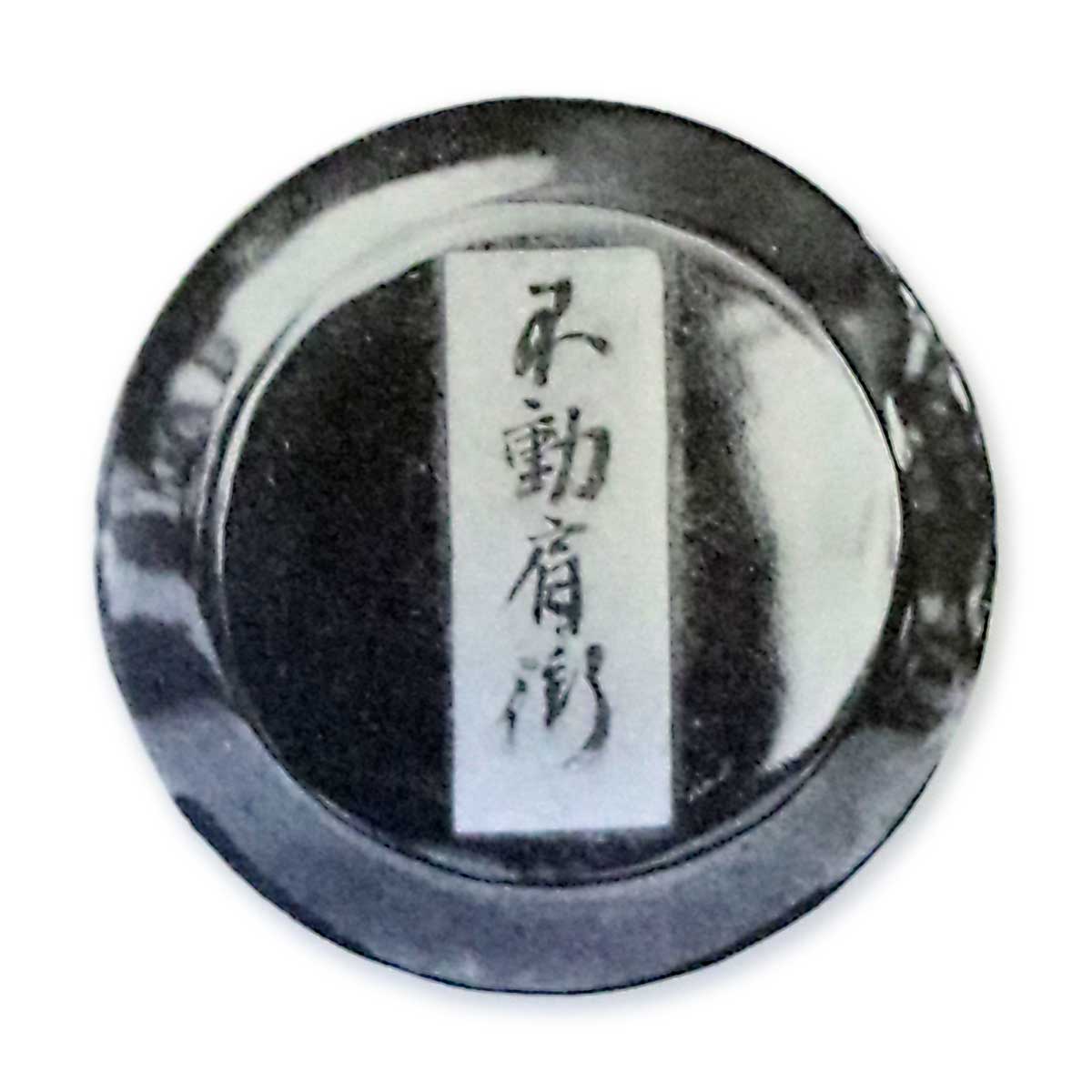
・Hikiya (wooden tube for protecting the tea caddy): Black lacquer. There is a label affixed that reads “Fudō Katatsuki.”
Hikiya pouch: Arisugawa (Fursu weave); the tying cord is yellow-green twisted cord.
・Inner box: Shunkei lacquer (transparent lacquer finish); the interior features a Muranashi-ji finish (a lacquer technique).
Inner box pouch: Round crest on a red ground; the lining is Donshu fabric with a cobblestone pattern; the tying cord is yellow-green twisted cord.
・Outer box: Paulownia wood, Shunkei lacquer, with a lock. The lid’s exterior features the Kyuyosei family crest in black.
Outer box bag: Brown leather, lined with Kaiki fabric, with a brown twisted cord.
・Master box (the outermost box containing everything): Unfinished paulownia wood.
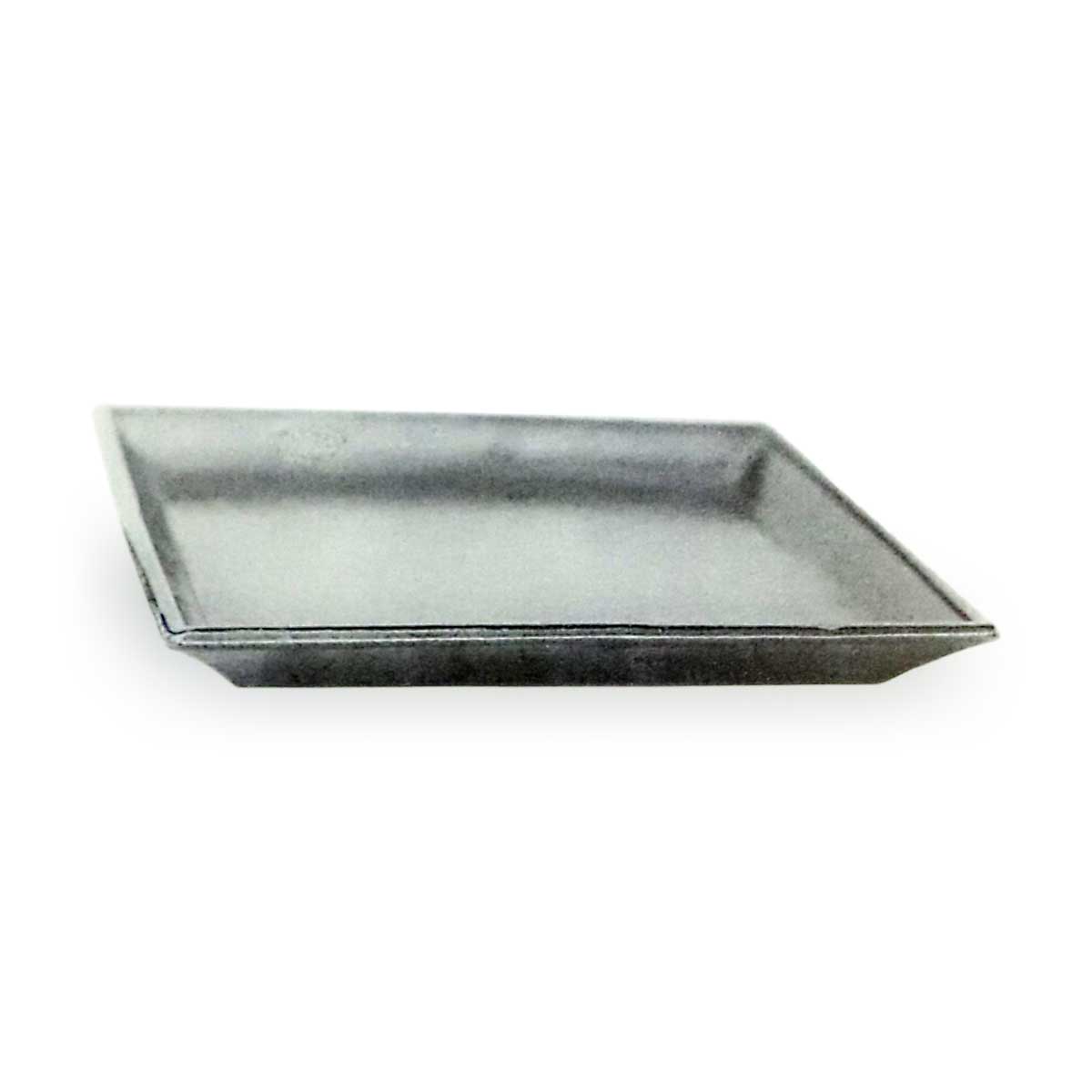
・Display tray (for displaying the tea caddy): A black-lacquered square tray (shihō-bon). Dimensions: approx. 19.1 cm (length x width); inner flat surface (mirror): approx. 15.5 cm (length x width); base: approx. 15.2 cm (length x width); height: approx. 2.1 cm.
[Miscellaneous Notes]
Fudō Katatsuki. Chinese import.
Owned by Matsudaira Shimousa-no-kami. Height approx. 8.8 cm, body diameter approx. 7.3 cm, mouth diameter approx. 4.5 cm, mouth height approx. 0.9 cm, base diameter approx. 4.4 cm, body circumference approx. 23.9 cm. There is one spot where black glaze has dripped; the unglazed clay is a fine-grained white with a grayish tint. The base shows traces of thread cutting, and the weight is approximately 118.1 g.
(Source: “Kokon Meibutsu Ruiju Shiyu no Bu”)
Fudō. Owned by Lord Matsudaira Shimotsuke-no-kami. It has multiple lids. The pouches are made of Shōō satin, Nishiki-maru-mon satin, and Un-tsuru satin.
Fudō Katatsuki (Records from literature, etc.)
The Hikiya (tube) is lacquered black, the pouch is velvet, and the box is Shunkei-lacquered; the interior features a mottled pear-skin finish with a depiction of a tea caddy.
(Source: *Rinpōkiryū*)
Fudō Katatsuki. Owned by Lord Matsudaira of Shimōsa.
(Source: *Ganka Meibutsu Ki*)
The Fudō is of Chinese origin. It dates from the same period as such Meibutsu tea caddies as “Nitta,” “Setaka,” “Gyokudō,” and “Tanamura.” Furthermore, it shares the same maker as “Nitta” and “Setaka,” and the glaze application is identical. The Seto ware pieces “Hirano,” “Yama-no-i,” and “Ikoma” also feature this same glaze application.
(Source: *The Origins of Seto Pottery* by Matsudaira Fumai)
Fudō Katatsuki. Owned by Matsudaira Kazusa-no-kami.
(Source: *Record of Ancient Meibutsu*)
A Daimeibutsu currently kept in private collection in Kyoto and not offered for sale.
Fudō Katatsuki. Located in Osaka. Originally owned by Matsudaira Kazusa-no-kami.
(Source: *Random Notes from a Leisurely Life*)
Fudō Gotsubo (referring to Fudō Katatsuki). The name was derived from the intricate pattern of glaze drips on the front, which resembles the flames borne by Fudō Myōō.
(Source: *Sōyūki*)
[Record of a Tea Ceremony]
Noon on June 13, 1921, at Tarōan in Gotenyama (present-day Shinagawa Ward, Tokyo). Host: Masuda Don’ō (Takashi)
Tea gathering commemorating a pilgrimage to Mount Kōya
Guests: Takahashi Hōan, Nozaki Gen’an, Murota Yoshifumi, Fujiwara Ginjiro, Umezawa Tsurusō, Toda Otoichi
・Hanging scroll: Kōbō Daishi’s personal motto, the two characters “Nanzo Itaman”
・Teakettle: A Tenshō-period kettle with a matching lid and a ring handle
The body of the kettle bears the inscription: “Dedicated to Fudō Myōō by Kama-ya Tarōemon.”
・Flower Vase: A bamboo-woven flower dish from the Tenpō era
Flowers: Alpine plants: Atsumori-sō, white orchids, alpine violets (Violet)
・Tea caddy: The Daimeibutsu “Fudo Katatsuki”
Displayed on a black-lacquered square tray of Chinese origin. The cloth bag is made from fabric by “Sakuma Kakuryu.”
・Tea bowl: Furuido (a well-style tea bowl from the Korean Peninsula)
・Tea scoop: Made by Zen Master Sawakan
(Source: “Taisho Shin-yu Chado Ki”)
[History of Ownership]
Originally owned by Matsudaira Kazusa-no-kami, it was later sold and found its way to Osaka. Subsequently, along with a tea caddy known as the “Shino Maru-tsubo,” it became part of the collection of Kuramata Uemon, a merchant in Kojimachi, Tokyo, and from there passed into the hands of the Masuda family (Baron Takao Masuda).
[Visual Inspection Record (Description based on actual observation)]
On July 18, 1920 (Taisho 9), I viewed the actual piece at the residence of Baron Takao Masuda in Gotenyama, Shinagawa, Tokyo Prefecture.
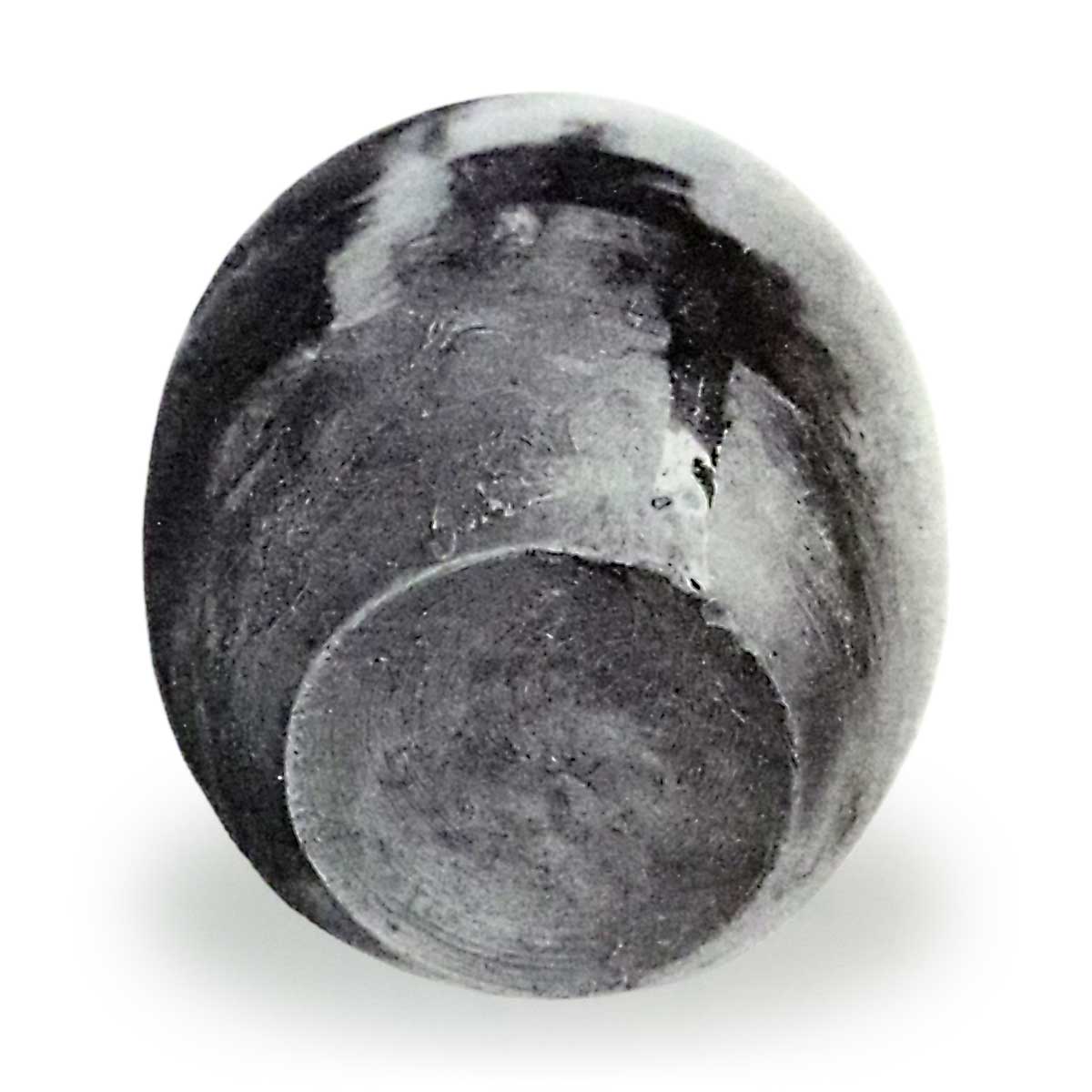
The rim is rounded, with a shallow fold. The lip flares outward toward the bottom, and the shoulders are distinctly angular and pronounced. A carved line (sun-suji) running all the way around the body is interrupted in places, and parts of this line feature a pattern resembling the markings on a ruler.
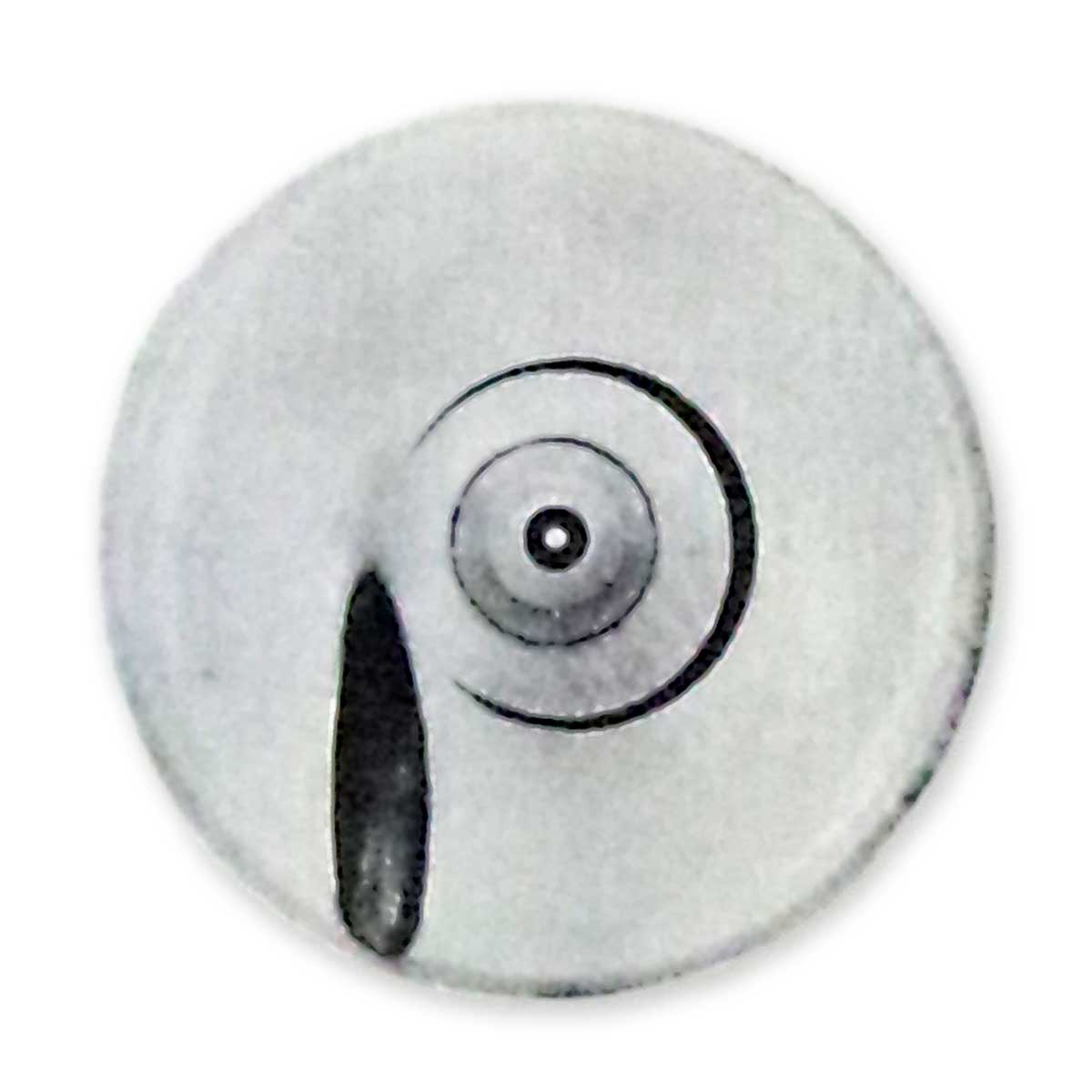
The entire piece is covered in a dark amber glaze with a beautiful luster. The front features a single glaze flow (nadare) that extends from the tip of the shoulder down to where it meets the base of the bowl. The lower section (hem) reveals a wide area of the red clay body, and there are traces of the potter’s fingers pressing and lifting the clay (finger marks, known as “yubikashi”) in several places. The thread-cutting marks on the base are extremely fine, with a flat section near the center that interrupts the thread-cutting lines. Inside, the glaze covers the rim, while the wheel marks are visible below that, and the base protrudes upward in a swirling pattern. There are traces of repairs where major damage was restored from the rim of the mouth to the shoulder and down the body.
The shape is generally the same as other Chinese-made (Han-style) shoulder-shaped tea caddies of this type, and since the pattern (texture) is created solely by the way the glaze is applied, it is a tea caddy with a solid, dignified presence that is not overly flashy despite its beautiful luster.