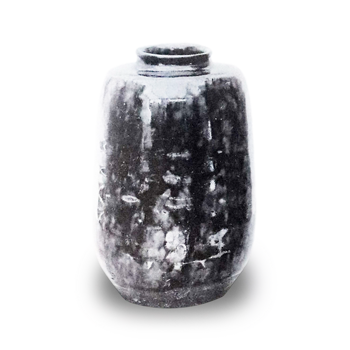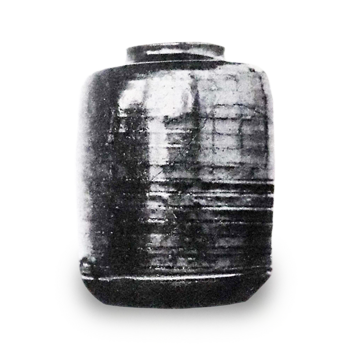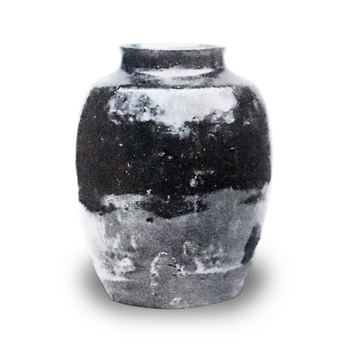
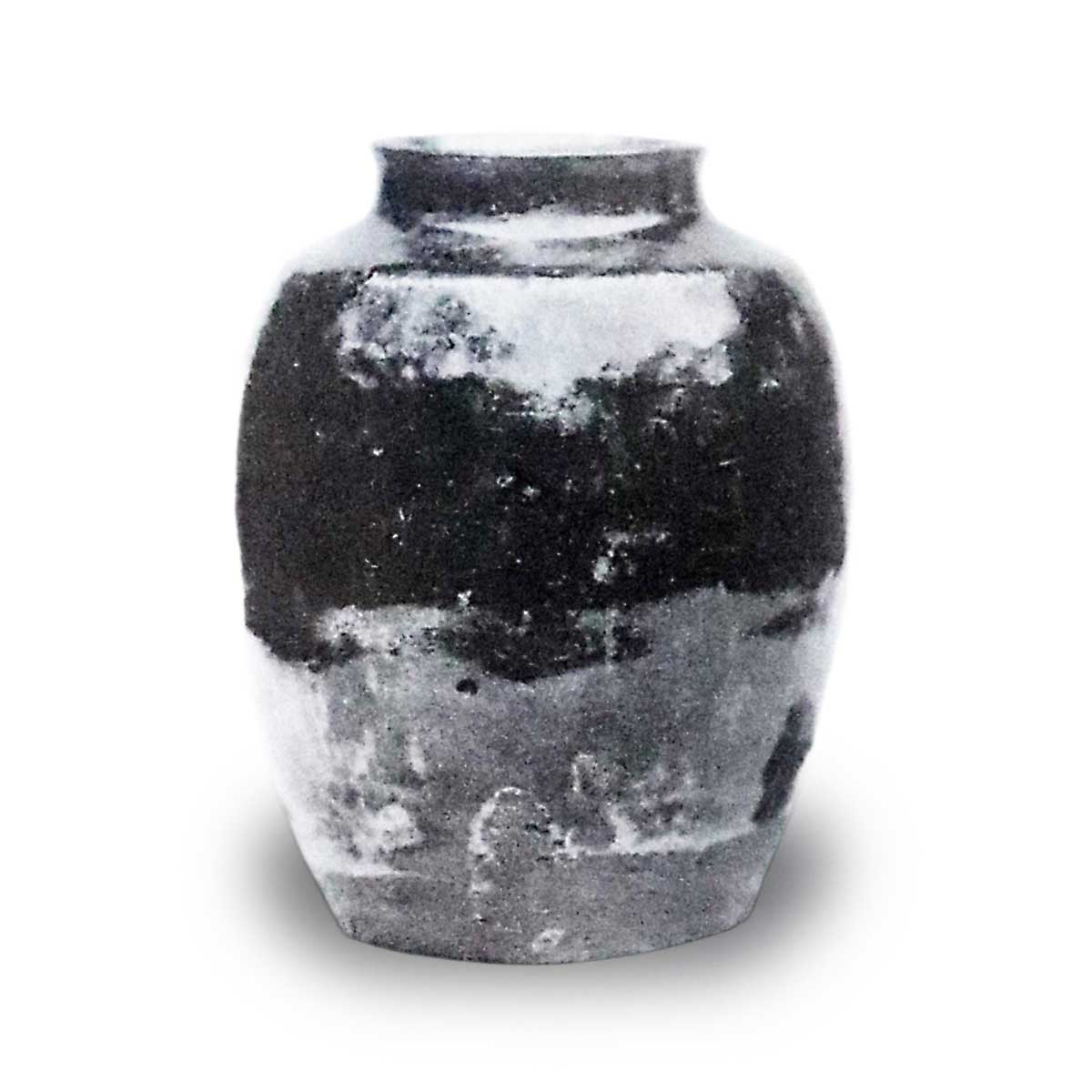
Old Seto Ware | Collection of Viscount Soma Mototane
Origin of the Name
This teapot was named because the appearance of its black glaze resembles billowing “murakumo” (clouds). Although works such as Kokin Meibutsu Ruiju and Meibutsu-ki record an item called “Ōseto Murakumo Katatsuki” that was owned by Sakai Shuri-no-kami, its dimensions and accessories differ entirely from those of this tea caddy; therefore, it is clearly a case of “same name, different object” (a different item sharing only the name).
Dimensions (converted to centimeters and grams)
Height: Approx. 9.6 cm (3 sun 1 bu 7 rin)
Body diameter: Approx. 7.7 cm (2 sun 5 bu 4 rin)
Mouth diameter: Approx. 3.9 cm (1 sun 3 bu)
Base diameter: approx. 5.0 cm (1 sun 6 bu 5 rin)
Koshidaka (height of the base): approx. 0.8 cm (2 bu 6 rin)
Shoulder width: approx. 1.2 cm (3 bu 8 rin)
Weight: approx. 207.4 g (55 monme 3 bu)
Accessories
・Lid: 1 (su)
・Coverings: 3 pieces
- Light green ground with bamboo vine and peony motif (lining: reddish silk; cord: light blue; ties: brown and yellow) [Daikokuya-style]
- Mōro (lining: hanada color / light indigo; ties: wisteria color; fastener: design resembling insect damage)
- Navy-blue ground with floral circles in Kinran (Lining: Hanada color; Cord and ties: Wisteria purple; Clasp: Design featuring insect-eaten patterns, etc.)
・Pouch box: Unfinished paulownia wood box
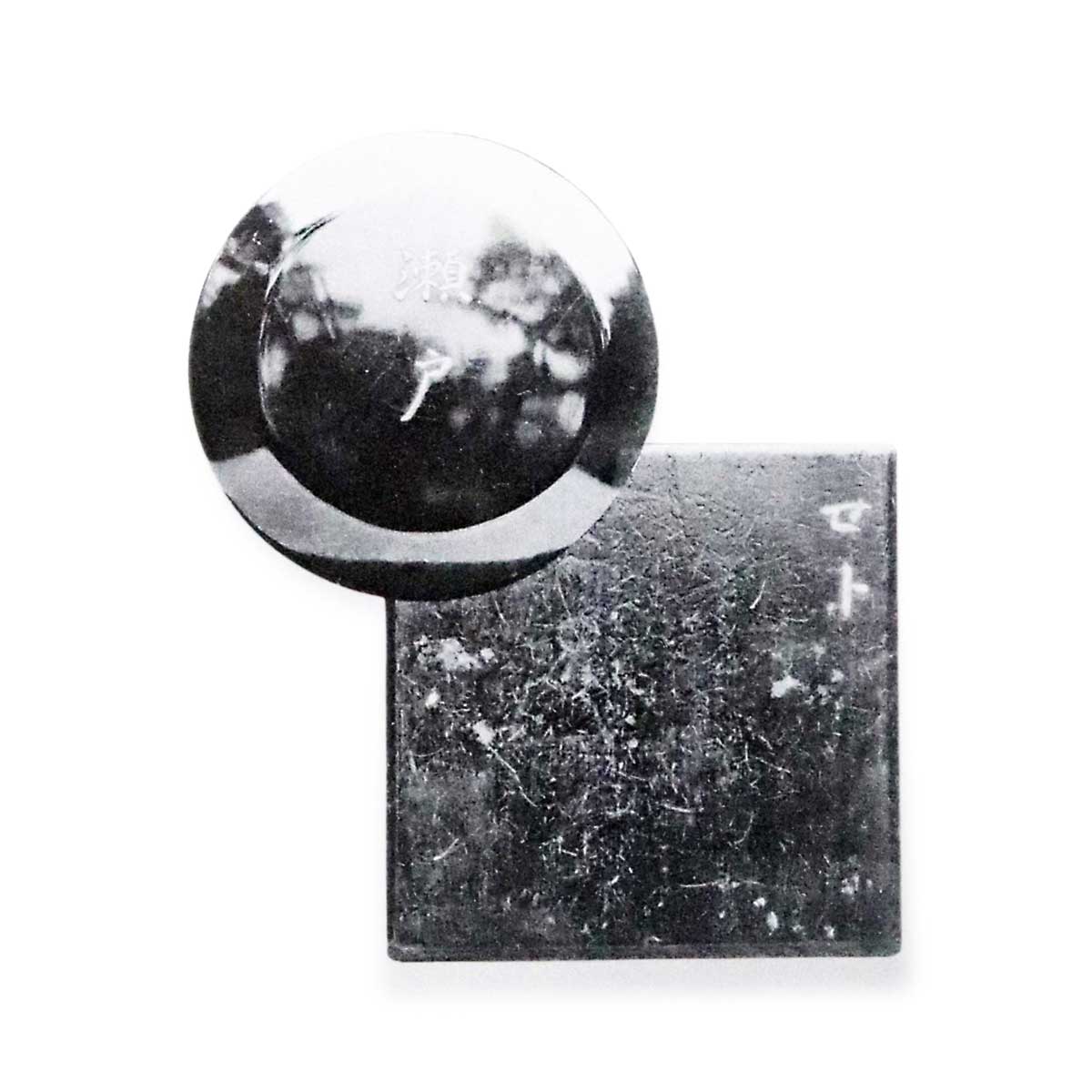
(Inscription in ink: Seto tea caddy, inscribed “Muragumo,” with three spare pouches)
・Hikiya: Black lacquered, with gold-powdered characters
(Contents: Seto)
・Inner box: Paulownia box with Shunkei lacquer finish, lettering in silver powder
(Contents: Pouch—Donshu Junko; lining: Tamaki; cord and fastener: brown; clasp: insect motif)
*Stored as a set
・Outer box: Unvarnished paulownia box
(Inscription in ink: Seto tea caddy, inscribed “Muragumo”)
(Seiga Shoran)
Record of actual observation (Field Observation Record)
On November 26, Taishō 9 (1920), I had the opportunity to view this piece in person at the residence of Viscount Soma Mototane in Ochiai Village, Toyotama District, Tokyo Prefecture.
The rim is thin; one side has been shaved from the inside to create a subtle curve, though this is not particularly noticeable. The area below the koshi is open, and the shoulder protrudes like the eaves of a roof.
Features and Highlights (Explanation)
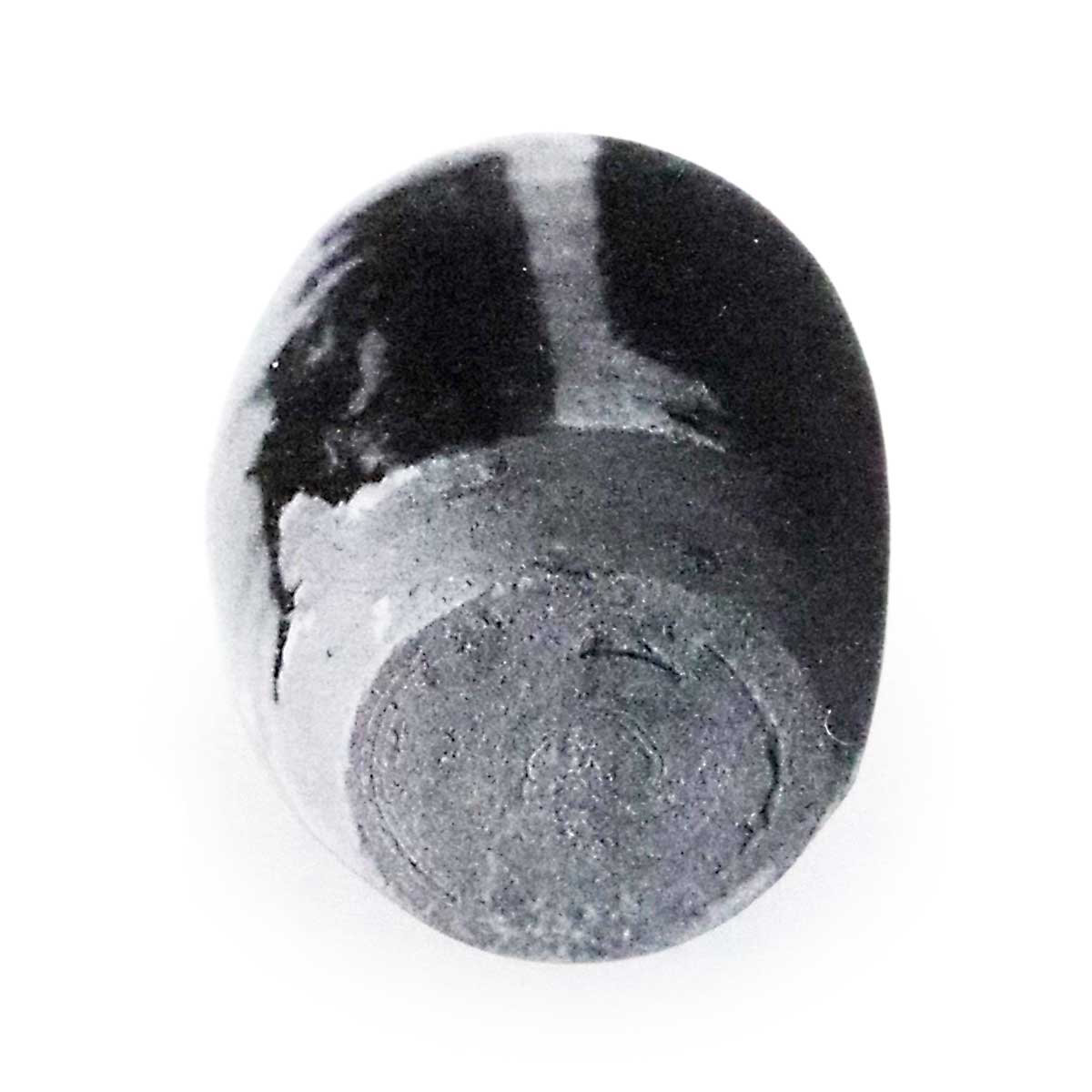
The shoulders are firmly flared, and while the body is rounded, it tapers slightly toward the base. The bottom retains rough traces of thread-cutting (ring-shaped cuts), but due to fraying of the clay and stone bursts (marks where stones within the clay exploded during firing), the thread-cutting lines are not particularly distinct.
The entire piece is a blend of black glaze, persimmon-colored glaze, and a metallic luster (kinki), creating a texture that resembles billowing clouds (muragumo). The black glaze predominates, and its luster is particularly beautiful and striking.
The body is marked by rough wheel marks, and the unique color of the iron-rich clay is visible from the rim downward. The wheel marks form three stepped chamfers, and there is one instance of “ishi-haze.”
The interior is fully glazed; the rough wheel marks spiral around the surface, forming a swirl pattern at the center of the base. The glaze’s texture and luster are exceptionally beautiful, and when held, the teapot has a pleasant heft, conveying a sense of solid, majestic grandeur—truly a magnificent teapot.