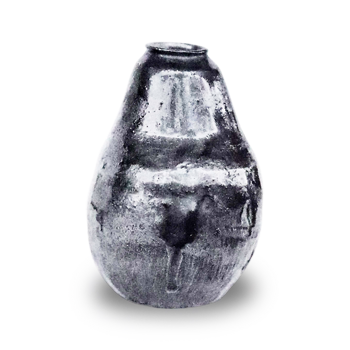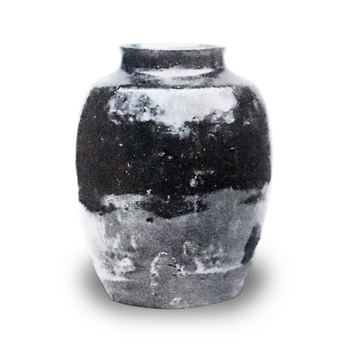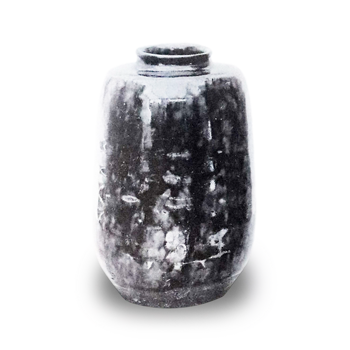
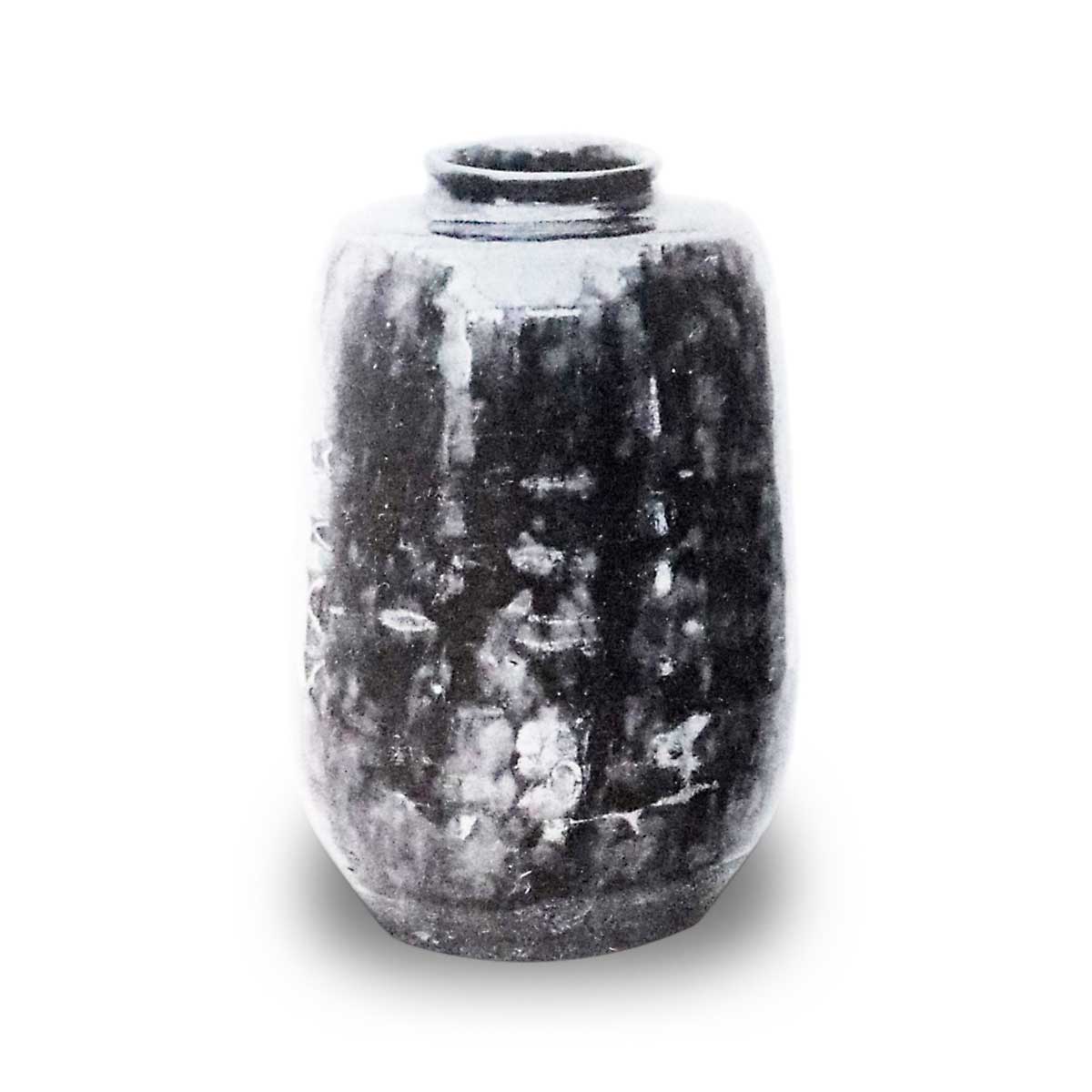
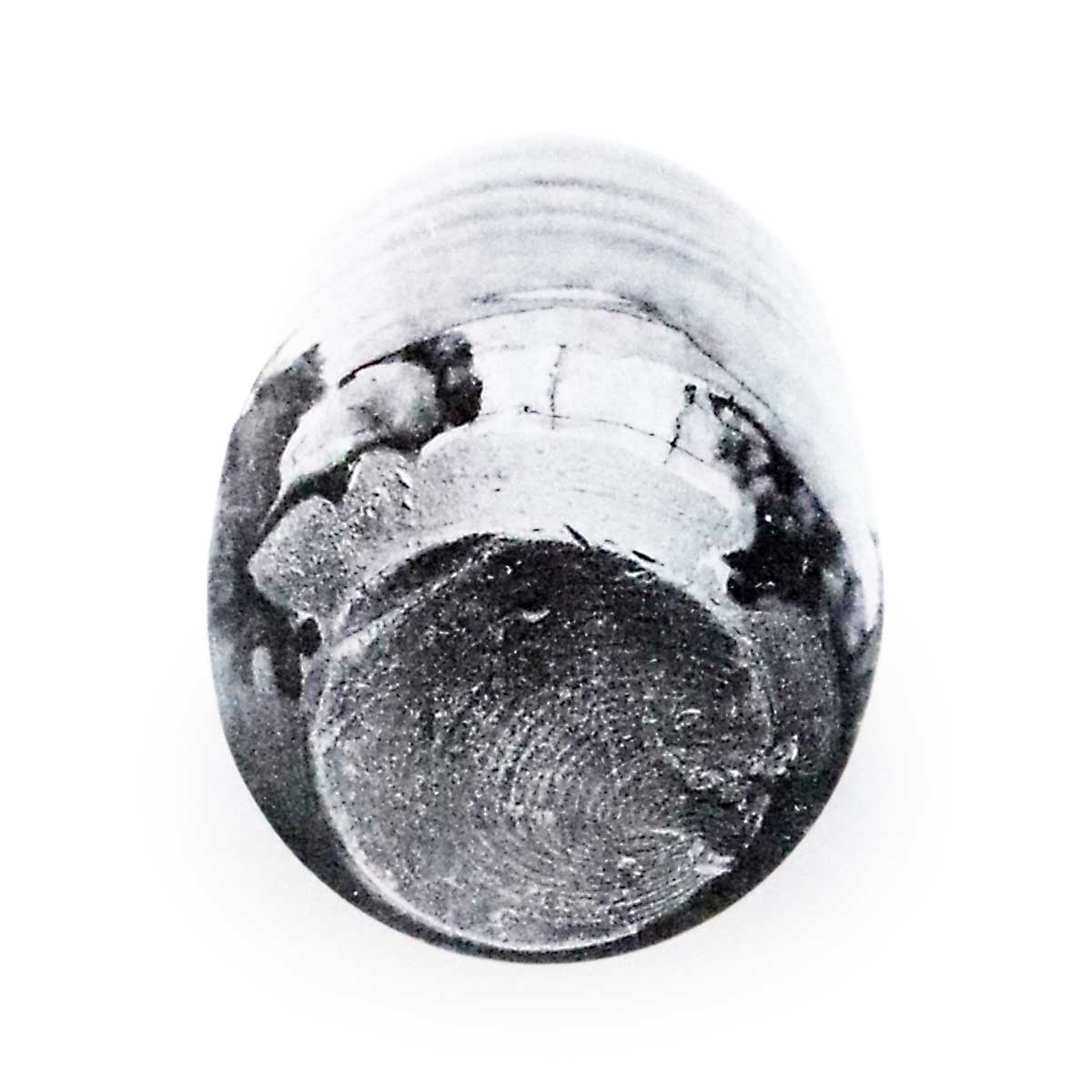
Old Seto—Daimeibutsu—From the Collection of Count Matsudaira Naoaki
Since the Chaki Mekiri-shū states that this piece was owned by Kamiya Naizen, a retainer of the Kaga Domain, it was likely named after the owner’s surname.
Dimensions (converted using 1 sun = 3.03 cm, 1 bu = 0.303 cm, 1 rin = 0.0303 cm)
Height: 3 sun 8 bu and a half (approx. 11.66 cm)
Body diameter: Just over 2 sun 5 bu (approx. 7.58 cm or more)
Mouth diameter: 1 sun 9 bu (approx. 5.76 cm)
Base diameter: 1 sun 7 bu (approx. 5.15 cm)
Shoulder diameter: 2 sun 1 bu (approx. 6.36 cm)
Accessories
・Cover lids: 2 (one of which is a “kō” [a lid with a hole, or one made from an old cover])
・Storage pouch: Shiro-habutae (white double-layered silk); cord: Enshū-cha (brown cord)
・Pouches (coverings): 2
- Daitōgire: Cord: Aitenjō (navy blue velvet); lining: Moegi-kaiki
- Unkaku Donshu: Tied with Enshu-cha (brown cord); lined with Oriiro-kaiki
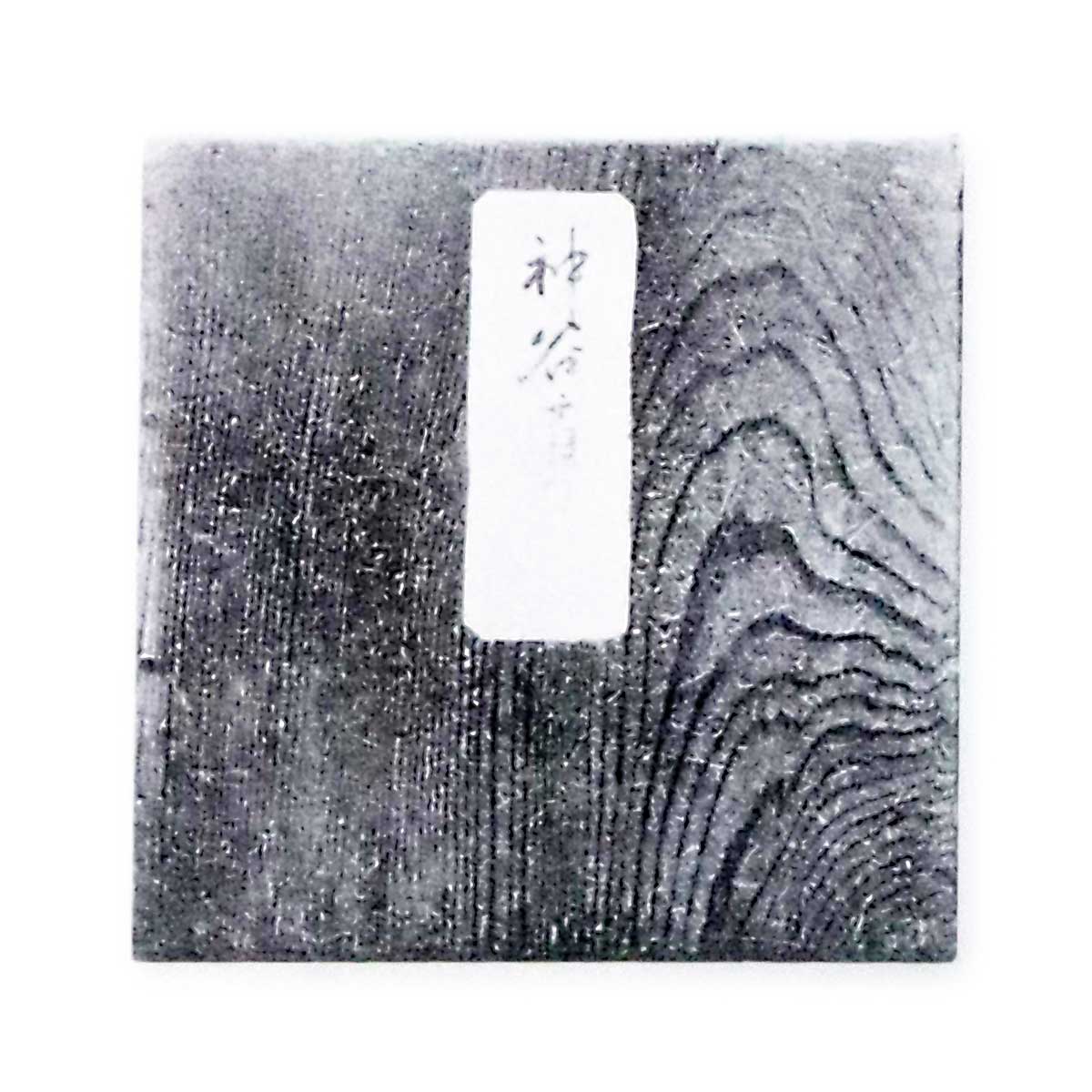
・Storage Box: Unfinished paulownia wood
The lid fits into a kakego (a nested container with a double bottom)
・Hikiya (wooden container): Black lacquer
The bag is made of Somekusa; the cord is Aitenjō (navy blue velvet)
Bears the inscription “Kamiya Katatsuki”
・Inner box: Tame-nuri lacquer finish, with leather cord
Wrapping cloth: Floral fabric (such as sarasa), lined with Onando Cha-habutae
・Outer box: Unfinished cedar, with leather cord and iron lock
(Note attached to the box) It reads “Kamiya Katatsuki,” but the author is unknown.
Summary of Various Records (Miscellaneous Notes)
・Kokin Meibutsu Ruiju: Kamiya Katatsuki, Daimeibutsu from ancient Seto, formerly owned by Matsudaira Dewa-no-kami (Lord Fumai). Height approx. 8.6 cm (based on the notation of “2 sun 8 bu 5”), body diameter approx. 7.58 cm plus a little; the body bears traces of a repaired crack (repair mark). Mouth diameter approximately 3.06 cm, shoulder diameter approximately 6.36 cm, base diameter approximately 5.15 cm. Two lids (kago); the lid handles are lacquered black, and the pouch is made of leather. The outer box is finished in tame-nuri lacquer. There are two pouches: one with a red-ground Chinese floral pattern and the other with a brown-ground cloud-and-crane pattern. (Illustration of the tea caddy included)
・Meibutsu-ki: An old Seto katatsuki, traditionally known as the Kamiya Katatsuki. Recorded on July 6, Kyōhō 1 (1716). Includes details on dimensions and accessories.
・Rinpū Kiryū: Owned by Kamiya (Kose-to) and the Lord of Unshū (Matsudaira Fumai). A lustrous persimmon color is overlaid with black mottling; there are areas where the mottling is interrupted and where the glaze has run. The wheel marks are vigorous. A strong golden luster emerges against the black background, making for a magnificent piece. The clay is blackish, and the thread-cut pattern on the base is slightly coarse. (Includes an illustration of the tea caddy with its pouch and description)
・Other records: It was owned by Kamiya Naizen of the Kaga Domain and was destroyed (or damaged) in a fire during the period when it was held by Kagiya in Osaka. It features an overglaze finish.
・Chaki Mekiri-shū: The persimmon-colored mottling is distinct, and the clay has a fine texture. The main thread-cut lines on the bottom are also fine, and the overall finish has a soft quality, reflecting the techniques of a “Meibutsu” (famous piece).
・Oke-kō Mekiri-sho: Owned by Kamiya Katatsuki; later held by Kagiya in Osaka. The base is a Raku-style persimmon color with black Raku-style mottling. The clay is brown, soft, and coarse-grained, and the “hon-ito-kiri” lines are fine. However, it is not particularly thin in construction.
・Chaki Meibutsu Zui by Kusama Waraku: Known as Kamiya Katatsuki, or alternatively as Kamiya. Originally owned by Kagiya Sōin, later by Umibe Sōsaku, and currently owned by Matsudaira Dewa-no-kami. (Includes dimensions, accessories, and an illustration of the tea caddy.)
・Rinsho of Seto Pottery by Fumai: The Kamiya Katatsuki is an ancient Seto ware. It is a work from the same period as the Izumo Katatsuki, Sue Katatsuki, and Asano Katatsuki.
・Chronicle of Tea Jars: There are oral traditions (secret methods of handling) regarding the four pieces: O-Seto, Muragumo, Ikoma, and Hasegawa, as well as the Kamiya Katatsuki. One should inquire about them.
・“Bakuan Bunko, Volume A, No. 9”: Overall, the persimmon-colored ground stands out beautifully, and the thread-cut pattern is coarse. It is a rather large tea jar. The base is coated with black glaze, the rim is thickly finished, and it possesses a deep, lustrous black sheen; overall, it is a splendid piece.
・“Fushimiya Memoir”: Kamiya Katatsuki, O-Seto (in the “Daimeibutsu” section). It was owned by Ueda Saburōemon, a merchant from Osaka, and was acquired by the Matsudaira family through the mediation of Kawachiya Sōkai of Edo during the An’ei era. The wooden cover is made of rosewood (karin), and the accompanying tray is a Chinese pinewood tray.
・“Osaki-sama’s Record of Artifact Purchases”: Kamiya; acquired in An’ei 7 through the mediation of Kawachiya Sōkai for 300 ryō.
History
Originally owned by Kamiya Naizen of the Kaga Domain, it was later passed down to the Kagiya family in Osaka. Subsequently, while in the possession of Ueda Saburōemon, the Edo goods dealer Kawachiya Sōkai acted as an intermediary in An’ei 7 (1778), and the item was delivered to Lord Matsudaira Fumai for a price of 300 ryō. Subsequently, on April 29, Taisho 6 (1917), during the exhibition commemorating the 100th anniversary of Lord Fumai’s death held in Matsue City, it was exhibited at Kōunkaku within the former Matsue Castle grounds, on loan from the Matsudaira family.
Field Notes (Record of Actual Observation)
On May 27, Taishō 7 (1918), I observed the piece in person at the office of Count Matsudaira Naoaki in Matsue City.
Although the tea caddy is relatively large, its rim is tightly drawn, and a single ridge runs slightly diagonally across its width. The wheel marks, similar to those seen on the Meibutsu “Enjōbō” tea caddy, form several horizontal bands. Within the lustrous black glaze, vibrant persimmon-colored variations appear in a “kanoko-madara” (speckled) pattern. From the rim downward, the glaze is thin, revealing the shikoro-kei (a brownish-gray) clay body. The thread-cut pattern on the base is fine. Overall, it is as if one were facing a plump, stately beauty, and it never feels awkward or unattractive. It must be considered a particularly outstanding piece even among Seto Katatsuki tea caddies.