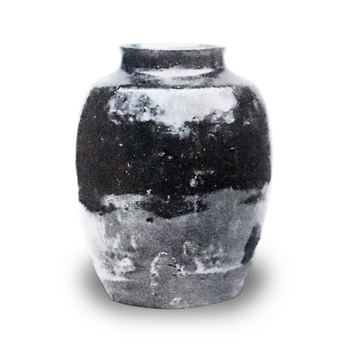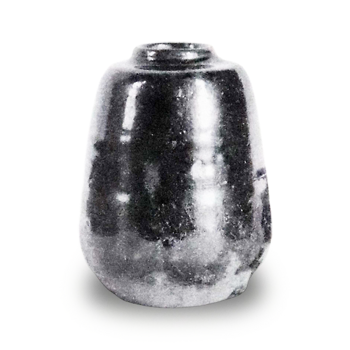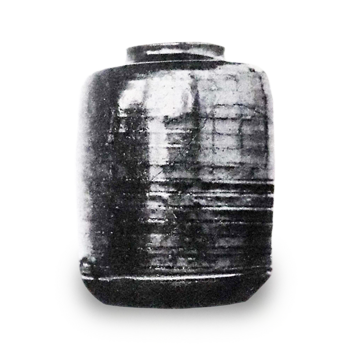
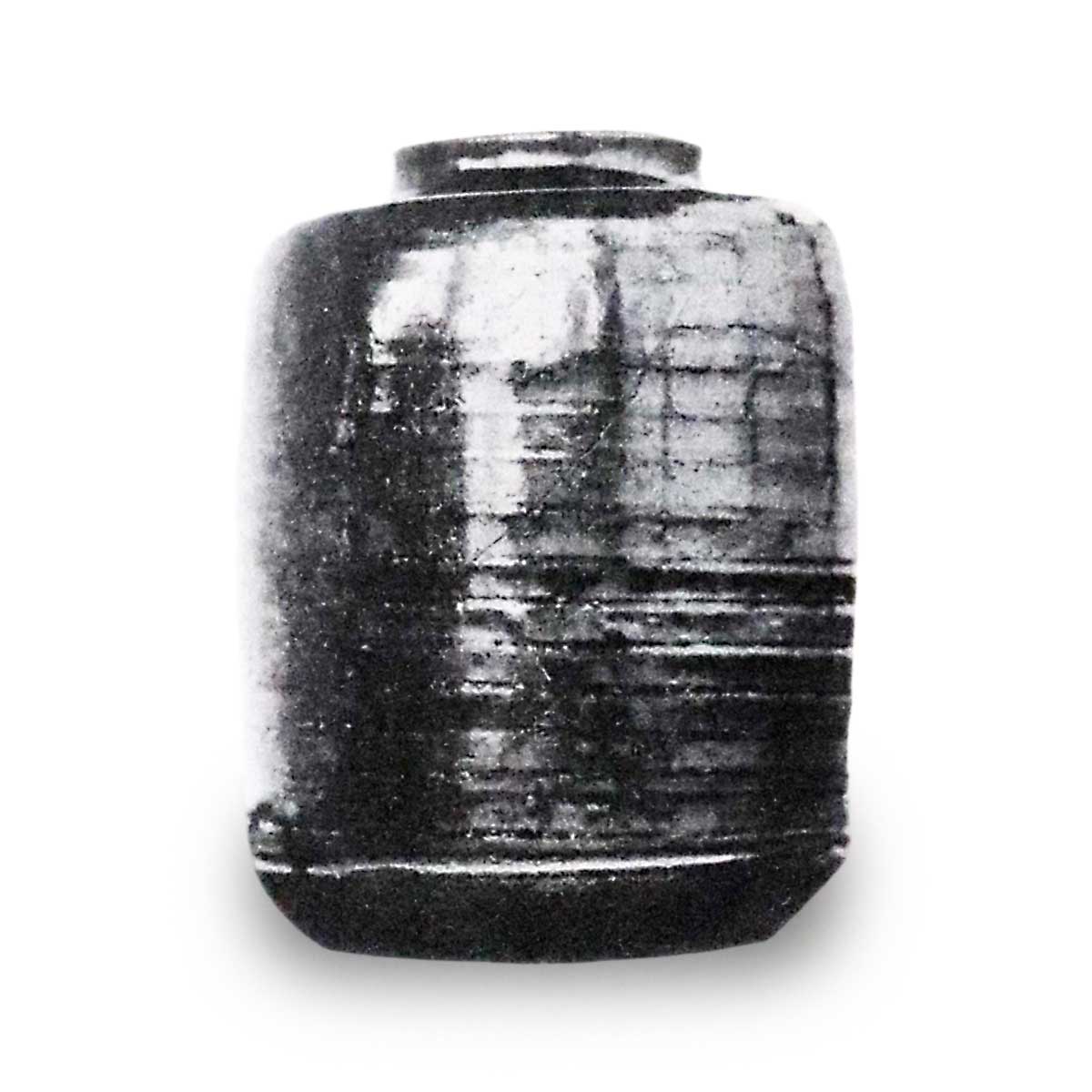
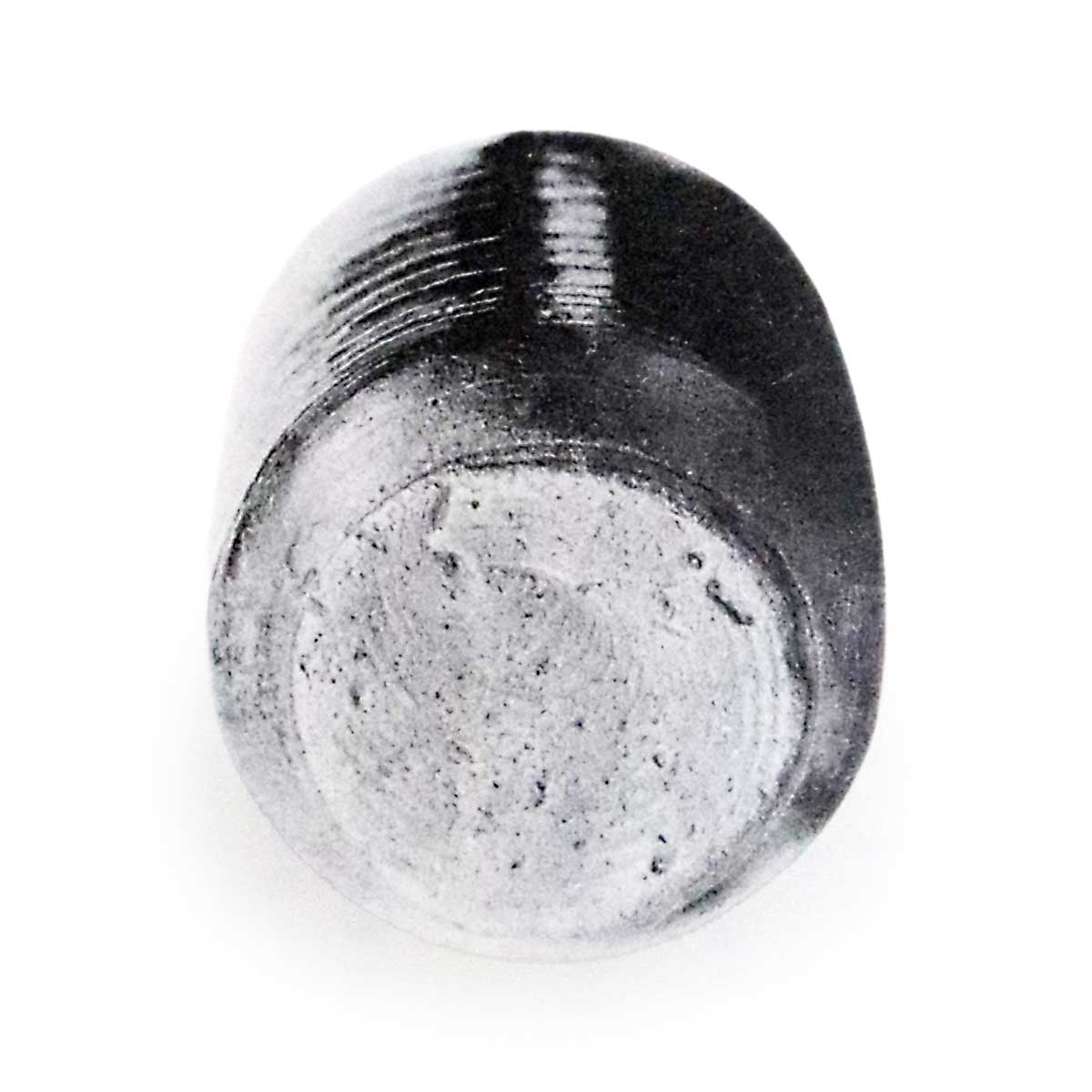
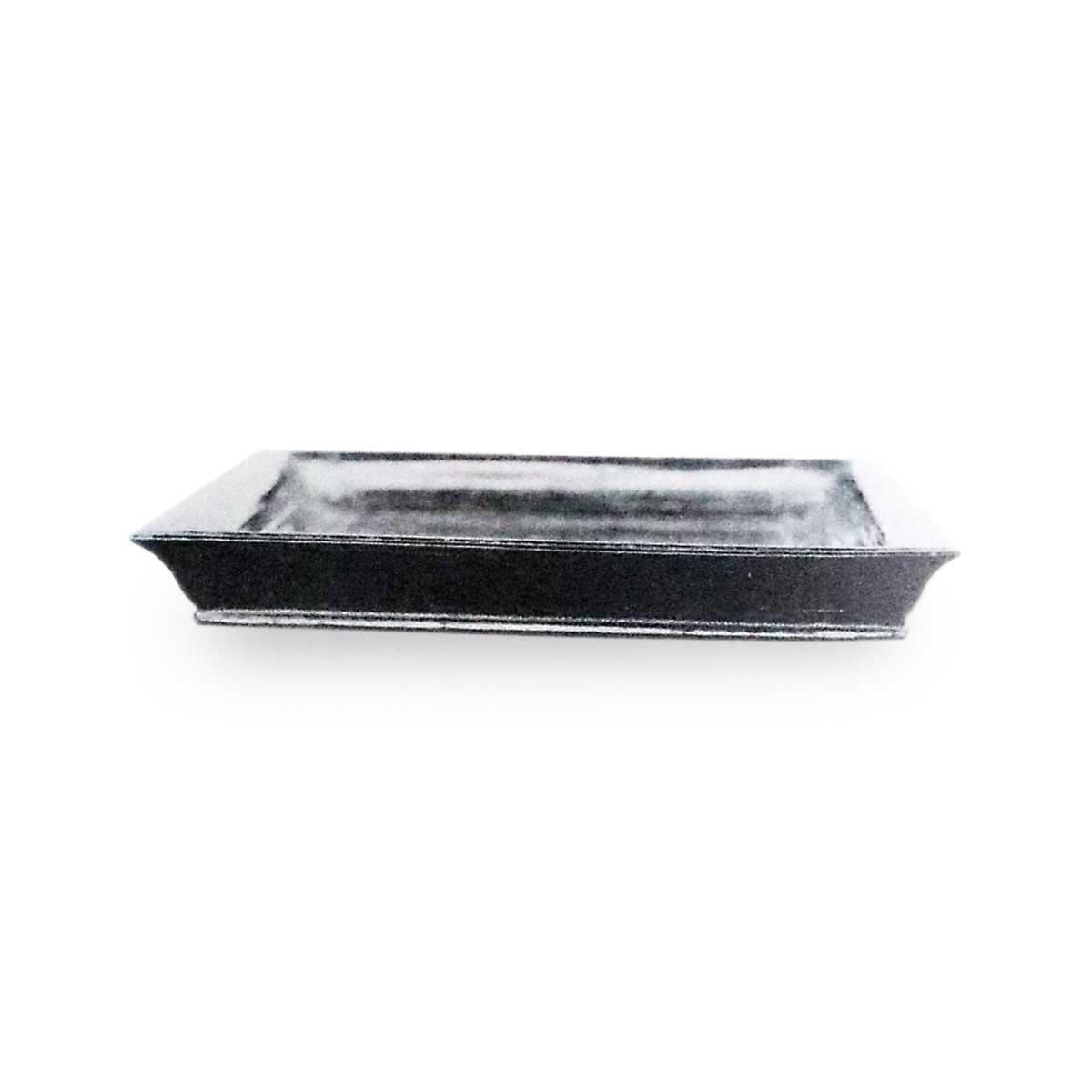
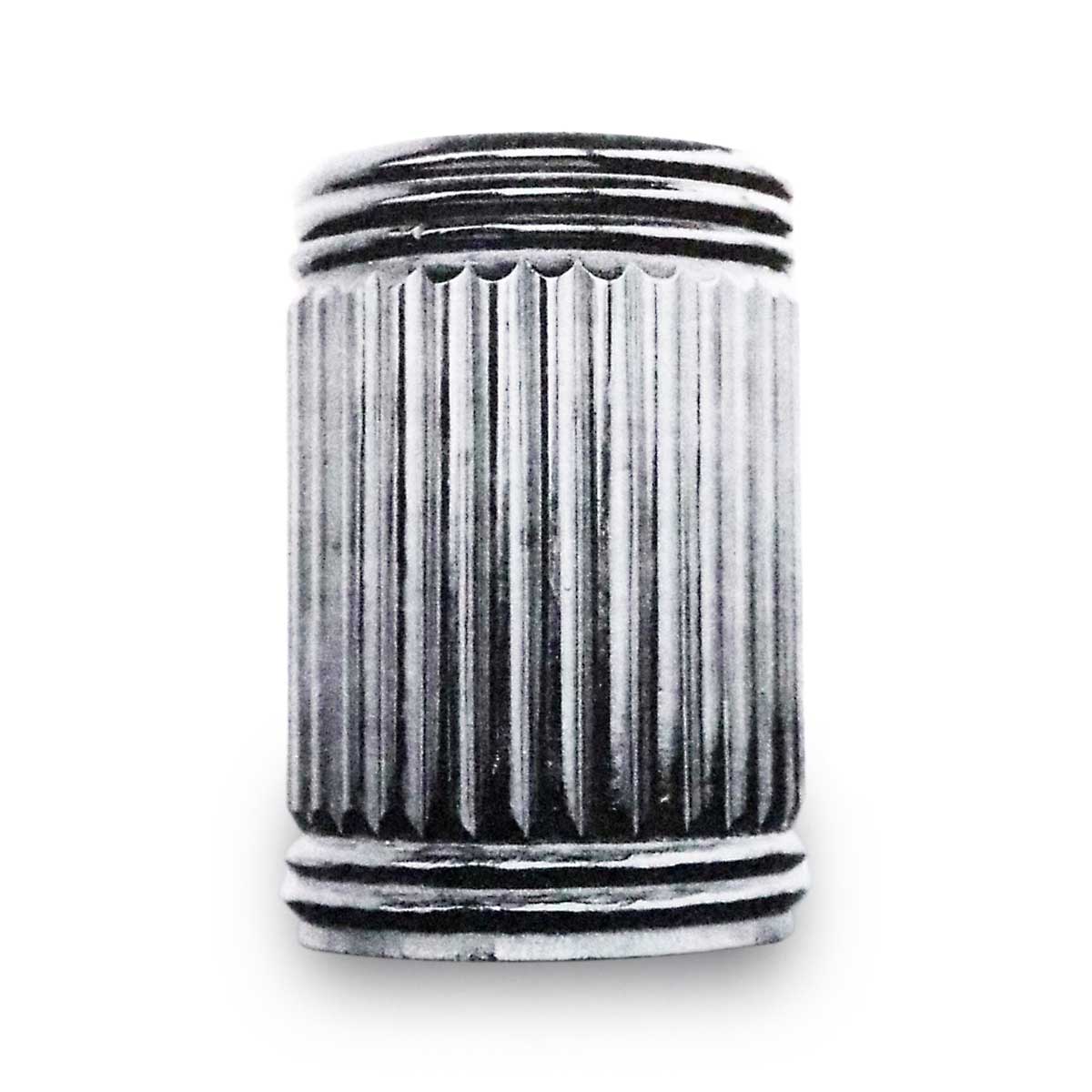
Old Seto, Daimeibutsu, Collection of Count Matsudaira Naoaki
Name
According to the tea book Fushimiya Tekō (Volume 5, Section A) from the Hōki-an Bunko collection, when Oda Nobunaga met his end at Honnō-ji, Enjōbō retrieved this tea caddy from the ruins and carefully preserved and kept it. In other words, it is clear that the tea caddy was named after Enjōbō because he possessed it. Furthermore, the Kokin Chajin Keifu states that Enjōbō Sōen was originally a monk at Honnō-ji. An anecdote has been passed down that Sen no Rikyū, recognizing Enjōbō’s pure and honest character as well as his skill in the art of tea, persuasively convinced him to leave the monastic life and return to lay life so that he could impart the profound secrets of the tea ceremony. Ultimately, Rikyū welcomed him as his son-in-law and taught him everything without reservation, including the Gokushin Daiko (the highest-ranking method of preparing tea).
Dimensions
Height: Approx. 11.8 cm (2 sun 9 bu)
Body diameter: Approx. 7.0 cm (just under 2 sun 3 bu)
Mouth diameter: Approx. 3.7 cm (1 sun 2 bu 2 rin)
Base diameter: approx. 4.8 cm (1 sun 6 bu)
Neck height: approx. 0.5 cm (1 bu 7 rin)
Shoulder width: approx. 1.1 cm (3 bu 6 rin)
Weight: approx. 187.5 g (just over 50 monme)
Accessories
・3 protective covers (shifuku) (2 of which have “su” [indentations])
・Cover box: Tame-nuri lacquer finish
・Storage pouch: Brown chirimen silk, with tsugari (tying cord for the cover); no entry in the tea manual
“Enjōbō”
・Pouches: 3 (with “En” written in ink on the bottom of each pouch)
- Keitō-gire: Cord is Tamamushi-kaiki, lining is Murasaki-kaiki
- Jōchi-gire: Cord in Tamamushi-kaiki; lining in Murasaki-kaiki
- Sumi-no-kura-hana-usagi: Cord in purple; lining in Moegi-kaiki
・Pouch box: Tame-nuri lacquer
・Wrapping cloth: Purple chirimen double-layered fabric
・Hikiya (wooden tea caddy): Woven wisteria design with vertical stripes (one stripe running vertically up and down, 22 stripes total); lid is black-lacquered wood
・Hikiya pouch: Smoked leather; cord is light green
・Oto-hikeya (outer Hikeya): Made of flowering dogwood
・Outer Hikiya Pouch: Smoked leather; cord in indigo-blue velvet
・Inner Box: Unfinished paulownia wood
・Outer Box: Tame-nuri lacquer finish, with brass latch and Sanada cord
・Wooden Mold (for the tea caddy): Made of karin wood
・Wrapping Cloth: Purple silk double-layered fabric, Japanese hand towel (wakin)
・Accompanying Tray: Made of Chinese pine wood
・Tray Box: Tame-nuri lacquer finish
Tray Dimensions: Side length: approx. 24.7 cm (8 sun 1 bu 4 rin), Height: approx. 4.5 cm (1 sun 5 rin), Base side length: approx. 21.8 cm (7 sun 2 bu)
・Inscription (on the back of the tray, etc.)
Back: Autumn month of the 34th year of the Jiajing era (Autumn 1555), signed “Nimu”
“Raishō Ikai”
・Wrapping cloth: Silk with gold leaf, cotton-padded
・Box: Unfinished paulownia wood
Miscellaneous Notes
・Enjōbō (Old Seto): Owned by the Mitsui family, formerly the Hosokawa family, later the Kambe family, and then the Mitsui family again. When Oda Nobunaga met his end at Honnō-ji, Enjōbō retrieved this item from the burnt ruins and carefully preserved and kept it. (From Fushimiya Tekō)
・Enjōbō: A resident monk at Honnō-ji Temple in Kyoto. He constructed the temple’s three-story pagoda. He later returned to lay life and became the son-in-law of Sen no Rikyū. He married the wife from whom Yasue Dōkei had separated. There is another tea caddy, which is also named “Enjōbō.” (From Shūjinden)
・Enjōbō: He lived at Honnō-ji in Rakutō (east of Kyoto) and is said to have built its pagoda and Enjō-in. He later returned to lay life and became Rikyū’s son-in-law (omitted). He possessed an exquisite tea caddy from Seto, which has been known through the generations by the inscription “Enjōbō.” It was later passed down to the Kuwayama family and subsequently to the Kobe family. The Meibutsu-ki records that it was accompanied by three powder pouches and a pinewood tray. He served the Hosokawa family and was granted 300 koku; his descendants took the name Furuichi Sōsa, and the school of tea ceremony came to be known naturally as the “Enjō-ryū.” Some say its style resembles that of the Yabuuchi-ryū. Additionally, there was a man named Furuichi Sōri in Kokura, Buzen, a descendant of Furuichi Harima-no-kami; although this school is traditionally referred to as the “Furuichi-ryū,” it is said to belong to the Sōtan-ryū lineage as well. It is said that the families of Sori and Sōsa are those of brothers, with Sori’s family designated as the elder brother’s and Sōsa’s as the younger brother’s. (From Rikyū Hyakue Kai)
・Enjōbō (Kose-to, “Daimeibutsu”): Owned by the Mitsui family. Height: approx. 11.8 cm (2 sun 9 bu and a little more); body diameter: approx. 7.0 cm (2 sun 3 bu); mouth diameter: approx. 3.6 cm (1 sun 2 bu); base diameter: approx. 4.8 cm (1 sun 6 bu). It comes with three pouches (Cock’s Head, White Flower Rabbit, and Velvet with Flower Rabbit). Hikiya uses bamboo strips to make the handle and includes a leather pouch. The outer box is made of paulownia wood. The accompanying tray measures approximately 24.7 cm (8 sun 1 bu 5 ri) on each side, is approximately 4.5 cm (1 sun 5 rin) high, and has a base diameter of approximately 21.8 cm (7 sun 2 bu). The base is inscribed with the character “一” in ink, and the underside of the tray bears the inscription: “Autumn month of the 34th year of the Jiajing era; Higa Nim, a gathering with Raishō.” (Illustration of the tea caddy included) (From Kokin Meibutsu Ruiju)
・Enjōkaibō Katatsuki (Old Seto): Presented by Kanda Ankyū on March 2, Hōei 7 (1710). Inscription by Kuwayama Kasai.
Around the Meiwa era (1764–1772), it was owned by Kobe Hiko-shichi, and subsequently by Mitsui Moto-hachi of Kyoto. (Includes details on dimensions and accessories) (From Meibutsu-ki)
・Enjōbō (Old Seto): Originally owned by Mitsui Saburōsuke; currently in the collection of the Unshū-kō (Matsudaira family). Within the persimmon-colored glaze, black ripples (nadare) flow from the shoulder in 17 streaks toward the right, creating a striking effect reminiscent of sandpaper dust. The black surface is mottled, and the base (tatami-tsuki) is slightly concave in the center. (Includes dimensions, a description of accessories, and an illustration of the tea caddy) (From Rinpō-kiryū)
・Enjōbō: Originally owned by Mr. Kuwayama Shūri, it was later held by Kambe Hikoichi around the middle of the period, and in the first year of the An’ei era (1772), it became the property of Mitsui Hachirōemon. It weighs approximately 191.25 g (51 monme); the base retains a faint trace of a circular seat (a swirl-shaped carving), and features rough incisions characteristic of its original lineage. The overall body color is a persimmon hue with a metallic sheen, while the area around the shoulder is a pale amber color. Black spots appearing within the black glaze form a “pattern.” The overall glaze (base glaze) is thin, and there are 17 band-like streaks running in a circular pattern from the shoulder to the glaze pool. There are no traces of “girigiri” (a type of finishing touch). In some areas below the lower glaze pool, the clay is visible; likely where the streaks are, a metallic sheen resembling quail spots appears, creating a magnificent effect. The clay has a slight reddish tint. The rim is finished using the “hine-gaeshi” (twist-and-fold) technique, resulting in an excellent and exquisite finish. It has a wide rim with small black “zen” marks (such as spatula marks). There is a crack (nyū) on the opposite side of the shoulder. (Dimensions, accessories, and an illustration of the tea caddy are included.) (From notes on Fushimiya: Illustrations of Meibutsu Tea Utensils)
・Enjōbō: The overall body color is a blackish persimmon hue. The rim is plump, the clay has a rough texture in areas such as the interior, and the “ito-kiri” (the mark where the bottom was cut off) is superb. There are slight traces resembling “en-za” (swirl-like marks). There is a line from the “ito-kiri” on the bottom; it sits firmly on a black glaze and has a slightly “nine-shoulder” (angular shoulder) shape. (From Chainaru Meibutsu-ki)
・Among Rikyū’s famous pieces, those such as “Nishiki no Saya” and “Enjōbō” should all be classified as “Ō-Seto” (ancient Seto ware), and should not be mistakenly referred to as the general “Meibutsu-de” (pieces from a later period). (From Mekiri-kusa)
・Enshōbō: This is an ancient Seto ware. It belongs to a completely different era from other Seto wares. (From The Origins of Seto Pottery by Fumai)
Enshōbō Seto Katatsuki: Owned by Mr. Shūri Kuwayama. (From Record of Meibutsu)
Enjōbō: Owned by Shūri-dayū Kuwayama; currently in the possession of Hikoichi of Kobe. (From Record of Ancient Treasures)
・Enjōbō: Presented by Kanda Ankyū on March 2, Hōei 7 (1710). Originally owned by Lord Nakayama Shūmanosuke, it later passed to Kobe Hiko-shichi, and subsequently to the Kobe family of Ise Province (Seishū). (From Hon Meibutsu-ki of the Ueno Library)
・The term “Old Seto” is used as a general term for Seto ware produced after Tōshirō (Kato Kagemasa) returned from China. It is believed that “Ō-Seto” and “Kō-Seto” branched off from this Ko-Seto; while some sources state that these two were named based on their shape, there are instances where even smaller pieces are classified as Ō-Seto, and pieces with a larger style that appear to be Kō-Seto are, in fact, masterpieces. This is considered a characteristic of their great age. The “Enjōbō Katatsuki” is classified as Ō-Seto and is of the highest rank in terms of its antiquity. The “Jorohana Ko-katatsuki” is also classified as Ōseto. (From Yamasumike-hon Chairi-kō: The Kose-to Section)
・Enjōbō (Ōseto): Passed down from Sen no Rikyū to Enjōbō, it was later confiscated (purchased) from Mitsui Saburōsuke, a Kyoto townsman. This piece is a work from the very earliest (oldest) period of Seto ware. The quality of its luster dates from a later period than that of the “Aburaya Katatsuki,” and the eras are not the same. (From Fushimiya Te-kō)
・Enjōbō (Ōseto, Daimeibutsu): Originally owned by Sen no Rikyū, it was presented to Enjōbō at Honnō-ji. I have been told the price was approximately 500 ryō. (From Fushimiya Memoir)
January 19, Bunka 8 (1811) — Three-tatami-mat plus (tea room layout)
New Year’s Tea Ceremony (Lord Fumai, aged 61)
Guests: Motohonda Suruga-no-kami, Yanagisawa, Kawachiya Zenbei
Tokonoma: Calligraphy by Bujun (a Song Dynasty Zen monk) on a wooden panel
Flower Vase: Celadon “Bamboo Shoot” Vase; Flowers: White Peach, Red Camellia
Tea Caddy: Enjōbō (Oseto ware; formerly owned by Furuichi Harima-no-kami)
Tea Caddy Cover: Keitō
Tray: Chinese import; inscribed on the reverse with the characters “Autumn, Month, Day, Year 34 of the Jiajing era, while reclining”
Tea Bowl: Warikōdai
(From Daien-an Tea Gathering Records)
(Note) This New Year’s tea gathering hosted by Lord Fumai began on January 18, as mentioned earlier, and was held a total of 15 times—five times in February, six times in the leap month of February, and three times in March—before concluding. The Lord’s tea friends and tea utensil merchants who enjoyed his favor were generally invited. Details are recorded in full in the Daien-an Chakai-ki.
Provenance
It is said that Enjōbō Sōen, a monk at Honnō-ji, retrieved this tea caddy from the charred ruins after Oda Nobunaga was killed in the Honnō-ji Incident on June 2, Tenshō 10 (1582); therefore, it is believed to have originally been either one of Nobunaga’s personal possessions or a treasured artifact (shimono) of Honnō-ji. Of course, it is believed that Furuichi Harima-no-kami possessed it before Enjōbō acquired it. Although the exact dates by which it subsequently passed to Kuwayama Shuri and Nakayama Shumanosuke are unknown, it later came into the possession of Kobe Hikoshichi of Kobe, Ise Province; records indicate that around Hōei 7 (1710), it was held by Kanda Ankyū of Edo; and during the Meiwa era (1764–1772), it was passed on to Mitsui Motohachi of Kyoto. In the first year of the An’ei era (1772), it was presented by Mitsui Saburōsuke to Lord Matsudaira Fumai; it is said that the sum paid at that time was 500 ryō. The Daien-an Chakai-ki records in detail that, in the eighth year of the Bunka era (1811), Lord Fumai used this tea caddy to host many tea guests in celebration of his 60th birthday.
Firsthand Account
On May 6, Taishō 7 (1918), I had the privilege of viewing this piece with my own eyes at the residence of Count Matsudaira Naoaki in Motomachi, Yotsuya Ward, Tokyo.
The overall color is tea-brown, and the “ii-mawari” (the middle section of the body) is entirely covered with a black amber glaze. From the shoulder to the rim, 16 black horizontal stripes form a checkered pattern. The “twist” at the rim is shallow; the neck protrudes slightly, and the shoulder edges have been chamfered (the corners have been rounded off). There are two areas on the rim that have been repaired with black lacquer, and traces of a major crack running from the rim down the body are visible. Around the base, there is a single, somewhat deep horizontal spatula mark. Additionally, there are marks from a cutting spatula on the side of the base, and the base surface is shaped like a “circular seat” (a swirl-shaped carving). The thread-cutting mark (the trace where the base was severed) is rough and appears to have worn down naturally over time; amidst the bumpy, uneven surface, intermittent traces of the thread-cutting line can be discerned. When I held the part of the body where the stepped pattern is most distinct up to the sunlight as a test, I could see a flickering silver sheen (silver luster) flashing. Inside, below the area covered by the rim glaze, wheel marks run around the interior just as they do on the exterior. The center of the base is deeply indented, as if carved with a nail, conveying a profound sense of depth and dignity (ki-kyoku) inherent in this vessel. It is truly a masterpiece among Seto tea caddies, the most antique and elegant (ko-ga).