From the collection of Marquis Tokugawa Yorimichi of the Old Seto Domain
Name:
This name derives from the fact that it was originally owned by the Yamauchi family, lords of the Tosa Domain. Although it shares the same name as the “Yamauchi Katatsuki” in the collection of Count Tadamichi Sakai, it is a different piece.
Dimensions (converted to the metric system: calculated using 1 sun ≈ 3.03 cm, 1 bu ≈ 0.303 cm, 1 rin ≈ 0.0303 cm, and 1 monme ≈ 3.75 g):
Height: 2 sun 7 bu 6 rin = approx. 8.36 cm
Body diameter (shoulder): 1 sun 5 bu = approx. 4.55 cm
Body diameter (base): 2 sun 1 bu 5 rin = approx. 6.51 cm
Mouth diameter: Just over 8 bu 5 rin = just over 2.58 cm
Base diameter: 1 sun 1 bu = approx. 3.33 cm
Koshidaka (Rim Rise): 1 bu = approx. 0.30 cm
Shoulder Width: 2 bu 5 rin = approx. 0.76 cm
Weight: 38 monme 4 bu = approx. 144.0 g
Accessories
・Lid (one): Knob lid, without recesses (muka: no partitions or indentations on the underside)
・Storage pouch (one): White chirimen silk; white cord
・Bags (two):
1. Old bag: Severely damaged, to the point where the base material is no longer visible. Brown cord
- Antique brocade with a light green ground, single-strand vine pattern, and large peony design (moegi-ji hitoe-zuru ōbotan Kinran), hanada-chakai-ki pattern; purple cord
・Storage boxes (two)
・Paulownia box (unfinished wood, inscription: “Yamauchi Katatsuki”)
(Diagram showing the inner box, outer box, etc.)
・Yamauchi pouch
・Black-lacquered box with gold-powder lettering (“Yamauchi Tea Jar Pouch”)
・Hikiya (wooden container for holding the tea jar): Zento-boku (or Sentō-boku) wood, inscribed with “Yamauchi”; pouch features carved Chinese-style Kinran
・Inner box: Unfinished paulownia wood, inscribed with “Yamauchi”
・Outer box: Black lacquer, with the characters “Yamauchi” in gold powder
Miscellaneous Notes
The Yamauchi Katatsuki was passed down from Kobori Enshū to Matsudaira Tosa-no-kami (the Yamauchi family) and was presented to the shogunate. Subsequently, Tokugawa Mitsusada, the second lord of the Kishū Domain, received it as a gift from the 5th shogun, Tokugawa Tsunayoshi.
(From the Kishū Family Documents)
February 15, Kanbun 5 (1665)
Katatsuki (Seto ware) Presented as a relic of Matsudaira Tosa-no-kami
(From the “Record of Relics and Acquisitions from Various Families”)
History of Transmission
Originally owned by Kobori Enshū, it was passed down to the Yamauchi family, lords of the Tosa Domain, which is how it came to be known as the “Yamauchi Katatsuki.” On February 15, Kanbun 5, it was presented by the Yamauchi family to the Edo Shogunate; subsequently, during the reign of Shogun Tokugawa Tsunayoshi, Tokugawa Mitsusada, the second lord of the Kishū Domain, received it as a grant. Since then, it has been passed down through the Kishū Tokugawa family to the present day.
Record of Actual Observation
On October 9, Taisho 8 (1919), I had the opportunity to view this piece in person at the residence of Marquis Tokugawa Yoritomo in Iikura-cho, Azabu Ward, Tokyo.
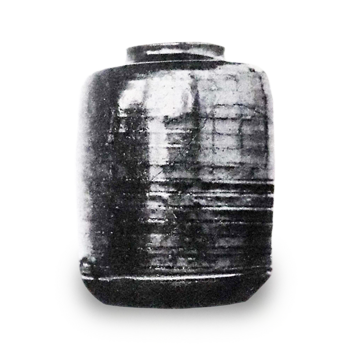
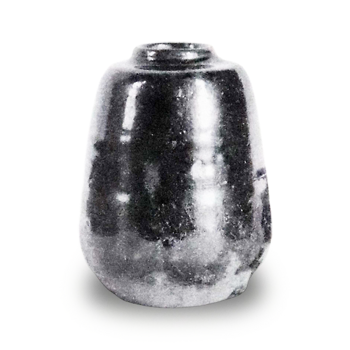
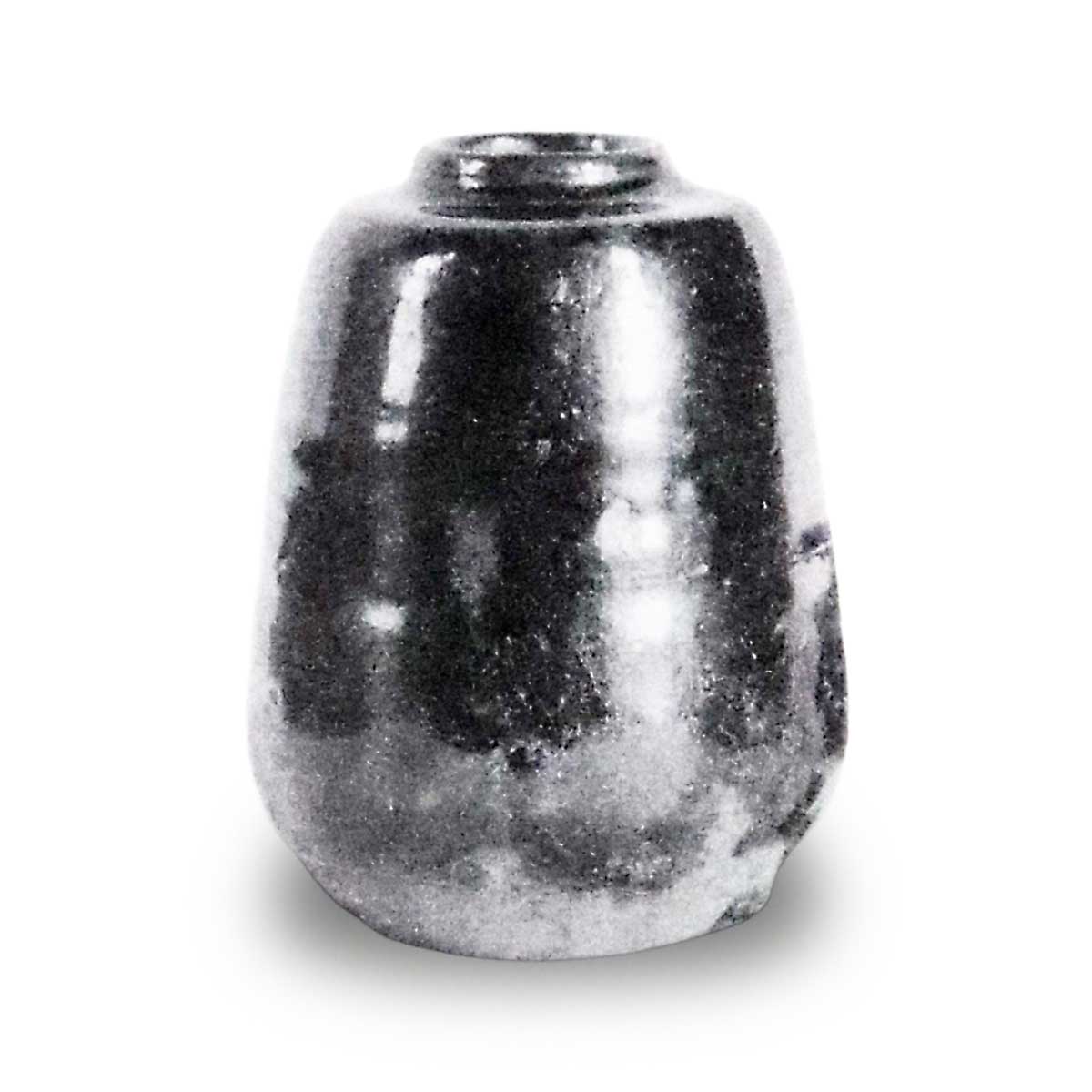
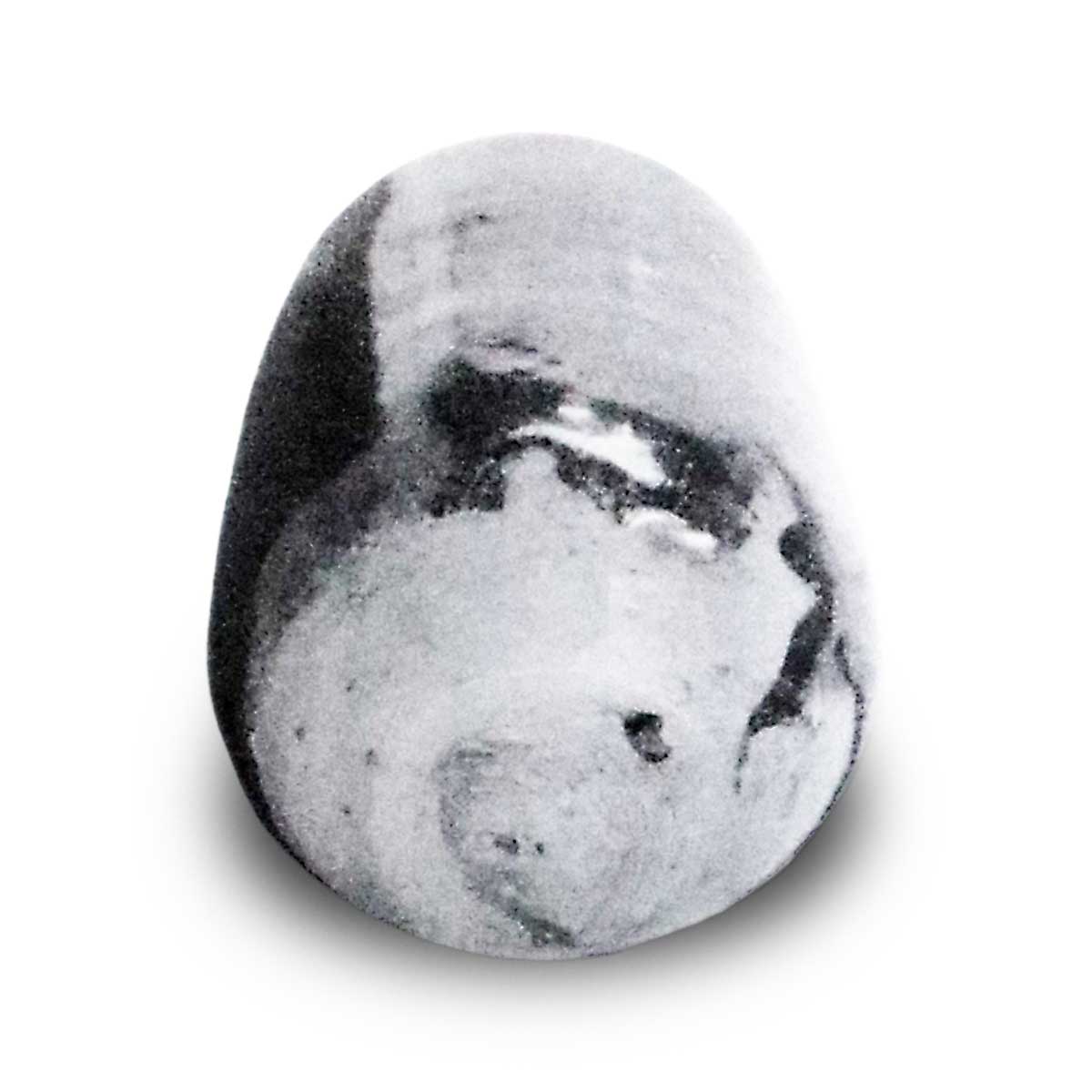
The rim lacks a tight, well-defined edge or a resilient curve, and the foot ring is low. The shoulder is small with a chamfered edge and flares out toward the base. Overall, the black glaze is applied thickly, and the luster is magnificent. Around the body, the wheel marks form shallow, horizontal ridges, and a single, thin indented line runs all the way around. Near the base (the rim), the glaze pool is thick, and a single glaze drip pattern extends all the way to the edge of the base before stopping. Midway up the body, three “openwork” spots—one large and two small—in persimmon and metallic gold (a color with a metallic sheen) appear arranged horizontally within the black glaze. From the lower rim downward, the off-white clay body is visible; the base is worn, and part of the “thread-cut” (the swirling marks on the base) has been erased. Additionally, the inner surface of the base shows signs of wear resembling insect damage—small holes and indentations in the clay. Around the rim, the metallic glaze appears in scattered dots resembling gold leaf, creating a distinctive “scenic highlight.” It feels substantial in the hand, and among ancient Seto works, this is a unique tea caddy with an unconventional shape and glaze quality.