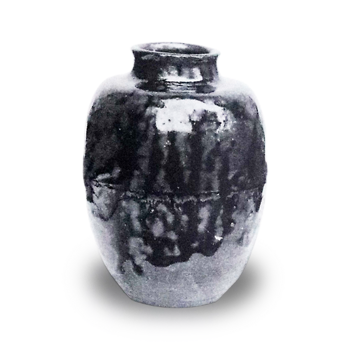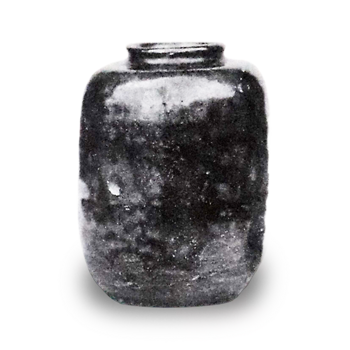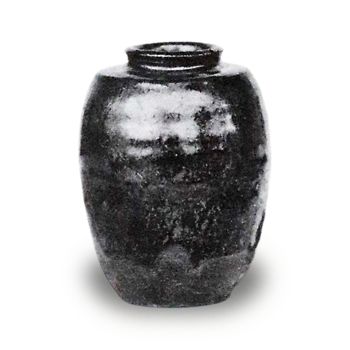
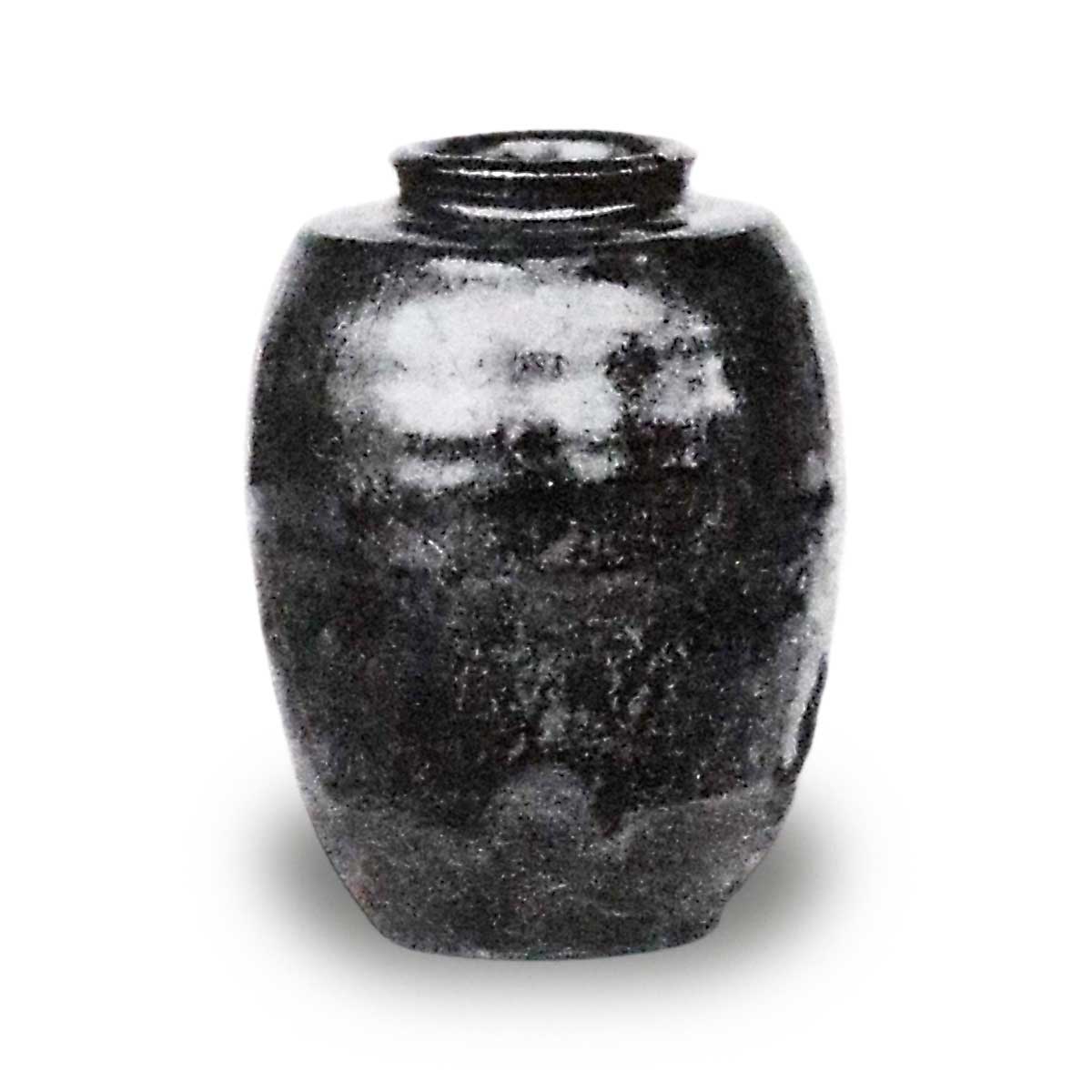
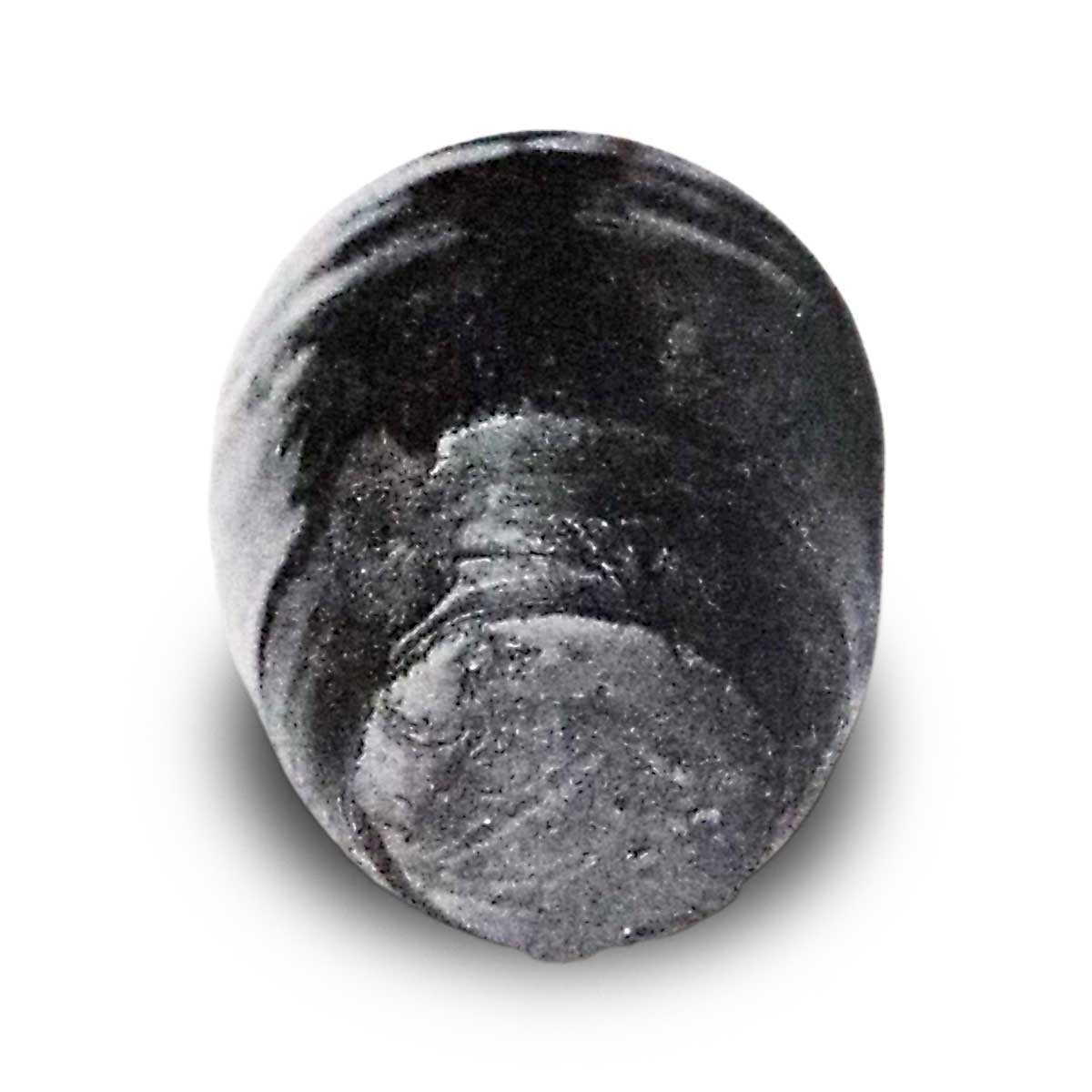
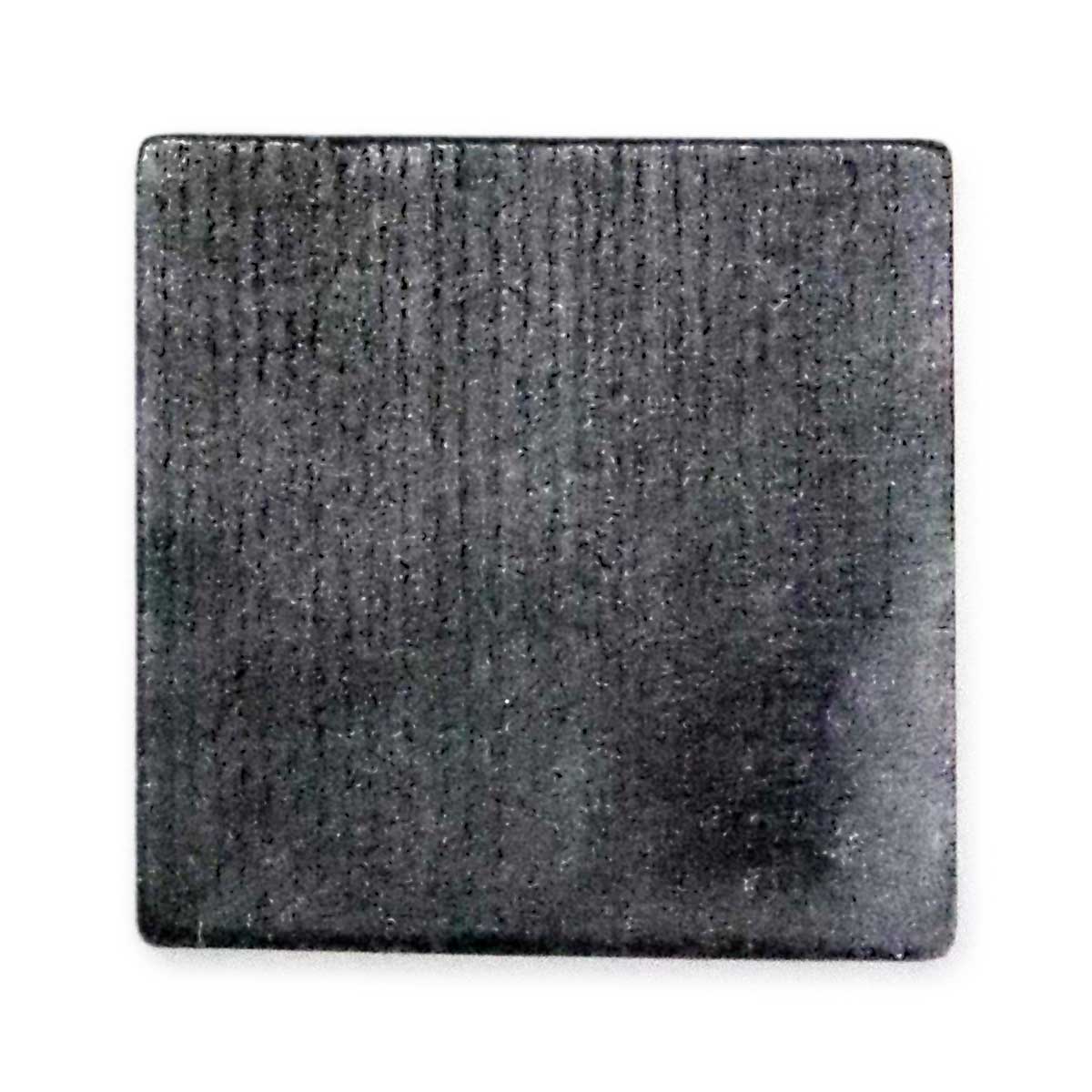
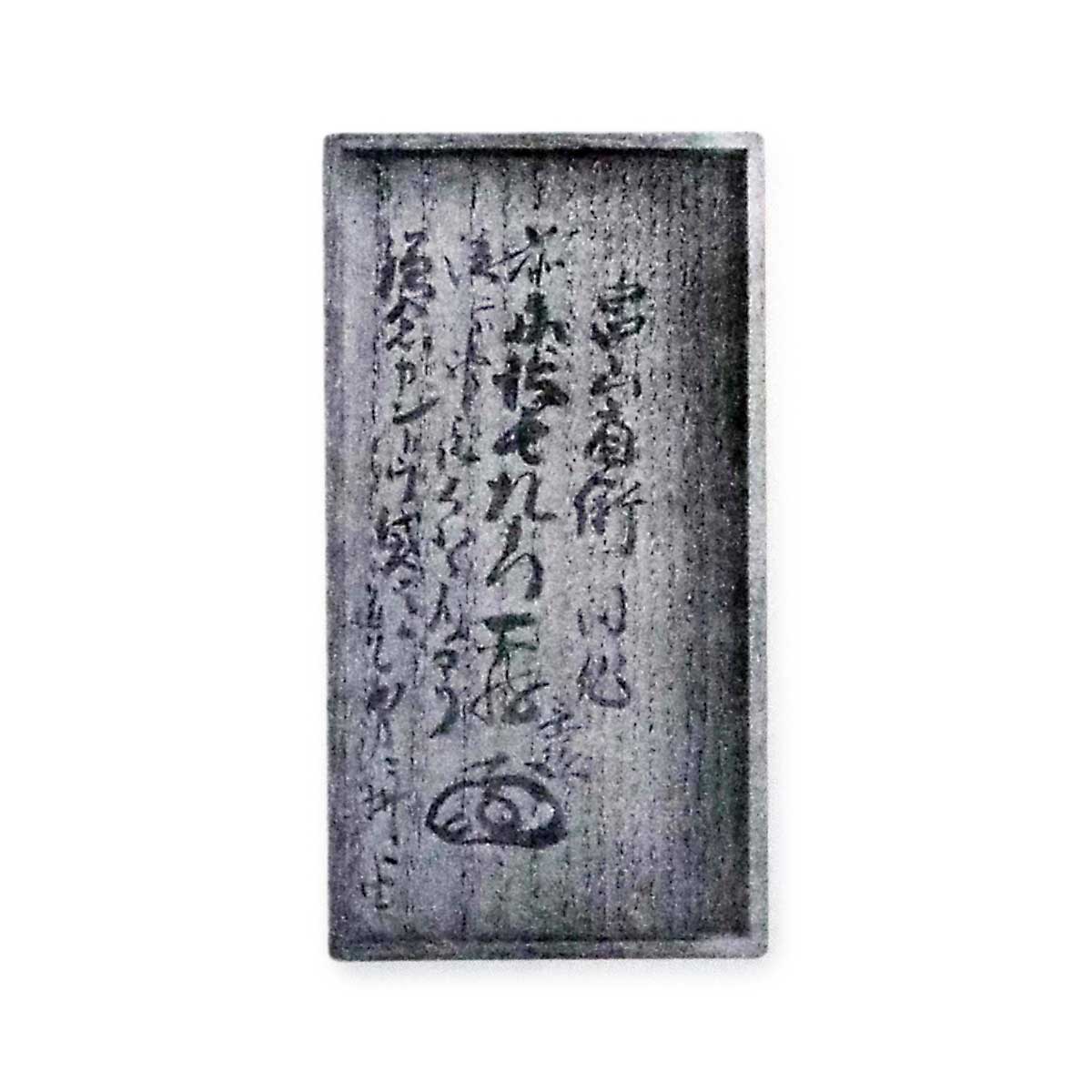
Old Seto—From the collection of Mr. Hikosaburō Fujita, Osaka
[Origin of the Name]
The name is believed to have been chosen to liken the teapot to a mountain, thereby expressing its elegance and high refinement.
[Dimensions (Converted to Modern Units)]
・Height: Approx. 7.6 cm (2 sun 5 bu)
・Body diameter: Approx. 5.8 cm (1 sun 9 bu)
・Mouth diameter: approx. 2.7 cm (9 bu)
・Base diameter: approx. 3.0 cm – 3.3 cm (1 sun – 1 sun 1 bu)
・Shoulder width: approx. 6.2 cm (2 sun 5 rin)
・Neck height: approx. 0.5 cm (1 bu 5 rin)
・Weight: Approx. 118.1 g (31 monme 5 bu)
[Accessories]
・Lids for storage pouches (lids for storing pouches, etc.): 4 pieces (2 of which are round)
・Storage pouches: 4 pieces
- Donshu Fujitane (Lining: light blue with peony and arabesque pattern on a sea-wave background; cord: brown)
- Navy-ground Angled Dragon with Antique Gold Railings (Lining: iridescent; cord: brown)
- Okura Brocade (Lining: pale yellow with peony and arabesque pattern on a sea-wave background; cord: brown)
- Miyauchi Kōtō (Lining: Brown with a sea-wave pattern; Cord: Brown)
・Wooden Mold (Kata): Paulownia wood, 1 piece (fits inside the navy-ground Angular Dragon bag)
・Storage Bags: 2 pieces
(Replacement Box: Inscription by Kobori Enshū / Replacement Box: Inscription by Kanjian Sōshin)
[Notes on Boxes, Markings, etc.]
・Inscription by Kobori Enshū: The front reads “Takane Bag.”
・Same work as “Hatakeyama Katatsuki.”
(Provenance Note: Previously owned by Funahashi Chōzaemon, it later became part of the collection of Kamio Yamato-no-kami. It is said that the Kamakura Kantō bag is currently on display at a sword shop.)
・Bears the seal of Kanzian Munenobu.
・Hikiya (protective wooden tube): Made of tagayasan wood.
・Scabbard: Red-ground crimson-haired cotton (lining: vertical Donshu-patterned pure silk; cord: brown).
・Inner box: Paulownia, natural wood finish (bearing inscriptions by Kobori Enshū reading “Seto Katatsuki” and “Takane”).
・Outer box: Black lacquer with chamfered edges and gold-dust wisteria-bird maki-e.
・Scabbard: Red-ground Donshu (lining: light green silk; cord: brown).
・Outer case (box covering the entire exterior): Paulownia with Shunkei lacquer.
・Accompanying Document: 1 letter (certificate of authenticity in the hand of Ryōchū).
*Included in Kobori Enshū Sōhō’s *Meibutsu Ruishū*. The six characters inscribed on the lid of the “Seto Katatsuki Takane” box, as well as the three characters on the front of the pouch box lid, are similarly authentic.
[Appraisal and Commentary]
[Accompanying Note by Kobun Ryōchū]
“The characters on the front of Kanzian Sōshin’s pouch-style box, as well as the inscription on the back of the same box and Sōshin’s name seal (kaō), are present. These are unmistakably in Sōshin’s own hand.
(Date) May of the Year of the Earth Horse—Kobun Ryōchū (Seal)”
“This tea caddy was part of Kanjian Sōshin’s collection. As a piece of ancient Seto ware, it is truly magnificent and is of the same origin as the ‘Hatakeyama Katatsuki.’ It is a rare and highly prized masterpiece.”
[Miscellaneous Notes (from Kokin Meibutsu Ruiju Shūi and Kamio Zōchō)]
“Seto Takane Katatsuki (made by Tōshirō).
Height: approx. 7.6 cm (2 sun 5 bu), mouth diameter: approx. 3.0 cm (1 sun), shoulder width: approx. 0.9 cm (3 bu), base diameter: approx. 3.4 cm (1 sun 1 bu 3 rin), weight: approx. 82.5 g (22 monme).
It comes with two pouches, featuring a design of a dragon on a dark blue background from Tsuruoka, with delicate earth-brown accents. The rim has a standard folded edge.
The upper glaze is thick and rich black, with mottled persimmon-colored patches. It is truly beautiful and magnificent. The lower glaze is a deep persimmon color applied in a streaked manner, with only faint, coarse traces of thread-cutting marks visible.”
[Provenance]
Passed down from Funahashi Chōzaemon to Kamio Yamato-no-kami, then to Kanzian Sōshin (Sakamoto Shūsai), and is currently in the possession of the Fujita family in Osaka.
[Official Inspection Record]
On May 14, Taishō 9 (1920), the actual piece was viewed at the residence of Hikosaburō Fujita in Amijima, Kita Ward, Osaka City.
The rim is somewhat thick, with a shallow turn-up. The neck is low, and the shoulders are firmly flared (shoulder-pushed shape). The body is flared and tapers toward the base.
Within the amber-colored glaze, there are highlights of black amber glaze; the body features traditional wheel marks, and there is a section where a black streak splits into two.
Near the rim, it displays a metallic sheen in a persimmon color; where the black amber glaze has pooled at the clay’s edge, it is applied somewhat thickly, revealing a faint hint of blue within.
Below the rim, the iron-rich clay body is exposed; the base is roughly half-circular, and the thread-cutting marks are coarse. The rim has been worn and polished, so only a small portion of it is visible.
Inside, wheel marks run from the glazed rim downward, forming a swirl pattern at the center of the base.
There are traces of repairs made to a large crack extending from the rim down the body to the lower rim.
As a Koseto shoulder-striking tea caddy, it is exceptionally small and extremely rare.