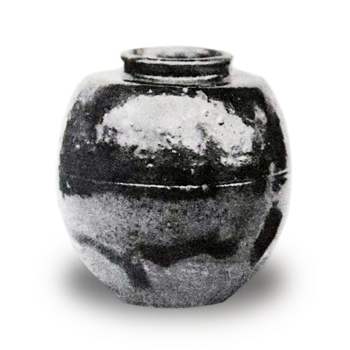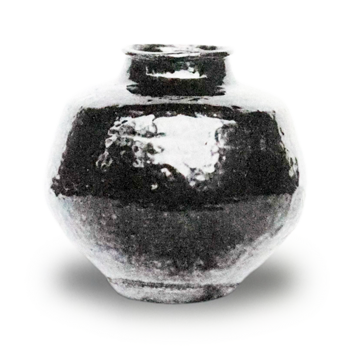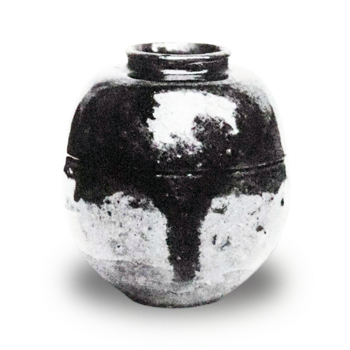
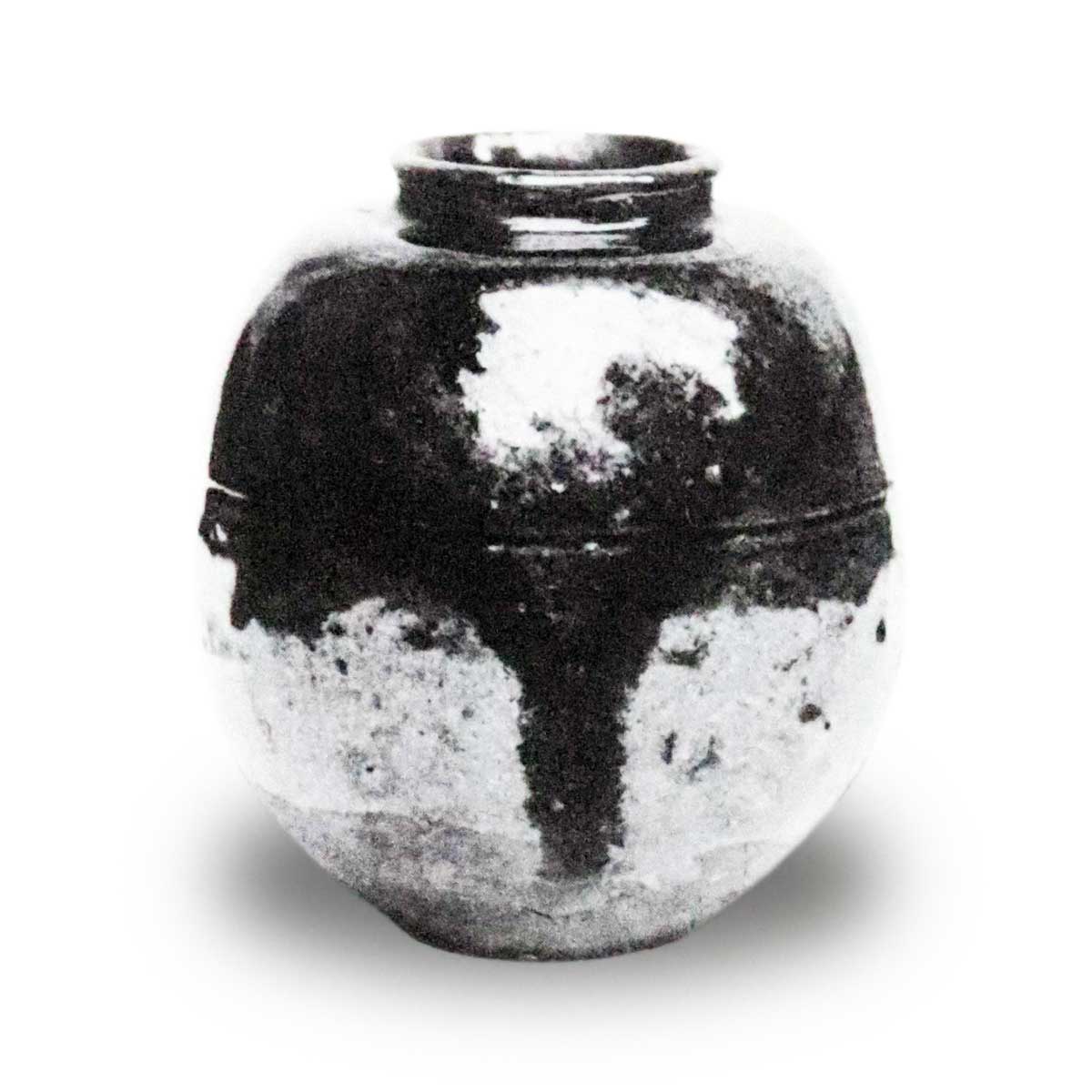
Made in China; Collection of Marquis Toshiyuki Maeda
Description
This Bunrin tea caddy was presented to the feudal lord by Yokoyama Yamashiro-no-kami, a senior retainer of the Kaga Domain.
Dimensions (converted at 1 sun ≈ 3.03 cm)
Height: approx. 6.97 cm (2 sun 3 bu)
Body diameter: Approx. 6.36 cm (slightly over 2 sun 1 bu)
Mouth diameter: Approx. 2.88 cm (9 bu 5 rin)
Base diameter: Approx. 2.42 cm (8 bu)
Height of the koshiki (base): Approx. 0.55 cm (1 bu 8 rin)
Shoulder width: Approx. 0.61 cm (2 bu)
Weight: 66.75 g (17 monme 8 bu) *Converted at 1 monme = 3.75 g
Accessories
・Lid: 1 (with a recess)
・Storage pouch (bag for the tea caddy): Brown silk with cut-out holes (for lacing), no cord
・Cover pouches: 2
Red ground with chicken-head Kinran (lining: pale green sea mist pattern; cord: purple)
Pearl-gloss satin (lining: large tear; cord: wisteria purple)
(Note) The chicken-head Kinran pouch does not fit this tea caddy; it likely got mixed up with pouches for other tea caddies.
・Pouch box: Unfinished paulownia wood (marked “Yokoyama Bunrin”)
・Bunrin pouches: 2
・Wooden mold: Paulownia wood, 1 piece, housed in a Shukō satin pouch
・Hikiya (a tube for storing the tea caddy): Black persimmon wood, interior finished with sumi-nuri lacquer, bottom with a swirl pattern
Pouch: Arisugawa cloud-and-crane pattern (lining is light brown shujin tortoiseshell weave, cord is brown)
・Inner box: Unfinished paulownia wood, with an inscription by Sen Sōtan (Sōfu) (“Bunrin”)
・Outer box: Unfinished paulownia wood (marked “Yokoyama Bunrin”)
Miscellaneous Notes
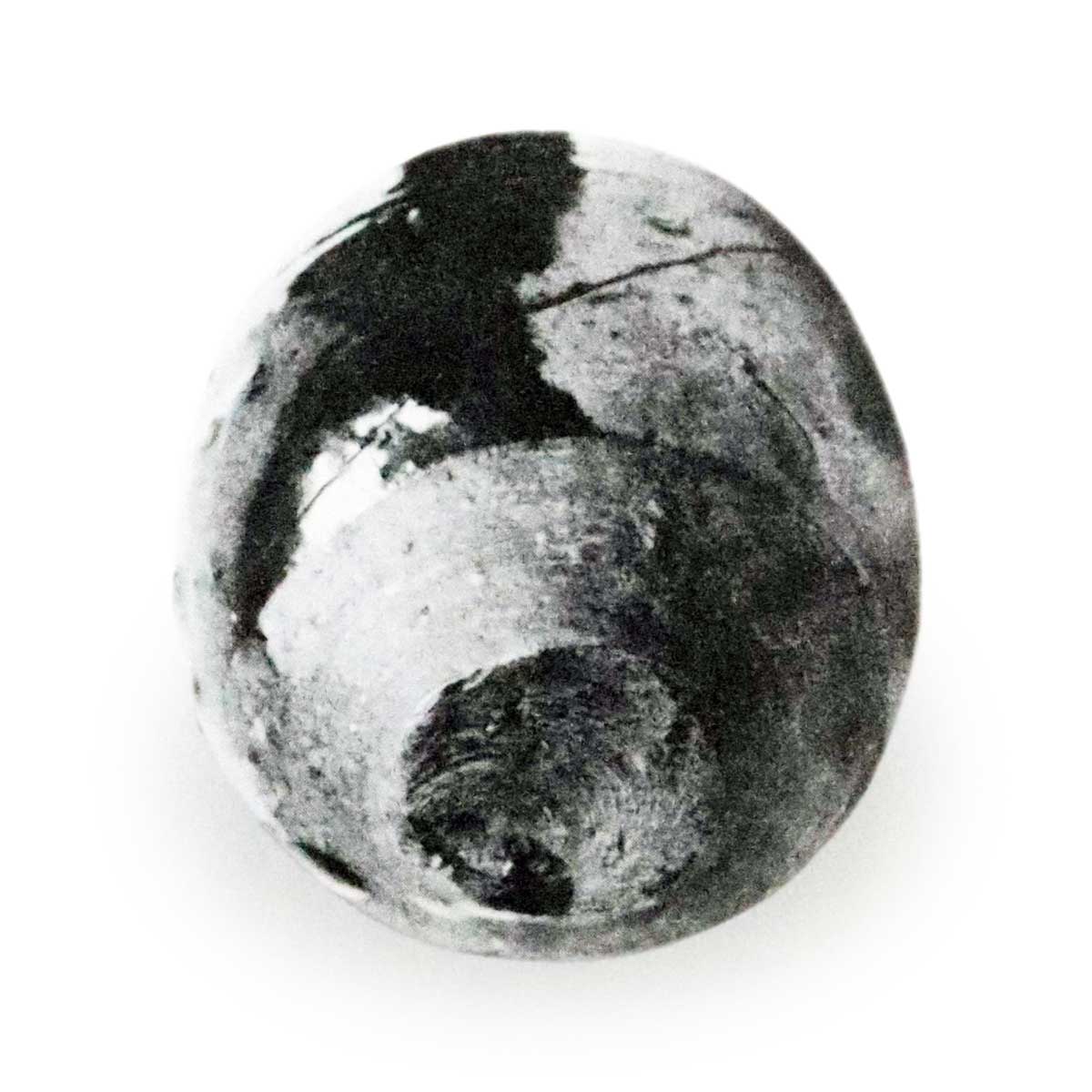
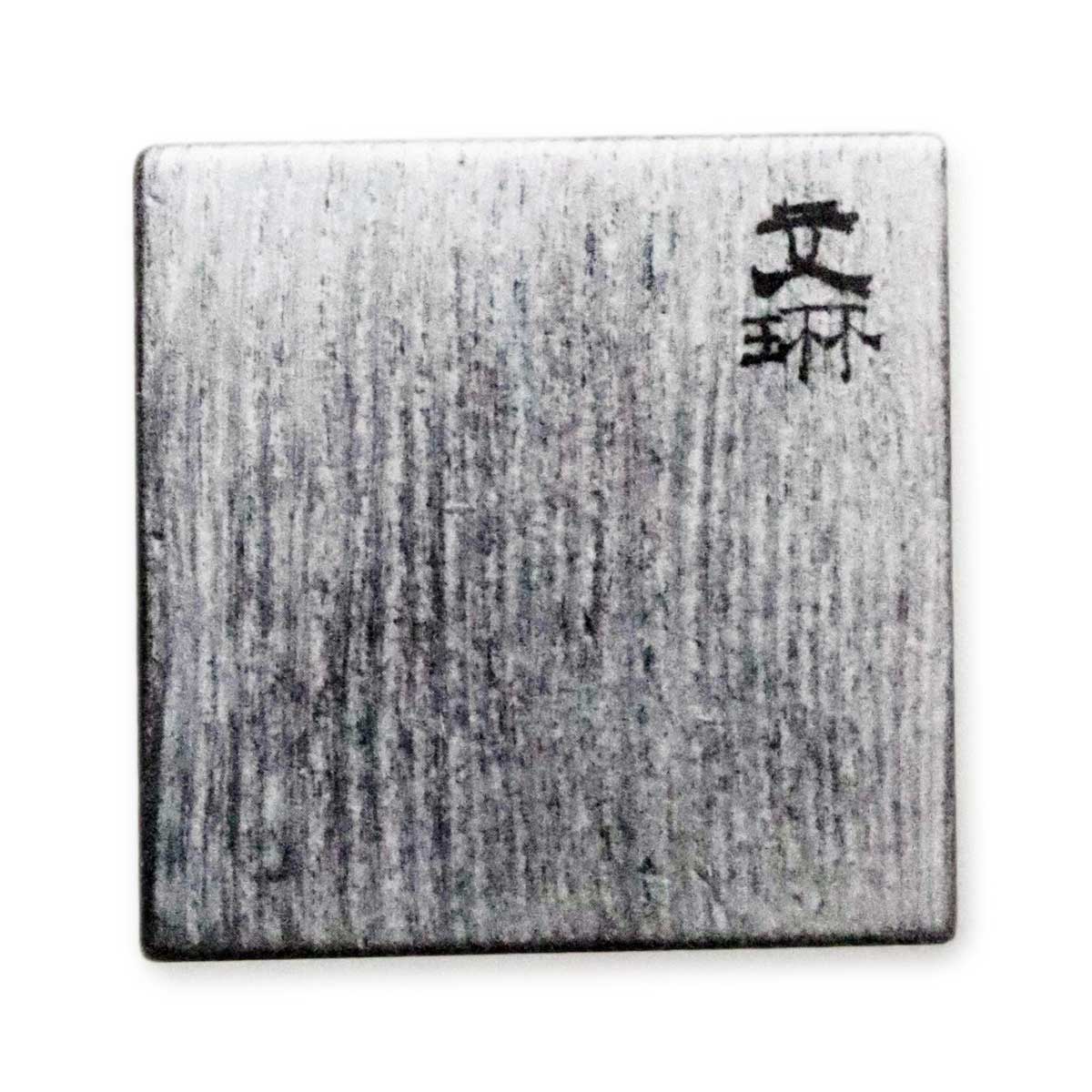
Yokoyama Bunrin: Made in China. The body is grayish-brown; the underglaze is persimmon-colored; the overglaze is black. The base is flat with a thread-cut edge, and there is a glaze splatter near the base on the front side when placed (when viewed from the top). There is a single ridge (stripe) on the body; it is thin-walled and of exceptional craftsmanship.
(From The Marquis Maeda Family’s Inventory of Household Goods)
Yokoyama Bunrin: Made in China. Presented by Yamashiro-no-kami. The body is black persimmon-glazed with a lacquered interior, and the pouch features the Arisugawa pattern. Additionally, there are pouches with Kinran brocade and a pearl-gloss satin design, housed in a separate box. The box bears the inscription “Bunrin” written by Lord Maeda Tsunaki (Fuko).
(From Maeda Family Treasury Inventory)
History
It is said that this was presented to the feudal lord by Yokoyama Yamashiro-no-kami, a retainer of the Kaga Domain. However, the exact period remains unclear. One theory suggests it refers to Yokoyama Yamashiro-no-kami Nagatomo, who served as a senior councilor during the reign of Lord Maeda Toshitsune.
It was exhibited at the 52nd Art Exhibition held at Ueno Park in Tokyo in October 1913 (Taisho 2), and at the 54th Art Association Enshu Exhibition in October 1915 (Taisho 4).
Record of Actual Viewing
On December 1, 1919, I had the opportunity to view this piece in person at the residence of Marquis Maeda Toshitame in Motofuji-cho, Hongo Ward, Tokyo.
The rim has a shallow outward curve, and the neck is low with a slight indentation around its circumference. Overall, the black glaze shines beautifully against the pale purple body; the black glaze flows down from the edge of the neck and merges, forming a single line around the middle of the body, where it stops just before the unglazed clay becomes visible at the base. A single sunken ridge runs all the way around the body, with areas that have puffed up like rice crackers appearing here and there. It feels very light in the hand, and the clay beneath the rim is exposed in a grayish-brown hue. The base is small, with fine thread-like marks, and within them are glaze splatters and stone flecks (small stones visible on the surface). It appears to have been dropped and broken in the past, as there are signs of significant damage and repair from the rim to the edge of the base. Inside, the rim is covered in glaze, while below that, the wheel marks spiral inward, forming a tomoe (swastika) pattern at the center of the base. The glaze color is vivid and beautiful, and the overall appearance—including its patterns and texture—is intriguing. If you were to look for a similar piece, the Meibutsu “Shimoya Bunrin” would be the closest match.