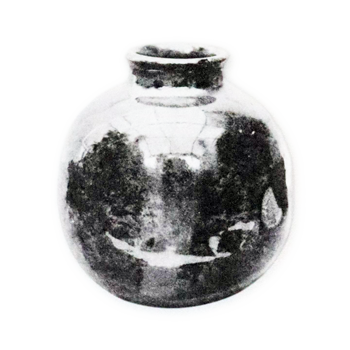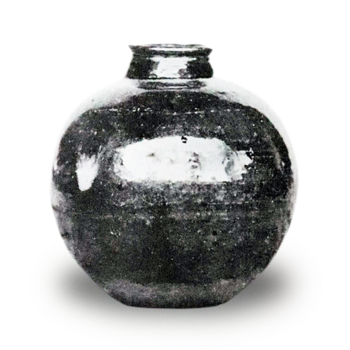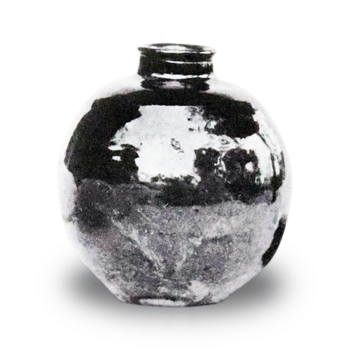
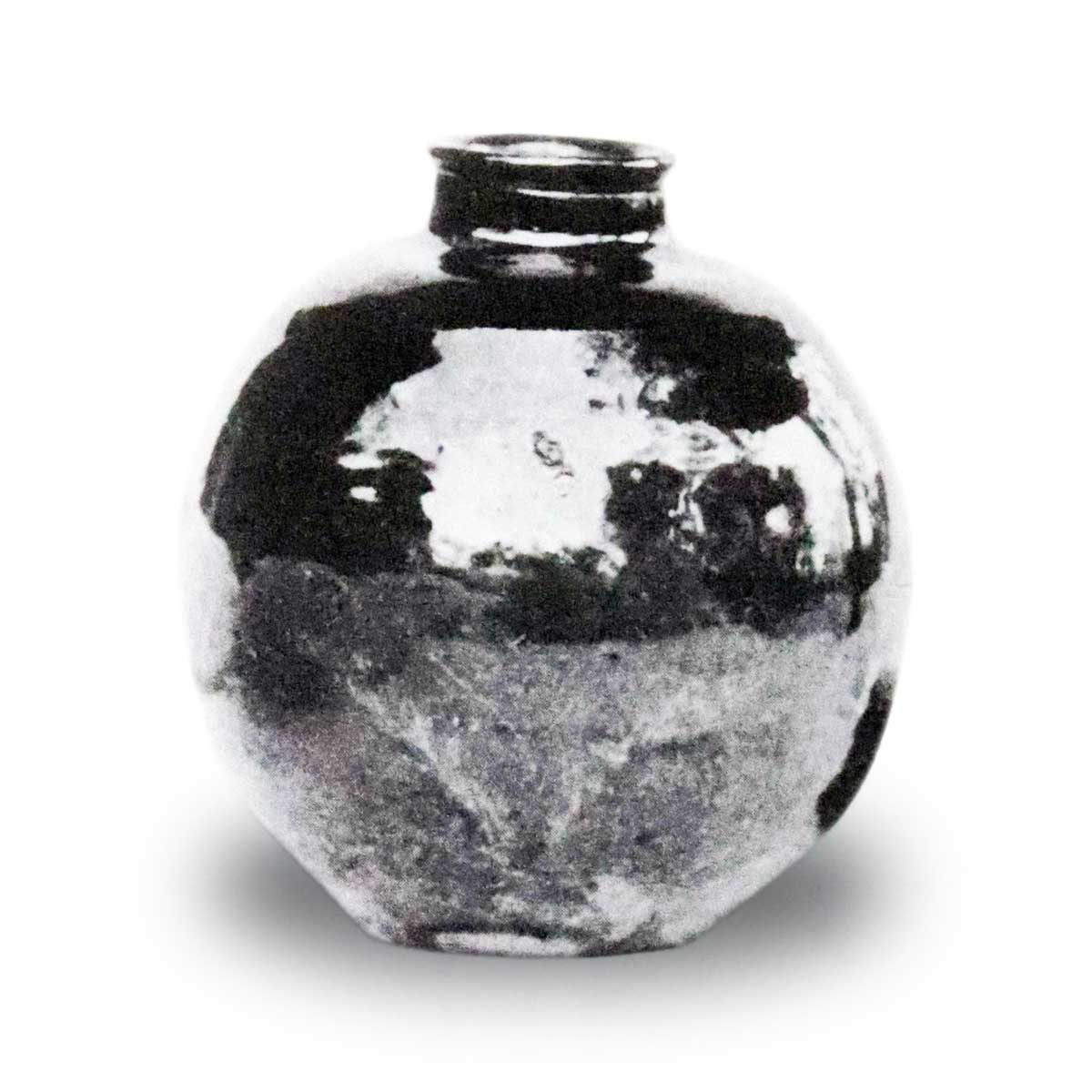
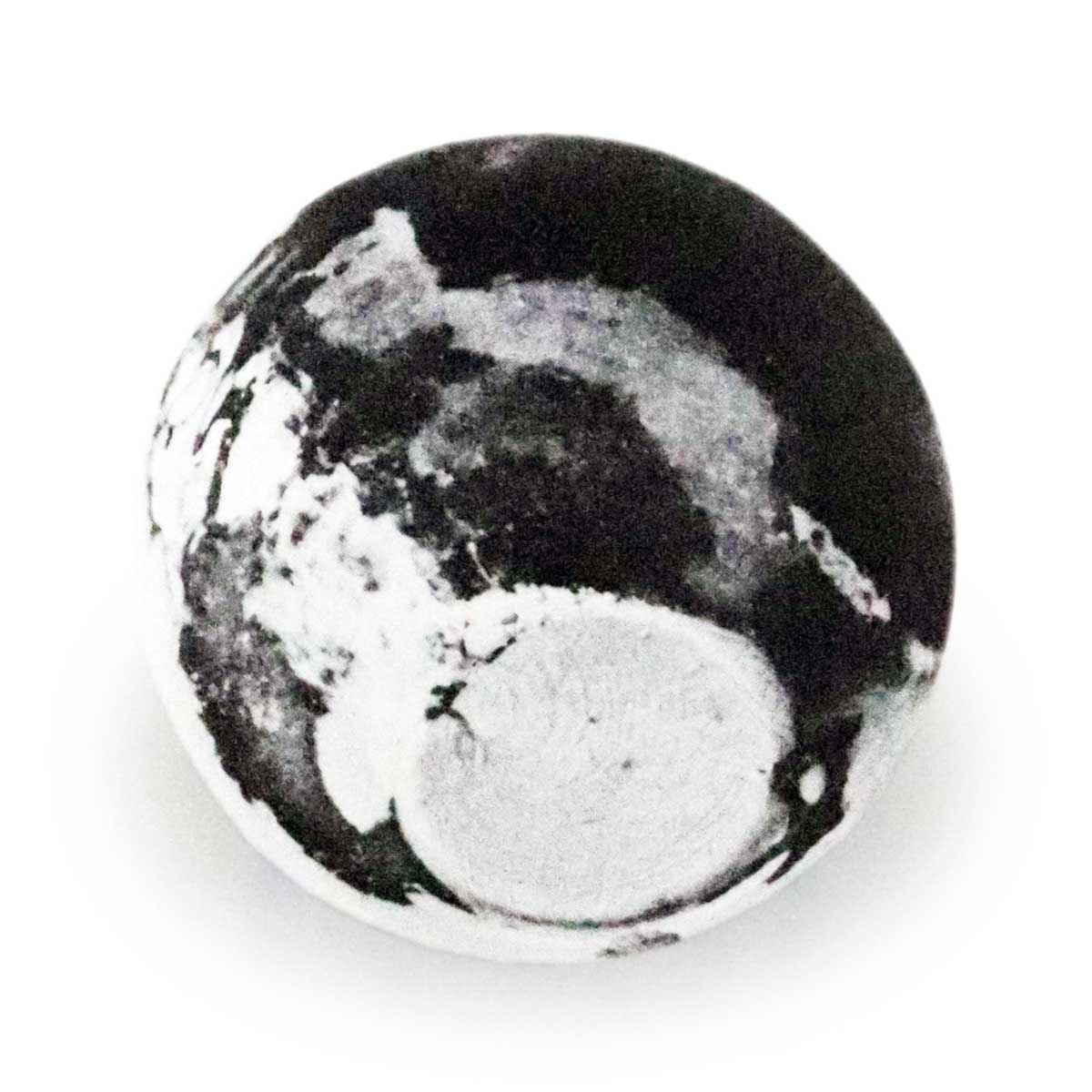
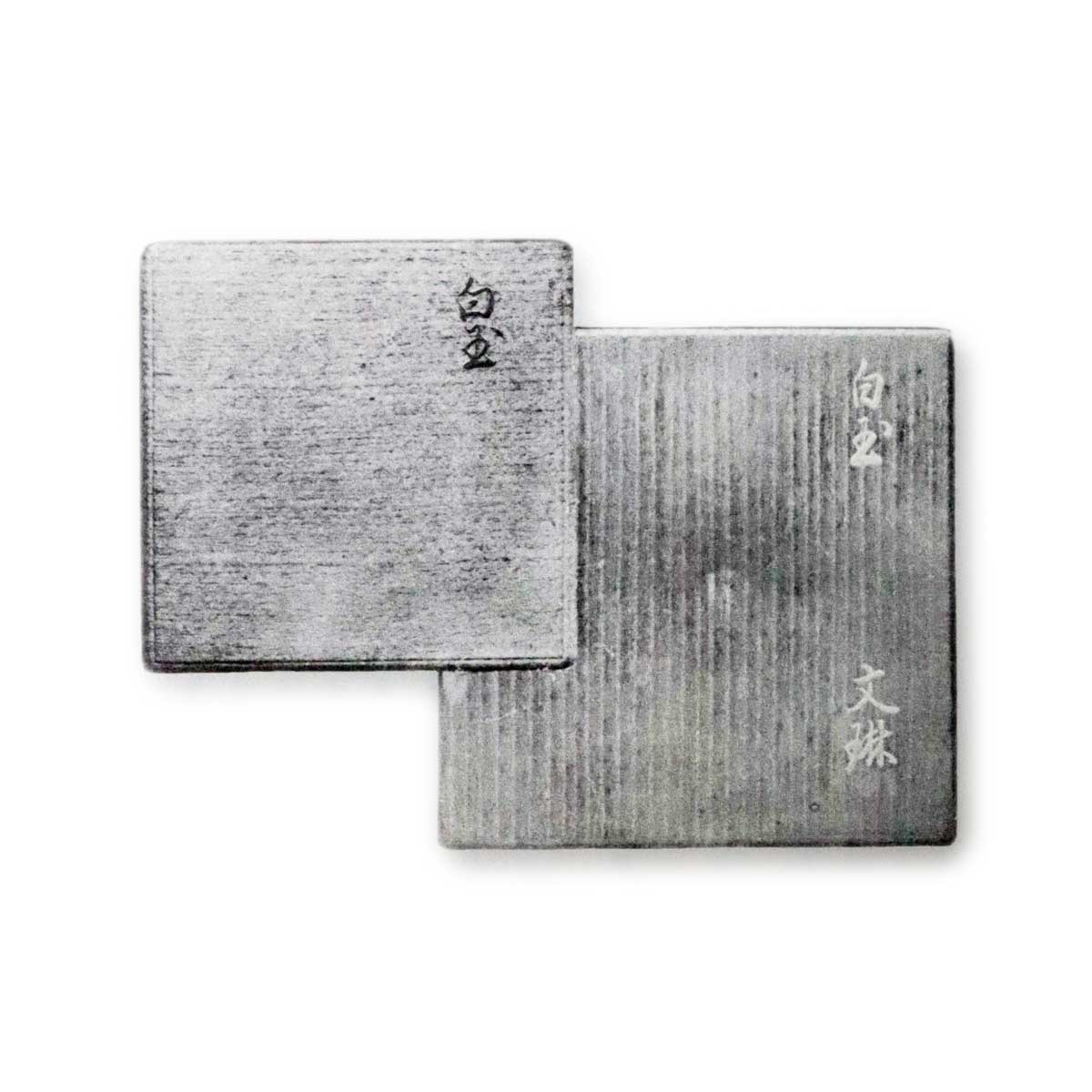
Made in China; Daimeibutsu; Former Name: Maruya (Kuya) Bunrin; Collection: Mr. Kaichiro Nezu, Tokyo
Origin of the Name
The name “Shiratama Bunrin” is believed to derive from the way the glaze pools to resemble droplets of water or pearls. Additionally, its former name, “Maruya (Kuya) Bunrin,” derives from the fact that it was once owned by Maruya Rinsai of Kyoto.
Dimensions (Converted using 1 sun ≈ 3.03 cm and 1 monme ≈ 3.75 g)
Height: Approx. 7.27 cm (2 sun 4 bu)
Body diameter: Approx. 6.73 cm (2 sun 2 bu 2 rin)
Mouth diameter: approx. 2.27 cm (7 bu 5 rin)
Base diameter: approx. 2.79 cm (9 bu 2 rin)
Koshiki (rim) height: approx. 0.79 cm (2 bu 6 rin) or approx. 0.85 cm (2 bu 8 rin)
Weight: 93.38 g (24 monme 9 bu)
Accessories
・Lid: 1 piece (with a recessed center)
・Storage bag (for the tea caddy): White chirimen silk, with a white cord
・Covering bags (pouches): 3 pieces
Shōhō-ji (back features a sea mist pattern, cord is purple)
Old Kinran on a white background (back is heavily worn, cord is purple)
Honno-ji (bag in unsewn state)
・Inner box of the bag: Unfinished paulownia wood, gold powder on the chamfers, box of the Ryoei (Shogunate)
Inscribed “Shiratama Bunrin Bag No. 3”
・Outer box of the bag: Unfinished paulownia wood, with a note written by a scribe
“Received: Shiratama Bunrin Bag”
・Inscription on the paper wrapping the bag
“This bag was originally sewn, but as the fabric is old, the pleats were weak and prone to damage. Therefore, after consulting with the authorities, the seams were undone on June 20, 1746 (Enkyō 3, Year of the Fire Tiger), and the bag was stored as is.
Shiratama Bunrin Bag No. 3 (Honnō-ji, old Kinran on a white background)”
・Hikiya (tea caddy case): Made of karin wood, no inscription
Pouch: Brocade (lining is light green satin with family crests; cord is brown)
・Inner box: Unfinished paulownia wood, gold powder on chamfered edges, box of the Ryoei (Shogun’s household)
Inscribed with “Shirayuki”
Wrapping cloth: Gold sarasa
・Middle Box: Paulownia with Shunkei lacquer finish, featuring gold-powdered characters
“Shiragata Bunrin”
Wrapping Cloth: Karasude sarasa
・Outer Box: Unfinished paulownia wood, with an inscription by the scribe of Matsudaira Iga-no-kami
(Inscription on the outer box)
“Received: Shiragata Bunrin”
・Inscriptions: 2 documents
“The following is recorded in the inventory ledger for the 9th year of Hōreki (1759), the Year of the Go-Ma:
On February 21, the 5th year of Hōei (1708), the Year of the Bo-Shi, when the 5th Shogun, Lord Tsunayoshi (Lord Jōken-in), visited, at the lower residence at Ogi-bashi,
Lord Kanki-in Tadashi (Matsudaira Tadashi) received the following:
Shiratama Bunrin Tea Caddy
(In other inventory records, it is noted as ‘Daimeibutsu, known as Maruya Bunrin.’ A box for a replacement pouch is also included.)”
“Presented by the 5th Shogun of the Tokugawa clan, Tsunayoshi
History of the Shiratama Bunrin Tea Caddy
Received on February 21, 1708 (the Year of the Rat), upon the Shogun’s visit.
Record of Notable Items
From the Shogun (His Excellency)
・30 sets of seasonal clothing
・2 bundles of three types of gifts
・Sword: Norishige (value: 75 pieces)
・Horse: Held in trust; saddle provided
・Private Gift (a gift bestowed in private)
Tea caddy: Shiratama Bunrin
To Matsudaira Iga-no-kami
(Note in red ink: Lord Tadashi)
Likewise
・Sword: Yoshikane (value: 30 pieces)
To Matsudaira Shinjuro
(Red-inked note: Lord Tadaaki’s childhood name)
Likewise
・Chirimen (crepe silk) 50 rolls
・Boxed appetizers: 1 type
To the wife of Matsudaira Iga-no-kami
(Red-inked note: The matchmaker is Lord Tadashi’s sister, Lady Kōju-in of Yonekura, who is married to the sister of Suzuki Shōtaemon)
・Chirimen (crepe silk) 50 rolls
To the daughter of the same person
・Items bestowed as a private gift
Books
Reading stand: To Matsudaira Iga-no-kami
Writing desk
Box for ten sticks of incense (tools for kumi-ko): To his wife
Incense containers: 5: To Matsudaira Shinjiro
Incense burner box: To the daughter of Matsudaira Iga-no-kami
The above items were bestowed as described.
February 21, Year of the Rat
Miscellaneous Notes
Shiratama Bunrin. Made in China. Owned by Matsudaira Mutsu-no-kami (Date clan). (Illustration of the tea caddy included)
(From Kokon Meibutsu Ruiju Shiyu no Bu)
Date Tsunamura (Matsudaira Mutsu-no-kami). Born in Manji 2 (1659). He retired on August 25, Genroku 16 (1703), and changed his name to Kazusa-no-suke on the 26th. On September 14, he presented to the Shogun, as gifts (bestowed items), a sword belonging to Sanjō Yoshie, a Shiratama Bunrin tea caddy, and a tray. He died on June 20, Kyōhō 4 (1719). He was 61 years old.
(From Kansei Shūshū Shokke-fu)
On September 14, 1703 (Genroku 16), Matsudaira Kazusa-no-suke (Date Tsunamura) was granted (as a gift) Sanjō Yoshie’s sword (valued at 200 pieces of silver) and a tea caddy by Hakutaku Bunrin (accompanied by a tray).
(From the Imperial University Historical Materials Collection, Record of Gifts and Donations from Various Families)
Maruya Bunrin: A small Chinese jar. Owned by Maruya Rinsai.
(From Kobimotsuki)
Maruya Bunrin: A small Chinese jar. Owned by Maruya Rinsai of Kyoto.
(From Ganka Meibutsu Ki)
Maruya Bunrin: A small Chinese jar. Daimeibutsu. Owned by Maruya Rinsai.
(From Kokon Meibutsu Ruiju)
Maruya Jūbei lived in Takoyakushi, and was known as a member of the “Hanabusa faction”; it is said that several houses belonging to his relatives were located within the neighborhood. This household possessed a famous tea caddy named “Maruya Bunrin.” The sales contract documenting the sale of this tea caddy for 100 kan of silver is recorded in detail in the book Meibutsu Ruiju. It is currently part of the collection of the former head priest of Higashi Hongan-ji.
(From Chawa Shin’kō-ō by Seki Chikusen)
Maruya Bunrin: Owned by Maruya Rinsai of Kyoto. Later bestowed upon Matsudaira Iga-no-kami.
(From Gomono Godōki)
November 27, 1918 (Taisho 7) — Inmusan-an Tea Ceremony at the Nezu Residence in Aoyama, Tokyo
Host: Nezu Aoyama (Kaichirō)
Guests: Takahashi Hōan, Nozaki Gen’an, Iwahara Ken’an, Yamazumi Sōsumi, Kobitsu Ryōnin
The hanging scroll was Saigyō’s “Tera Ochiba-giri”
“Sekiteraya (Sekidera), people no longer pass by; if that is so, the courtyard where maple leaves scatter thickly—is that the face I see?”
Tea caddy: Shiratama Bunrin (bag made of Shōhōji cloth, tray: Wanbon style); tea bowl: Shiro Gosho-maru; tea scoop: “Ikken” by Sen Sōtan (with matching tube); tea water basin: “Kaki no Saki” with sand-textured finish.
(From Tōto Chakai-ki, Vol. 6)
November 19, 1921 (Taisho 10) — Higashiyama Grand Tea Gathering (Kachuan, within the grounds of Kiyomizu-dera Temple) Host: Nezu Seizan
In the tokonoma: “Tera Rakuyōki” (Temple Falling Leaves) by Saigyō. The flower vase is Kinuta celadon; the flowers are winter peonies.
The tea caddy was the Daimeibutsu Chinese-made “Hakugyokubunrin” (served on a Wakasa tray), and the tea bowl bore the name “Takigawa” on the stem of a persimmon.
(From Shin’yu Taisho Chadoki)
History
Originally owned by Maruya Rinsai of Kyoto, it was later passed down to Higashi Hongan-ji Temple and subsequently became the property of the Sendai Domain (the Date family). However, on September 14, 1703 (Genroku 16), when Matsudaira Mutsu-no-kami Tsunamura retired, he presented this tea caddy to the shogunate. Subsequently, on February 21, 1708 (Hōei 5), when Shogun Tokugawa Tsunayoshi visited the residence of Matsudaira Iga-no-kami Tadashi, he bestowed this tea caddy upon him. From that time onward, it remained a treasured possession of the Matsudaira Iga-no-kami family for generations, but in 1913 (Taisho 2), it was reportedly transferred directly from the Matsudaira family to its current owner (the Nezu family).
Record of Actual Viewing
On July 7, 1920 (Taisho 9), I had the opportunity to view this piece in person at the residence of Mr. Kaichiro Nezu in Aoyama Minamicho 6-chome, Akasaka Ward, Tokyo.
The rim is extremely small, and the outward curve of the rounded rim is shallow. The neck protrudes downward, and a blue-green streak runs halfway around it. From the tip of the shoulder to the body, wheel marks run gently in a spiral; from the front of the body, a yellow amber-colored glaze flows down and stops near the base. The glaze extends low, reaching the very edge of the base. The base is made of vermilion-colored clay (reddish-brown), with a misalignment at the starting point of the thread-cut pattern. Furthermore, the presence of irregular horizontal lines across the entire base indicates that this piece belongs to a highly unusual style (variant).
Inside, the glaze covers the rim of the mouth, and a single streak of blue-green runs through it. Below that, the clay is exposed (unglazed), and the wheel marks form a swirl pattern reaching the center of the base.
This tea caddy feels somewhat heavy when held; the flow of the single line on the standing form, the pools of pale blue glaze, and the yellow amber luster all combine to create a magnificent sight rarely seen among Bunrin tea caddies. Furthermore, true to its name “Shirayuki” (White Jade), the fact that it is free of even a single minute scratch makes it truly worthy of being called a “jewel worth a thousand cities” (a treasure of such value as to rival multiple cities).