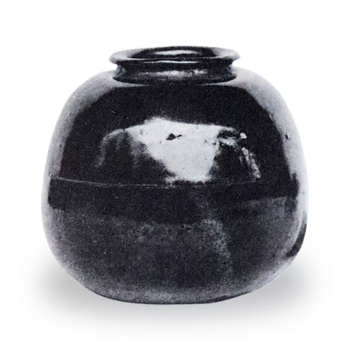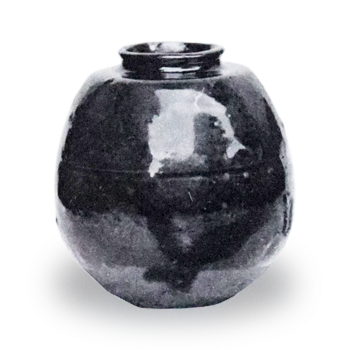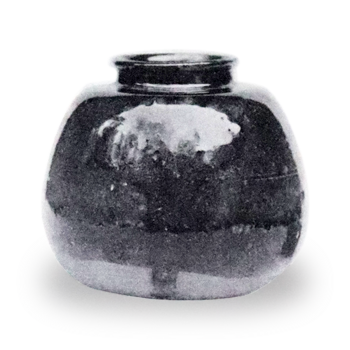
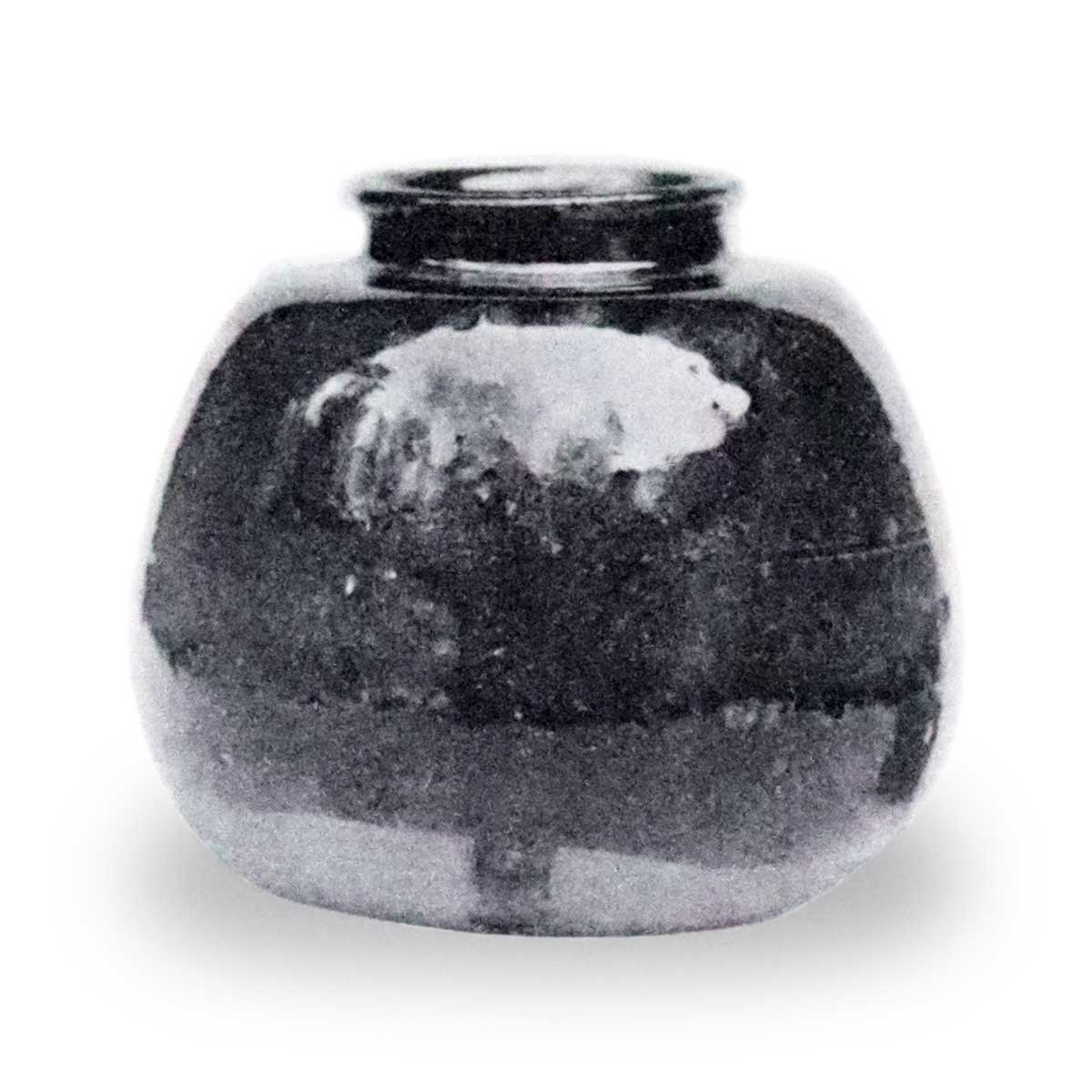
Chinese-made (Tang-style) Daimeibutsu; Collection of Mr. Tokuzo Shima, Osaka
Name
“Fukuhara” is likely the name of the owner, but there are no clues regarding its provenance.
Dimensions
Height: 1 sun 8 bu 8 rin (approx. 5.7 cm)
Body diameter: 2 sun 1 bu (approx. 6.4 cm)
Mouth diameter: 9 bu (approx. 2.7 cm)
Base diameter: 9 bu (approx. 2.7 cm)
Height of the neck: 2 bu (approx. 0.6 cm)
Shoulder width: 2 bu (approx. 0.6 cm)
Weight: 14 monme (approx. 53 g)
Accessories
Lids: 5
Lid without window: Artist unknown
Lid with wooden rim window: In the style of Lord Kenzan; made by Ritsuden
Lid with inlaid design without window: In the style of Lord Kenzan; made by Ritsuden
Large lid without window: In the style of Matsudaira Bizen-no-kami; made by Ritsuko
Crimped ivory
(Note) Lord Kenzan is the posthumous name of Date Tsunamura, Lord of Sendai.
Pouches: 4
Navy-ground dragon-patterned satin (donsu); lining: sea mist (silk fabric); cord fasteners: purple
White-ground striped cotton from Guangdong; lining: iridescent silk; cord fasteners: purple
Bamboo-vine-patterned satin; lining: iridescent silk; cord fasteners: purple
White-patterned satin; lining: iridescent silk; cord fasteners: purple
Bag box: Paulownia wood, natural finish; inscription visible across the grain of the wood
“Fukuhara Eggplant Bag”
Hikiya: Tagayasan wood; gold-leaf lettering; inscription by Kobori Enshu
“Nasu”
Pouch: Single-piece cut; lining is brown sea-green; cord fasteners are brown
Inner box: Paulownia; Shunkei lacquer; gold-powder lettering; inscription by Kobori Enshu
“Fukuhara”
Outer box: Paulownia; black mixed-pattern lacquer; with lock
Accompanying tray: Pouch; tanned leather
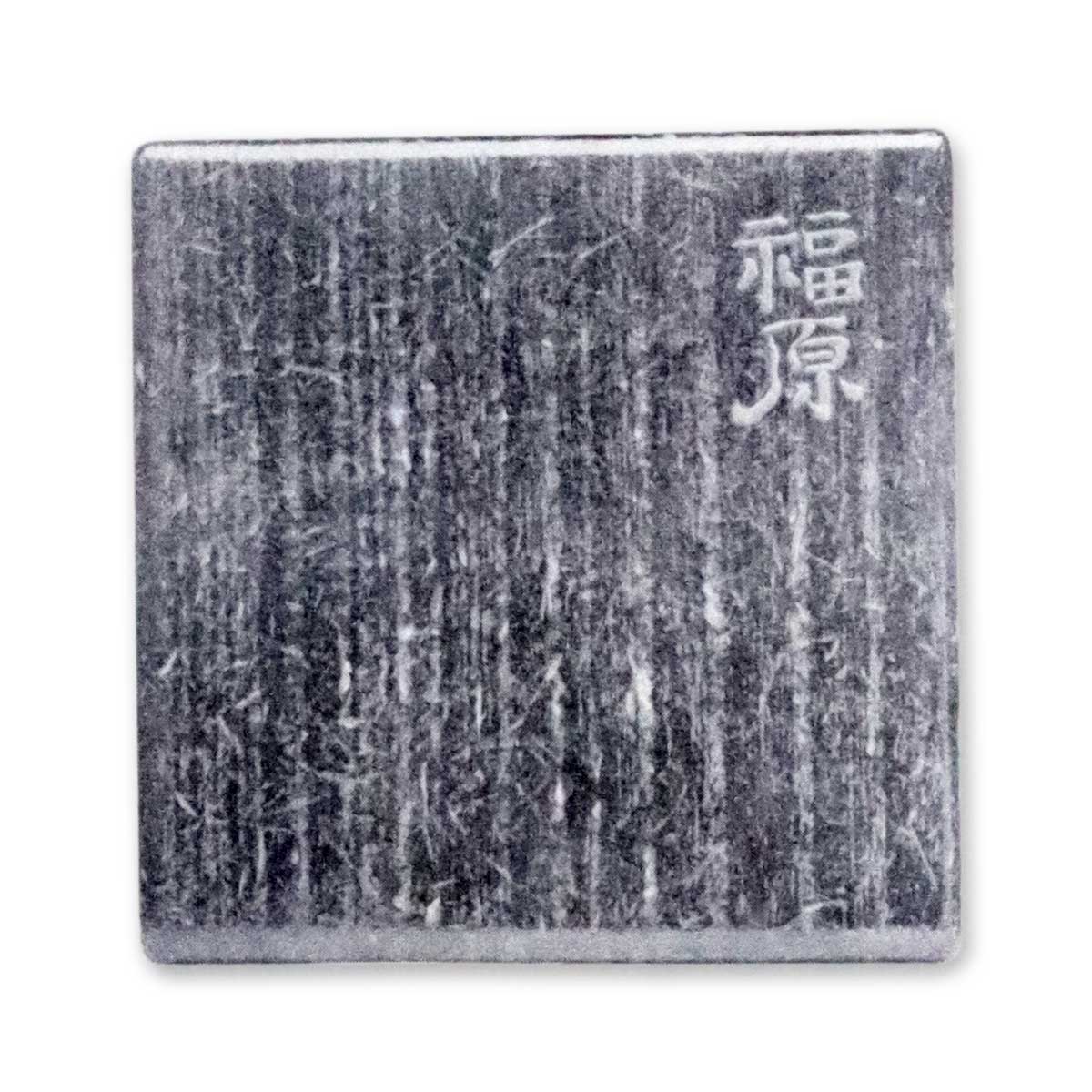
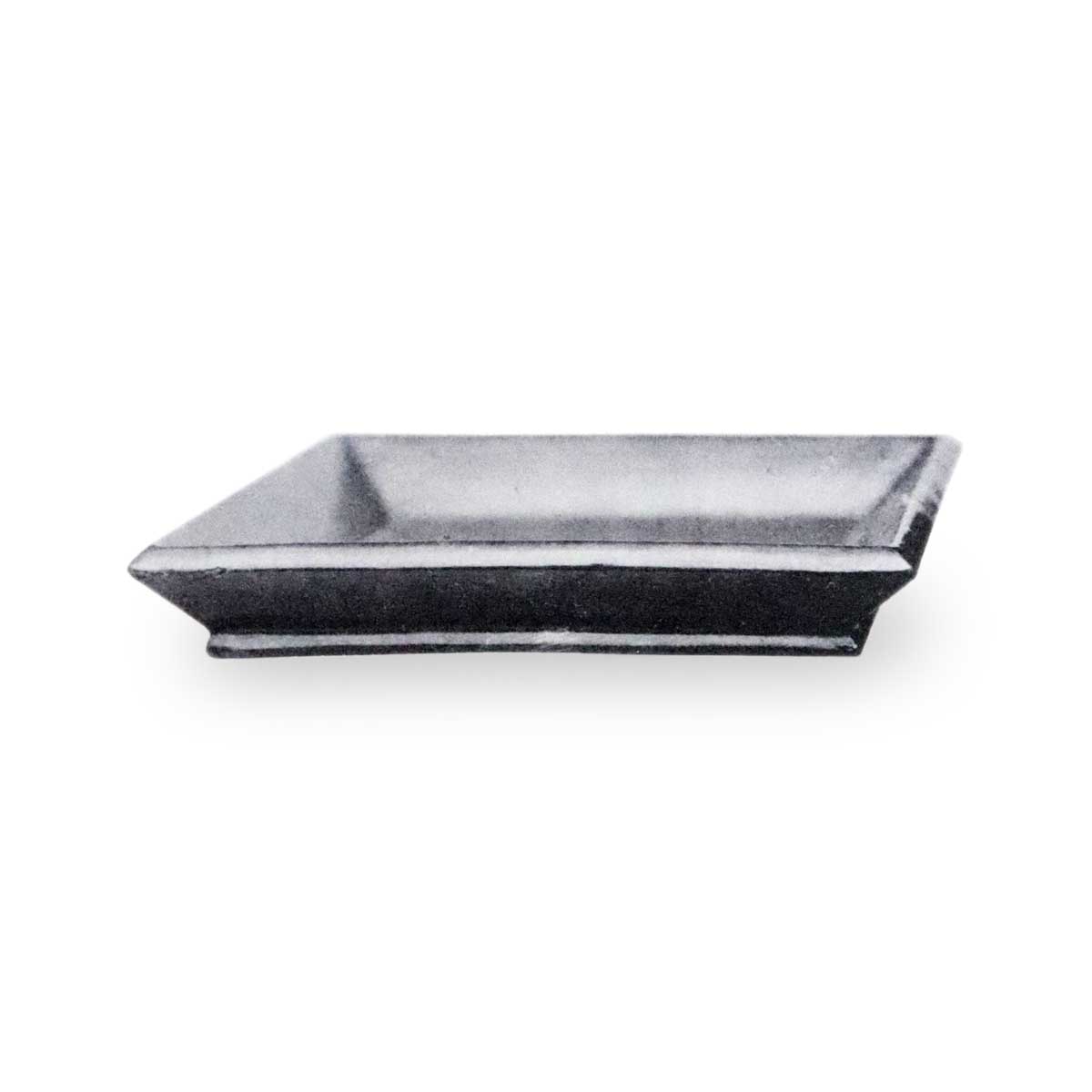
Chinese-style square tray
Dimensions: Inner diameter 6 sun 7 bu (approx. 20.3 cm); Mirror diameter 5 sun 1 bu (approx. 15.5 cm); Base diameter 6 sun (approx. 18.2 cm); Height 1 sun 1 bu (approx. 3.3 cm)
Box: Paulownia wood, natural finish
Plain Vermilion Square Tray
Accompanying Documents: 2
One is a painting of a bird by Kei. This has been passed down through the generations of the Shinjo Echizen-no-kami family.
The other is the Meibutsu Chinese antique Fukuhara Eggplant Tea Caddy. This was requested by the former lord (Sakinomamori: the previous feudal lord, etc.) in exchange for fifty gold coins from Lord Matsudaira Hida-no-kami.
Regarding the two items mentioned above, as you requested them through Shōzaburō Hoshino, we are sending them to you as a gift. That is all.
March 27, Enpō 5 (1677)
Jūrōzaemon Nakao (Seal, Signature)
Kansuke Ōhira (Seal, Signature)
To Lord Kanyūemon Okuda
List
- Fukuhara Eggplant-shaped Chinese-style tea caddy
Note: Comes in a light yellow patchwork cloth bag - Hikiya: Exotic wood, in a patchwork cloth bag
Note: Inscribed with “Eggplant” in gold powder - Sō-ya: Black lacquered, with a lock, in a leather bag
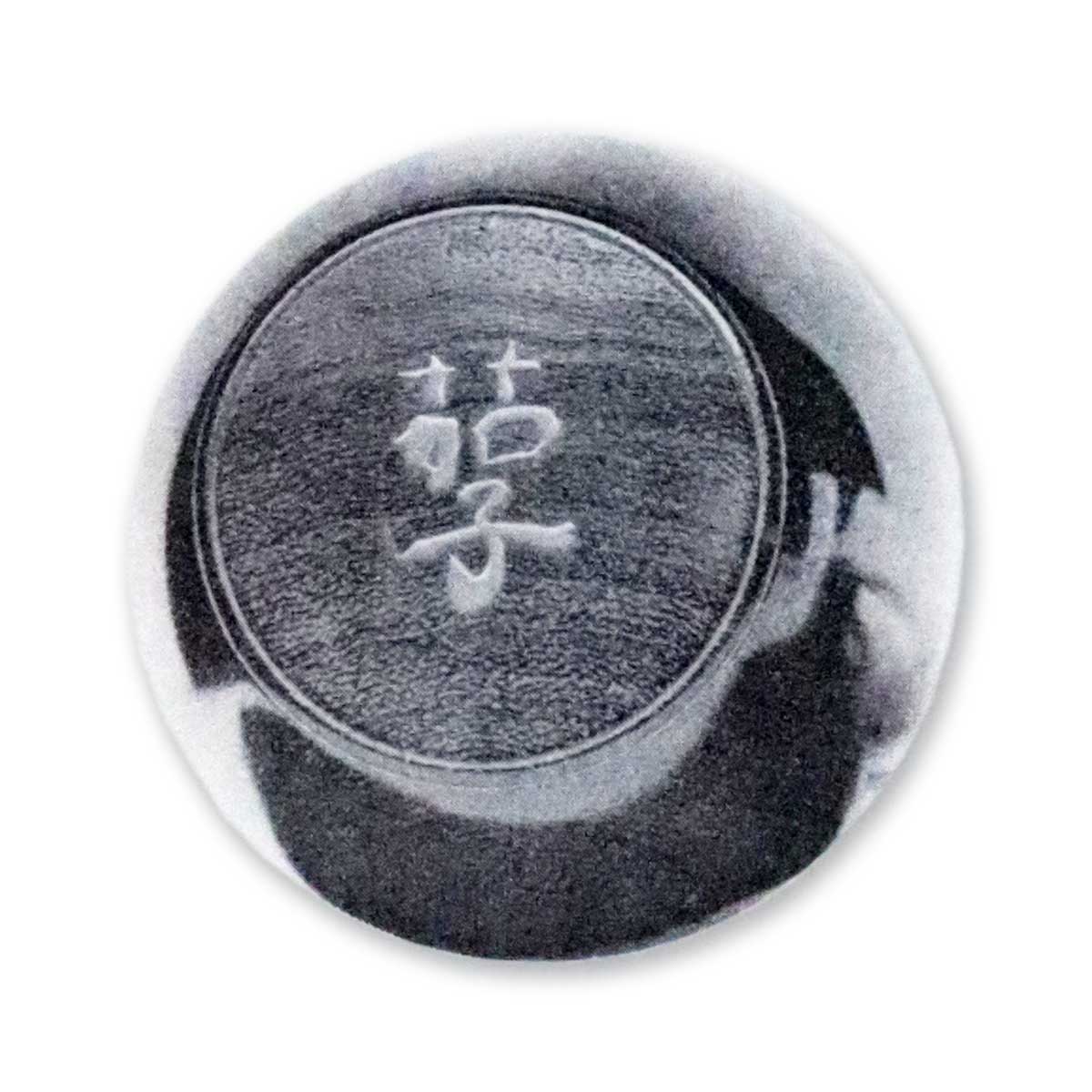
Note: The dimensions and weight of the tea caddy are inscribed on the underside of the lid - Wooden base: Paulownia, square box
Inside
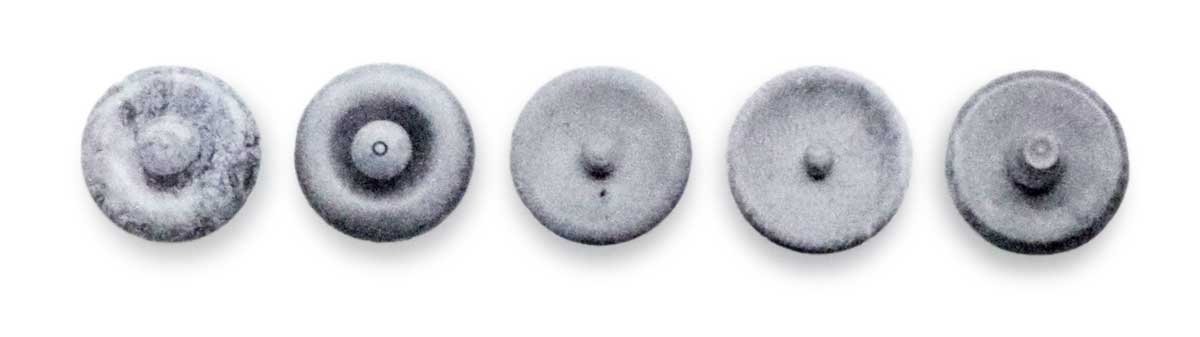
Teapot mold: 1, in a Shirajima bag
Replacement bag: 1, navy-blue damask bag with coiled dragon design
Replacement lids: 1 of 2 is a shrunken ivory lid preferred by Lord Matsudaira Bizen-no-kami - Cover letter from Lord Shinjo Echizen-no-kami’s senior retainers, Nakao Jurozaemon and Ohira Kansuke: 1 copy
The above
Year of the Horse, November - Dimensions sheet: 1 copy
Chinese-style Fukuhara Eggplant Tea Caddy
Weight: 13 monme 9 bu 5 rin (approx. 52 g)
Height: 1 sun 8 bu 7 rin (approx. 5.7 cm)
Circumference: 6 sun 6 bu 8 rin (approx. 20.2 cm)
Mouth diameter: 9 bu (approx. 2.7 cm)
Page 260
Miscellaneous Notes
Fukuhara Chinese-style: Matsudaira Mutsu-no-kami (only an illustration of the tea caddy is available).
(From Kokon Meibutsu Ruiju)
Fukuhara Eggplant
Exhibited at the Special Exhibition in April 1902. Lord Date Muneoki. Four pouches (bird-strap satin, bamboo-vine satin, dragon-pattern satin, small-check Cantonese), the Hikiya is made of ironwood (labeled “Nasu”), and the accompanying tray is plain tsuishu lacquer (features an illustration of a tea caddy).
(From Tsurezure no Tomo by Matsuyama Seika)
History
Originally owned by Matsudaira Hida-no-kami, it was passed down to Shinjo Echizen-no-kami. In March 1677 (Enpō 5), Date Tsunamura, Lord of Sendai, earnestly requested it and made it his own. Since then, it has been a treasured possession of the Date family, but during the Date family’s second auction on July 5, 1916 (Taisho 5), it was purchased by the current owner for 57,000 yen.
Inspection Record
Inspected on September 27, 1920, at the residence of Mr. Tokuzo Shima in Koraibashi 5-chome, Higashi Ward, Osaka City.
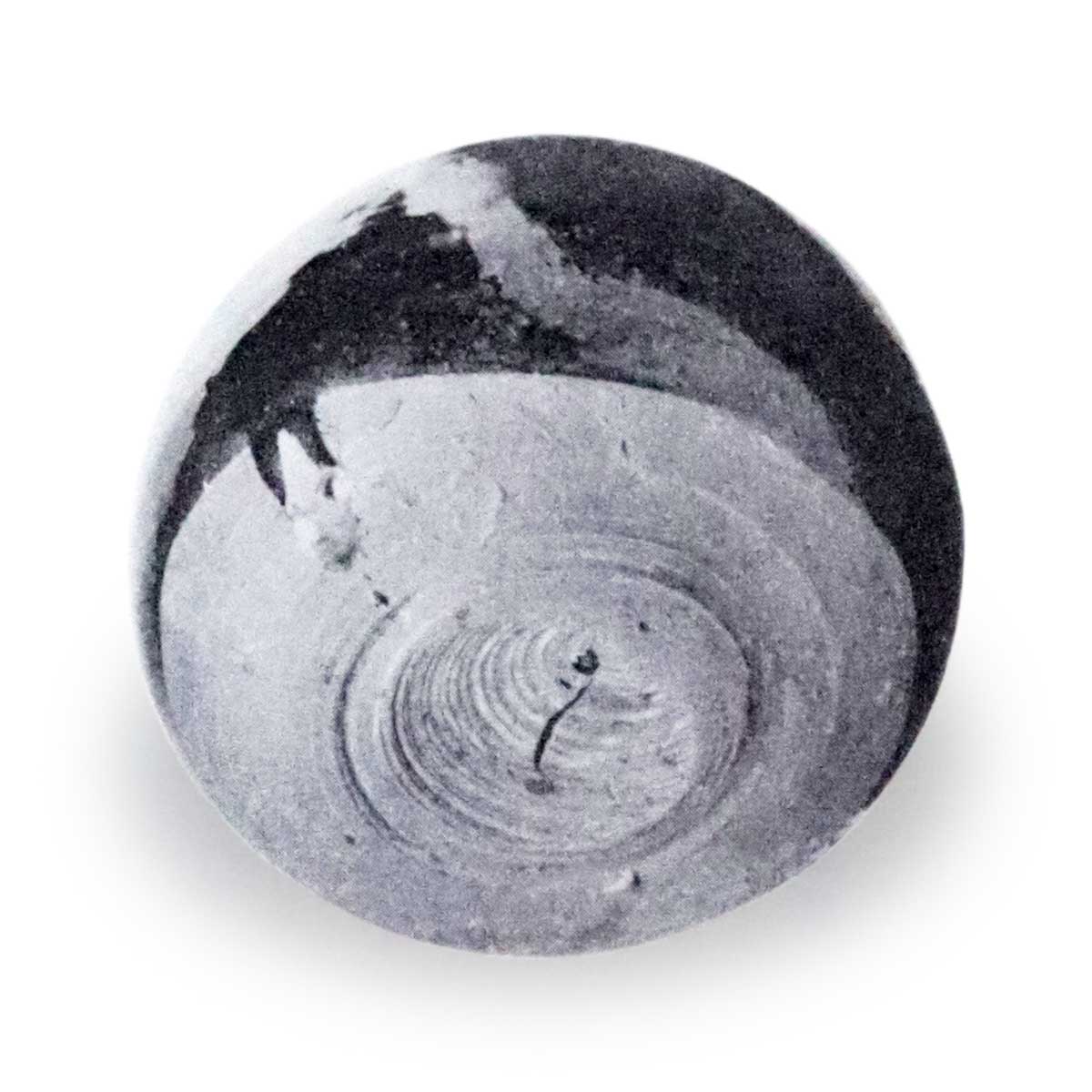
The rim is extremely thin, with a shallow flaring (curvature at the rim’s edge). The body begins to round at the shoulder and gradually expands, widening significantly at the waist. Overall, it has a reddish-brown (ochre) hue over a purple glaze; yellow glaze flows down from both sides below the shoulders, merging into a single streak that reaches the body and stops at the edge of the unglazed clay at the base, with a slight blue-green color appearing in the pools of glaze. Additionally, there are streaks of blue-green glaze around the neck, and on the body, excluding the decorative pattern, a sunken line runs around three-quarters of the tea jar. The wheel marks run very gently around the entire piece; the area below the rim reveals the grayish-brown clay, with fingerprints visible in places. A spatula mark runs around the base; the thread cut is fine, but the area near the starting point has been worn down into a crescent shape, and part of it has disappeared. There is a linear firing crack in the center of the base, and a single speck of black glaze has splattered there. Inside, the glaze covers the rim; there are no wheel marks. The center of the base is slightly raised, with the surrounding area slightly sunken. Overall, both the purple glaze and the reddish-brown glaze (ochre glaze) emit an extremely beautiful luster; where the reddish-brown color is deepest, it almost takes on a grape-like hue, and the way it reflects light to mirror objects (like a mirror) is a rare sight among other Chinese tea caddies. On the opposite side of the vessel, a mottled, brownish-purple glaze appears at the junction with the unglazed clay around the waist, and there is a small chip at the tip of the shoulder. Overall, it is intact and is an exceptionally beautiful tea caddy.