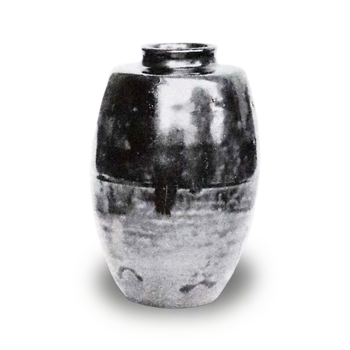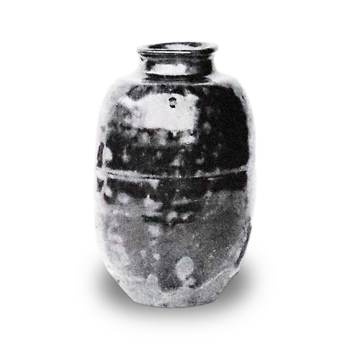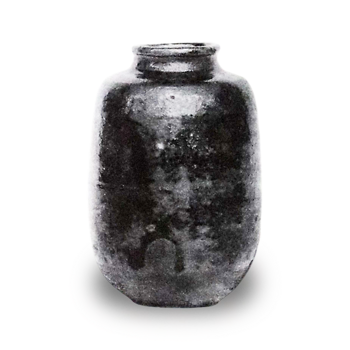
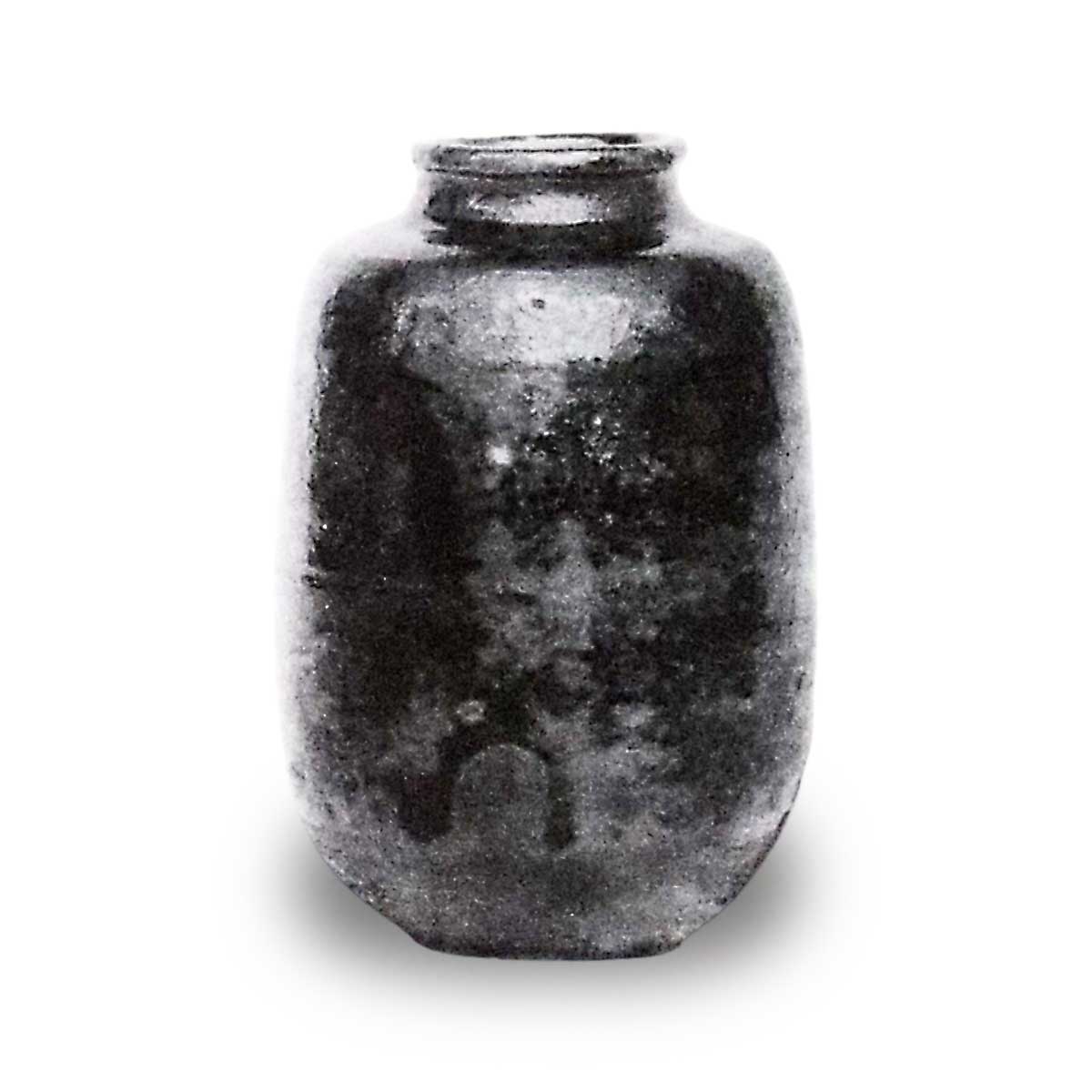
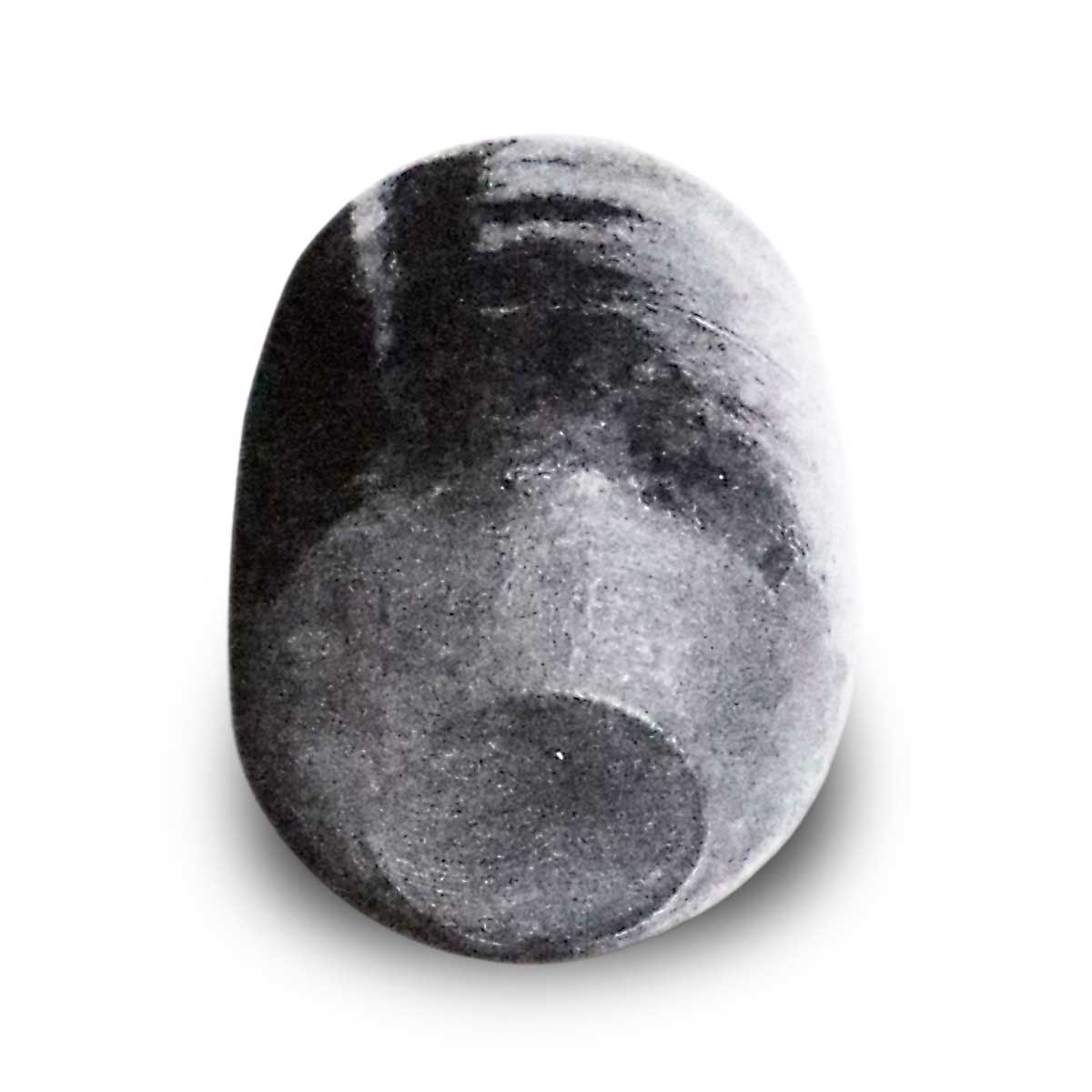
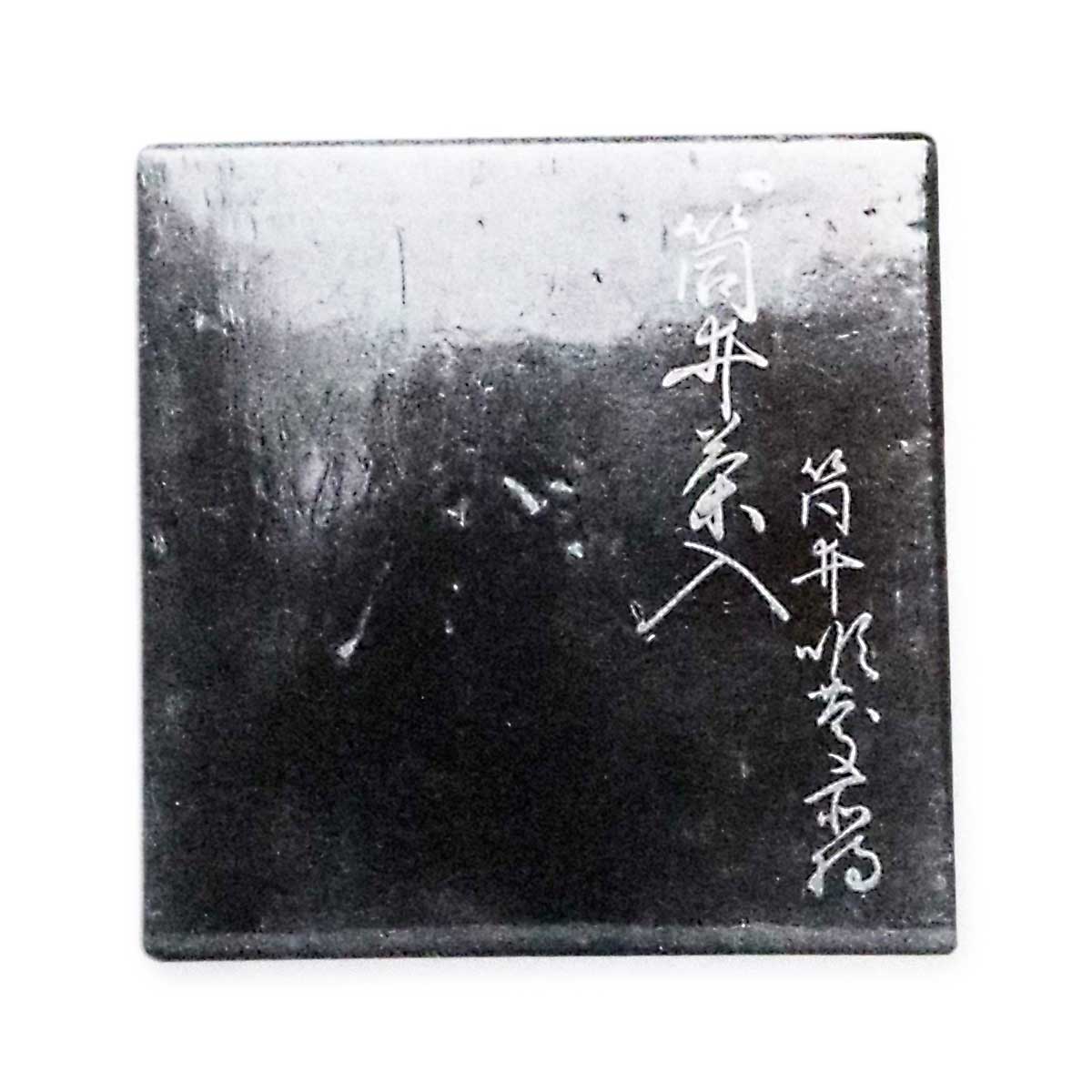
Old Seto, Daimeibutsu, Collection of Marquis Tokugawa Yoshichika
Name
This name derives from the fact that it was once owned by Tsutsui Junkei. Junkei served Oda Nobunaga and defeated Matsunaga Hisahide; as a result of this achievement, he came to govern Yamato Province. Initially, Junkei had no sons of his own, so he adopted a son of Akechi Mitsuhide as his heir. Consequently, when Mitsuhide assassinated Nobunaga (the Incident at Honno-ji), he first tried to lure Junkei into joining him, but Junkei remained neutral and waited to see how the situation would unfold. From that point on, the term “opportunist” (hiyorimi) came to be referred to as “Tsutsui Junkei” in common parlance. He later served Toyotomi Hideyoshi and died of illness on August 11, Tenshō 12. He was 36 years old. He had a deep fondness for Buddhist studies, was well-versed in the Yogācāra school of thought, and was also thoroughly familiar with texts on Shinto and Confucianism; he was also a skilled composer of waka poetry. Furthermore, he held loyalist sentiments; he celebrated the accession of Emperor Ōgimachi in Kōji 3 and is said to have presented offerings upon the emperor’s subsequent enthronement. Although there is little evidence in historical documents regarding his tea ceremonies, given the general tastes of the warlords of that era, he must have been a man of refined taste who was certainly not second to anyone. In particular, because he was a man of literary cultivation, it is believed that his level of sophistication and refinement in the arts was exceptionally high.
Dimensions (converted to modern units)
Height: approx. 8.48 cm (2 sun 8 bu)
Body diameter: approx. 5.61 cm (1 sun 8 bu 5 rin)
Mouth diameter: approx. 2.73 cm (9 bu)
Base diameter: approx. 2.73 cm (9 bu)
Neck height: approx. 0.67 cm (2 bu 2 rin)
Shoulder width: approx. 0.76 cm (2 bu 5 rin)
Weight: Approx. 91.13 g (24 monme 3 bu)
*Calculation standards: 1 shaku = 30.303 cm (1 sun ≈ 3.03 cm, 1 bu ≈ 0.303 cm, 1 rin ≈ 0.0303 cm), 1 monme = 3.75 g
Accessories
- Lid: One piece (ivory)
- Storage pouch: Purple ha-niji
(*This new pouch is being used because the original pouch was severely damaged) - Cover pouches: Two
・Brown ground with angular dragon and antique gold lattice pattern (Lining: Onado Kaiki; Straps and fasteners: Purple)
・White-brown ground with gold-inlaid earthenware pattern and gold lattice (Lining: Tamamushi; Straps and fasteners: Purple) - Storage Box: Tame-nuri lacquer with gold-powder lettering
- Hikiya: Ivory, black-lacquered with repair marks resembling star patterns in places
・Cover (Pouch): Purple leather; Cord and fasteners: Ten-aji velvet (velvet) - Box: Black lacquer with gold-powder lettering
(Inscription: “Owned by Tsutsui Junkei,” “Tsutsui Tea Caddy”)
Miscellaneous Notes (Literary Records)
・Tsutsui: Seto Katatsuki, Owari-style. (Gankō Meibutsu-ki)
・Tsutsui: Seto Katatsuki, Daimeibutsu, Lord of Owari. (Kokin Meibutsu Ruiju)
・Tsutsui: Old Seto (from Rin-hō-ki-ryū)
・Tsutsui Katatsuki: Lord Owari. On March 18, Genroku 11 (1698) (the Year of the Wood Tiger), when the 5th Shogun, Tokugawa Tsunayoshi, paid a visit to the Owari Tokugawa family, this tea caddy was presented to him. (Komeibutsu-ki)
・Tsutsui Katatsuki: The pouch accompanying this piece is called “Tsutsui-giri” and is cherry-bark colored. (*Katsu Kaishū’s *Meibutsu-ki) ・Tsutsui: Old Seto, Daimeibutsu; Lord of Bishū (Owari Tokugawa family), accompanied by a Tsutsui-giri pouch (includes illustration of the tea caddy) (Hōian Bunko, Series A, No. 17*)
・Tsutsui Katatsuki: Old Seto; this item was once owned by Tsutsui Junkei. It was subsequently acquired by Tokugawa Ieyasu and, after being bestowed upon Tokugawa Yoshinaga, the first lord of the Owari Domain, has been passed down through the generations of the Owari Tokugawa family. The body features a “snake and scorpion” (spotted) pattern, revealing the black or persimmon-colored glaze characteristic of ancient Seto ware. There are two fine lines running down the middle of the body, and the base is finished with a “thread-cut” edge. (“Bishu Tokugawa Family Collection Register”)
・Tsutsui Katatsuki: Old Seto; “Daimeibutsu” (Masterpiece); the bag is decorated with a white cloud and a giraffe. The persimmon-colored ground is speckled with quail-like spots throughout, mixed with mottled patterns; the glaze on the unglazed body is rough-textured and has a fine patina, with a high content of iron oxide. The base features spattered glaze, which appears as if it has scooped up the clay, so the color of the clay itself is not visible. The thread-cut finish on the base is as fine as a hair. (Illustration of the tea caddy included.) (From *Appendix to the Maeda Family Collection Register) ・It is said that the works of Fujishirō (Kato Kagemasa, the founder of the Seto school) possess a natural and distinctive style. Inscriptions such as “Komeichi” are a result of this distinctive style. Here I list famous pieces currently attributed to Fujishirō; among them, works such as Yoshimitsu, Aoyagi, and Tsutsui were produced using Chinese (Tang dynasty) glazes with Japanese clay, and Murata (Sōju, Jukō, etc.) referred to these as “Nenuki-Seto.” (Chaki Meibutsu Zui* by Kusama Waraku)
・On May 3, Kan’ei 4 (1627), when the Shogun (Tokugawa Iemitsu) paid a visit to the residence of Lord Yoshinori, the Owari Daikan, the following attended: Mito Komon Yorifusa, Tōdō Izumi-no-kami Takatora, and Tachibana Hida-no-kami Muneshige.
- Wall Hanging: A single-line poem by Priest Ikkyū
- Tea caddy: Crane
- Tea bowl: Mishima Reiki
- Tea scoop: “Namida” by Rikyū
(Kusa no Ma, Bag Shelf) - Tea caddy: Tsutsui Katatsuki
- Tenmoku: Haikatsugi, Amagasaki-dai
・In the 2nd month of the year of the Fire Goat (Kan’ei 8, 1631), Lord Daio (Tokugawa Iemitsu) paid a visit to the Vice-Governor of Owari (Lord Yoshinori).
Accompanying him: Lord Mito Yorifusa, Tachibana Muneshige
(Bag Shelf) - Water Jar: Celadon
- Tea Caddy: Tsutsui Katatsuki
- Tenmoku: Ash-glazed, Amagasaki-dai
(“Tōbu Jitsuroku”)
(“Gokai-ki”)
Considerations Regarding Its Transmission
The “Oshū Tokugawa Family Collection Register” states: “This item was originally owned by Tsutsui Junkei; it was subsequently held by Tokugawa Ieyasu, and has been passed down within this family ever since it was bestowed upon our ancestor (Tokugawa) Yoshinaga.” Therefore, the statement in the Komeibuki that “on March 18, Genroku 11, when Shogun Tsunayoshi paid a visit to the Owari family, this tea caddy was presented” is likely a misrepresentation (misinterpretation) based on hearsay, implying that tea was “served using” this tea caddy (i.e., that tea was prepared and presented in it).
Record of Actual Observation
On June 4, Taishō 8 (1919), I observed the item in person at the residence of Marquis Tokugawa Yoshichika in Ōtaine-chō, Higashi Ward, Nagoya City.
The rim is round but slightly warped, and the flared rim is extremely shallow. The shoulders are rounded and gently sloping, with mottled persimmon- and gold-colored hues appearing within the black glaze. A single sunken ridge runs across approximately half the circumference of the body; below the rim, an earth-colored clay containing iron is visible, and there are several flat, disc-like protrusions. The thread mark on the base is fine, and the rim shows slight wear. Inside, the glaze covers the rim area, and the wheel marks spiral downward to the base, forming a swirl pattern. There are faint traces of repair around the rim. It exudes a warm and gentle presence and is truly an elegant, Meibutsu tea caddy.