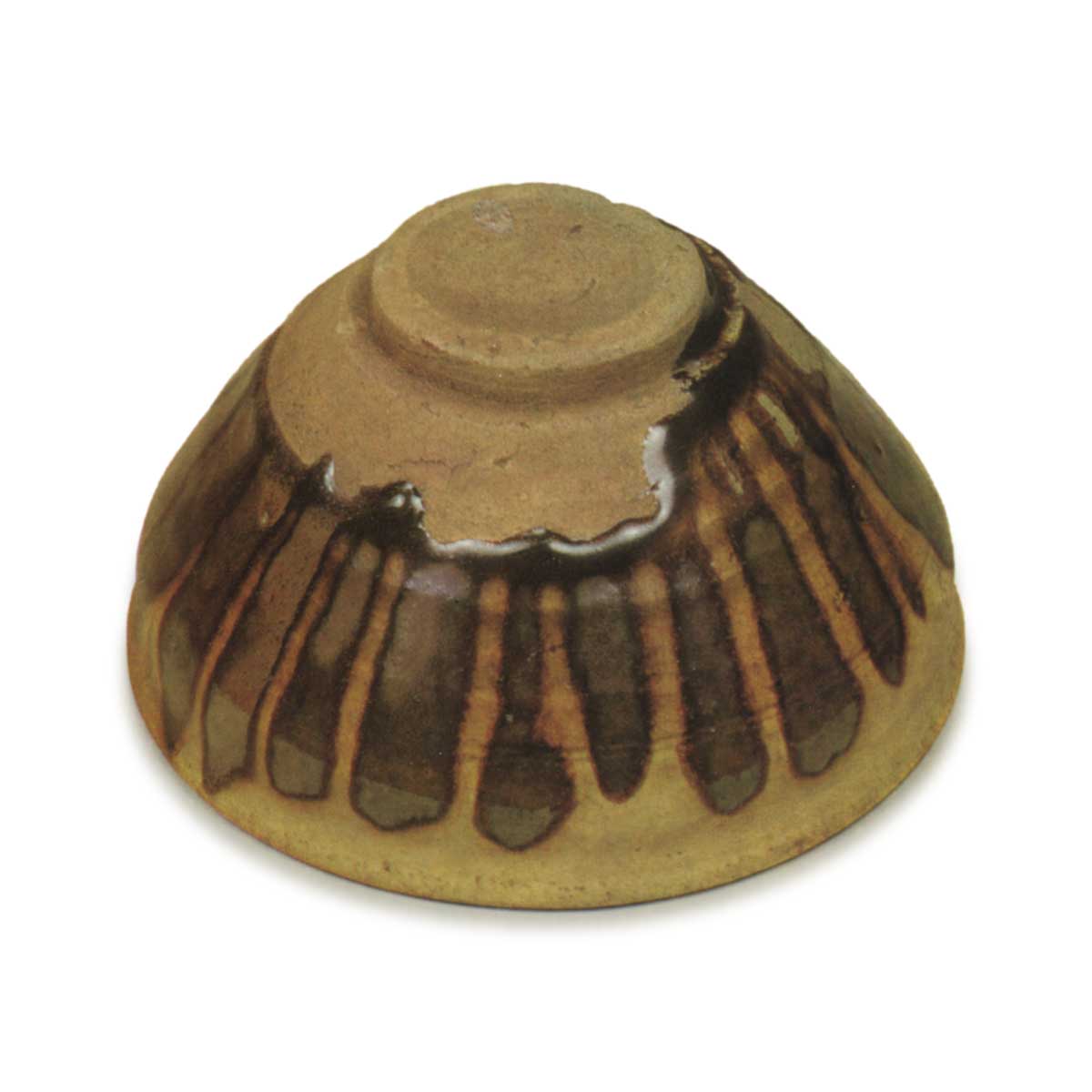
Revival Masterpiece, Important Cultural Property
Accessories
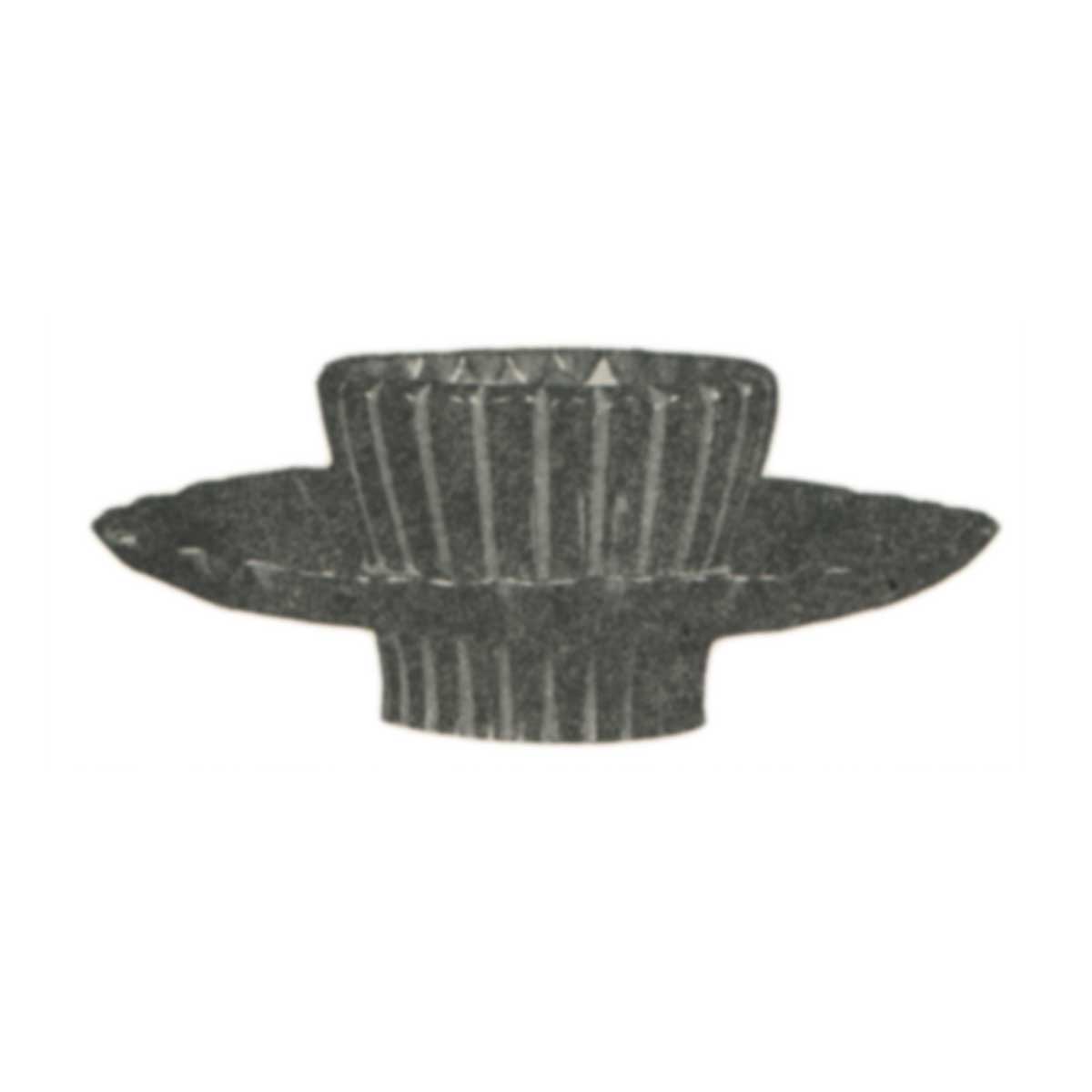
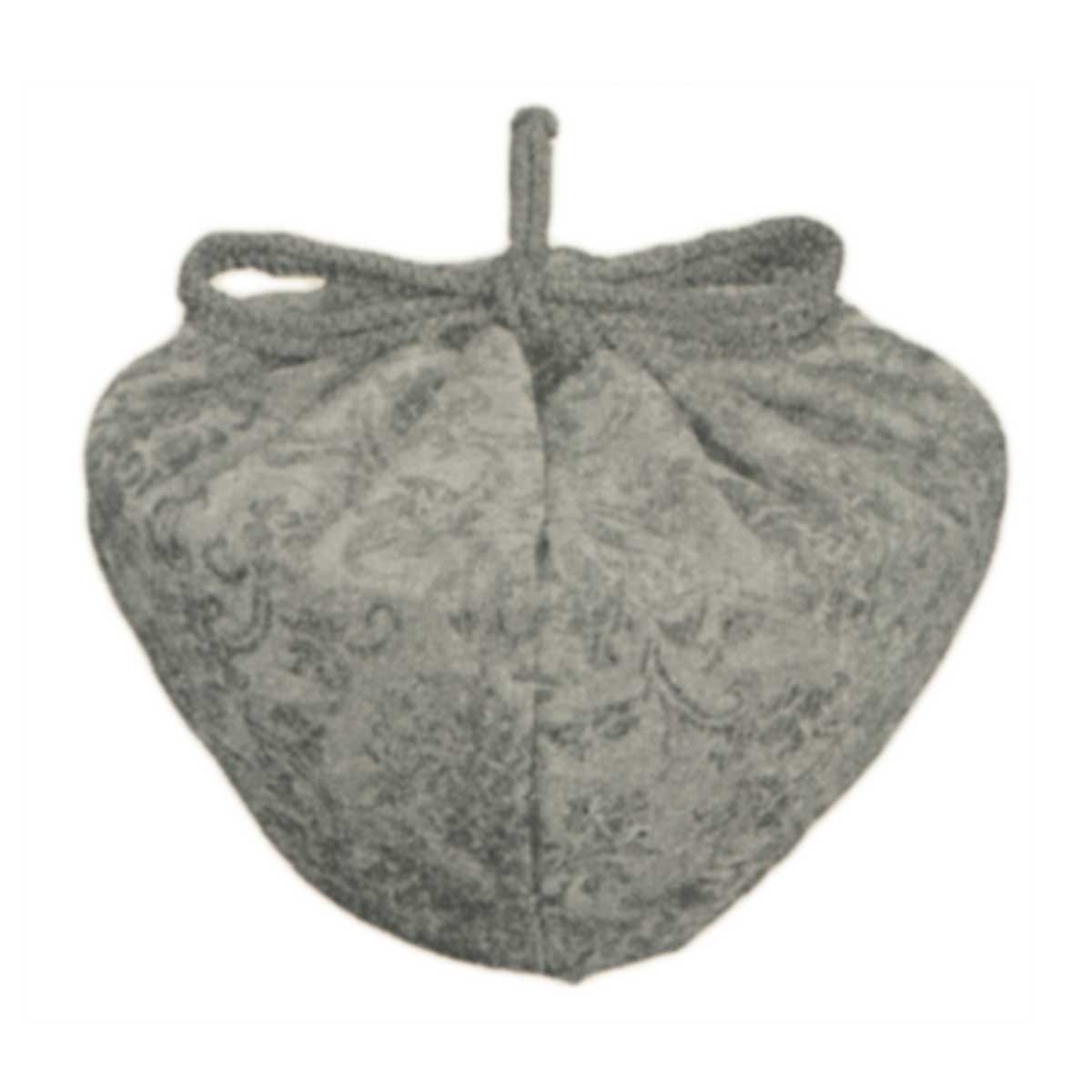
Cover, white ground with double vine pattern and old gold lattice, Tenmoku stand, black plain ground with chrysanthemum pattern, box, paulownia wood with inscription by Kobori Enshu
Provenance
Kobori Enshu – Kobori Izumi no Kami – Matsudaira Iga no Kami – Fujita family
List
Meibutsu-ki, Meibutsu-ki Furoku, Meibutsu-shu, Mekki-sō, Meibutsu Mekki Monjo, Enshū Zōchō, Hōan Bunko Kō 16, Taisho Meiki Kanko.
Dimensions
Height: 6.5 cm, Mouth diameter: 12.2 cm, Foot diameter: 4.5 cm, Same height: 0.7 cm, Weight: 236 g.
Owner: Osaka Fujita Museum of Art.
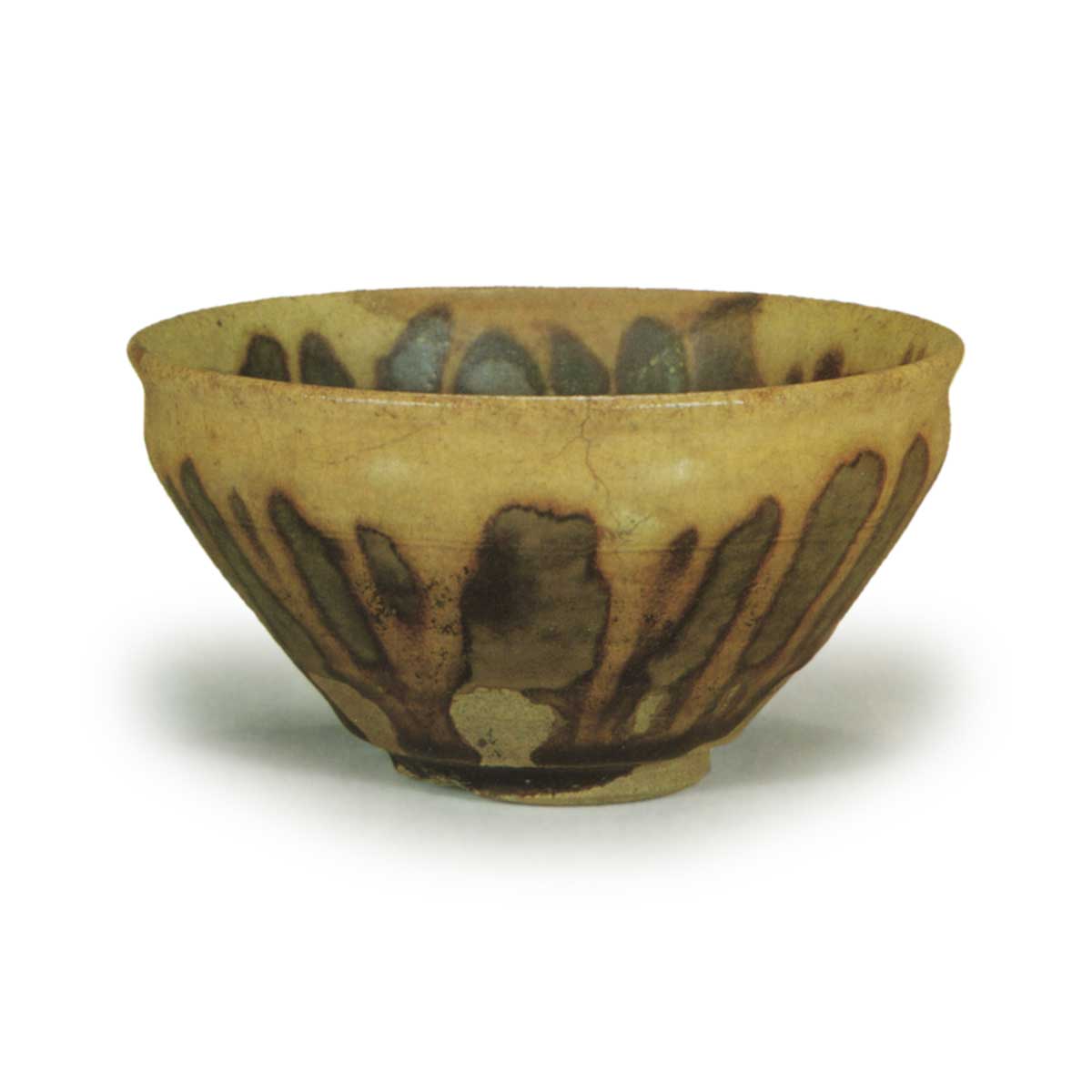
This tenmoku tea bowl, as mentioned in the general discussion, was originally used by Zen monks in the monks’ hall as a tea ceremony utensil.
The impression given by this tea bowl is that of a “Shunka-san.”
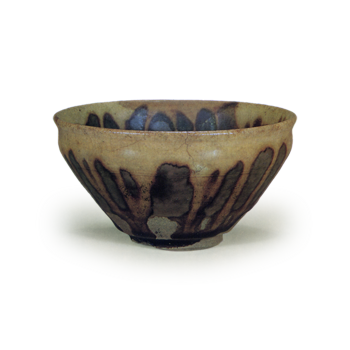
From a technical perspective, it appears that iron was used to draw patterns under the yellow Seto glaze. The slightly curved straight lines suggest that it was made in a later period of Seto Tenmoku. However, the fact that the inside of the foot is not carved suggests that it was made before the Momoyama period.
It is said that Kobori Enshu interpreted this pattern as chrysanthemums and named it “Chrysanthemum Tenmoku,” but efforts to faithfully replicate Chinese Tenmoku tea bowls are evident.
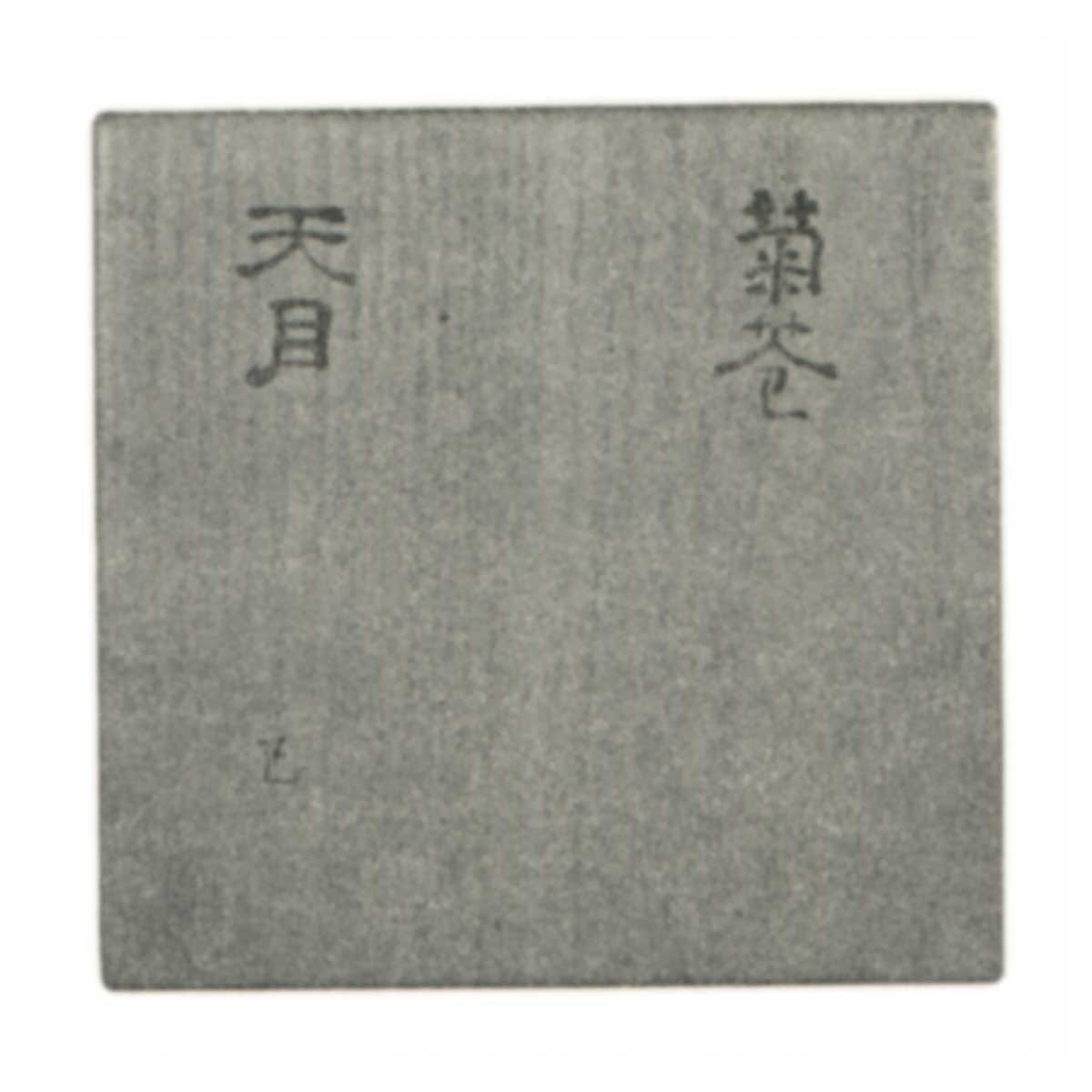
The box inscription, written in Enshu’s hand, reads “Chrysanthemum Alley Tenmoku,” with the character “Snake” in small letters at the bottom left, indicating that the tea bowl was categorized using the Chinese zodiac symbols each time it was acquired.