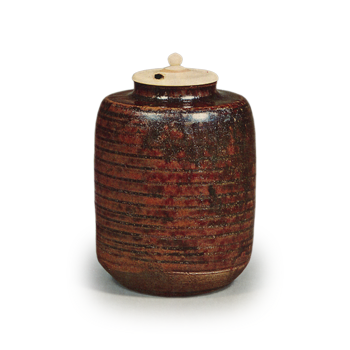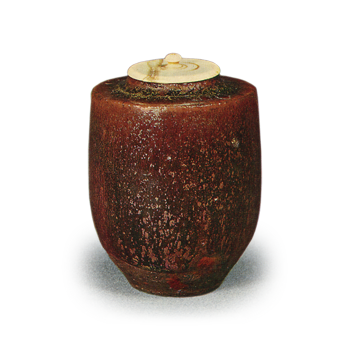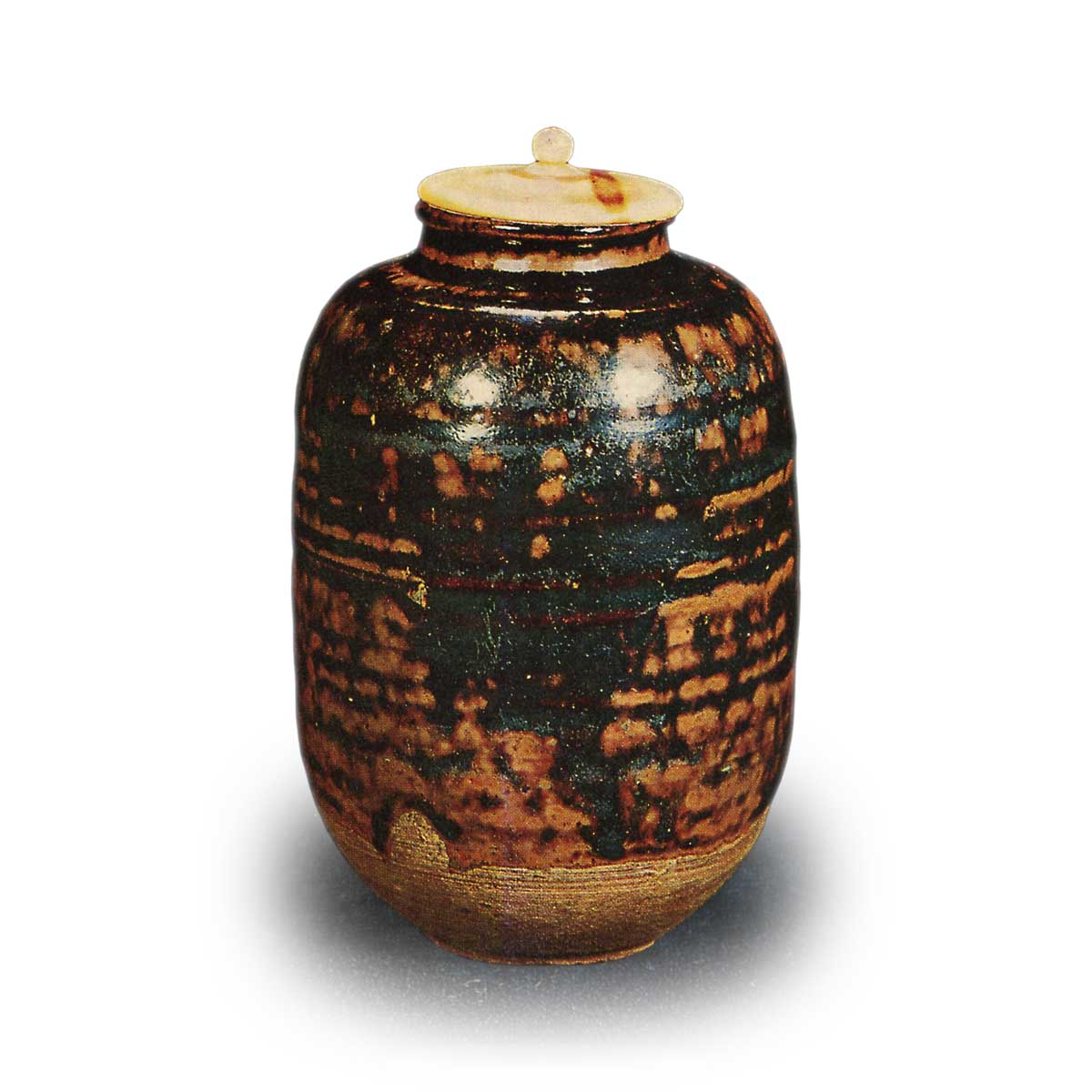
Also known as Dōkyū Katatsuki, Old Seto, Meibutsu of the Middle Period
Accessories
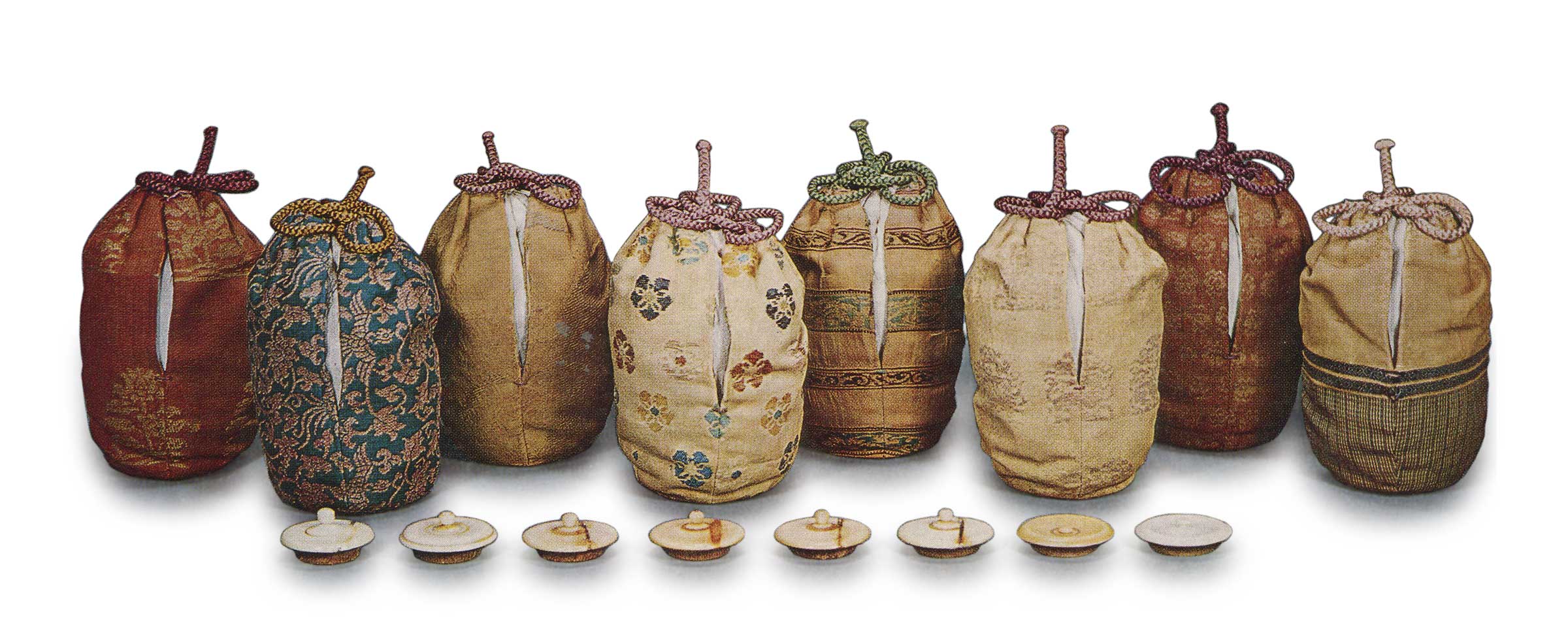
Lids: 8; Covering Cloth: 8; Covering Cloth Box; Paulownia Wood; Inscription; Written by Kobori Enshū
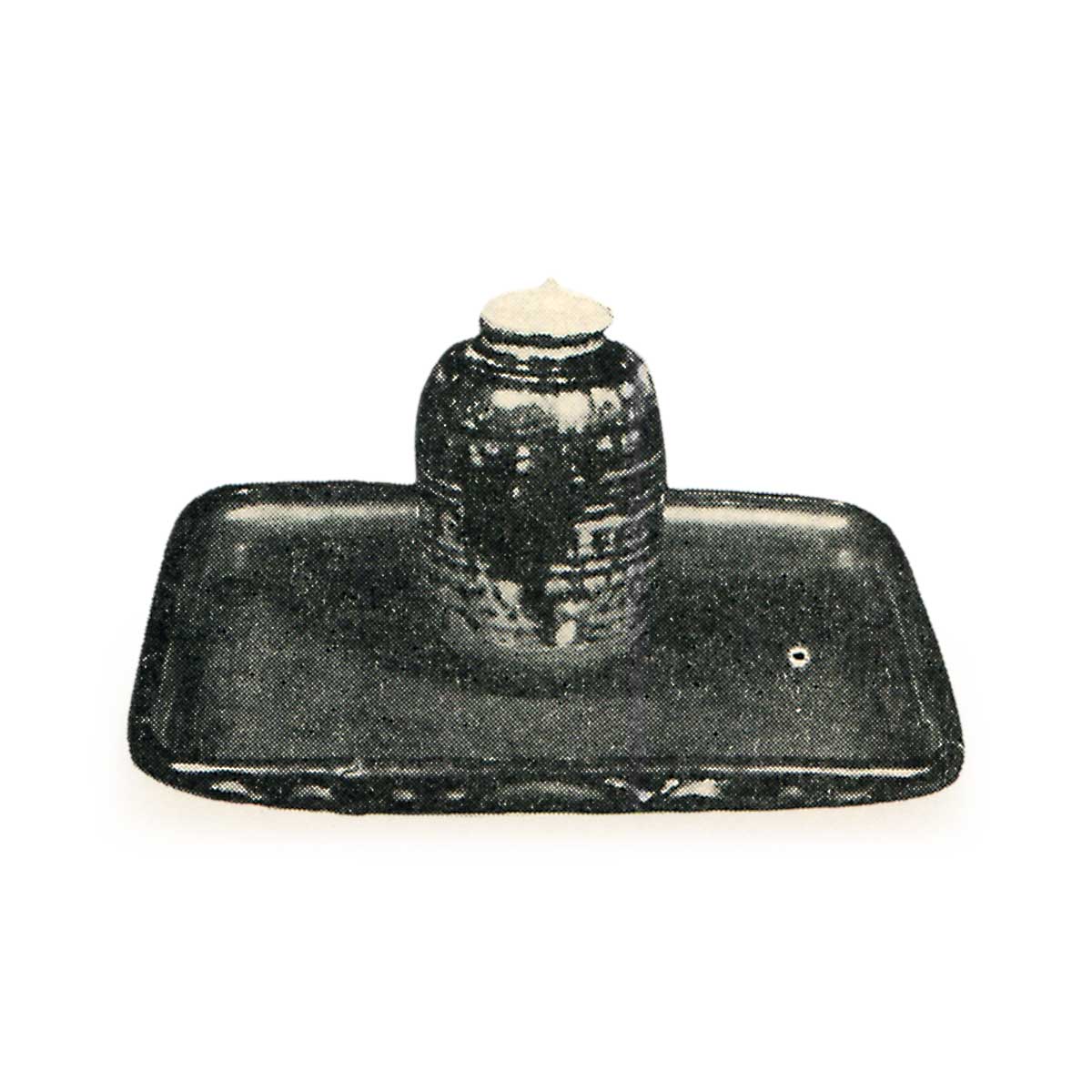
Hikiya: Ichitake Nakatsugu; External Lathe Marks; Shunkei Lacquer; Chinese Import; Black-rimmed Kuwari Square Tray; Chūan-an; Mulberry Wood; Made by Joemon Yoshibe; Tray Box; Paulownia Wood; Inscription; Written by Kobori Enshū
Box: Paulownia wood with inscription by Kobori Enshū. Inner box: Paulownia wood with inscription by Kogetsu and Enshū.
Accompanied by one scroll: From Kobori Enshū to Mizuno Hyōkurō.
Provenance
Kobori Enshū → Watanabe Ki → Fujita family.
References
Enshū’s Inventory Ledger, Kobori Family Utensil Ledger, Kokon Meibutsu Ruishū (Collection of Famous Objects Through the Ages), Meibutsu Ki (Record of Famous Objects), Mekiri Sō (Essay on Discernment), Enshū Shūi (Supplements to Enshū), Enshū Hyakue Chayū (Enshū’s Hundred Tea Gatherings), Matsuya Hisashige Nikki (Matsuya Hisashige’s Diary), Matsuya Nikki (Matsuya’s Notes), Kokon Chayū Shū (Collection of Tea Ceremony Through the Ages), Chayū Rokushōshū Denki (Biographies of Six Tea Masters
Dimensions
Height: 9.6 cm, Mouth Diameter: 3.15 cm, Body Diameter: 6.4 cm, Base Diameter: 3.0 cm, Weight: 128 g
Owner
Fujita Art Museum, Osaka
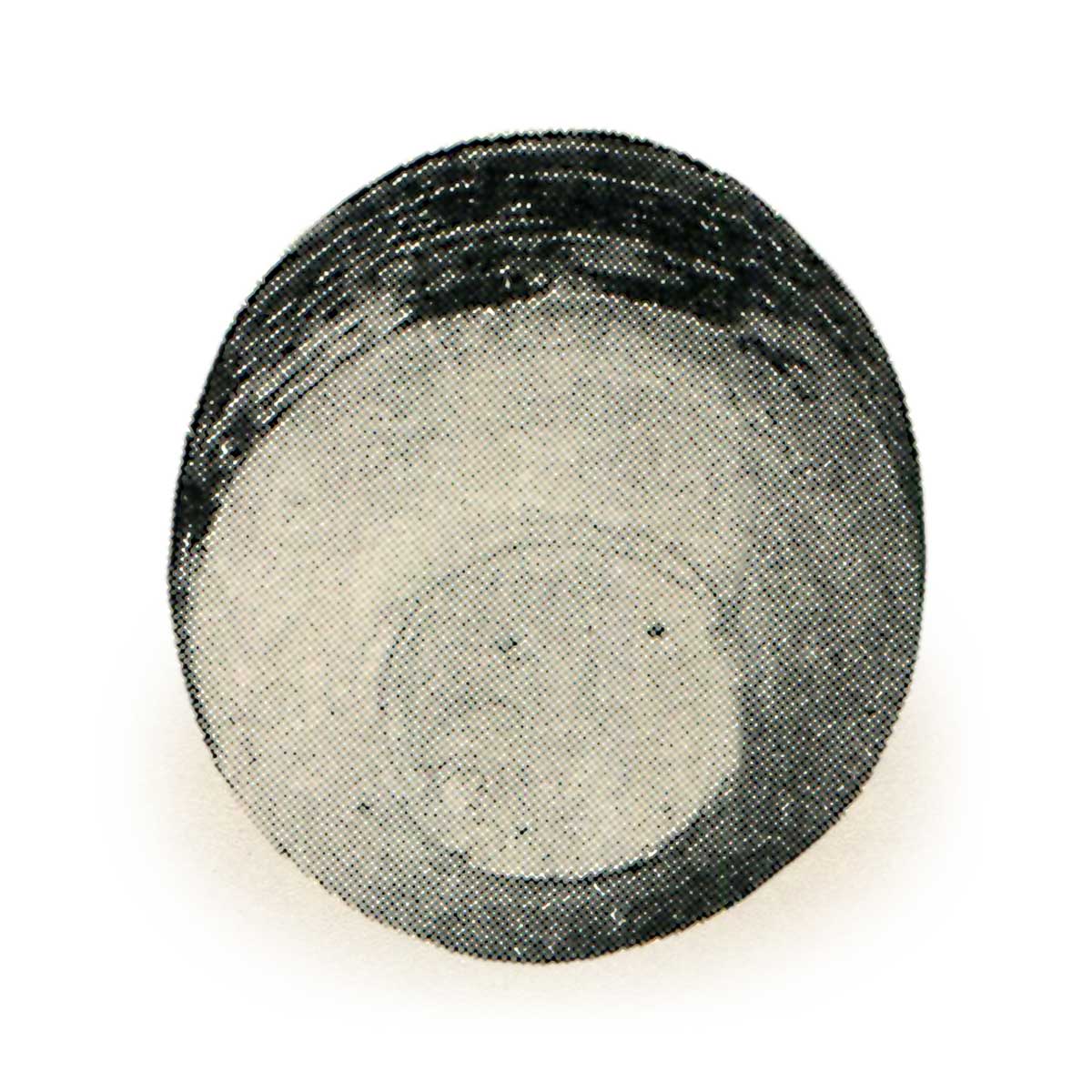
As the sole surviving piece from Enshū’s private collection, it stands out among ancient Seto wares for its well-proportioned size, elegant form, and bright coloration, appearing more youthful than its age. Its appearance is more subdued than the vivid colors in the illustrations, recalling its refined quality.
Its gently sloping shoulders are not imposing; a subtle wheel-thrown line, paler than the shoulders, extends to the base. The form tapers gracefully from the clay body to the base, its Seto glaze taking on a yellowish hue. A black glaze flows down the body, forming a narrow stream at the base. The clay appears soft, and the threaded base is neatly finished, lending it a refined quality.
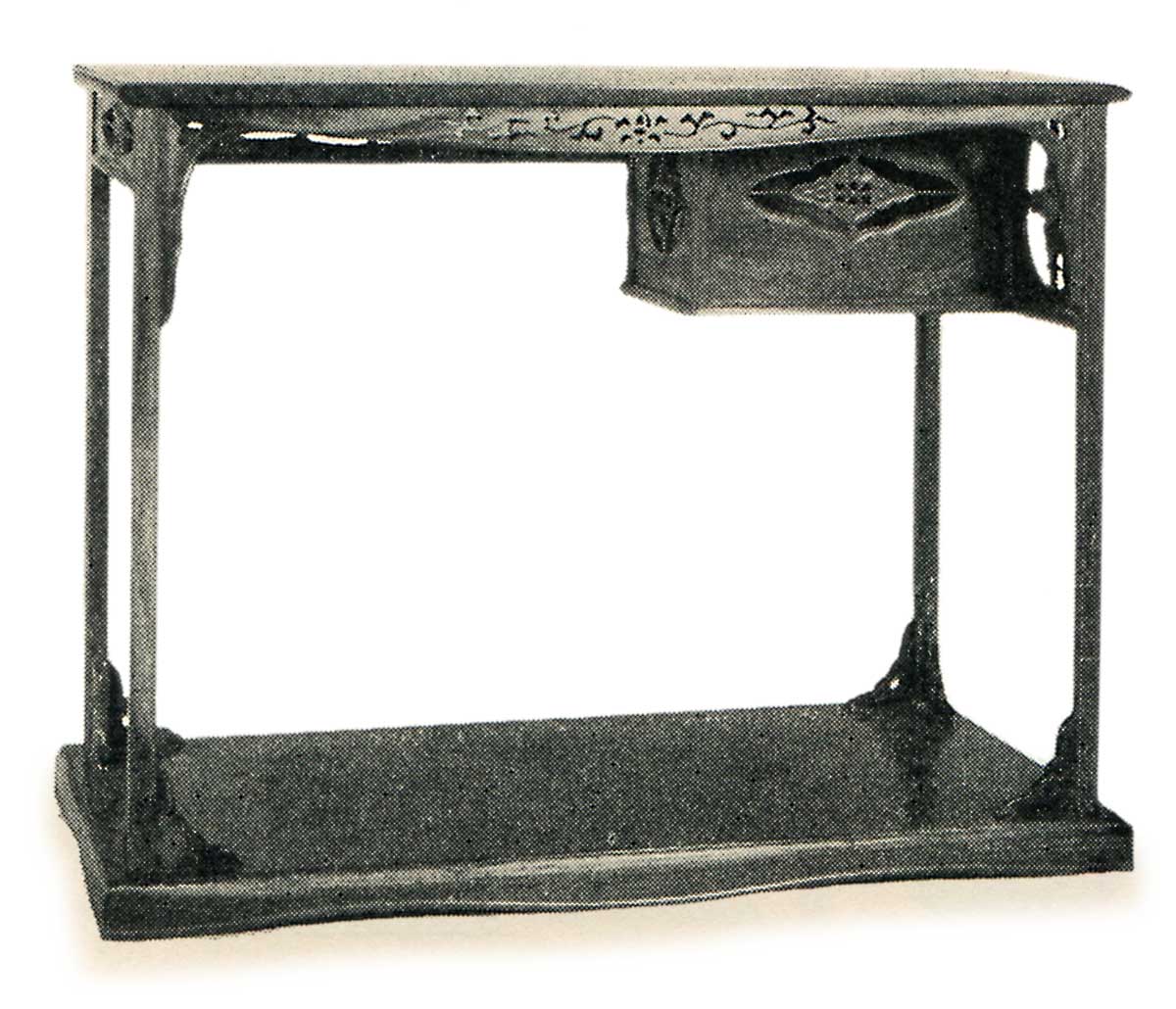
The replacement lids comprise eight pieces, each a different variety of the Meibutsu Kirikawara ware. Eight replacement lids for the tea caddy are also included. A square tray with a black-green glaze and a shelf specially made for the tea caddy, attributed to Chūjōan, are also included, reflecting Enshū’s taste.