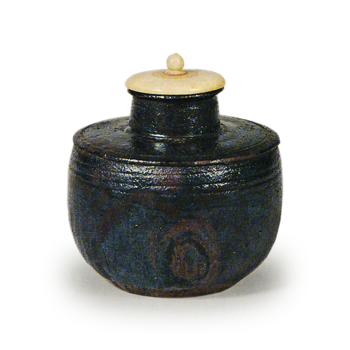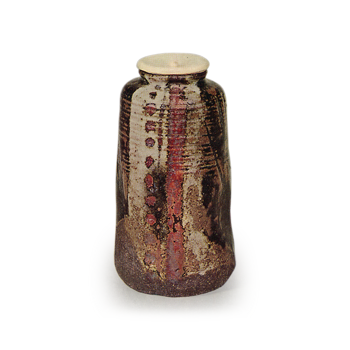
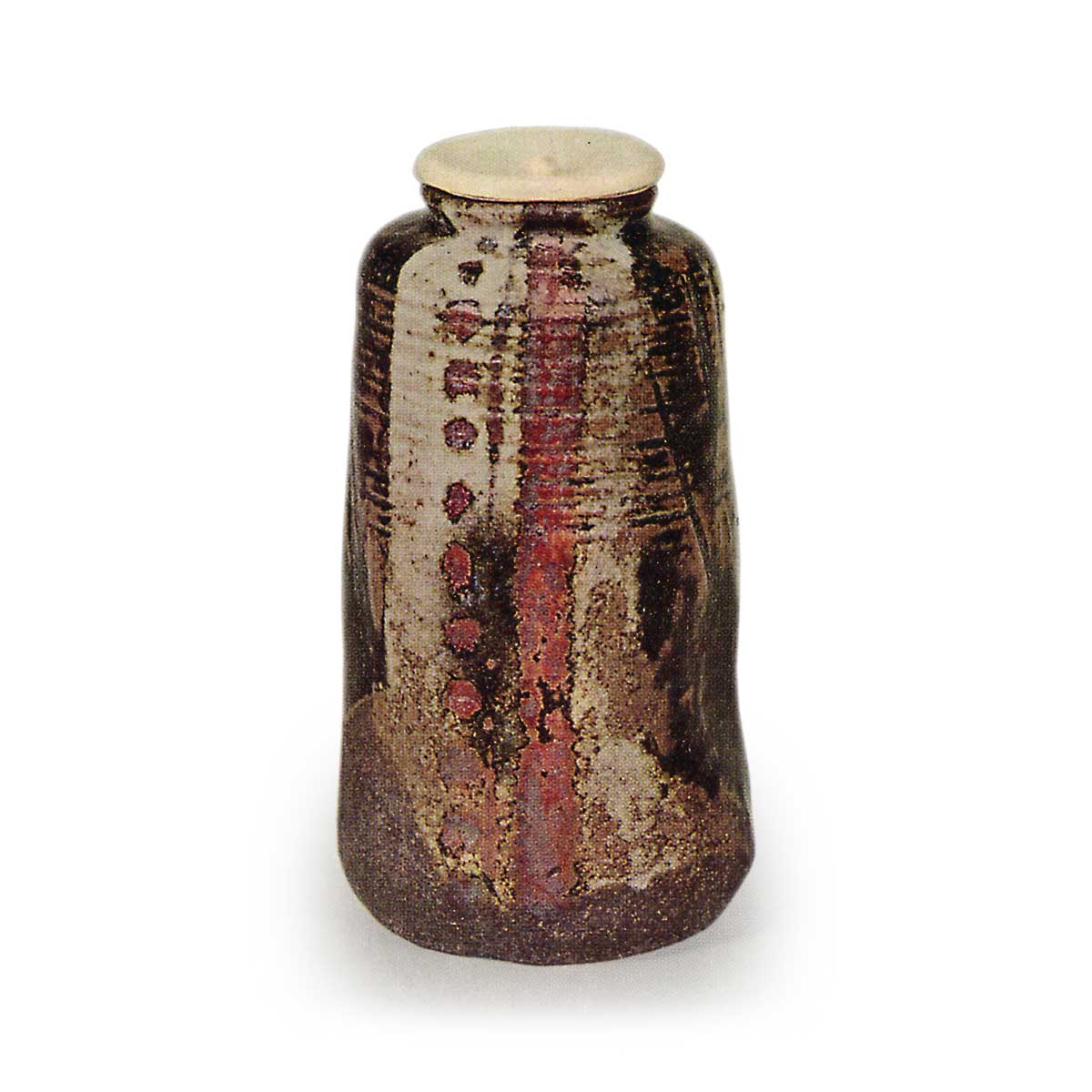
Gokama Kiln, Oribe
Accessories: Lid, Single Nest; Lid Box, Paulownia Wood; Inscription, by Matsudaira Fumai
Two Covering Cloths
Hikiya Kiln, Ironwood; Body, Silver Powder Character Design; Inscription, by Kobori Enshu; Lid, Gold Powder Character Design
Inner Box, Paulownia Wood; Inscription, by Kobori Enshu; Outer Box, Paulownia Wood; Inscription, by Matsudaira Fumai
Provenance
Kobori family → Tsuchiya Sagami-no-kami → Matsudaira Fumai
Recorded in
Kokin Meibutsu Ruiju, Meibutsu-ki, Meibutsu Mokuri Monjo, Fushimiya Nikki Meibutsu Chaki Zu, Meibutsu Shu, Mokuri-sō, Kobori-ke Goto Gai Shutsuryo Cho, Tsuchiya Zocho, Fushimiya Teko
Dimensions
Height: 8.9cm, Mouth Diameter: 2.8–3.1cm, Body Diameter: 5.2cm, Base Diameter: 4.3cm, Weight: 120g
This tea caddy is read as “Miotsukushi.”
While there are many Oribe tea caddies, only the Narumi Gaki-hara tea caddy is counted among the revived Meibutsu. This is likely because Enshū disliked its overly diverse appearance. However, the Miohyō tea caddy, with its pleasing wabi-sabi form, seems to have been treasured and kept in secret among Enshū’s own collection.
It is small and slender, lacking handles. The upper part bears wheel marks, over which white glaze and Seto tea glaze are applied in a flowing manner. Dots are applied, resembling the seams of curved lacquerware, and the accidental firing variations of the clay visible between the white glaze create the scenery. This rustic style, rare for Oribe ware, likely appealed to Enshū’s taste.
Two storage covers. Lightly fitted, using brocade and silk kandou.


Body inscription by Kobori Enshu
With all my heart
As a token
That we have met
Here
And now
We are parted
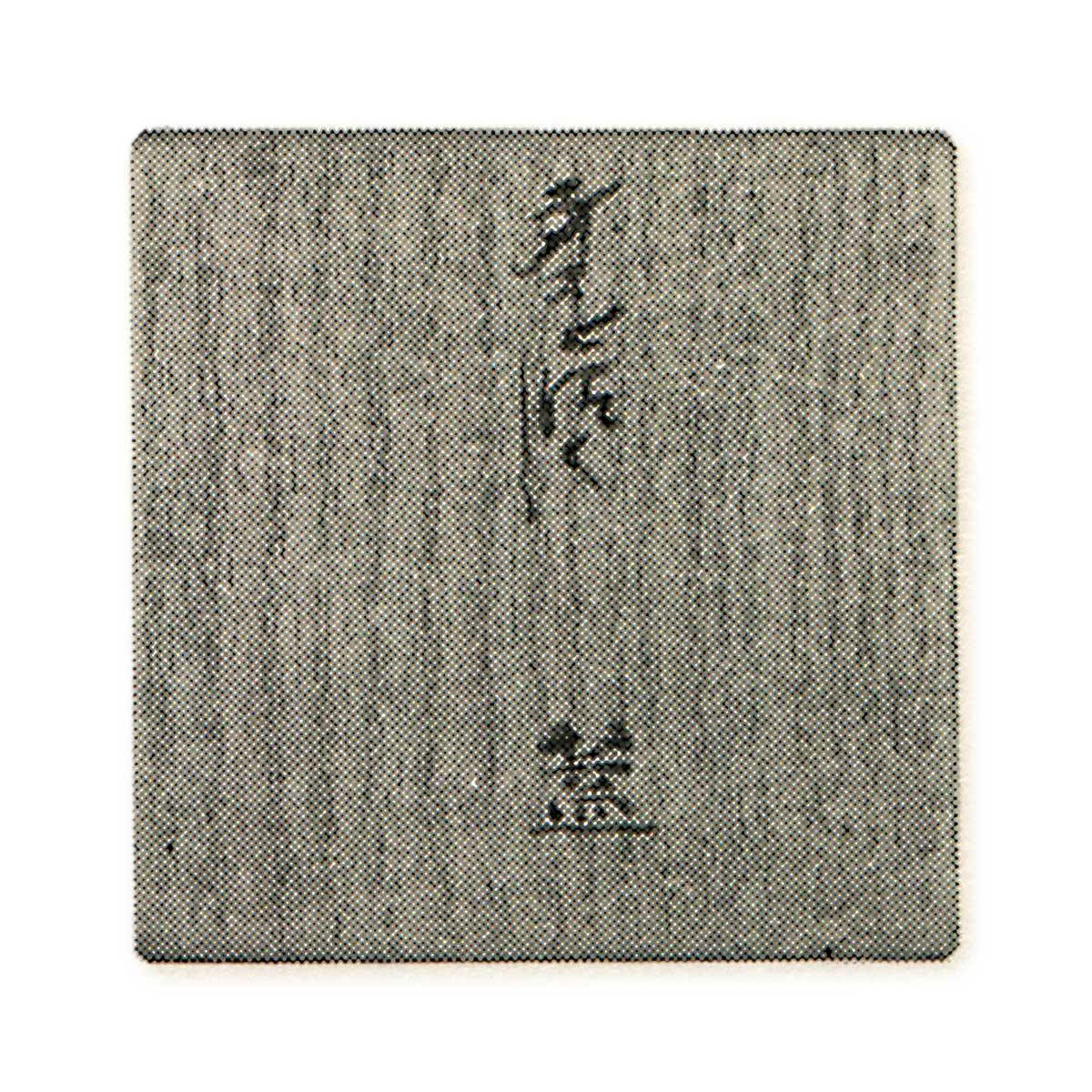
Inscription by Matsudaira Fumai
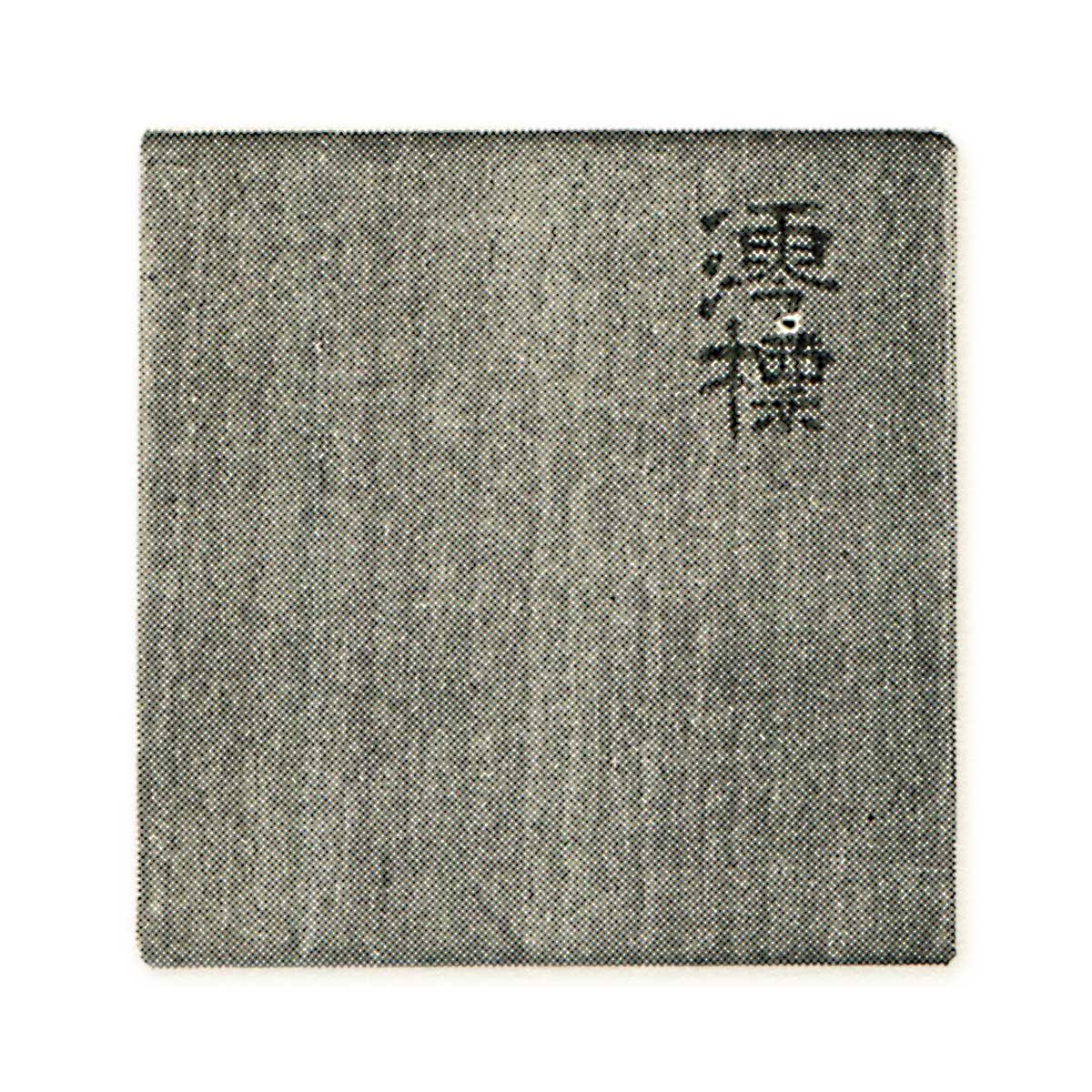
Inscription by Kobori Enshu