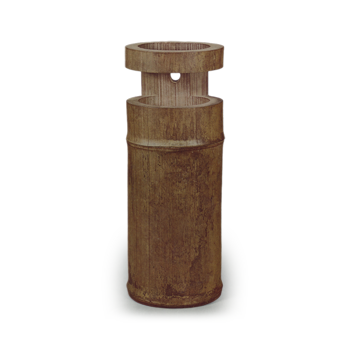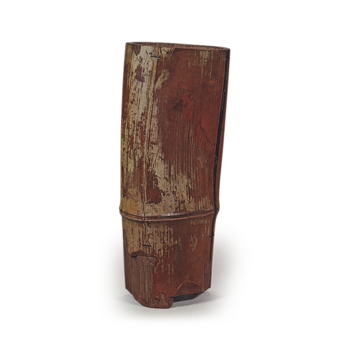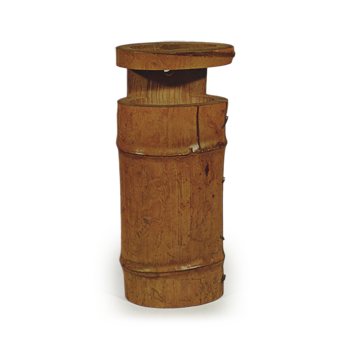
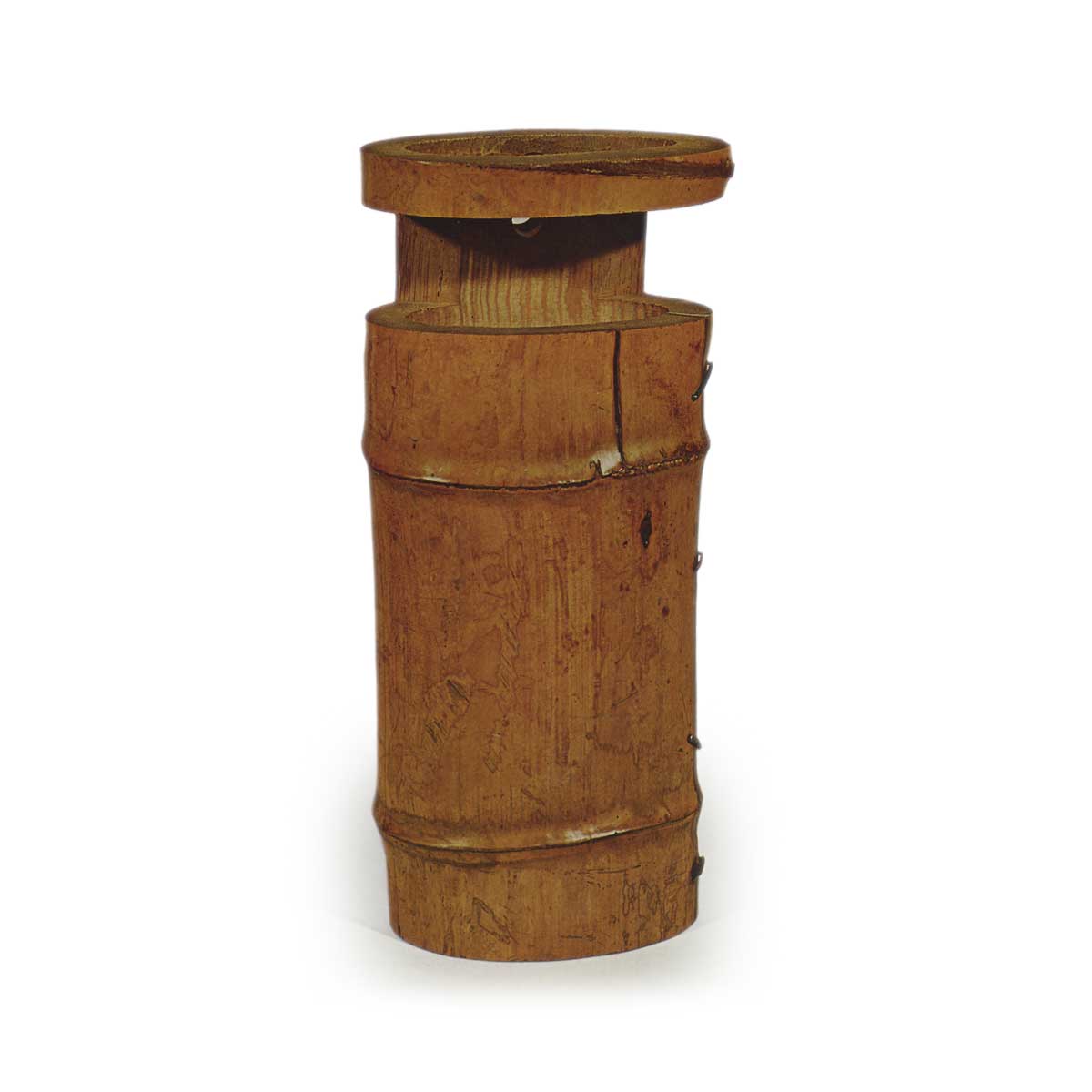
Accessories: Inner box (white paulownia wood with slatted lid), inscription by Kobori Enshu
Inscription on the underside of the lid
Dimensions
Height: 30.2 cm, Mouth diameter: 8.3–13.9 cm, Body diameter: 13.3 cm, Base diameter: 9.5–11.9 cm, Weight: 859 g
Collection: Nezu Museum, Tokyo
I believe I have demonstrated that the openings at the top and bottom of the single-cut flower window on the Enshu bamboo vases discussed so far are narrower than those on Rikyu-style Senke vases.
I hope you have also come to understand that the absence of the artist’s signature or a directly inscribed mark on the vase itself is a key point in identifying Enshu vases.
As an exception, this “Fujinami” is inscribed with the characters “Fujinami” in gold powder on the back of the vase. While there is no doubt that the original is by Enshu, the gold powder inscription is merely a later addition by a craftsman.
However, the writing on the box is undoubtedly by Enshu. The lid’s front reads “Fujinami Single-Cut Bamboo Vase,” and the lid’s underside bears a poem by Fujinami.
Inner Box: Unfinished Paulownia Wood; Slatted Lid; Inscription: Written by Kobori Enshu
Inside of Inner Box Lid: Inscription
The wisteria waves at the shrine where the spirits dance
How could I ever forget them, even for a moment?