Accessories: Box, natural paulownia wood, inscription
Dimensions
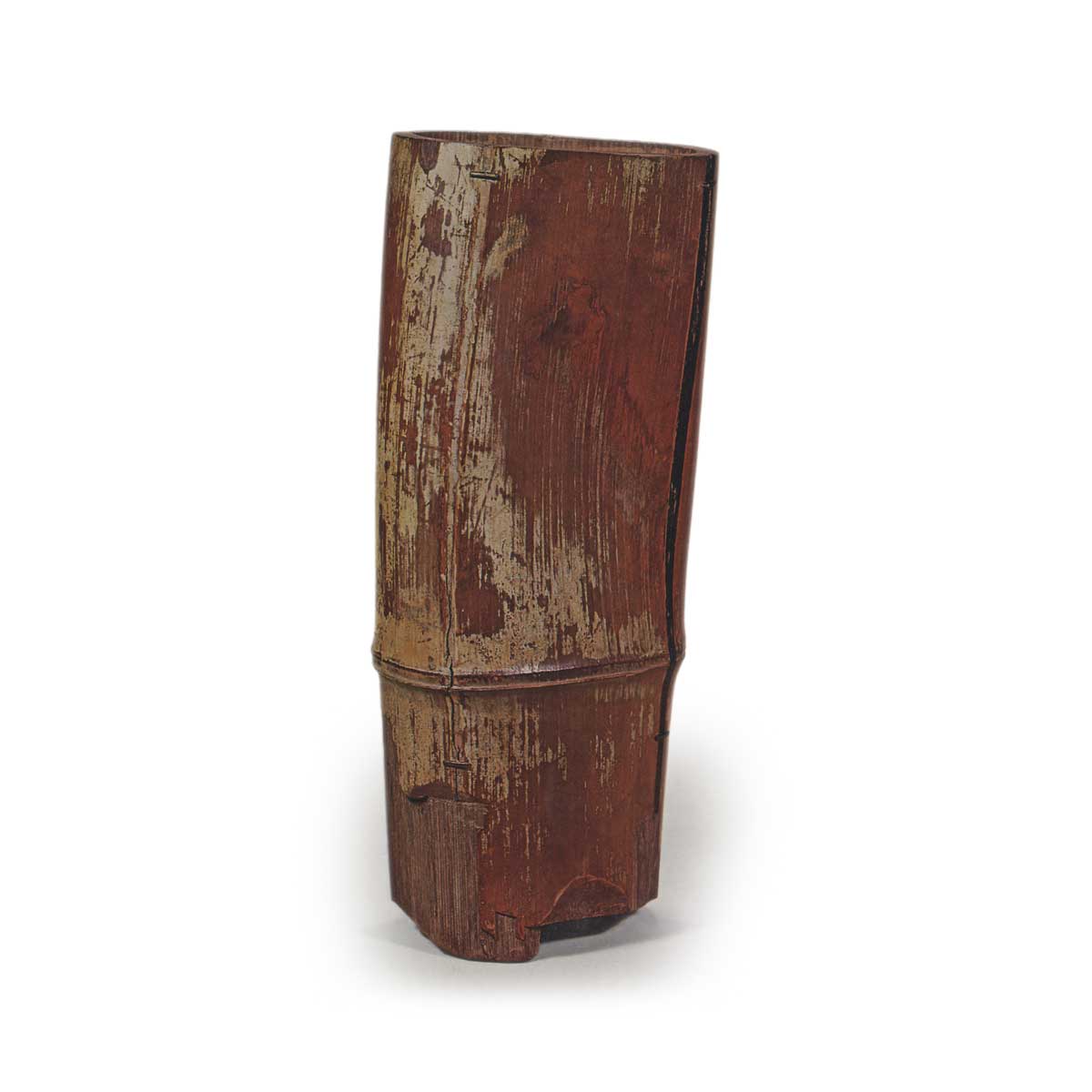
Height: 29.4 cm, Mouth diameter: 7.9–12.2 cm, Body diameter: 10.1–12.0 cm, Base diameter: 9.9–10.3 cm
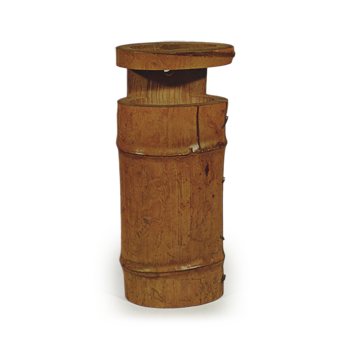
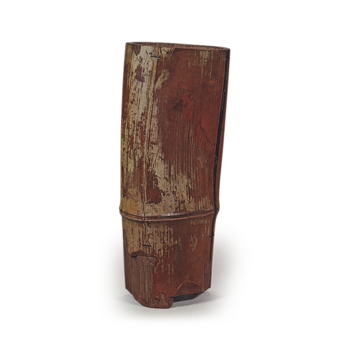
This is one of the two flower vases known as “Sakashita-jame” by Sekishu, a pair that is neither clearly the elder nor the younger. The “Sakashita-jame” is a type of flower vase rarely seen outside of this piece by Sōwa and those by Sekishu.
By some strange twist of fate, these two vases have been exclusively held by a certain family in Kobe. We were invited to a tea ceremony there, and judging by their style, we correctly identified one as Ishū’s work and the other as Sōwa’s—a truly delightful experience.
Since Katagiri Sekishū was a warrior daimyō, the bold and unrestrained style of the “Shakuhachi-jamoku” is understandable; however, even for a daimyō, Kanamori Sōwa was a man known as “Hime Sōwa” for his refined, courtly aesthetic in tea, so I never dreamed he would have such a bold and unrestrained taste. I suppose that both Sekishū and Sōwa, tracing back far enough, belonged to the tea lineage that originated with Sen Dōan. His father, Rikyu, upon seeing his son Michiyasu’s tea style, praised him so highly that he remarked, “I can think of no one but Michiyasu who could prepare tea before the Great Buddha.” Michiyasu must have been quite the heroic figure indeed. That two such outstanding figures—Sekishu and Sōwa—emerged from this lineage of Michiyasu and created this masterpiece is a profound topic, though it remains unclear which came first.
Box: Unfinished Paulownia wood, with inscription
Vase: Sōwa (seal)