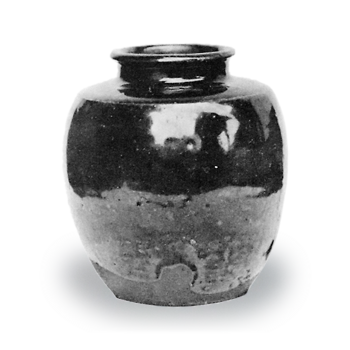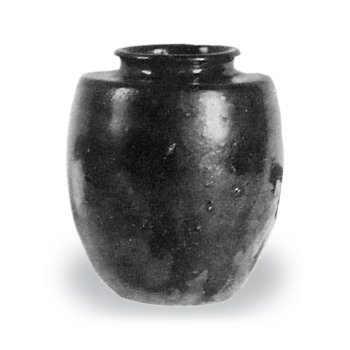
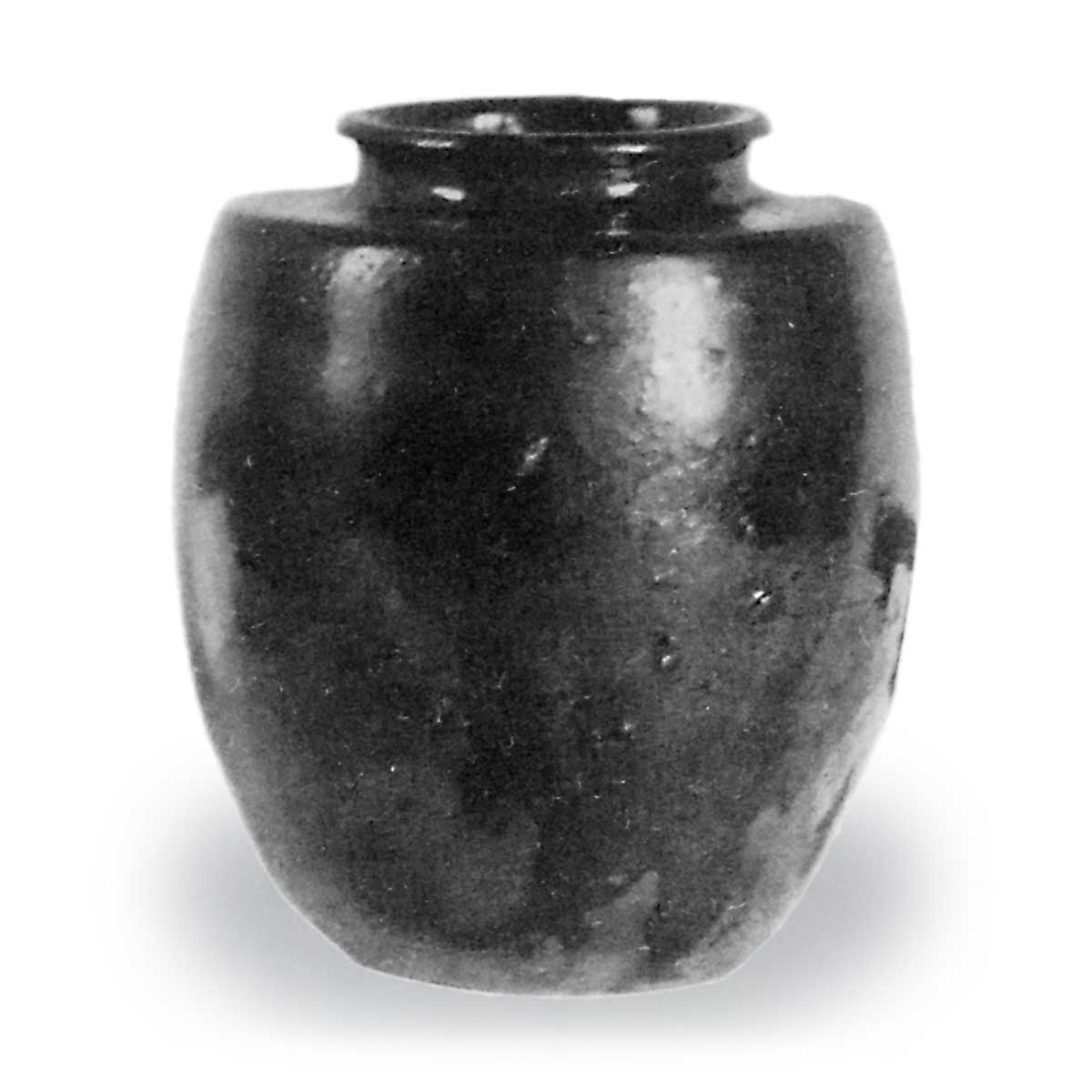
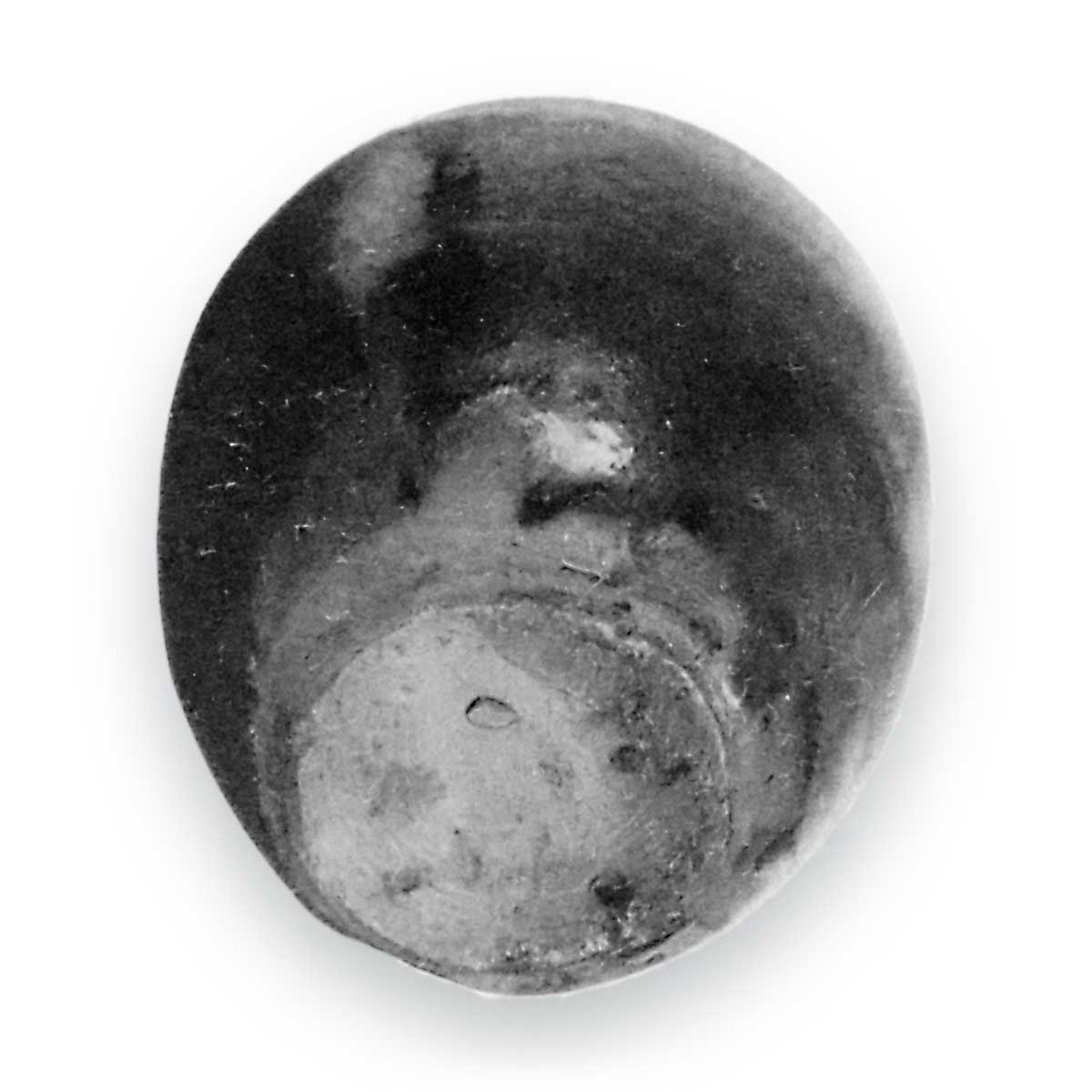
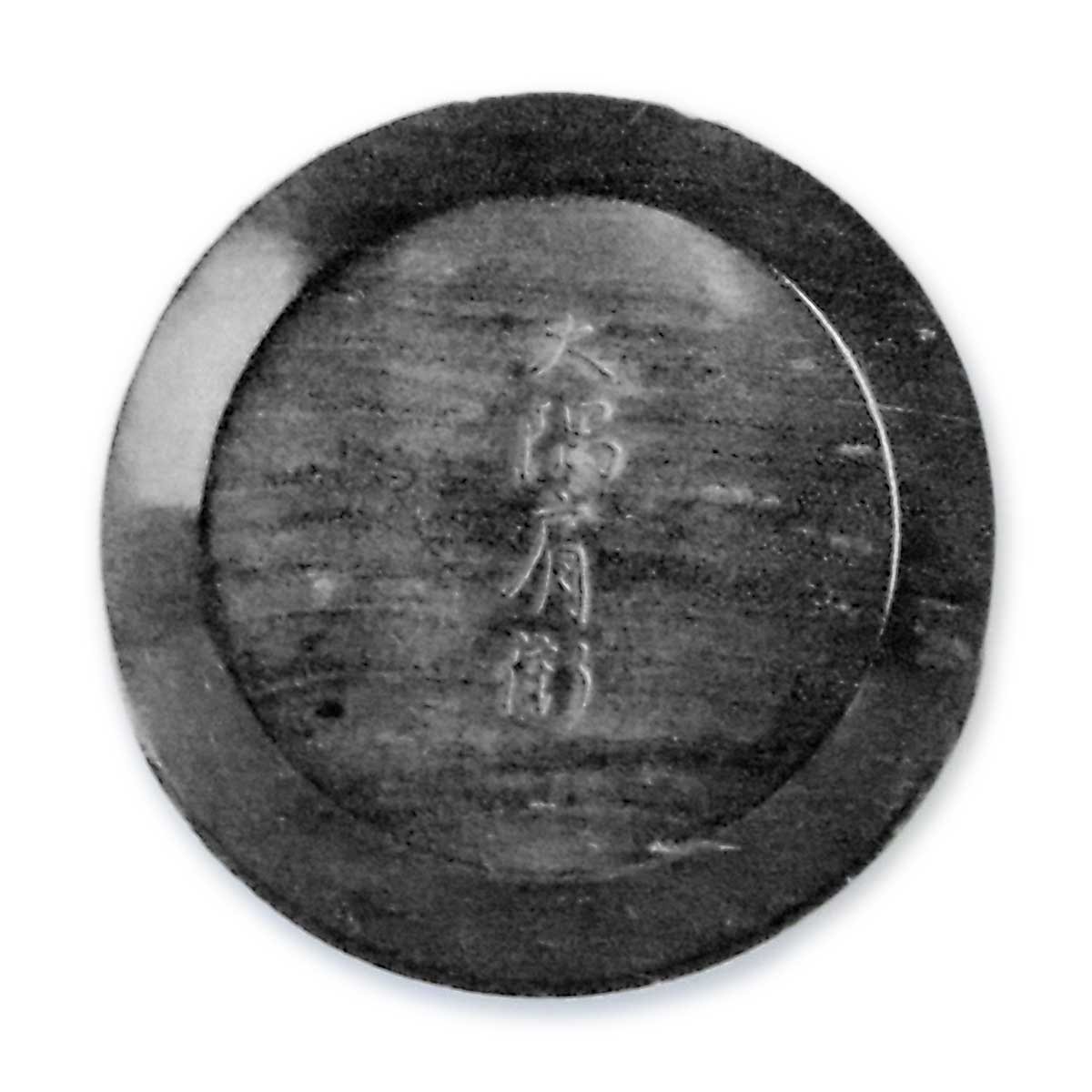
Made in China (Tang-style) | Daimeibutsu | Collection of Marquis Tokugawa Yorimichi
[Origin of the Name]
It is also known as the “Honda Osumi Katatsuki.” This is because it was a tea caddy owned by Honda Osumi-no-kami. The Hankanfu records the following: “Honda Ōsumi-no-kami Tadasumi was the third son of Honda Sado-no-kami Masanobu and served the Shogunate. During the Siege of Osaka, he attacked from the Tennoji sector and beheaded 217 enemies, presenting their heads as a tribute. As a reward, he was granted fiefs (totaling 28,000 koku, comprising Enomoto in Shimōsa Province and Minakawa in Kōzuke Province), but soon after, he suffered an unexpected misfortune, and his family line was extinguished. 」
[Dimensions]
Height: Approx. 8.8 cm (just under 2 sun 9 bu)
Body diameter: Approx. 7.7 cm (2 sun 5 bu 5 rin)
Mouth diameter: Approx. 4.4 cm (1 sun 4 bu 6 rin)
Base diameter: Approx. 3.9 cm (1 sun 3 bu)
Shoulder width: Approx. 1.4 cm (4 bu 5 rin)
Weight: Approx. 107 g (28 monme 6 bu)
[Accessories]
・Ivory lid: 1
・O-mono bag (bag for the tea caddy): White chirimen (crepe), with a white cord
・Cover bags (pouch): 2
- Seigaiha, clouds, and cranes damask (lining: iridescent, cord: purple)
- Light yellow ground with nine-cloud dragon pattern satin (lining: iridescent, cord: purple)
・Storage box: Black lacquered, with gold-leaf lettering
“Osumi Katatsuki Bag”
・Hikiya (wooden container to protect the tea caddy): Made of karin wood, with gold-leaf characters on the lid
“Osumi Katatsuki”
Bag for the Hikiya: Tang-style woven fabric (lining: brown satin, cord: purple)
・Inner box: Unfinished paulownia wood box
“Osumi Katatsuki”
・Outer box: Black lacquered, with gold-leaf characters
“Osumi Katatsuki”
[Miscellaneous Notes]
“Kobutsuki”: Honda Osumi Katatsuki. Owned by Ii Sobeto.
‘Gankabutsuki’: Honda Osumi Katatsuki. Chinese import. Owned by Ii Sobeto.
“Kokin Meibutsu Ruiju” and “Rinbōkiryū”: Honda Osumi Katatsuki. Chinese import. Daimeibutsu. Owned by Ii Sobeto.
On August 20, 1635 (Kan’ei 12), at Yamazato in the Ninomaru of Edo Castle, this was the tea ceremony attended when Lord Ii Sobeto presented tea.
Lord Matsudaira Etchū-no-kami, Lord Matsudaira Chikuzen-no-kami, Lord Mōri Kai-no-kami, and Lord Tachibana Hida-no-kami were in attendance.
[Suki-dōgu (Tea Utensils)]
Hanging Scroll: Calligraphy by Chizetsu
Flower Vase: Metalwork
Tea Caddy: Osumi Katatsuki
Tea Bowl: Yase-yaki
(From Kizen-bon Yamamoto Dōku Kokusho)
On December 5, 1639 (Kan’ei 16), the Shogun visited Lord Ii Sōbe-no-kami’s secondary residence, where tea was served.
【Utensils from the Mountain Sukiya】
Hanging Scroll: Calligraphy by Chizetsu
Tea Caddy: Osumi Katatsuki
Tea Bowl: A new one
Flower Vase: Gold-inlaid Kabura
(From Kizen-bon Yamamoto Dōku Kokusho)
Kansei Shūshū Shokke-fu:
Ii Naozumi (Genbato, later Sobeto). He became lord of the Hikone Domain in Kanbun 2 (1662). On July 26, Manji 2 (1659), during the ceremony to express gratitude for inheriting the family headship, he presented the Shogun with a sword by Maeda Masamune, an Osumi Katatsuki tea caddy, and a calligraphy scroll by Chizetsu as heirlooms of his father, Sobeto Naotaka.
March 9, 1660 (Manji 3), Noon: Duty Officer: Dōju
Hanging Scroll: Calligraphy by Onzangō and Jiju
Tea Jar: Ōsumi Katatsuki
Flower Vase: Celadon (without turnip-shaped base)
Tea was prepared in the Shogun’s presence, and Naito Izumo-no-kami was ordered to perform the tea ceremony. Sakai Sanuki-no-kami served as the attendant.
(From The Tokugawa Family Tea Ceremony Records)
December 16, Kanbun 5 (1665) | Duty Officer: Sōyu
In the tea room, the Shogun personally arranged the flowers, and tea was bestowed upon Hoshina Higo-no-kami, Sakai Gagaku-no-kami, and Abe Bungo-no-kami. The meal was served in the Seiko Room and bestowed upon Hoshina Higo-no-kami.
Hanging Scroll: Calligraphy by Inzetsu
Tea Caddy: Osumi Katatsuki
Flower Vase: Large Sorori (flowers: red camellia and white chrysanthemum)
Tea Bowl: Hake-me
(From The Tokugawa Family Tea Ceremony Records)
The Thousand-Year Pine (Bunsei 11, compiled by Ōgawara Chōhachi of the Aizu Domain):
On December 15, Kanbun 5, a formal edict (from the Shogun) arrived, and on the 16th, Lord Hoshina Masayuki entered the castle. Around 1:00 p.m., a meal was served to Lord Masayuki alone in the Kuro-shoin, and tea was served by the Shogun (His Lordship) himself. As this was a tea gathering for a single guest, and since it was the first time the current Shogun had served tea to the daimyo since assuming office, it was considered a most auspicious occasion. Although the Shogun had long been visually impaired, he completed the tea ceremony in the tea room (the “Goi”) without a single misstep, and was all the more delighted. The tea utensils used on this occasion reportedly consisted of a calligraphy scroll by Shōgetsu, an Osumi katatsuki (presented by Ii Sōbetsu), a brush-marked tea bowl (presented by Doi Daishokutō), and a large antique bronze sorori flower vase (containing white camellias and red camellias), all of which were Meibutsu.
October 25, Kanbun 8 (1668) | Duty Officer: Munetada
In the inner tea room, the Shogun personally arranged the flowers, and tea was bestowed upon Itakura Naizen-no-jo alone. The meal was served to the storeroom attendants in the main reception room and the adjoining room. However, Itakura Naizen-no-sho had come to the castle to bid farewell (greetings upon his transfer) before his posting to Kyoto, and it was on this occasion that he was granted tea.
Hanging Scroll: Seven Poems by Fujiwara no Teika Tea Caddy: Osumi Katatsuki
Flower Vase: Celadon (without turnip, flowers are chrysanthemums)
Tea Bowl: Mishima Hake-me
(From The Tokugawa Family Tea Ceremony Records)
February 15, Kanbun 10 (1670) | Duty Officer: Munetada
A meal was bestowed upon Lord Kii Daikan (Tokugawa Mitsusada) in the Kuro Shoin. After Ii Sobeto offered his greetings, tea was bestowed in the Omote no Oi (tea room). The Shogun personally arranged the flowers, and Ii Sobeto also offered his greetings in the tea room. After the tea ceremony concluded, farewell greetings (ohima) were exchanged in the reception room.
Hanging scroll: Calligraphy by Engo
Tea caddy: Osumi Katatsuki
Flower vase: Osorori
Tea bowl: Mishima
(From The Record of the Tokugawa Family’s Tea Gatherings)
March 25, Kanbun 10 (1670) | Duty Officer: Rippu
In the Seiko Room of the Kuro Shoin, a meal was bestowed upon Lord Owari Chūnagon (Tokugawa Mitsutomo). After Ii Sōbudō offered his greetings, tea was served in the outer parlor. The Shogun personally arranged the flowers, and Ii Sōbudō also offered his greetings in the tea room. After the tea ceremony, farewell greetings were exchanged in the reception room.
Hanging scroll: Calligraphy by Enko
Tea caddy: Osumi Katatsuki
Flower vase: O-sorori
Tea bowl: Mishima Hake-me
(From The Record of the Tokugawa Family’s Tea Gatherings)
July 23, Enpō 4 (1676)
A “bath tea ceremony” was held in the inner private room, and the Shogun personally arranged the flowers. Tea was served to Lord Toda, Governor of Echizen, alone.
[Tea Utensils]
Osumi Katatsuki (*This entry is written separately)
The meal for Lord Toda was served in the “Room of Music, Chess, Calligraphy, and Painting.” However, this was a farewell reception in honor of his transfer to Kyoto.
Hanging Scroll: Fujiwara no Teika’s “Tsukuba-ne”
Tea Caddy: Hōki Katatsuki
Flower Vase: Ōsorori
[Alternative Utensils]
Tea Caddy: Ōsumi Katatsuki
Tea Bowl: Rikyu Ido
(From The Record of the Tokugawa Family’s Tea Gatherings)
March 26, 1677
In the Seiko Room of the Kuro Shoin, a meal was presented to Lord Kii, the Chūnagon. After the Rōjū, Sakai Gakudō, delivered his greetings, the Shogun personally arranged flowers at the outer tea ceremony area. In the tea room, the Rōjū, Sakai Gakudō, also concluded his greetings. Following farewell remarks in the reception room, the Shogun proceeded to the Kuro Shoin, where Lord Kii’s retainers paid their respects (omemi).
Hanging Scroll: Calligraphy by Enko
Tea Caddy: Osumi Katatsuki
Tea Bowl: Mishima Yuraku (a gift from Oda Buzen-no-kami)
Flower Vase: Celadon Kine (flowers: Nagasaki Shiroru and white peony)
[Alternative Tea Utensils]
Tea Caddy: Shishobo
Tea Bowl: Myojo
(From The Record of the Tokugawa Family’s Tea Gatherings)
February 26, Enpō 6 (1678)
In the Seiko Room of the Kuro-shoin, a meal was presented to Lord Owari. After the Rōjū Sakai Gakudō delivered his greetings, the Shogun personally arranged flowers at the outer table. When Lord Owari viewed the Ōsumi Katatsuki in the tea room before the Shogun, the tea caddy and tea were immediately bestowed upon him, and Lord Owari accepted them. After the address by the Rōju Sakai Gakudō concluded, he gave his farewell address in the reception room, and the Shogun proceeded to the Kuro-shoin, where Lord Owari’s retainers paid their respects.
Hanging Scroll: Calligraphy by Ingetsu-ko
Tea Caddy: Osumi Katatsuki
Flower Vase: Large Sorori (containing a single skunk cabbage flower and a single leaf)
Tea Bowl: Rikyu-ido
[Alternative Tea Utensils]
Tea caddy: Gyokudo
Tea bowl: Waritakadai
(From The Tokugawa Family Tea Ceremony Records)
February 26, Enpō 6 (1678) — A tea ceremony hosted by Lord Tokugawa Ietsuna for Lord Owari, the Chūnagon
[Decorations in the Tea Room]
Hanging Scroll: Calligraphy by Tsukie Shoin
Tea Caddy: Osumi Katatsuki
Flower Vase: Large Sorori
Tea Bowl: Rikyu Ido
The “Osumi Katatsuki” on the right was bestowed upon Lord Owari by the Shogun himself.
(From Rikuzan Ichiyu Hoki)
On March 18, Genroku 11 (1698), when the Shogun (Tokugawa Tsunayoshi) visited the residence of the Owari Chūnagon, he privately bestowed a “Hanseki Katatsuki” (*Note: This is an error; it should be “Yukishige Katatsuki”) tea caddy upon the Chūnagon. In return, the Chūnagon privately presented the “Osumi Katatsuki” tea caddy to the Shogun.
(From *Godaidai-ki* by Toda Shosui)
Items bestowed upon the Kii Chūnagon as relics of Lord Tokugawa Tsunayoshi:
Wakizashi: Sadamune (valued at 200 gold coins)
Tea caddy: Ōsumi Katatsuki
Envoy: Tsuchiya Sagami-no-kami
(From Shiojiri by Amano Nobukage)
[History]
Originally owned by Honda Ōsumi-no-kami Tadasumi, it became the property of the shogunate when the Honda clan became extinct, and was subsequently granted to Ii Sōbe-no-kami Naotaka. The aforementioned Yamamoto Dōku Kokusho records that in the 12th and 16th years of Kan’ei (1635 and 1639), Ii Sōbe-no-kami used this tea caddy to entertain Shogun Tokugawa Iemitsu.
On July 26, 1659 (Manji 2), Naotaka’s son, Naozumi, presented this tea caddy—a memento of his father—to the shogunate as a token of gratitude for inheriting the family headship. Subsequently, the Tokugawa Family Tea Ceremony Records mentioned above document that this tea caddy was used at tea ceremonies of the shogun’s household in 1656 (Manji 3), 1665 (Kanbun 5), 1668 (Kanbun 8), 1672 (Kanbun 10), 1676 (Enpō 4), and 1677 (Enpō 5).
On February 26, 1678 (Enpō 6), Shogun Ietsuna bestowed this item upon the Owari Chūnagon following a tea ceremony. However, on March 18, Genroku 11 (1698), when Shogun Tsunayoshi visited the Owari domain residence, the Owari Chūnagon presented it once again to the Shogunate as a token of gratitude for the secret bestowal of the “Yukishige Katatsuki.”
Subsequently, in 1709 (the 6th year of the Hōei era), it was bestowed upon the Kishū Tokugawa family as a memento of Lord Tsunayoshi, and has been passed down ever since to the present day (currently in the collection of Marquis Tokugawa Yorimichi).
[Record of Actual Viewing]
On October 9, 1919, I viewed the actual piece at the residence of Marquis Tokugawa Yorinori in Iikura-cho, Azabu Ward, Tokyo.
The rim has a deep, flared edge; the neck is short; and the shoulders protrude robustly and powerfully. The entire piece is covered in a purple ground glaze, over which a dark amber glaze has been applied. From the tips of the shoulders, the amber glaze flows down like a waterfall, reaching the exposed clay at the base before stopping. In the pools of this glaze, a faint hint of lapis lazuli blue is visible.
There is a section where the sunken line running around the body is interrupted. Within the black glaze, the purple glaze forms speckles resembling the feathers of a hawk (shibun), and around the shoulders, the amber-colored glaze is applied even more densely.
From the hem downward, the clay is a pale grayish-white, and the base shows traces of chips or dents where the clay has cracked. The clay has a sticky texture and a smoothness reminiscent of dissolved white powder. The traces of the thread cut are thin and faint, appearing and disappearing, and are somewhat indistinct.
The interior base is glazed, while the area below it features a subdued glaze that has lost its luster, with wheel marks visible all over the surface. It feels very light in the hand, and the glaze patterns are rich and varied. If one were to look for a similar piece, the “Kitano Katatsuki” style bears the closest resemblance.