

A Meibutsu of the Revival of Chinese-Style Ware
Collection: Count Matsudaira Naoaki
About the Name
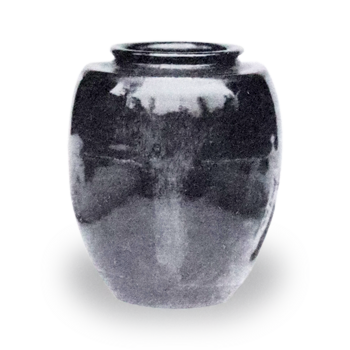
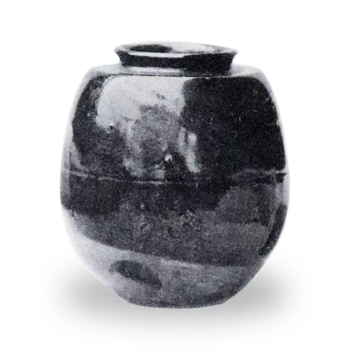
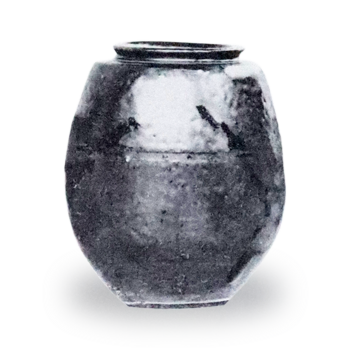
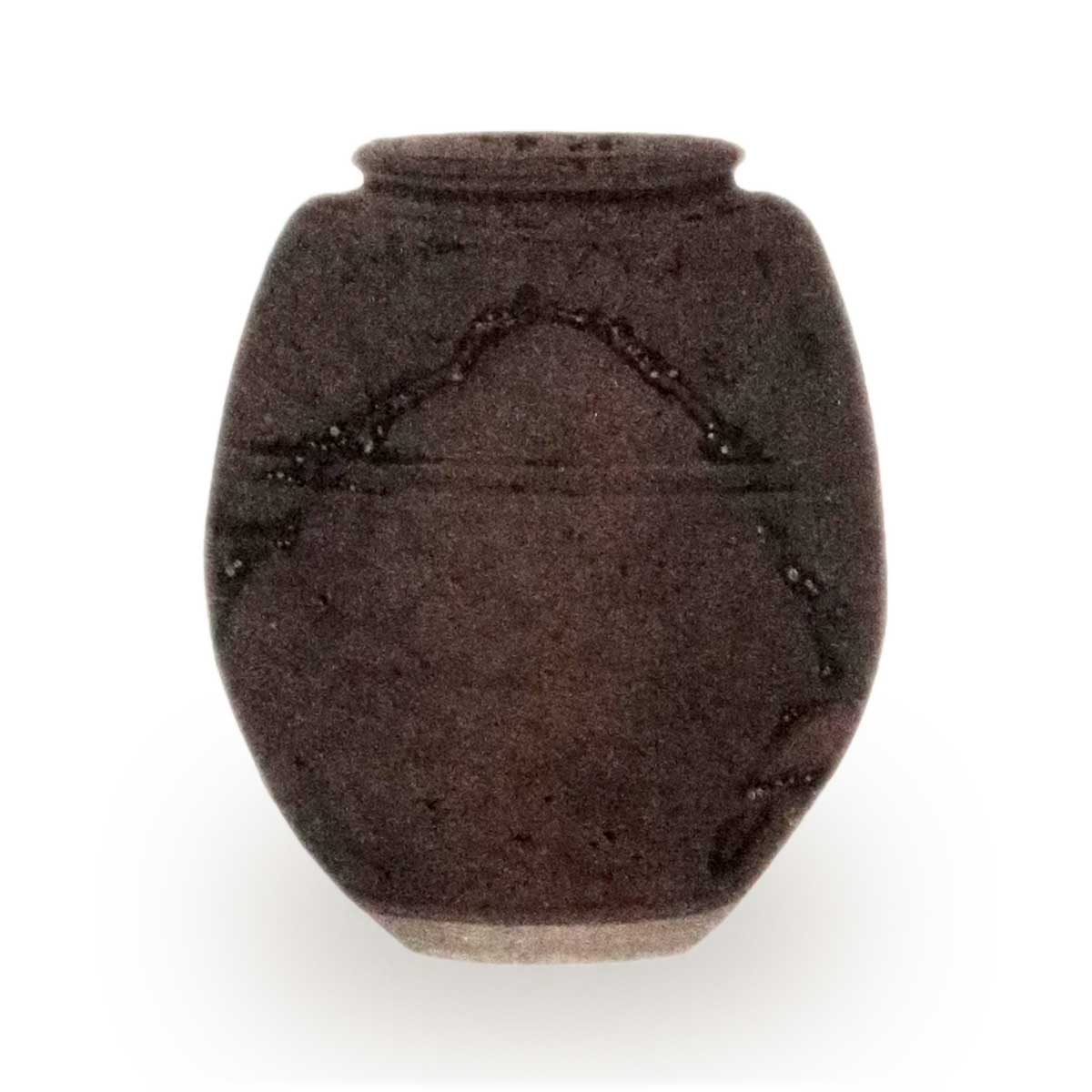
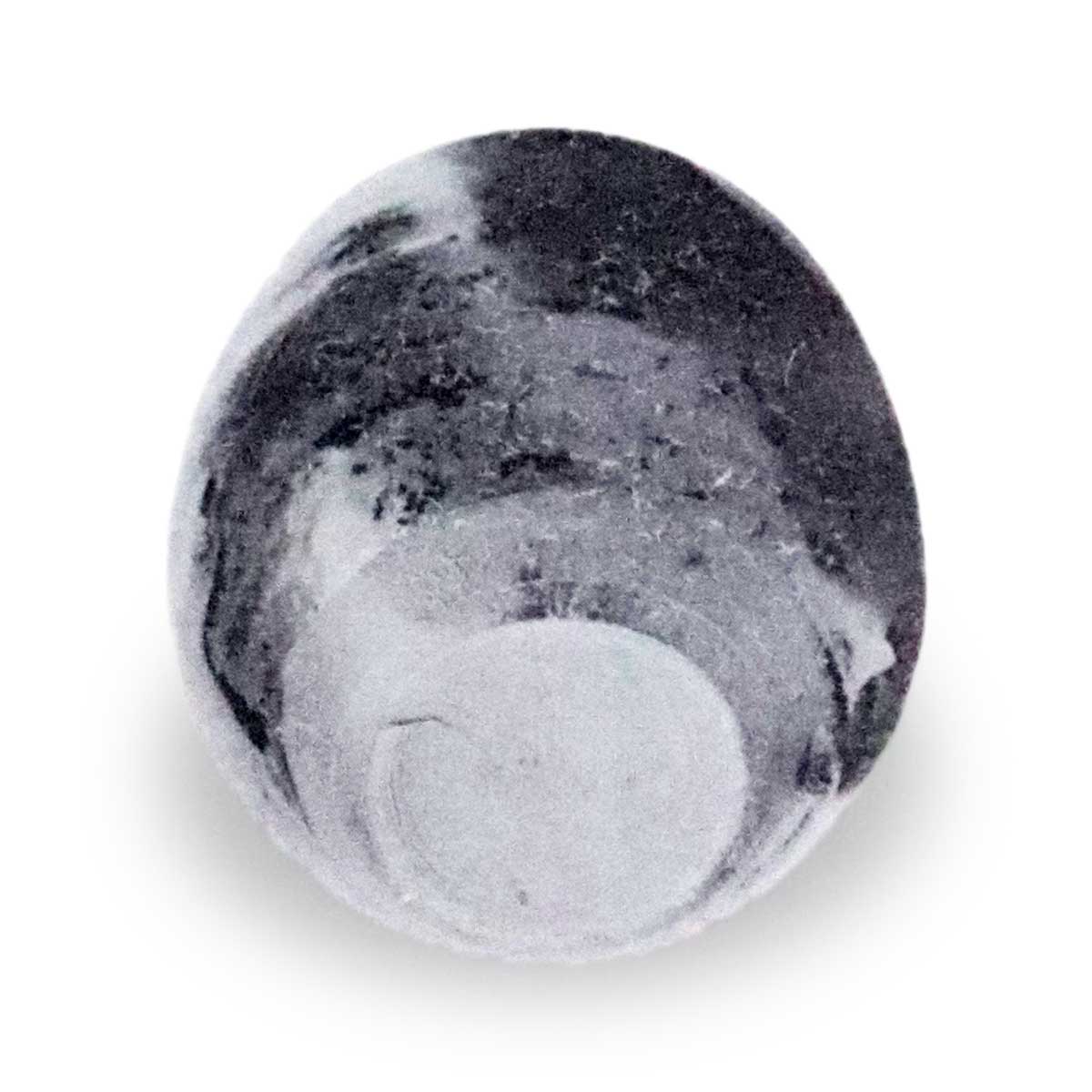
This name was given because the way the glaze drips down the body of the tea caddy forms the shape of Mt. Fuji.
Dimensions
Height: 2 sun 5 rin (approx. 6.2 cm)
Body diameter: 1 sun 8 bu (approx. 5.45 cm)
Mouth diameter: 1 sun 7 rin (approx. 3.24 cm)
Base diameter: 8 bu 2 rin (approx. 2.48 cm) or 8 bu 5 rin
Koshiki (rim) height: 1 bu 5 rin (approx. 0.45 cm)
Shoulder width: 1 bu (approx. 0.3 cm)
Weight: 11 monme 3 bu (approx. 42.4 g)
Accessories
・Lid: 1 piece, made of ivory
・Lid box: Untreated paulownia wood, with an inscription by Matsudaira Fumai
・Carrying pouch: Purple chirimen (crepe), with purple braided cord
・Storage pouches: 4
Kamakura Koto: Lining is pale green silk, braided cord is indigo velvet
Donshu Junko: Lining is purple silk, braided cord is purple
Fujigotoiri: Lining is pale green silk, braided cord is indigo velvet
Koto Oriru: Lining is pale green silk, braided cord is purple
・Storage box: Untreated paulownia wood
Contents: Floral cloth; lining is pale yellow ha-ni-bi
・Hikiya: Holly wood; interior is black lacquered; two silver rivets in the split
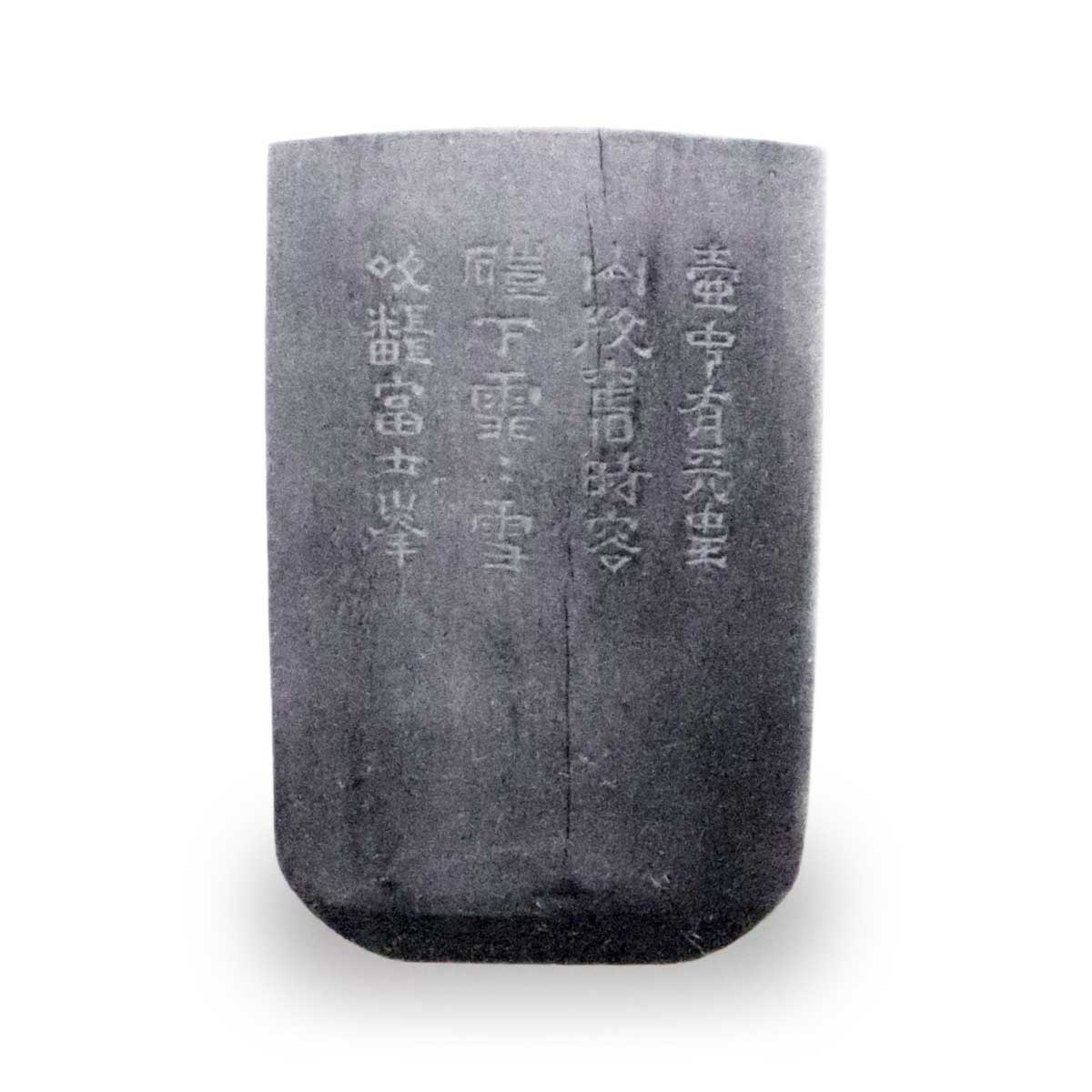
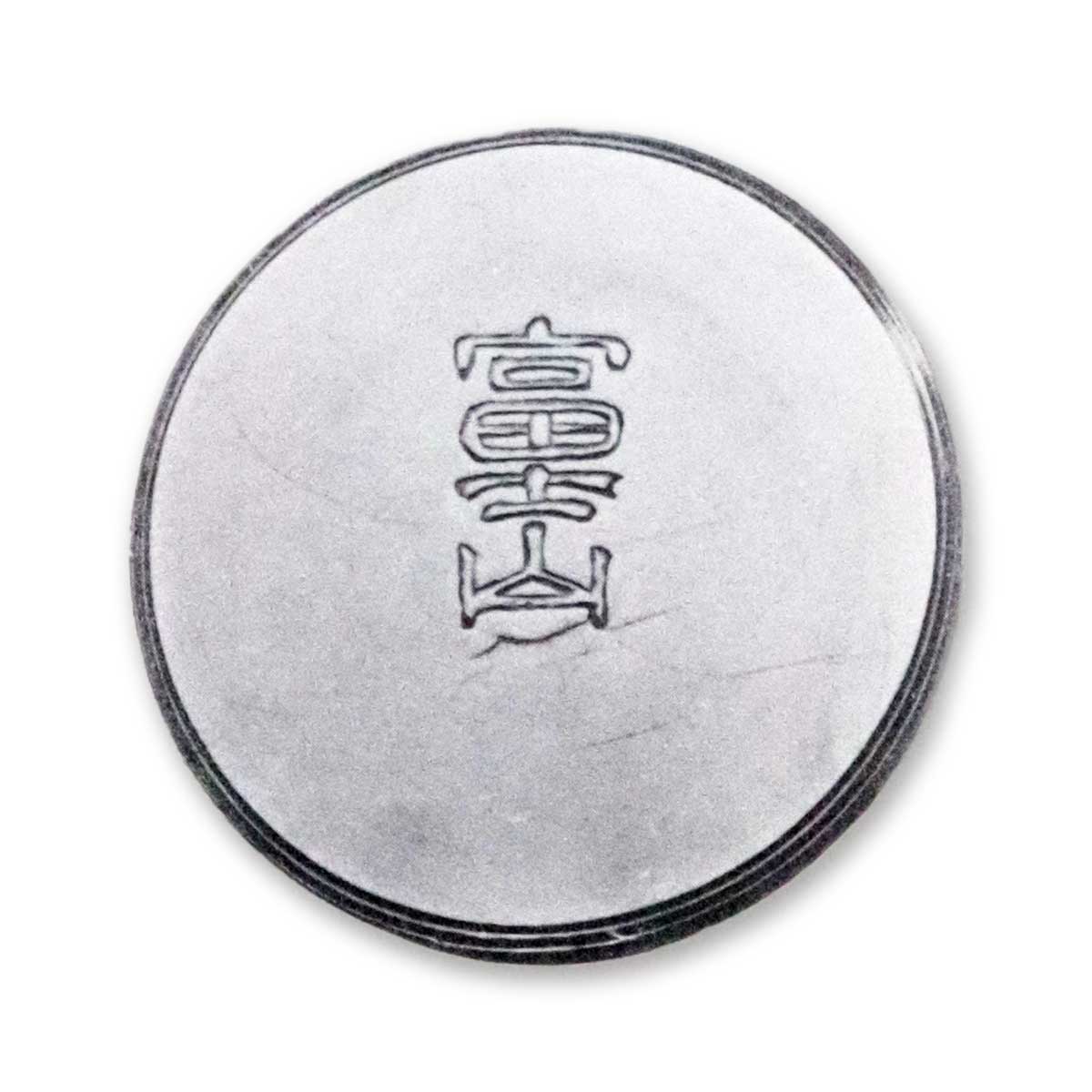
Lid: Carved inscription “Fuji-yama”; features a poem by Priest Kogetsu
(Poem: Within the vase lies heaven and earth; the mountain changes its form from days of old; beneath the steps, snow falls thick and fast; the wind sweeps over Mount Fuji’s peak)
Bag: Woolen fabric; lining is birch-colored haike with a wave-and-bird pattern; cord is Enshu brown
・Inner box: Natural-finished paulownia wood; bears a calligraphic inscription by Kobori Enshu reading “Mount Fuji”
Wrapping: Sarasa; lining is brown haike
・Outer box: Unfinished paulownia wood, inscribed “Mt. Fuji”
Wrapping: Floral cloth, lined with Onado-brown ha-niwa silk
Accompanying items
・Certificate of authenticity: 1 copy, an appraisal certificate by Ryōon
・Inscription: 1 copy, inscribed by Priest Kōsei
・Box: Unfinished paulownia wood, inscribed by Matsudaira Fumai
Miscellaneous Notes
Mount Fuji shoulder-style, formerly owned by Matsudaira Dewa-no-kami. Height: 2 sun 5 rin; body diameter: 1 sun 8 bu; mouth diameter: 1 sun 7 rin; base (bottom): 8 bu 2 rin. Includes one ivory lid. The storage bag is made of purple chirimen. There are four covers; the white Donshu cover is lined with kaiki, and the fujigotoki cover is lined with the same. The lining of the Kamakura Koto Koto is the same; the tying cord is velvet. The lining of the Shirama Kandou is the same. There is no inscription on the storage box. The stand is made of holly wood with a black lacquered interior; a poem is carved on the body, the work of Priest Kogetsu (Mt. Fuji: Within the vase lies heaven and earth; the mountain has changed its former appearance; beneath the steps, snow falls thickly; the wind blows over the peak of Fuji). The pouch is made of a sarasa-like fabric; the lining features a wave-and-bird pattern in a light brown hue, and the braided cord is Enshu brown. The box is made of untreated paulownia wood and bears a label inscribed with “Mount Fuji” by Sōfu; a label by Ryōon, written in his own hand, is affixed to the underside of the lid and depicts an illustration of the tea caddy. It is listed as the first entry in the section on “Revival Masterpiece Tea Caddies.”
(From Kokon Meibutsu Ruiju)
Mount Fuji Katatsuki. This is a Tang-style piece and dates from the same period as the tea caddy known as Morimoto Bunrin. When compared to the famous Meibutsu tea caddies known as Nitta, Setaka, and Fudo, it is of a slightly lower historical standing, even though it belongs to the same era as the Yakudate. It is on par with Iki, Aoki, Honnoji, Bunrin, Rikyu, and Shiri-hira.
(From The Origins of Seto Pottery by Fumai)
This is a Tang ware piece fired by Fujishiro using Chinese clay and glaze brought back from China (Tang) upon his return to Japan. It is approximately 500 years old and likely belongs to the same category as the Fuji-san Fukiage. However, judging by the construction of this vessel—which is identical to that of the Kose-to Rokujo Katatsuki and other similar pieces—it is believed to have been made by Fujishiro himself, rather than having been imported from China during his era.
(From Mr. Yamazumi Rikizo’s Record of Tea Caddies)
Fujiyama. The vessel is thin overall and covered with an amber-colored glaze. The clay is viscous, the thread-cutting marks are fine, and the body has a blackish persimmon color. There are wheel marks on the unglazed body (dimensions and accessories are noted).
(From Hōian Bunko-bon Kō No. 9)
Mount Fuji, Chinese ware. Owned by the merchant Fuyuki, and later by Ueda Sogo (includes dimensions, accessories, and an illustration of the tea caddy).
(From Meibuki)
Mount Fuji, made in China (Han). Daimeibutsu, owned by Matsudaira Fumai (Lord Unshu). As shown in the illustration, the unglazed clay and glaze on the shoulders are mouse-gray and blackish, while the cascading glaze is amber-colored. Made of white clay, the thread-cut pattern on the bottom is fine (includes dimensions, accessories, and an illustration of the tea caddy).
(From Rinpōkiryū)
Mt. Fuji, Chinese-style katatsuki. Mentioned in the notes on the tea utensils of Lord Kobori Tōtōmi-no-kami (Enshū).
(From Sakurayama Ichiyu Nikki, page 208)
Mount Fuji: Chinese ware. The inscription on the box reads “Kobori Enshu.” Owned by Abe Bungo-no-kami. Includes an illustration of the tea caddy.
(From Chaki Zunsho)
Mount Fuji: Chinese ware. Small in size. Owned by Kobori Enshu, and later by Fuyuki of Edo.
(From Setsumangusa)
Mt. Fuji, Chinese ware. Owned by the merchant Ueda Sogo. Includes dimensions, accessories, and an illustration of the tea caddy.
(From Enshu Meibutsu-ki)
Mt. Fuji. Owned by Lord Matsudaira Dewa-no-kami (includes dimensions, accessories, and an illustration of the tea caddy).
(From Chake Suiko-zatsu)
Mount Fuji: Chinese ware. Owned by Lord Kobori Enshu, and later by Fuyuki Kiheiji. Around the 5th year of An’ei (1776), the price when I sold it was 20 gold coins.
(From Hōian Bunko-bon Otsu Dai-san-gō Fushimiya Kokusho)
Mount Fuji. Purchased in 1778 (An’ei 7) from Fushimiya Jin’emon for 14 gold pieces and 450 ryō. I paid Fushimiya Jin’emon 14 monme of silver as a brokerage fee.
(From Osaki Sakurajo Utensil Purchase Ledger)
History of Ownership
Originally owned by Kobori Enshū, it was passed down to Abe Bungo-no-kami. It subsequently came into the possession of Fuyuki (aka Ueda Sōgo), a wealthy merchant of Fukagawa, Edo, and in 1778 (An’ei 7), Lord Matsudaira Fumai purchased it for 450 ryō through the mediation of Fushimiya Jin’emon.
On April 25, 1915 (Taisho 4), it was displayed at Tarōan during a grand tea ceremony held at the Masuda residence in Gotenyama, Shinagawa.
On May 7, 1918, I had the opportunity to view it in person at the residence of Count Matsudaira Naoaki in Motomachi, Yotsuya Ward, Tokyo.
This tea caddy is considered the finest among Chinese-style katatsuki tea caddies. It is listed as the first entry in the section on “Revival-era Masterpiece Tea Caddies” in the Kokon Meibutsu Ruiju (Compendium of Famous Objects Through the Ages), compiled by Lord Matsudaira Fumai, and has long been the most revered piece among tea masters.
It is entirely free of damage; the rim (koshiki: the raised edge of the mouth) is low, the inward fold is deep, and the construction around the shoulders is crisp and taut, displaying unparalleled craftsmanship. A single sunken groove runs all the way around the body, and the black amber-colored glaze appears on the chestnut-brown base, naturally forming the shape of Mount Fuji—which seems to be the origin of its name. In addition, the dark amber glaze has flowed down, stopping at the boundary where the unglazed clay at the rim is exposed. The area where the glaze stops is thick and has a slight bluish-green tint. The clay in this area has a slight reddish hue.
It feels light in the hand; the mouse-gray clay is visible from the rim downward, and the thread-cutting marks are fine, with slight irregularities at their starting points. Additionally, there is a single small chamfer mark around the base, likely made with a spatula. Inside, the glaze covers the rim, while below that, wheel marks are visible over a thin glaze layer, and the center of the base features a swirl pattern.
The piece is exceptionally well-crafted and of the highest quality; it is rich in visual interest and completely intact, with every element perfectly in harmony. Consequently, despite its small size, it occupies the highest position among the countless Chinese tea caddies, much like Mount Fuji towering above a range of mountains.