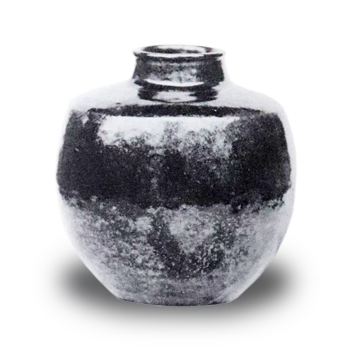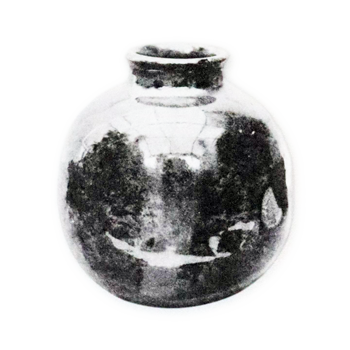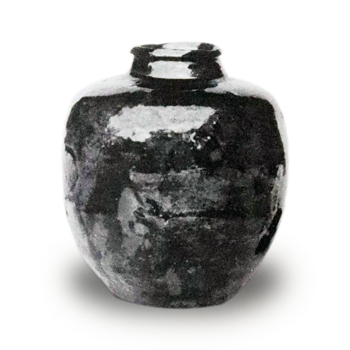
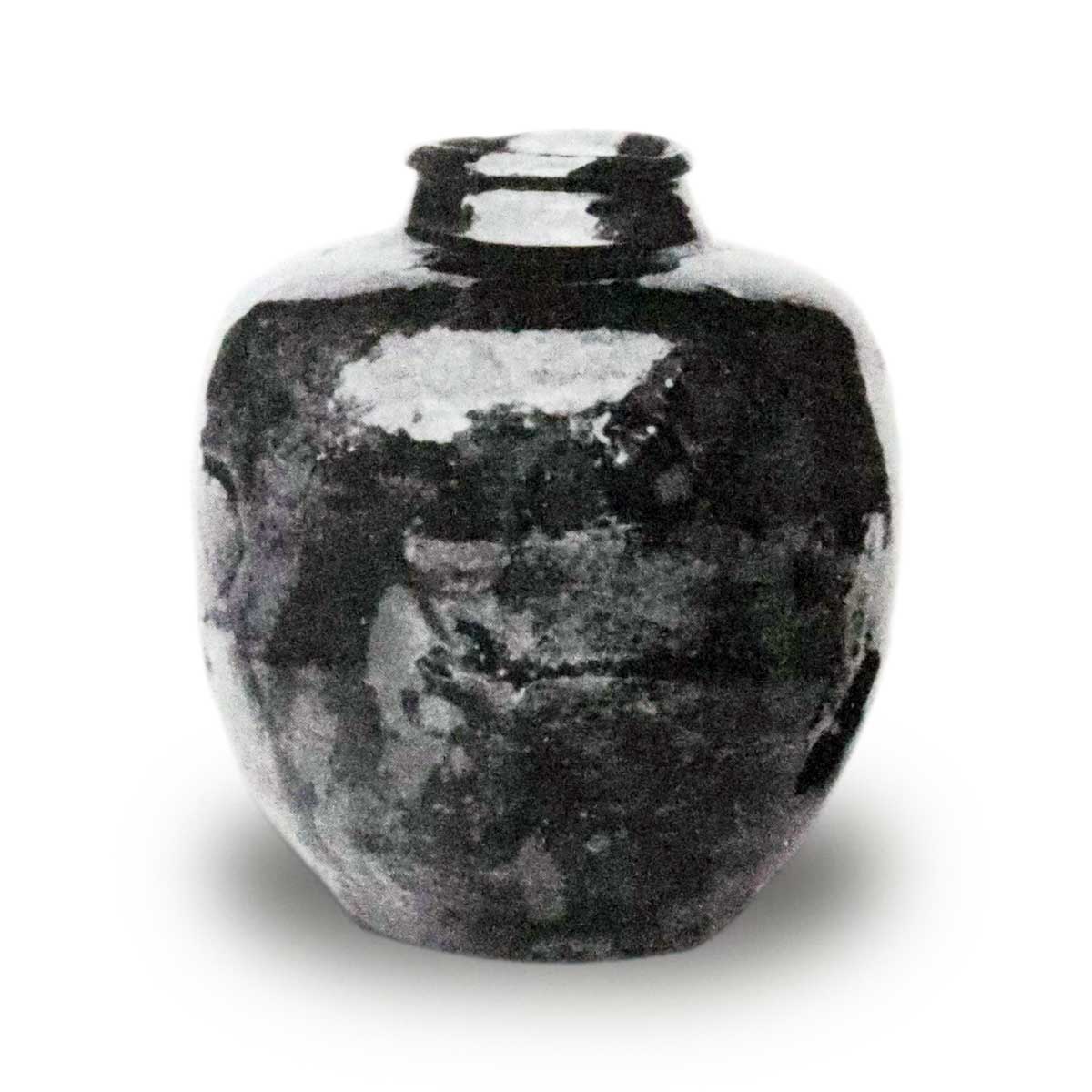
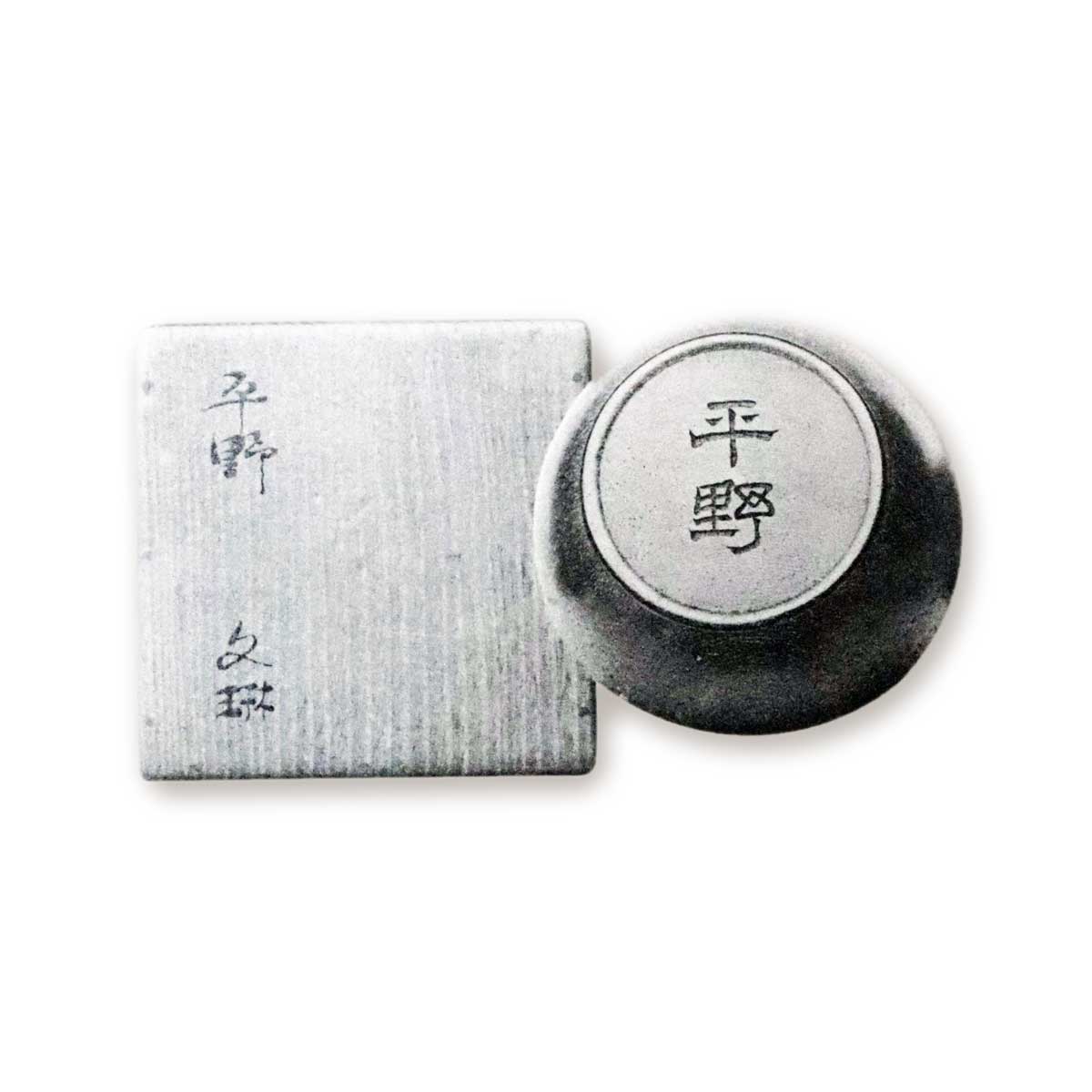
Made in China; Collection of Marquis Asano Nagataka
Origin of the Name
The exact origin is unclear, but it is speculated that this Bunrin was likely owned by Hirano Dōze, as there is a description in the entry for May 23, Tenshō 9 (1581) of the Tsuda Sōyuki Chadō Nikki (Tsuda Sōyuki’s Tea Ceremony Diary) stating, “The unveiling of a katatsuki tea caddy formerly owned by Hirano Dōze.” However, no definitive evidence of this connection has been found to date.
Dimensions (Converted using 1 sun ≈ 3.03 cm and 1 monme ≈ 3.75 g)
Height: Approx. 6.88 cm (2 sun 2 bu 7 rin)
Body diameter: Approx. 6.27 cm (2 sun 7 rin)
Mouth diameter: Approx. 2.73 cm (9 bu)
Base diameter: approx. 3.03 cm (1 sun)
Koshiki (steamer) height: approx. 0.76 cm (2 bu 5 rin)
Shoulder width: approx. 0.91 cm (3 bu)
Weight: 71.25 g (19 monme)
Accessories
・Lid: 1 (with a depression)
・Carrying pouch (for the tea caddy): Purple chirimen silk, purple cord
・Storage pouches: 2
Asakura Kanto-ori (lining: Kai silk, purple cord)
Striped Kanto-ori (lining: iridescent Kai silk, purple cord)
・Wooden mold: Paulownia wood, 1 piece (Contained in a striped Kanto-ori bag)
・Bag box: Unfinished paulownia wood (marked “Hirano Bunrin Bag”)
・Hikiya (a tube for storing the tea caddy): Made of ironwood (Tagayasan). Includes an inscription by Kobori Enshu.
The lid features the character “Hirano” carved in relief (a carving technique where the frame is left uncarved to make the characters stand out).
The bag is made of brocade with a cloud pattern (lined with Kai silk; the cord is brown). As this bag is extremely worn and damaged (in very poor condition), it is currently housed in a separate wrapping paper.
・Inner box: Unvarnished paulownia wood, with an inscription by Kobori Enshu.
“Hirano Bunrin”
It includes an authentication label (kyoku-fuda) by the calligrapher Ryochu.
・Outer box: Paulownia with a translucent lacquer finish (tame-nuri), with a paper label bearing the inscription “Hirano Bunrin” affixed to it.
Miscellaneous Notes
Hirano Bunrin. A copy of a handwritten inscription by Lord Asano (Matsue-no-kuni) and a handwritten inscription by Lord Kobori Enshu. “Hirano Bunrin.” The replacement pouch is made of Asakura Koto-ori fabric, lined with a single layer of Kaiki silk, and has a purple cord. The Hikiya is made of ironwood (Takayasan), features a beaded rim, and has carved decorations. Inscription by Lord Kobori Enshu: “Hirano.” The pouch is brocade, with a Kabechiyoro lining. The glaze flow and the front view when placed (the placement angle) show patches of white glaze mixed in. There are some less-than-ideal (unsightly) aspects to the rim’s construction. (Illustration of the tea caddy included)
(From Shokake Meiki Shū)
Hirano Bunrin. Made in China. The overall construction is thin, and the sprayed (fukire) glaze in gray and black is magnificent. The amber-colored glaze is applied unevenly on the front when placed (okikata). Made of gray clay, it features thread-like cracks. (Illustration of the tea caddy included)
(From the Makuan Bunko, Series A, No. 22)
History of Ownership
It is unclear when it entered the collection of the Marquess Asano family.
Record of Actual Viewing
On May 11, 1920 (Taisho 9), I had the opportunity to view this piece in person at the villa (Izumi Residence) of Marquess Nagataka Asano in Hiroshima City.
The piece is thinly made; the rim’s outward curve appears to have been shaved down, and the edge is extremely thin. The neck protrudes slightly, and there is a single sunken groove running around it. The shoulders slope gently downward, the body is slightly indented (waisted), and it tapers toward the base (narrowing at the bottom).
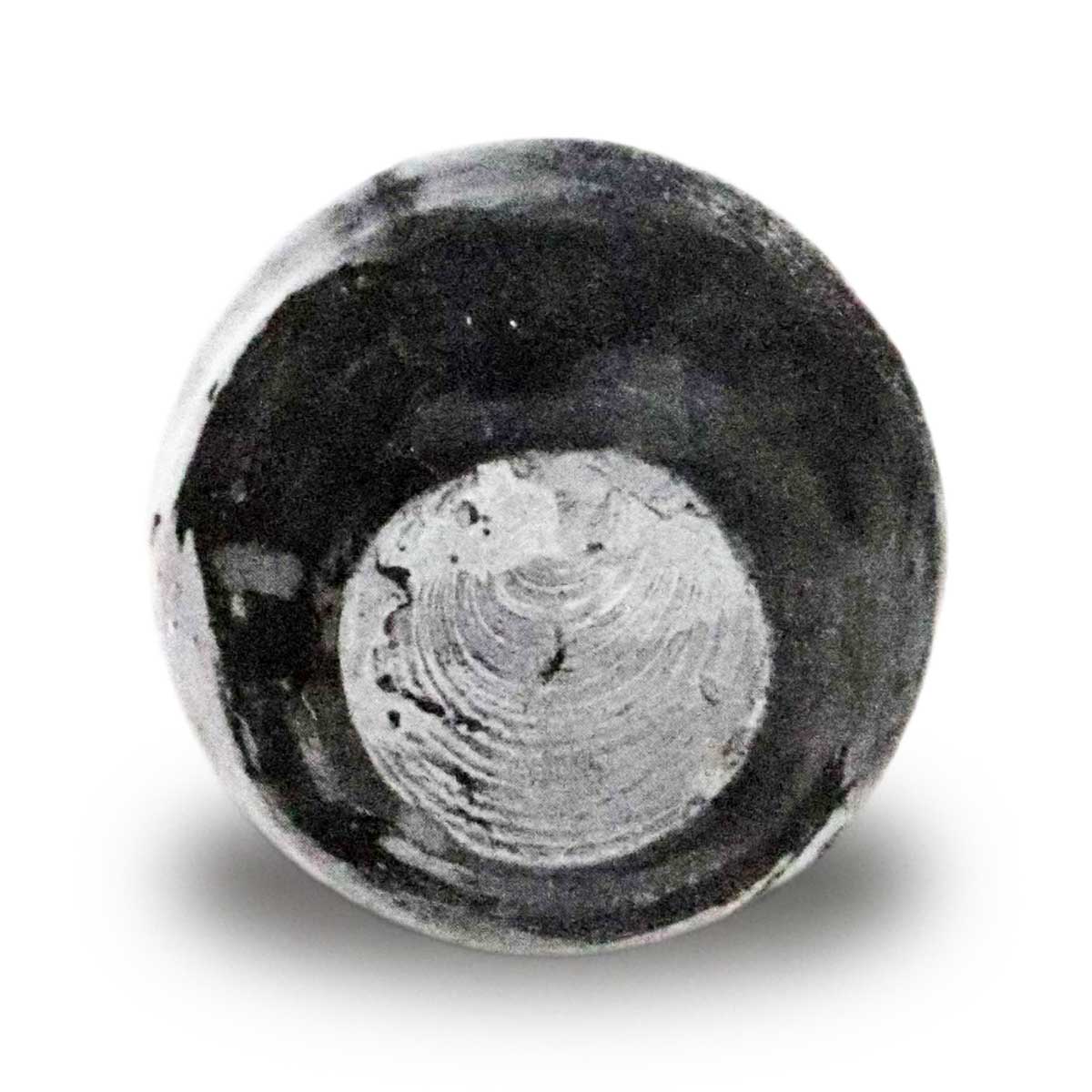
A black amber glaze blends with a persimmon-colored glaze that possesses a metallic luster (metallic sheen), and within this mixture, a glossy yellow glaze is interspersed, creating mottled patterns in places; the richness of the visual variations is beyond words. The single pool of jade-colored glaze visible where the unglazed clay is exposed at the rim is the most beautiful feature.
From the rim downward, the height is uneven, revealing reddish-brown clay; the thread marks are fine, with splashes of persimmon-colored metallic sheen and black glaze interspersed throughout.
The interior is entirely glazed, with coarse wheel marks. There are absolutely no flaws anywhere, and both the color and form of the glaze are exceptional; it is considered one of the finest masterpieces among Bunrin tea caddies.