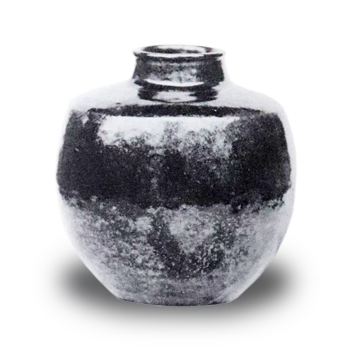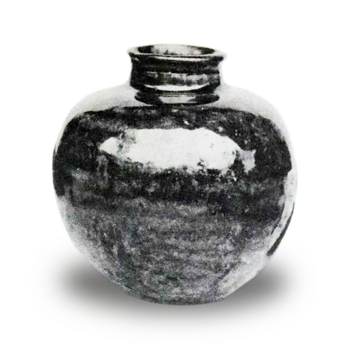
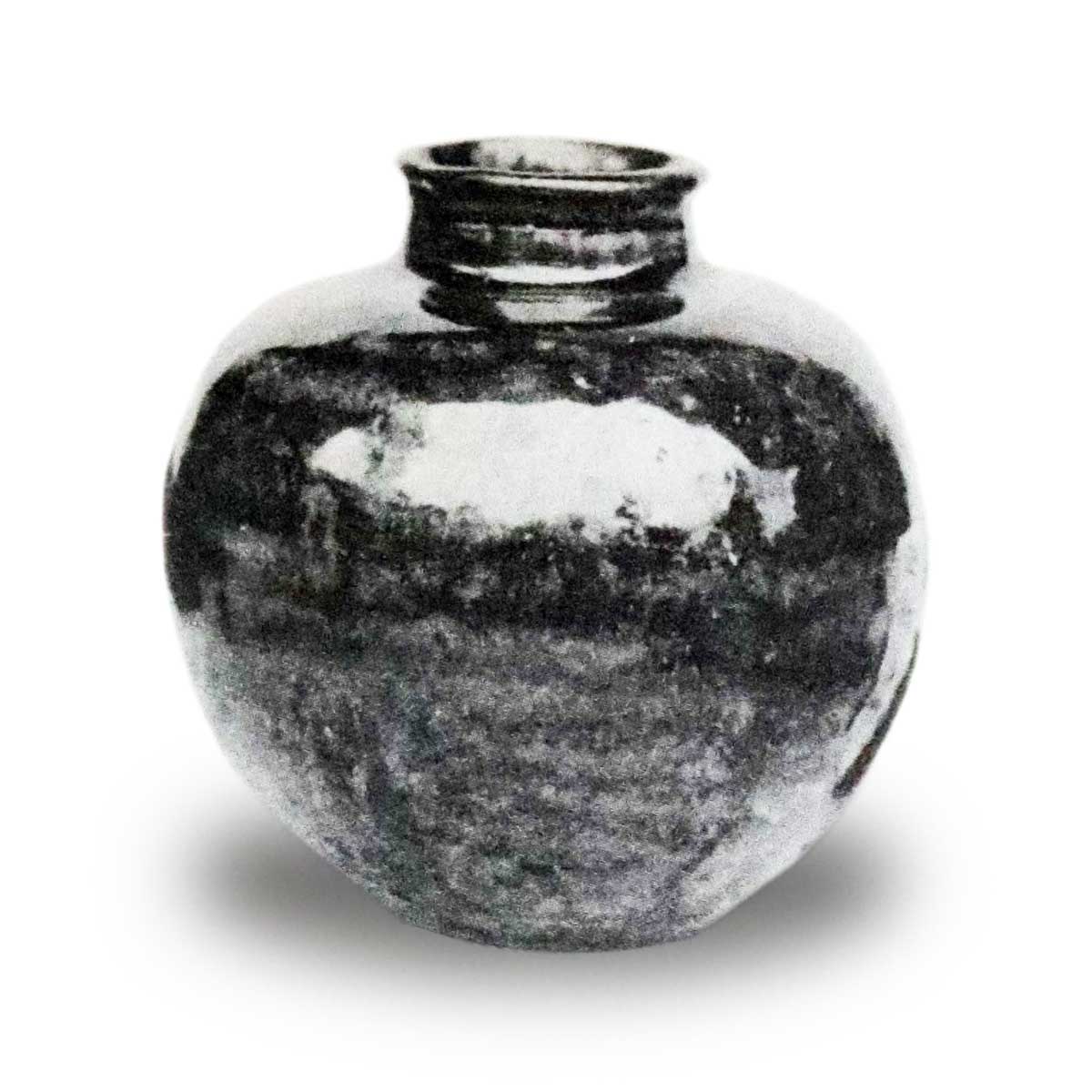
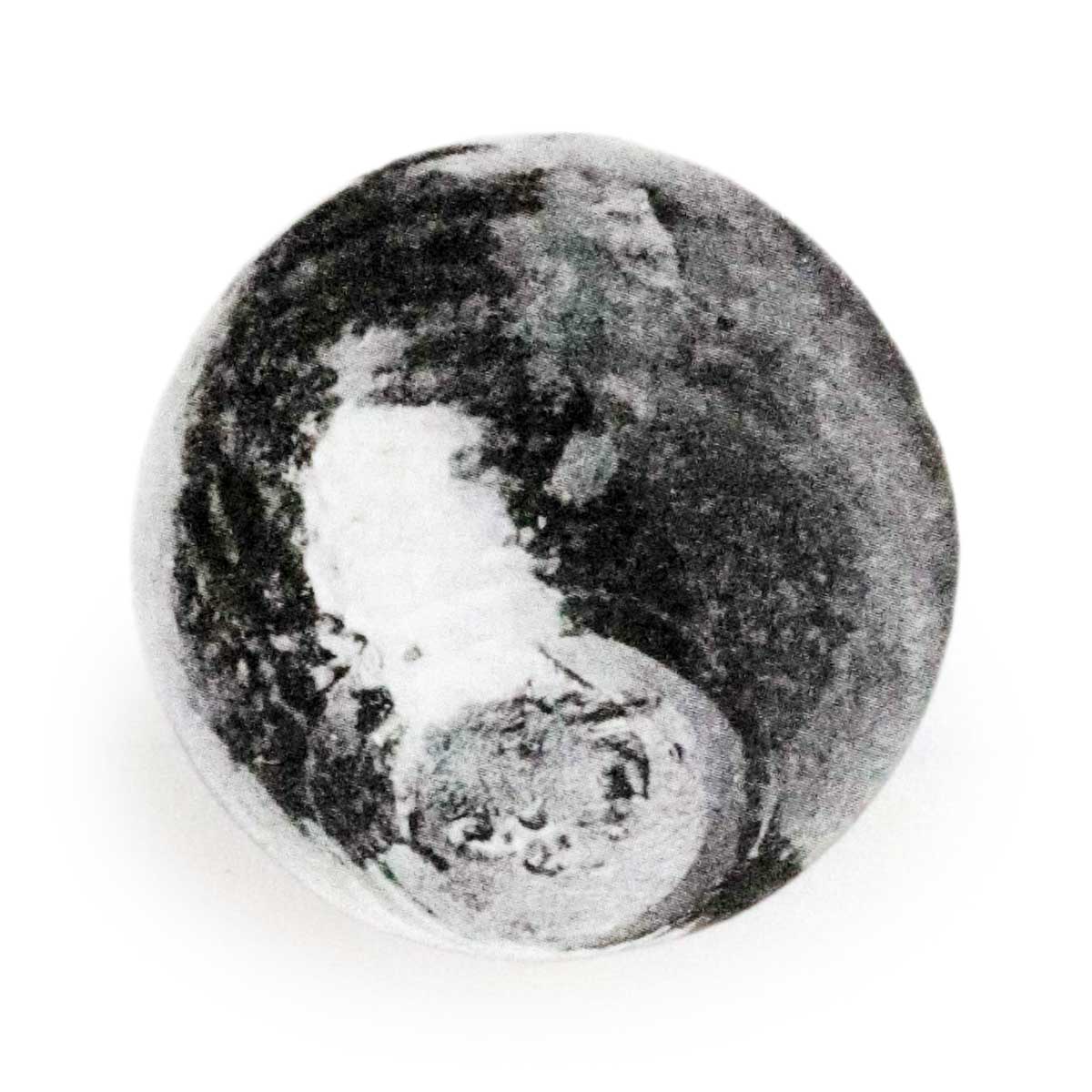
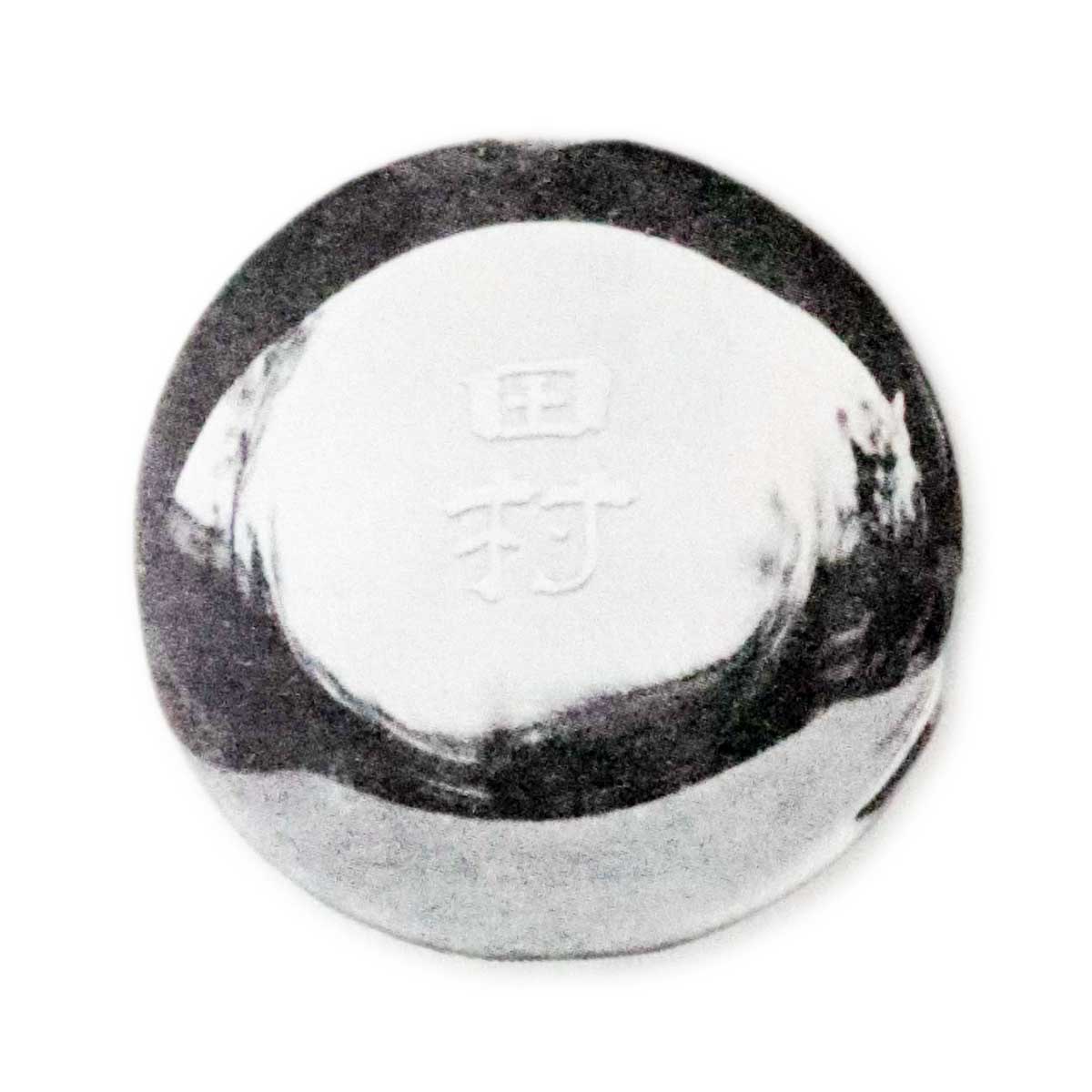
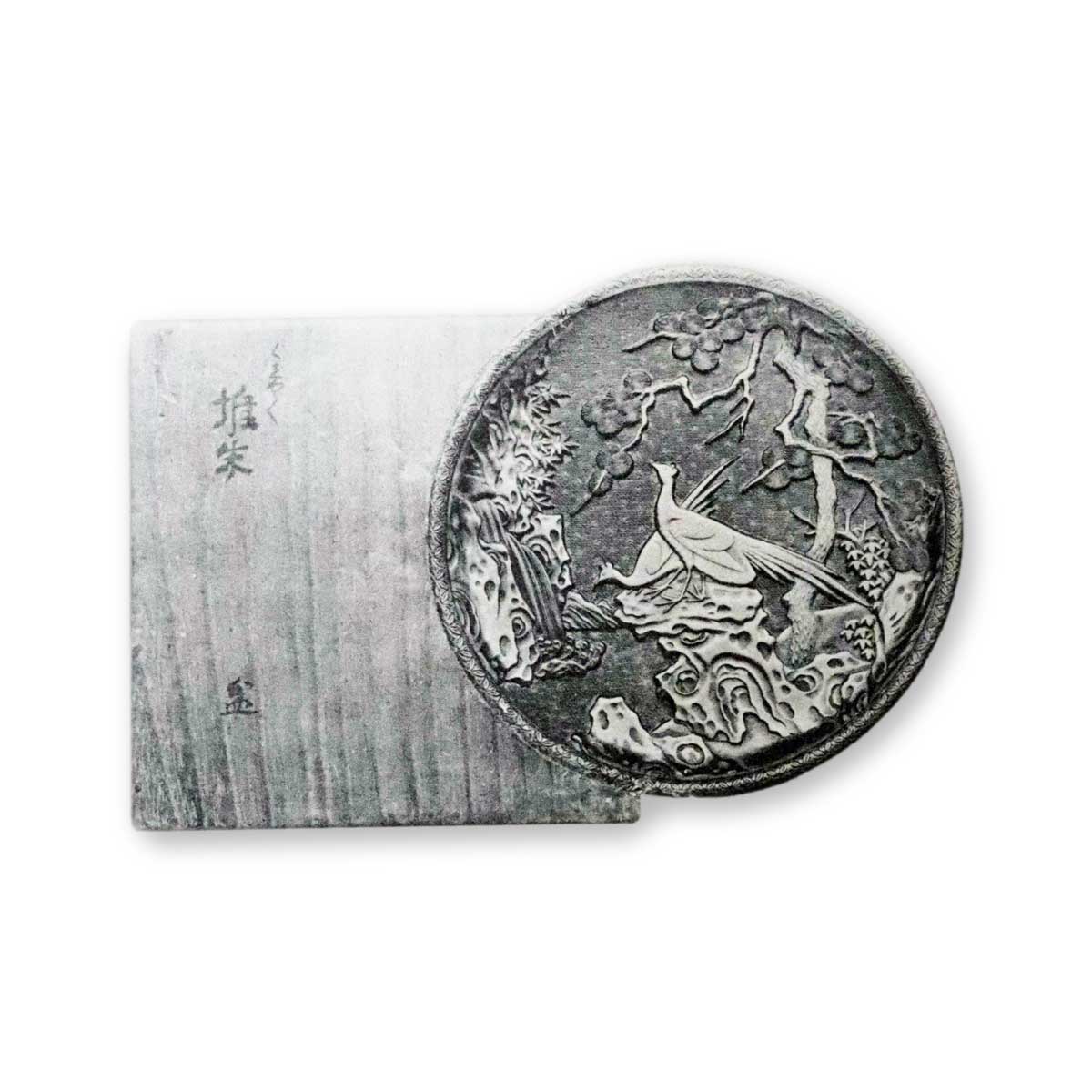
Made in China; Collection of Baron Heitaro Fujita
Origin of the Name
“Tamura” is believed to be the name of the original owner, but it is unclear exactly who that person was. It is speculated that it may have belonged to Tamura Sakyo-no-taifu (Tamura Sakyo-no-taifu Takaaki, who first became lord of Ichinoseki Castle in 1616), the ancestor of the current Viscount Tamura family.
Dimensions (converted at 1 sun ≈ 3.03 cm)
Height: Approx. 6.36 cm (2 sun 1 bu)
Body diameter: Approx. 6.36 cm (2 sun 1 bu)
Mouth diameter: approx. 2.42 cm (8 bu)
Base diameter: approx. 2.27 cm (7 bu 5 rin) or approx. 2.42 cm (8 bu)
Height of the koshiki (lid): approx. 0.76 cm (2 bu 5 rin)
Weight: just over 65.6 g (just over 17 monme 5 rin *1 monme = 3.75 g)
Accessories
・Lids: 2 (one with a recess, made by Kumi). Stored in a lid box.
・Storage bag (for the tea caddy): Light blue habutae silk, with a Enshu brown cord
・Cover bags (4):
Floral-patterned, alternating-strip Munekuni shibori (lining: pale yellow-green umi-ki, cord: wisteria purple)
Moe-green ground with diamond and dragon Hosokawa shantung (lining is the same, cord is purple)
Graduated weave with cloud and pearl shantung (lining is the same, cord is Enshu brown)
Hino Koto weave (lining is the same, cord is purple)
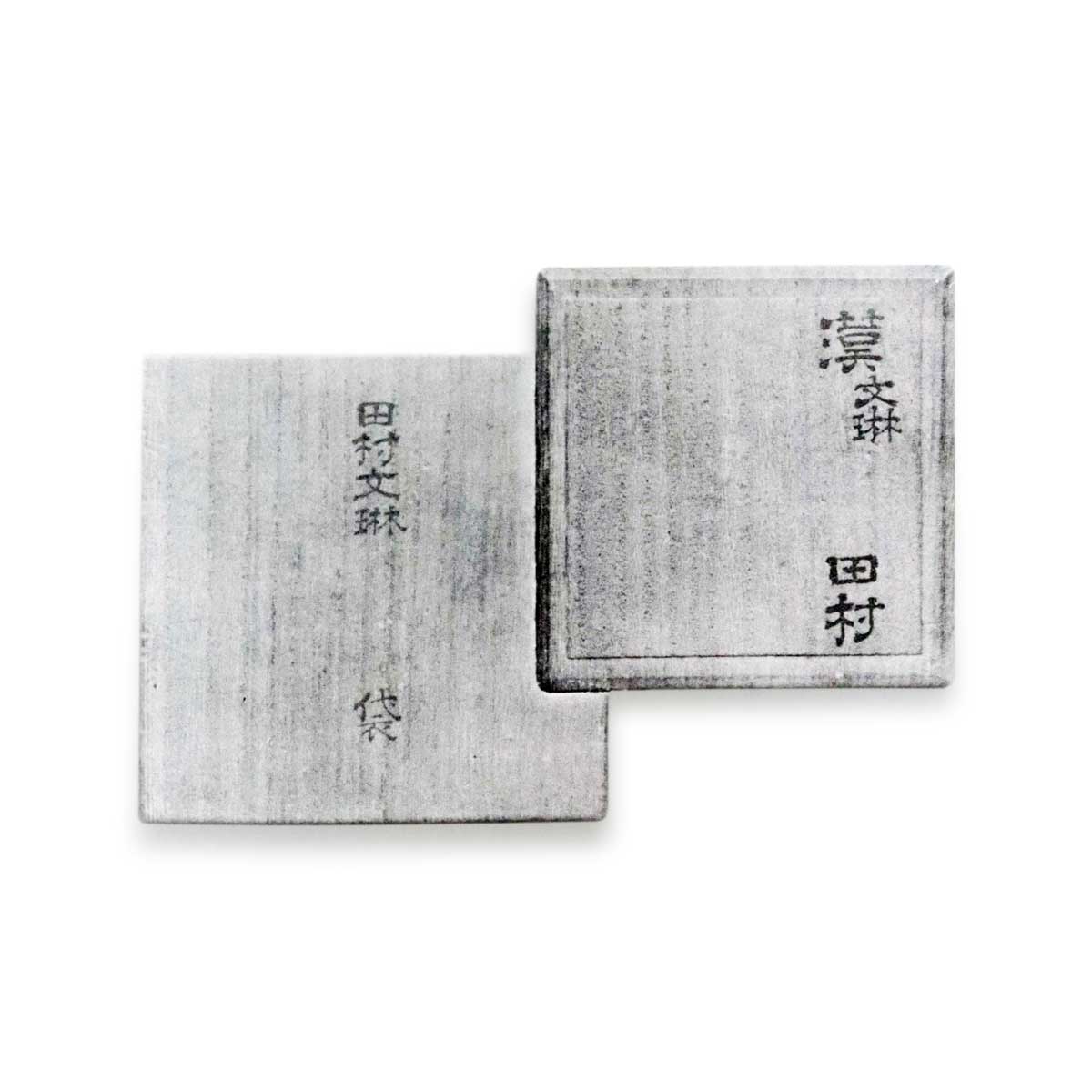
・Storage box: Natural wood paulownia, with an inscription by Kobori Enshu
“Tamura Bunrin Bag”
・Hikiya (a tube for storing a tea caddy): Black lacquered, with gold-leaf lettering
“Tamura” with an inscription by Kobori Enshu
Bag: Color-thread segment-woven peony and Chinese floral Shu-chrysanthemum chrysanthemum-patterned chrysanthemum-patterned chrysanthemum-patterned chrysanthemum-patterned chrysanthemum-patterned chrysanthemum-patterned chrysanthemum-patterned chrysanthemum-patterned chrysanthemum-patterned chrysanthemum-patterned chrysanthemum-patterned chrysanthemum-patterned chrysanthemum-patterned chrysanthemum-patterned chrysanthemum-patterned chrysanthemum-patterned chrysanthemum-patterned chrysanthemum-patterned chrysanthemum-patterned chrysanthemum-patterned chrysanthemum-patterned chrysanthemum-patterned chrysanthemum-patterned chrysanthemum-patterned chrysanthemum-patterned chrysanthemum-patterned chrysanthemum-patterned chrysanthemum-patterned chrysanthemum-patterned chrysanthemum-patterned chrysanthemum-patterned chrysanthemum-patterned chrysanthemum-patterned chrysanthemum-patterned chrysanthemum-patterned chrysanthemum-patterned chrysanthemum-patterned chrysant
・Inner box: Paulownia wood, lid with double chamfered edges
“Bunrin Tamura” with an inscription by Kobori Enshū
・Accompanying tray: Round tray with peacock carving in tsuishu lacquer, made by Zhang Cheng (Chinese lacquer artisan)
Diameter approx. 16.67 cm (5 sun 5 bu), base diameter approx. 12.42 cm (4 sun 1 bu), inscribed “Zhang Cheng Zao” on the base
Bag: Gray-ground, grape-colored silk satin (lining: striped seaweed pattern; cord: brown)
Box: Natural wood paulownia; bears an inscription by Kobori Enshu
“Peacock Taisu Tray”
・Outer box: Black lacquer; chamfered edges with wisteria and bird maki-e
・Master box: Paulownia with Shunkei lacquer finish
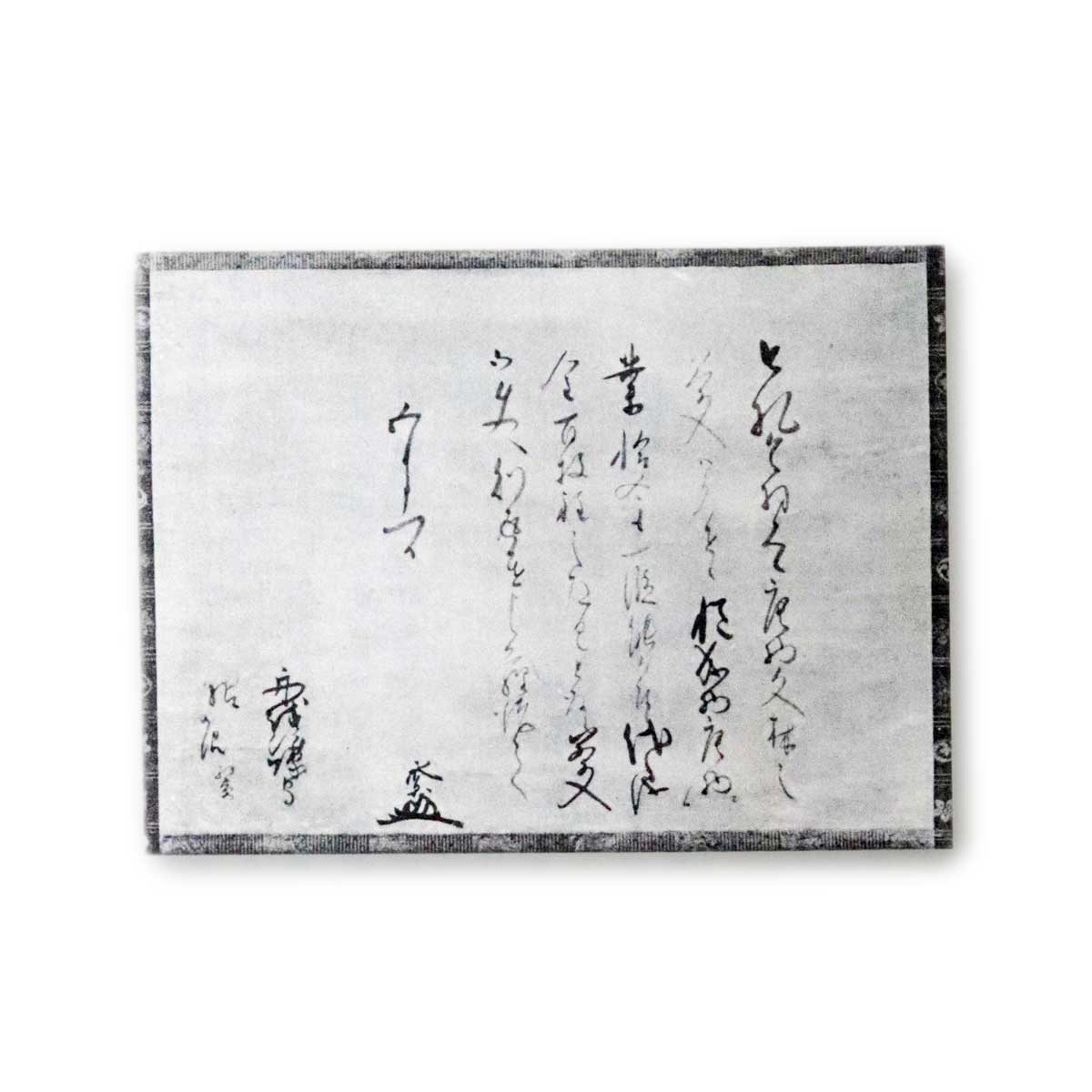
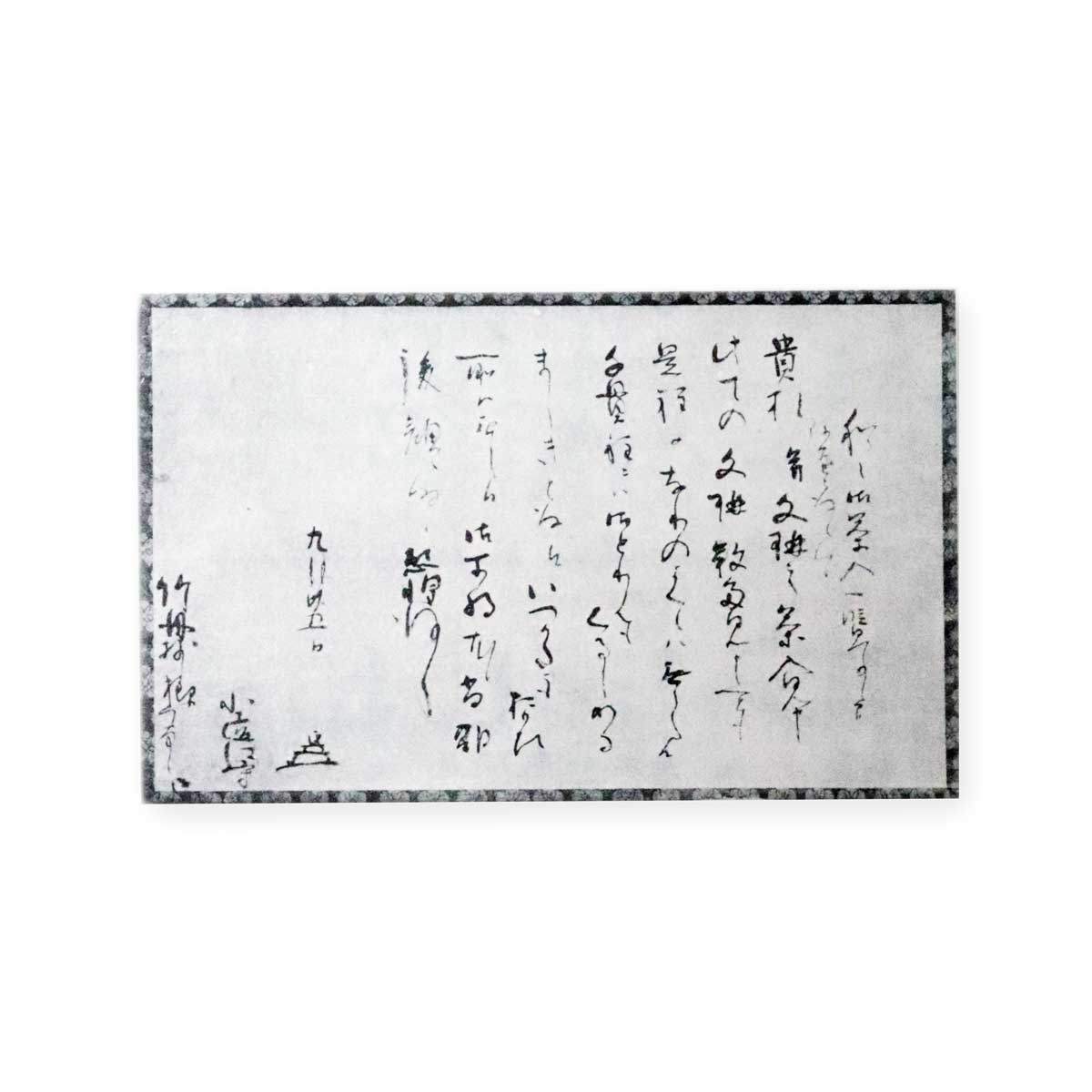
・Accompanying hanging scrolls: 2 pieces (painted by Kobori Enshū-no-kami Sōfu and Funakoshi Iyo-no-kami Nagakage), housed in a single box.
“P.S.: The tea caddy is truly magnificent, and I hold it in the highest regard.
I have had the pleasure of viewing your letter and the Bunrin tea caddy. I have seen many Bunrin pieces of this type, but none with such a fine form. I believe you could reasonably value it at around 1,000 Sen. In any case, it is an unexpectedly splendid piece, and it is most fitting that you possess it. I shall discuss the details when we meet at a later date. With deepest respect.
September 25, Kobori Tōtōmi-no-kami (Enshū) (Seal)
To Lord Takenaka Tanshū (Tango-no-kami)
And all concerned”
“I have read your letter. You showed me the Chinese-made Bunrin tea caddy, and it is indeed Chinese in origin; the craftsmanship and glaze are truly exceptional. I believe this item is worth about 100 gold pieces. I have returned the tea caddy to the messenger. With deepest respect.
May 1, Nagakage Funakoshi (Seal)”
・Box for hanging scroll: Made of untreated paulownia wood, with an inscription by Kobori Sukei
“Letters from Tamura Bunrin, Funakoshi, and Sōfu (Enshū)”
Miscellaneous Notes
Tamura Bunrin. Owned by Tsuchiya Samon. (Descriptions of dimensions and accessories are largely the same as in the Meibutsu Ruiju. Includes an illustration of the tea caddy)
(From Meibutsu-ki)
Tamura Bunrin. Made in China. Owned by Matsudaira Uezuke. Height approx. 7.88 cm (2 sun 6 rin), body diameter approx. 6.36 cm (2 sun 1 bu), outer rim diameter approx. 2.58 cm (8 bu 5 rin), base diameter approx. 2.42 cm (8 bu); slightly weak. The lid consists of two pieces, one of which was made by Kumi. There are four pouches: one made of Hino Koto-ori (with a Kaiki lining and a purple cord), one made of Hishi-satin (with a Kakidai lining and a purple cord), one made of Madarai-satin (with a Kakidai lining and a Enshu-brown cord), and one made of Usu-donsu (with a Kakidai lining and an Enshu-brown cord). The imperial pouch is made of light blue habutae silk with a Enshu brown cord. The Hikiya is black lacquered with gold leaf decoration; its pouch features the “Eyo-ha” pattern and a brown cord. The outer box is made of natural paulownia wood and bears the inscription “Bunrin Tamura”; the wrapping cloth is sarasa-patterned, and the cord is pale yellow. The bag box contains four items, wrapped in cotton cloth. Letters from Kobori Enshū-no-kami and Funakoshi Iyo-no-kami are included as hanging scrolls, two scrolls in one box. Text of the letters. The middle section is made of satin without a windband or straight border; the top and bottom are coarse shike silk; the scroll ends are ivory (Kobori Enshū-no-kami). The single-strip and wind-band are made of tokusagiri satin; the top and bottom are brown shike silk; the scroll ends are black-lacquered bat-shaped (Funakoshi). (The text of the letters is omitted, as noted above. There is also an illustration of the tea caddy, omitted.)
(From Kokin Meibutsu Ruiju Shiyu no Bu)
Tamura Bunrin. Features the original thread-cut decoration. The bag is made of swirl-patterned satin, ring-patterned satin, and flower-colored nested diamond-patterned satin; by Hino Koto. The bag box bears an inscription in ink reading “Tamura Bunrin Bag.” The box is made of unvarnished paulownia wood and bears the inscription “Kanbunrin Tamura Sōfu.” Accompanied by two letters from Funakoshi and Enshū. (Illustration of the tea caddy available)
(From Illustrated Guide to Tea Caddies by Yoshimasa Kōen)
Tamura Bunrin. Owned by Mr. Kawamura Den’ei. The pouch is labeled “Tenka-ichi Tamura Bunrin-bukuro Meiji.” Among the items in Mr. Kawamura Den’ei’s collection dated March 4, Meiji 25 (1892), this was surveyed on March 10. It is recorded in one of the three volumes of the Meibutsu Tsuchiya Storehouse Ledger.
From May 29 to June 1, 1892, an auction of Mr. Den’ei Kawamura’s collection was held at the Hoshigaoka Tea House, and the items were acquired by Mitsui Bank. An entry regarding this tea caddy appears in Meibutsu Ruiju. Viewed by Mr. Umakoshi on May 27, 1896.
(From Tsukushi no Tomo by Seika Matsuyama)
Provenance
It appears to have originally been owned by a certain Mr. Tamura (possibly Tamura Sakyo-no-taifu), and passed through Takeno Tanshu (presumably Takeno Tango-no-kami Shigemune) and Tsuchiya Samon before coming into the possession of Matsudaira Kōzuke-no-suke (Matsudaira Naoyoshi, lord of the Hirose Domain, a branch domain of the Matsue Domain). It subsequently came into the possession of Kawamura Den’ei, one of the “Eighteen Great Masters of Edo.” However, during an auction of the Kawamura family’s tea utensils held at the Hoshigaoka Saryo in Tokyo from May 29 to June 1, 1892 (Meiji 25), Mr. Kyohei Umakoshi purchased it for 300 yen and 50 sen. However, unable to refuse the strong entreaties of Roan (Denjiro Fujita), he finally promised to transfer ownership during a banquet at a restaurant in Osaka in 1899. Roan immediately dispatched a messenger to retrieve this tea caddy from the Umakoshi family in Tokyo and, as a token of gratitude, presented Mr. Umakoshi with 6,000 yen—twenty times the original price. Furthermore, around 1907, it is said that he later presented an additional lacquered tea caddy to be placed in the “Lady’s Slipper” tea box owned by Mr. Umakoshi. The details of Tamura Bunrin’s dealings at that time are recorded in detail in “The Tale of Tamura Bunrin” in the fourth volume of Tōto Chakai-ki.
On November 21, 1916 (Taisho 5), a grand tea ceremony was held at the Fujita residence in Amijima, Osaka, to mark the fifth anniversary of the passing of Baron Roan (Fujita Densaburo). In a separate room, over 30 of his cherished possessions were displayed.
・Han (Chinese) Tamura Bunrin ・Kose-Seto Naniwa Katatsuki
・Shoi Okabe (tea caddy) ・Rikyu Tottoya tea bowl
・Chojiro Shichiku Hayafune (tea bowl) ・Cochin large turtle incense container
Record of Actual Viewing
I viewed this item in person on May 17, 1920, at the residence of Baron Heitaro Fujita in Amijima, Kita Ward, Osaka City.
The rim has a shallow outward curve, with a single indentation along its edge. The neck is flared, the shoulders are gently sloping, the body is broad, the rim tapers inward, and the base is significantly narrowed.
Overall, amber-colored and yellow glazes blend together, with some areas displaying a pattern resembling quail spots (jūban). From around the neck to the entire surface of the shoulder, a yellow glaze covers the piece uniformly. In other areas, from the tip of the shoulder to the base where it meets the tray, yellow glaze flickers through the amber glaze, creating an interesting pattern. Additionally, there are spots where the amber glaze breaks through the yellow glaze.
On the front view, a single stream of yellow glaze flows down from the tip of the shoulder to the rim, where the glaze has pooled slightly thicker. The body bears faint wheel marks, and the clay with a slight metallic sheen (metallic luster) is visible around the base where it meets the tray.
Glaze spatter covers about half of the base, and there are some areas where the clay has chipped away. Consequently, the thread-cutting marks are not clearly visible, but this, in turn, greatly enhances its charm.
Inside, an amber-colored glaze runs around the rim of the mouth; below that, the wheel marks are fine, forming a narrow swirl in the center of the base.
Overall, the piece is exceptionally rich in visual interest; one would be hard-pressed to find another Bunrin tea caddy with such beautiful luster. The form is utterly refined, and there are absolutely no flaws. This tea caddy should be regarded as a single, perfect masterpiece.