
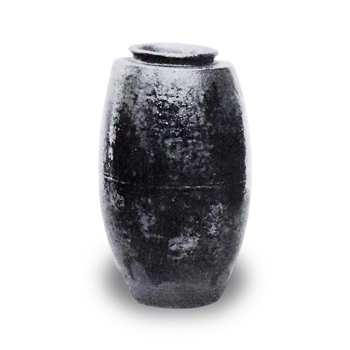
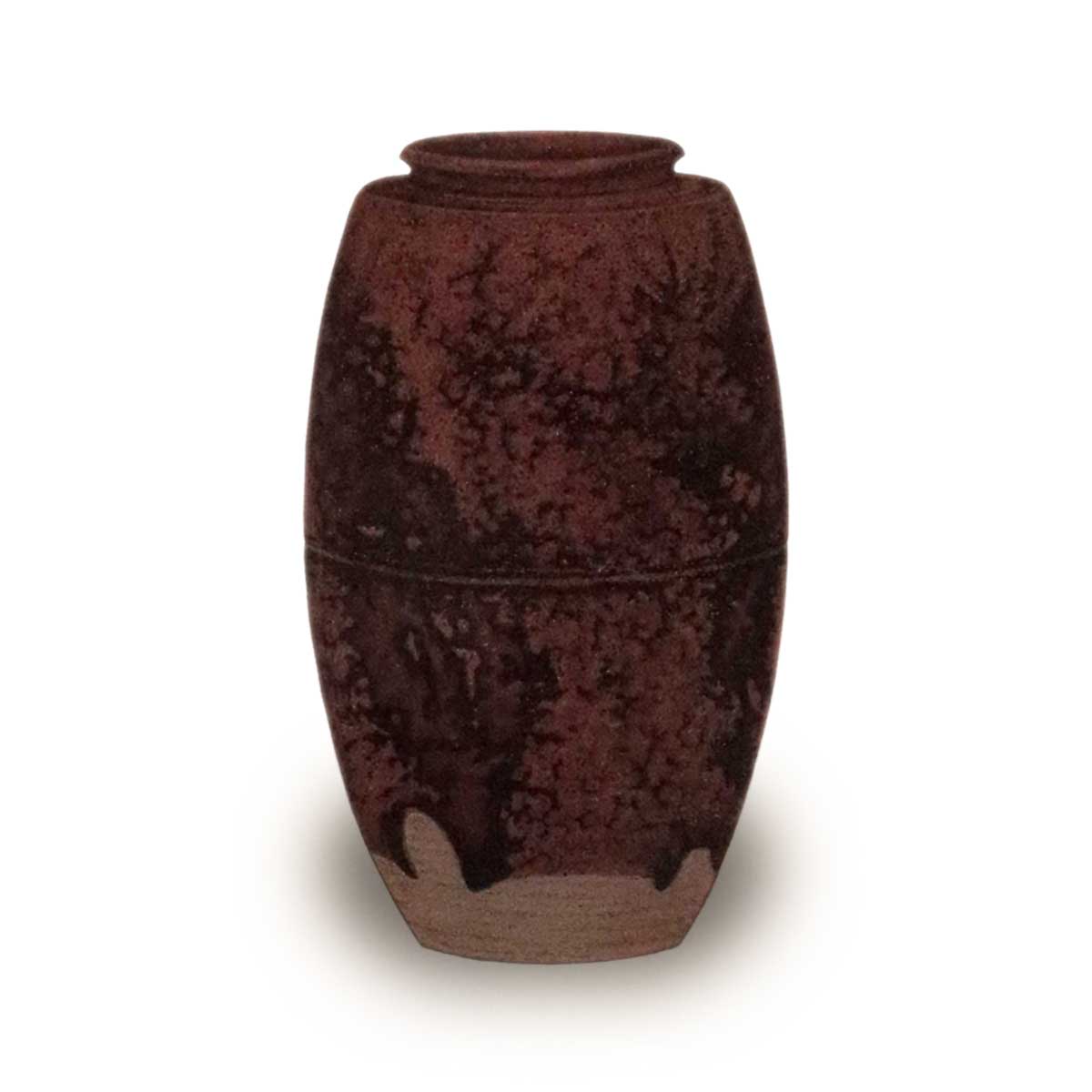
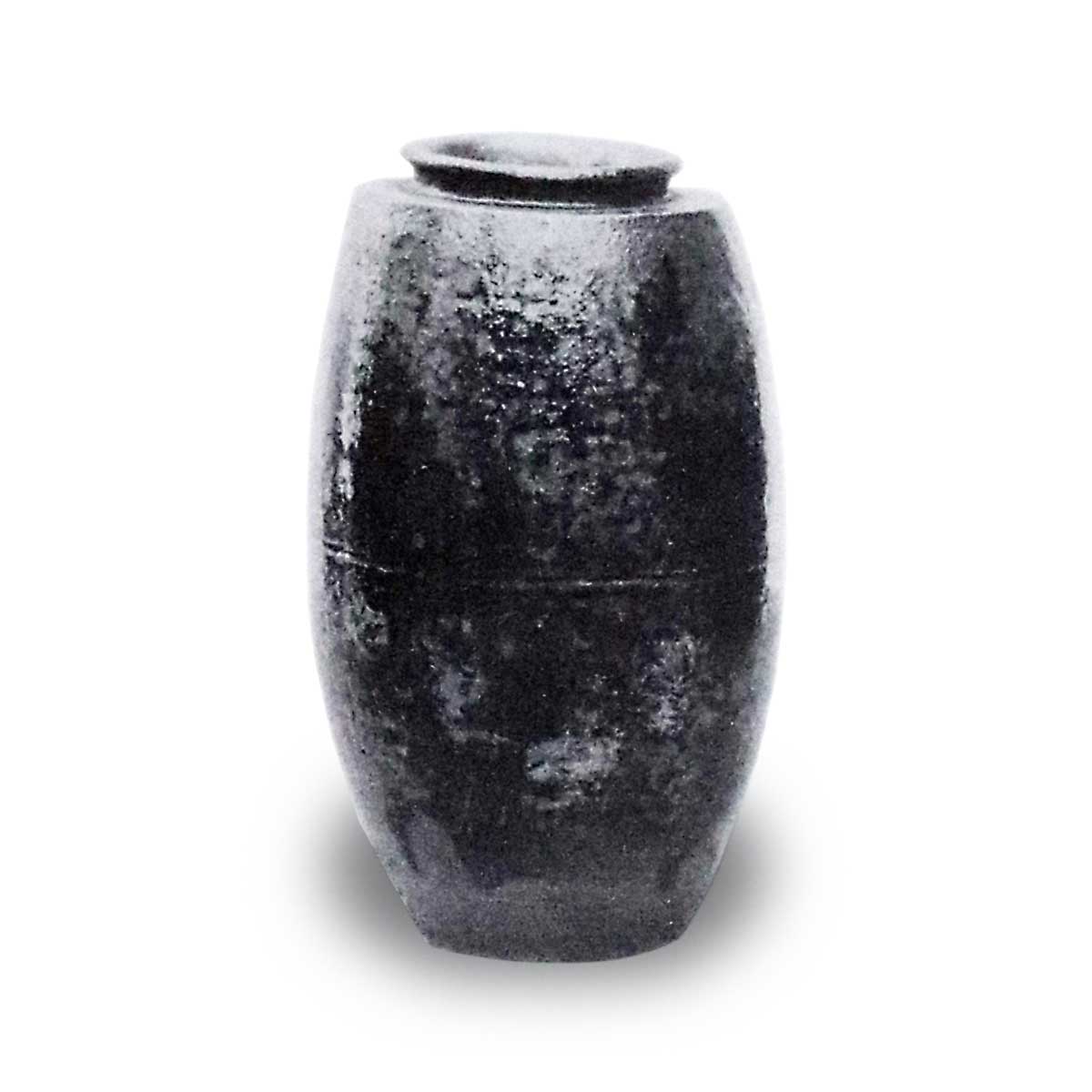
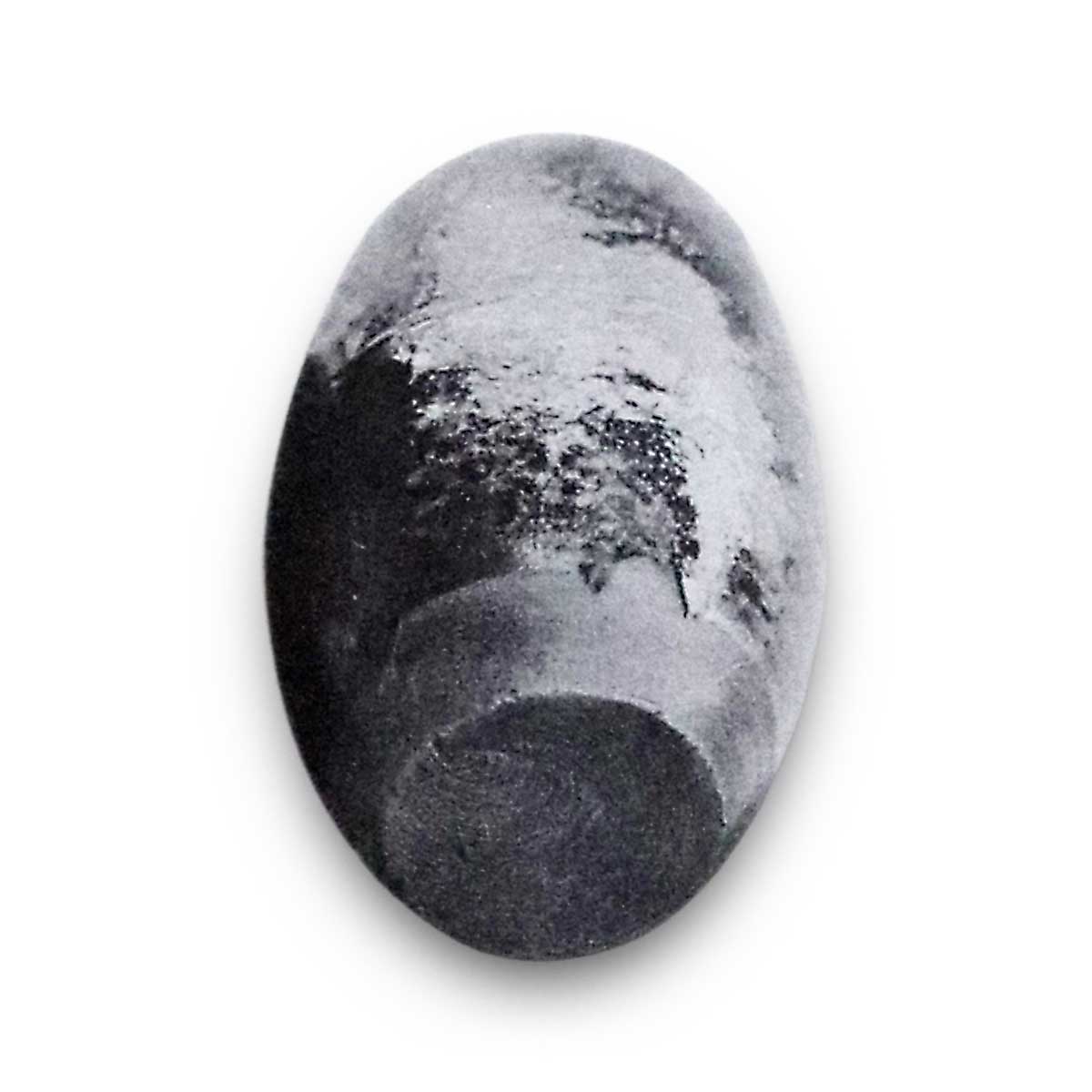
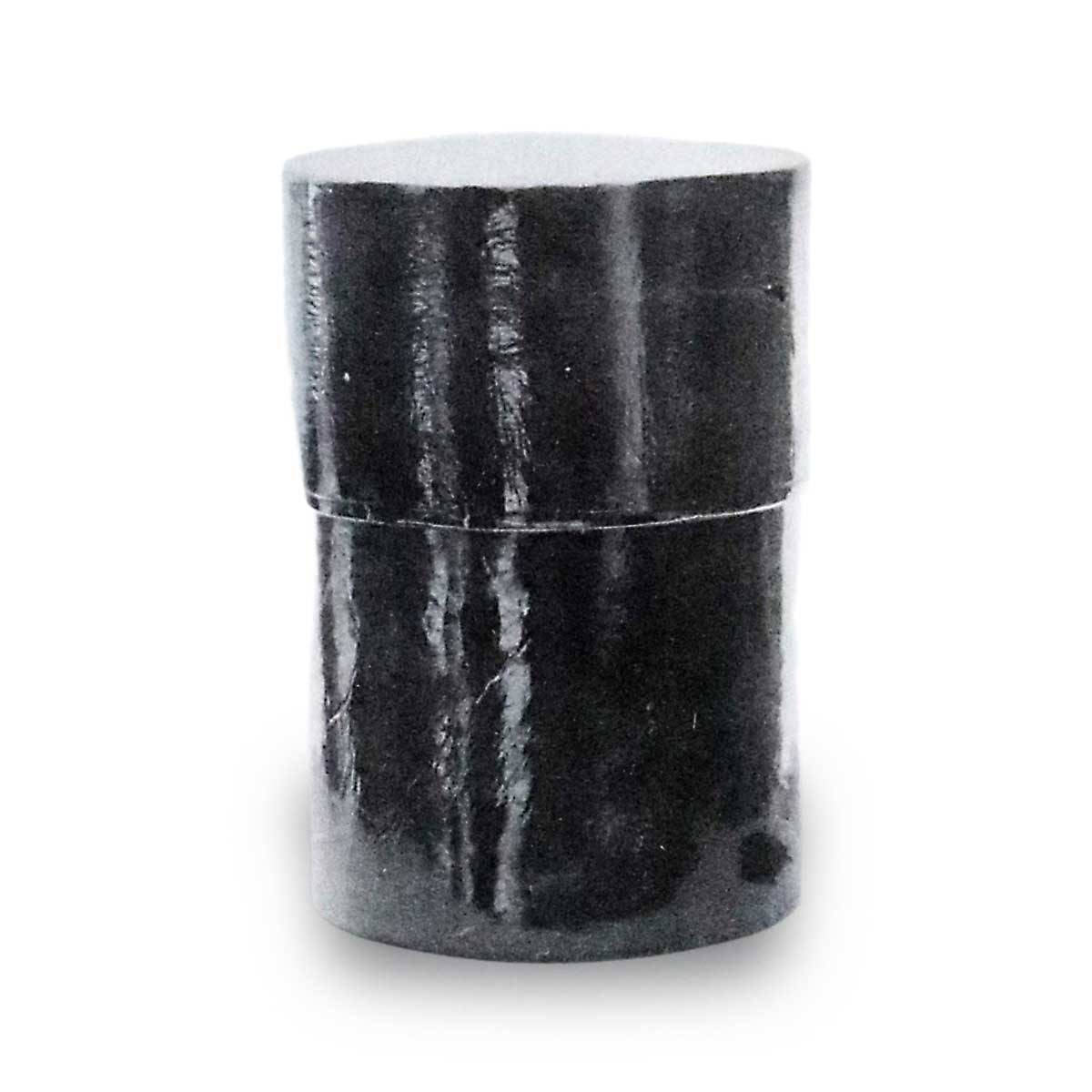
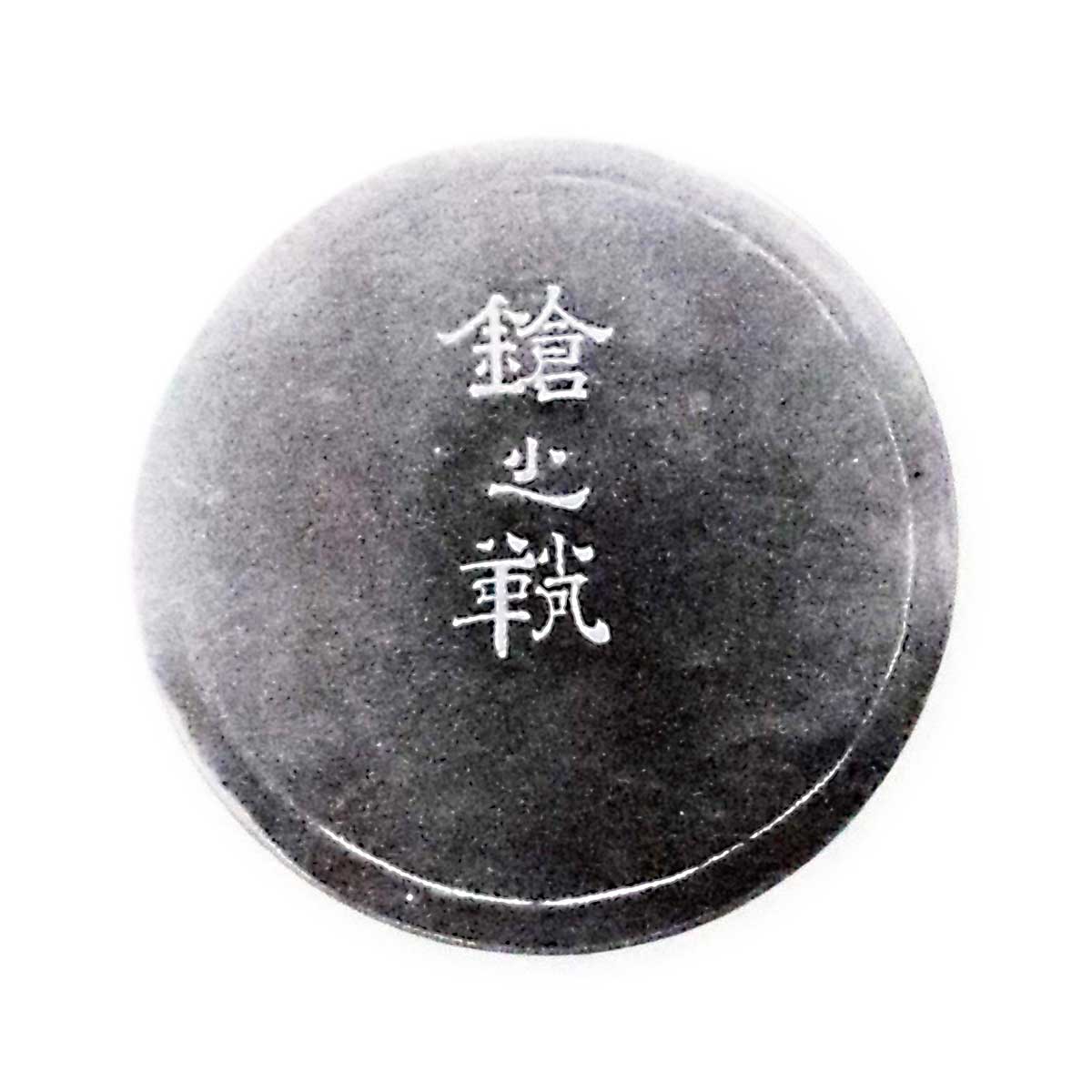
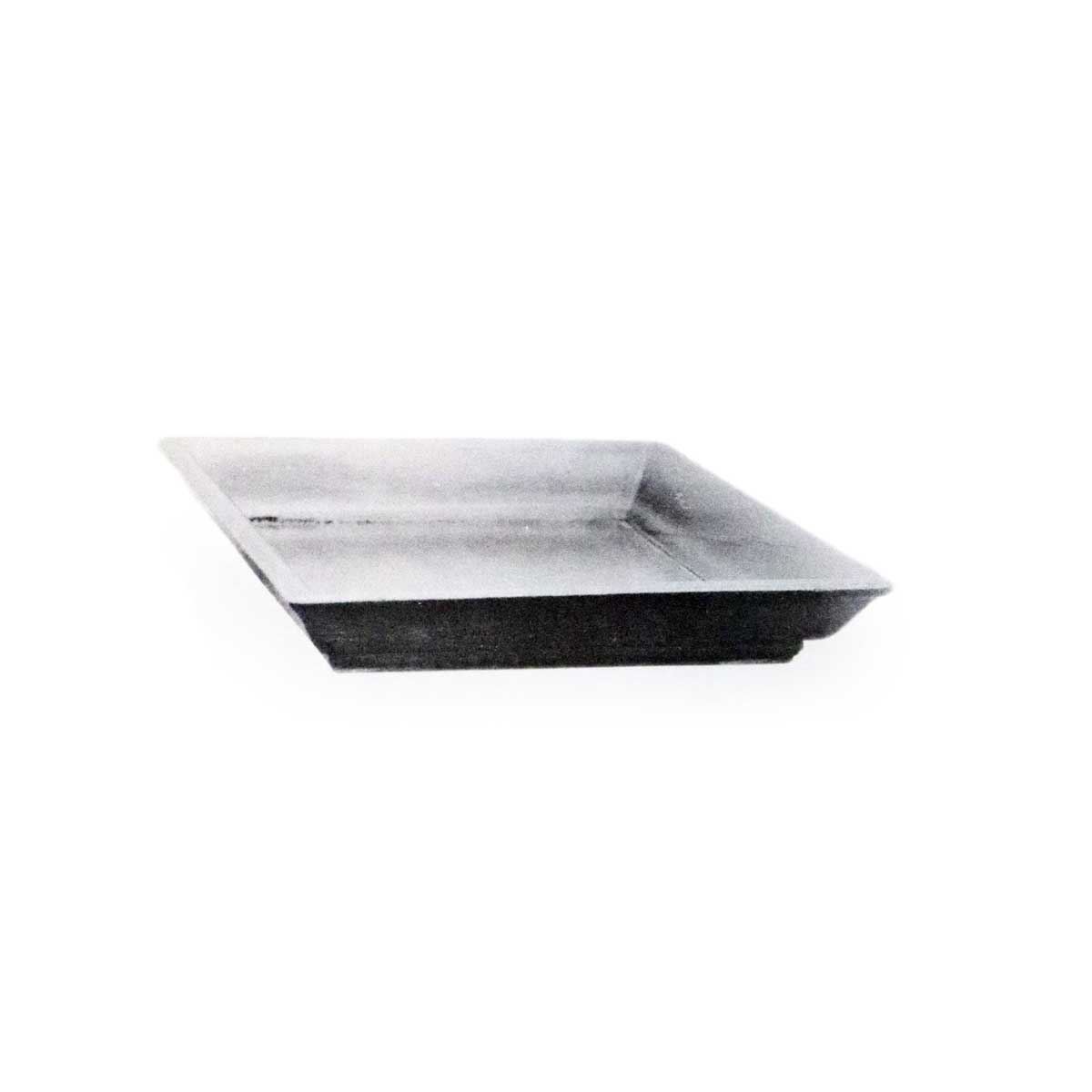
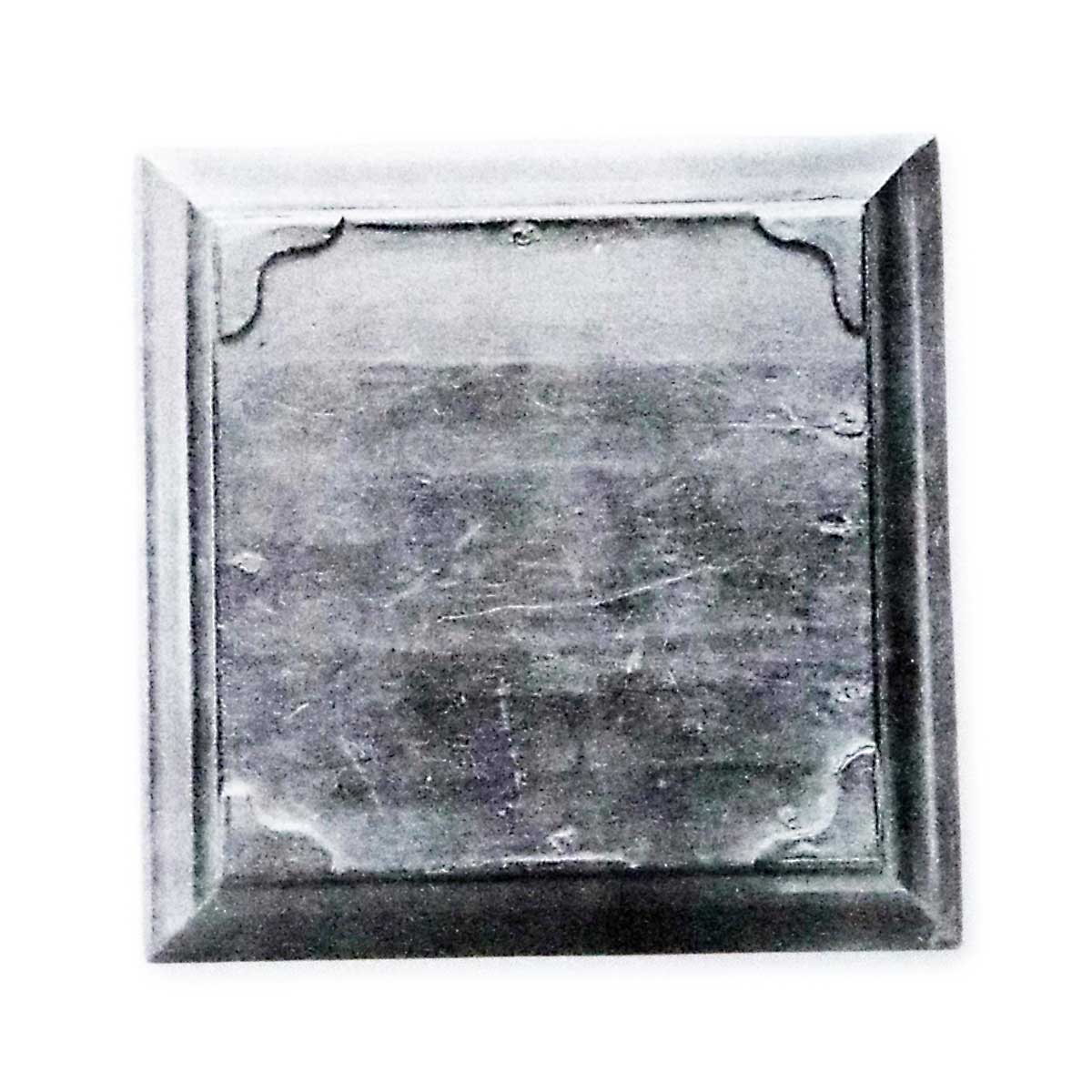
Old Seto—Daimeibutsu Tea Jar—Collection of Count Matsudaira Naoaki (Matsue Matsudaira Family)
[Regarding the Name]
The Meibutsu Mekiri Monogatari lists it as “Taiko-mei,” while the Unshū Matsudaira-ke Hon Meibutsu Chajiri Ki lists it as “Rikyū-mei.” In short, the name likely derives from the tea caddy’s slender, elongated shape, which closely resembles a spear sheath. Alternatively, there is a theory that the name originates from the incident where Akechi Mitsuharu, upon meeting his end at Sakamoto Castle, hung this tea caddy on the tip of his spear and surrendered it to Hideyoshi’s army; however, this is likely a story (fabrication) concocted by later generations.
[Dimensions and Weight]
Height: 3 sun 1 bu (approx. 9.39 cm)
Body diameter: 1 sun 9 bu (approx. 5.76 cm)
Mouth diameter: 1 sun 1 bu (approx. 3.33 cm)
Base diameter: 1 sun 5 bu (approx. 4.54 cm)
Shoulder diameter: 1 sun 5 bu (approx. 4.54 cm)
Weight: 27 monme 7 bu (approx. 103.88 g)
[Accessories]
・Lids: 3 pieces (1 with ivory rim, 1 with ivory nest, 1 made of horn)
・Lid box: Unfinished paulownia wood, with an inscription by Matsudaira Fumai
・Storage pouch: Purple habutae silk; the cord on the cover is “tsugari” (braided cord) in a faded yellow color
・Covers (pouches): 6
- Sumi-no-kura Hana-usagi: Purple cord
- Nami-moyō Donshu: Lining in Onando Chakai-ki pattern; purple cord
- Kongō-gire: Lining in Ori-iro Kaiki pattern; purple cord
- Daito-gire, lined with Shimomon-kaiki, with a purple cord
- Noda-gire, lined with Shimomon-kaiki, with a velvet cord
- Cha-ji-nishiki (tea-colored brocade), lined with Kuzureki-kaiki (faded yellow sea mist pattern), with a purple cord
*These are stored in two boxes, three items in each.
・Pouch boxes: 2
- Paulownia and natural wood, wrapped in Chofu (bird-patterned cloth) and lined with light yellow habutae
- Paulownia and natural wood, wrapped in Kafu (flower-patterned cloth) and lined with purple habutae
・Hikiya: Black-lacquered leather, inscribed with “Spear Scabbard” in gold powder
(Note) According to the *Ueno Library Meibutsu*, the three characters “Spear Scabbard” on the lid of the hikiya are attributed to Kobori Enshū. In *Rinpō-kīryū*, the author is listed as unknown.
(Hikiya Pouch): Dyed leather; cord made of white-patterned seaweed; lined in black
・Inner Box: Paulownia and white wood; treated with “nibukuro” (a black dyeing process to create an antique appearance); equipped with a lock
・Outer Box: Made of molded leather
・Antique Wrapping Cloth (Furuzutsumi): 1 piece. An old cloth that once wrapped the tea caddy; it is severely damaged (heavily worn).
・Accompanying tray: Tray made of Kōboki wood (such as katsura), finished in a tannin-based lacquer; formerly owned by Sen no Rikyū.
Dimensions: 5 sun 7 bu (approx. 17.3 cm) in length and width; the inner mirror surface measures 4 sun 1 bu (approx. 12.4 cm); the base measures 4 sun 3 bu 5 rin (approx. 13.2 cm); features cat-leg feet.
There is a mark on one corner of the bottom where a rivet is said to have been driven in by Furuta Oribe, which actually adds to its antique charm.
(Tray pouch): Donshu fabric; lining is Donshu Ishidatami fabric; cord is Enshu brown
(Tray case): Paulownia and natural wood, with an inscription by Kobori Enshū
・Wrapping cloth: Floral fabric; lining is Onado tea-colored ha-niwa
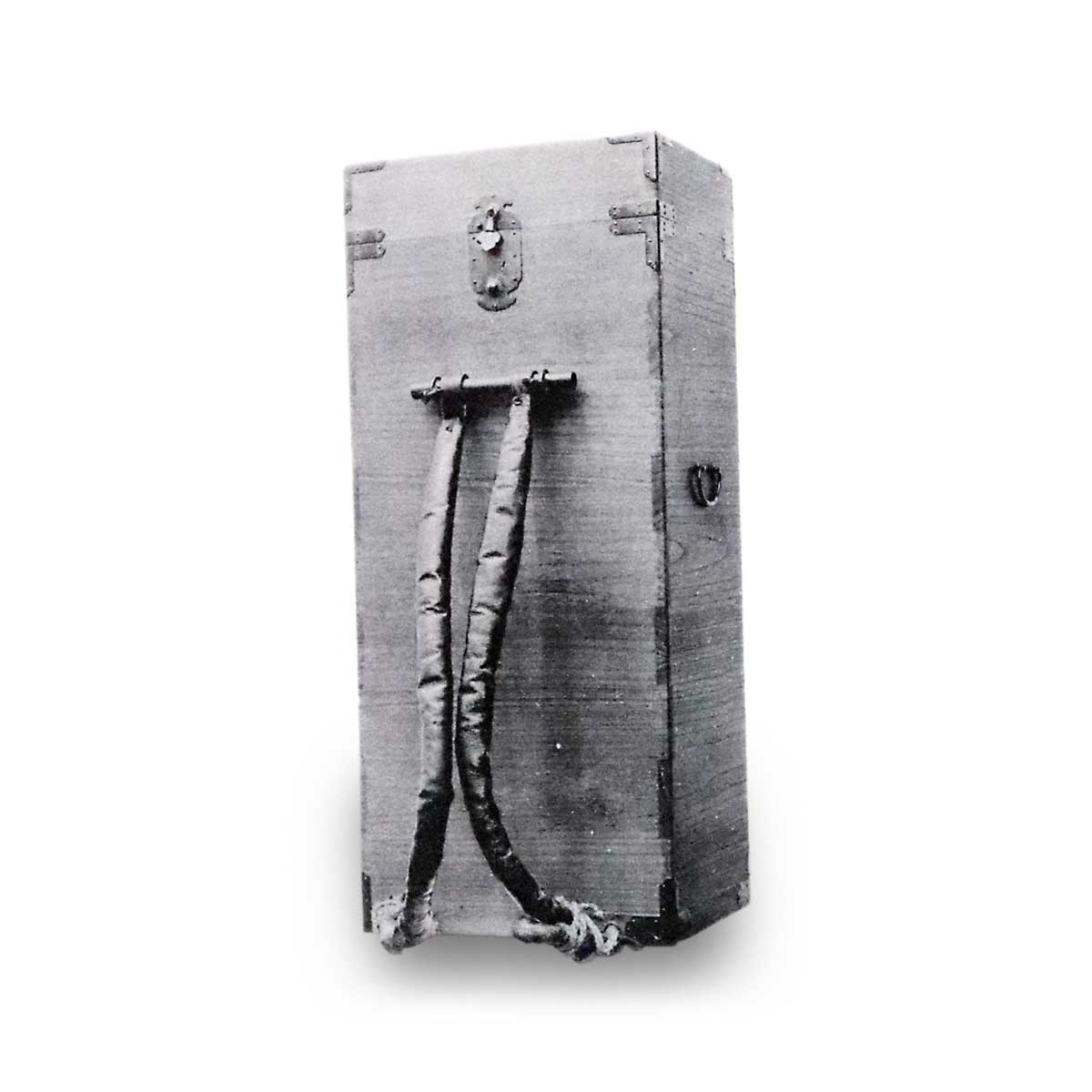
・Storage chest (Oibitsu): Paulownia and natural wood, with a lock
(Note) This case holds the “Yari no Saya” tea caddy and all its accessories, as well as the accessories for the “En’o calligraphy,” the “Tōgen calligraphy,” and the “Kyōdō calligraphy.” While the case containing the “Aburaya Katatsuki” is called the “First Oibitsu,” this one is called the “Second Oibitsu.”
[Summary of Explanations and Miscellaneous Notes on Each Item]
According to descriptions in the “Meibutsu-ki” (catalogs of famous tea utensils) from various periods—such as Senke Chūko Meibutsu, Rinpō-kiryū, and Mekuri-kusa—this tea caddy was deeply treasured by “Izutsuya of Kyoto” (Kawai Jūzaemon, or Shigeemon, or Jūemon).
It is said that when Kobori Enshū (Sōfu) served as the Fushimi Magistrate, he frequently traveled to Kyoto, and his greatest pleasure during these visits was to view this “Spear Sheath.”
Izutsuya cherished this tea caddy immensely, keeping it constantly by his side even while at the shop. Later, when Izutsuya’s family fortunes began to decline, he was forced to sell it to Mitsui Hachirōemon, though he retained the box. It is said that when he later realized it would be difficult to restore his family’s fortune, he wished, “At the very least, I want this box to be reunited with the tea caddy,” and handed the box over to the buyer.
Then, around the Kansei era (1789–1801), through the mediation of Kagaya Sakueemon, a Kyoto tea utensil dealer, Lord Matsudaira Fumai of the Matsue Domain purchased it for 2,500 ryō of gold (records indicate the actual price was 1,656 ryō, 1 bu, 2 shu, and 3 monme 5 bu).
Lord Fumai regarded this tea caddy as the “top-ranked Japanese artifact” and took pride in it as a masterpiece that formed a pair with his own treasured “Aburaya Katatsuki” (the “top-ranked Chinese artifact”). It is said that during his sankin-kōtai travels, he placed the Aburaya in the first travel case and the Spear Sheath in the second, having his retainers carry them carefully with him to Edo.
In September of Bunka 8 (1811), Matsudaira Fumai himself wrote, “The Spear Sheath tea caddy is the finest piece among Japanese-style tea utensils and should be treated with exceptional care.”
[Field Survey Record from Taishō 7]
On May 27, Taishō 7, the actual object was examined at the office of the House of Count Matsudaira Naoaki in Matsue City.
Among ancient Seto “katatsuki” tea caddies, this is a masterpiece possessing every conceivable aesthetic virtue. The rim is exquisitely crafted, chamfered from the inside, and features a deep “nori-gaeshi” (the reverse curve of the spatula). The shoulder edge stands out sharply, as if cut with a razor.
The entire exterior features a purplish ground with beautiful quail-spot patterns, showcasing the quintessential characteristics of ancient Seto ware. A single sunken line (horizontal groove) runs around the body, and the luster of the black amber glaze is indescribably beautiful.
From the lower rim downward, the “nezumi-tsuchi” (mouse-colored clay) is visible, and the thread cut (the mark left by rotating the wheel to detach the piece) on the base is extremely fine and flawless. The slender form is crisp and well-defined overall, and the craftsmanship is exquisite and exudes great elegance. It is by no means a coincidence—but rather entirely understandable—that the “Spear Sheath” was hailed as one of the “Two Grand Champions,” alongside the Tang-style Aburaya Katatsuki. Inside, glaze covers only the rim; below that, the swirls created by the potter’s wheel are clearly visible, forming a vortex at the center of the base.

