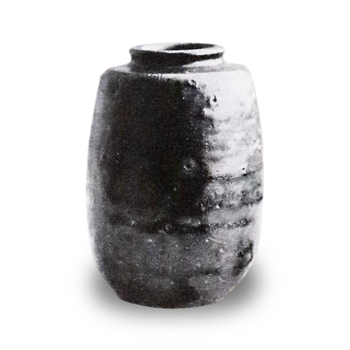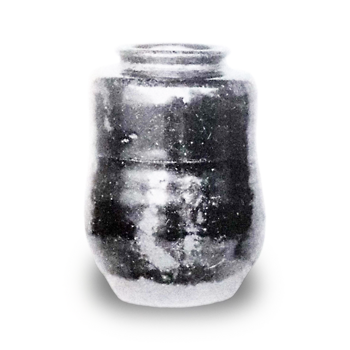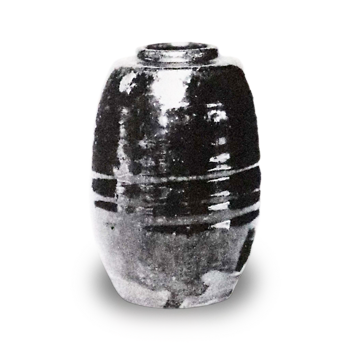
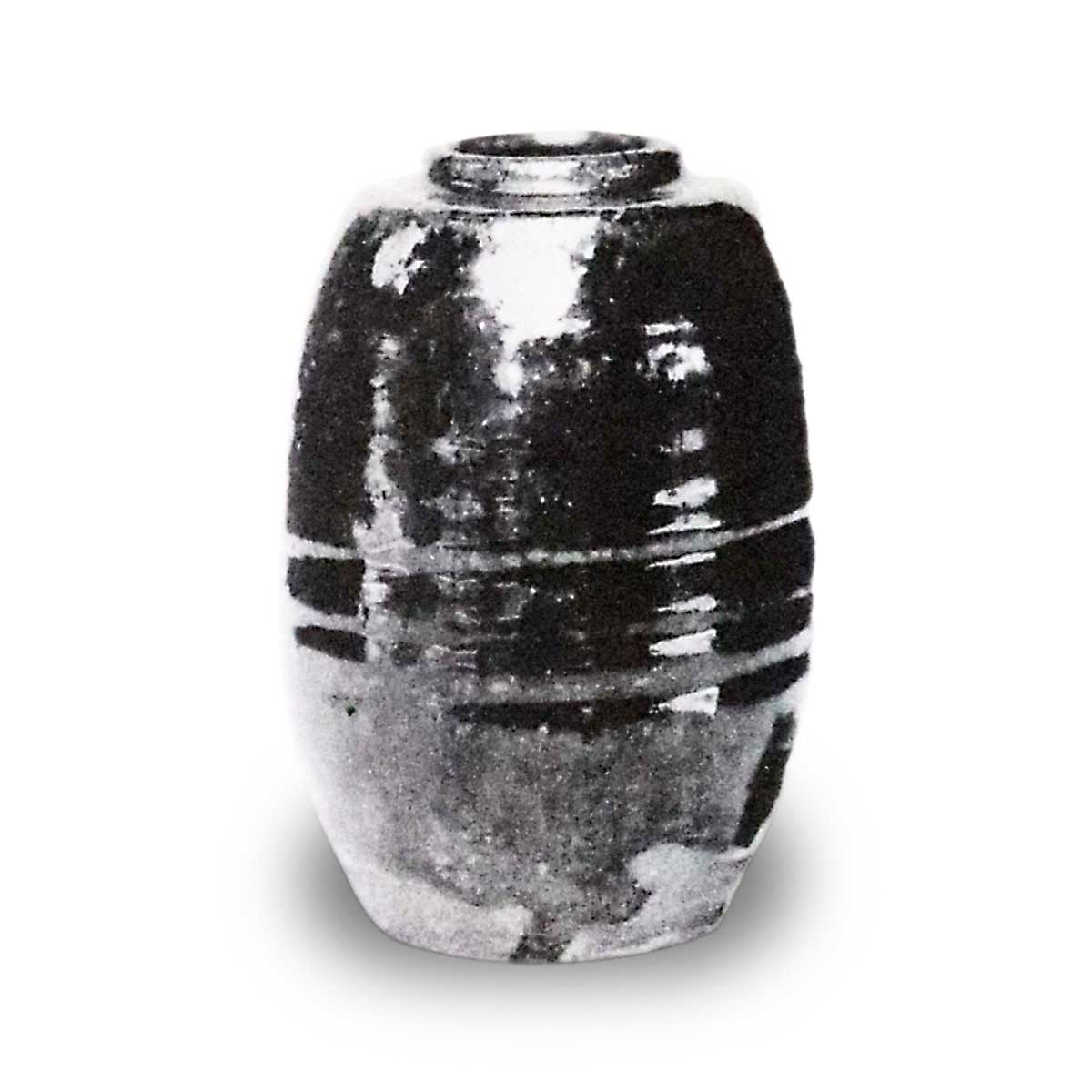
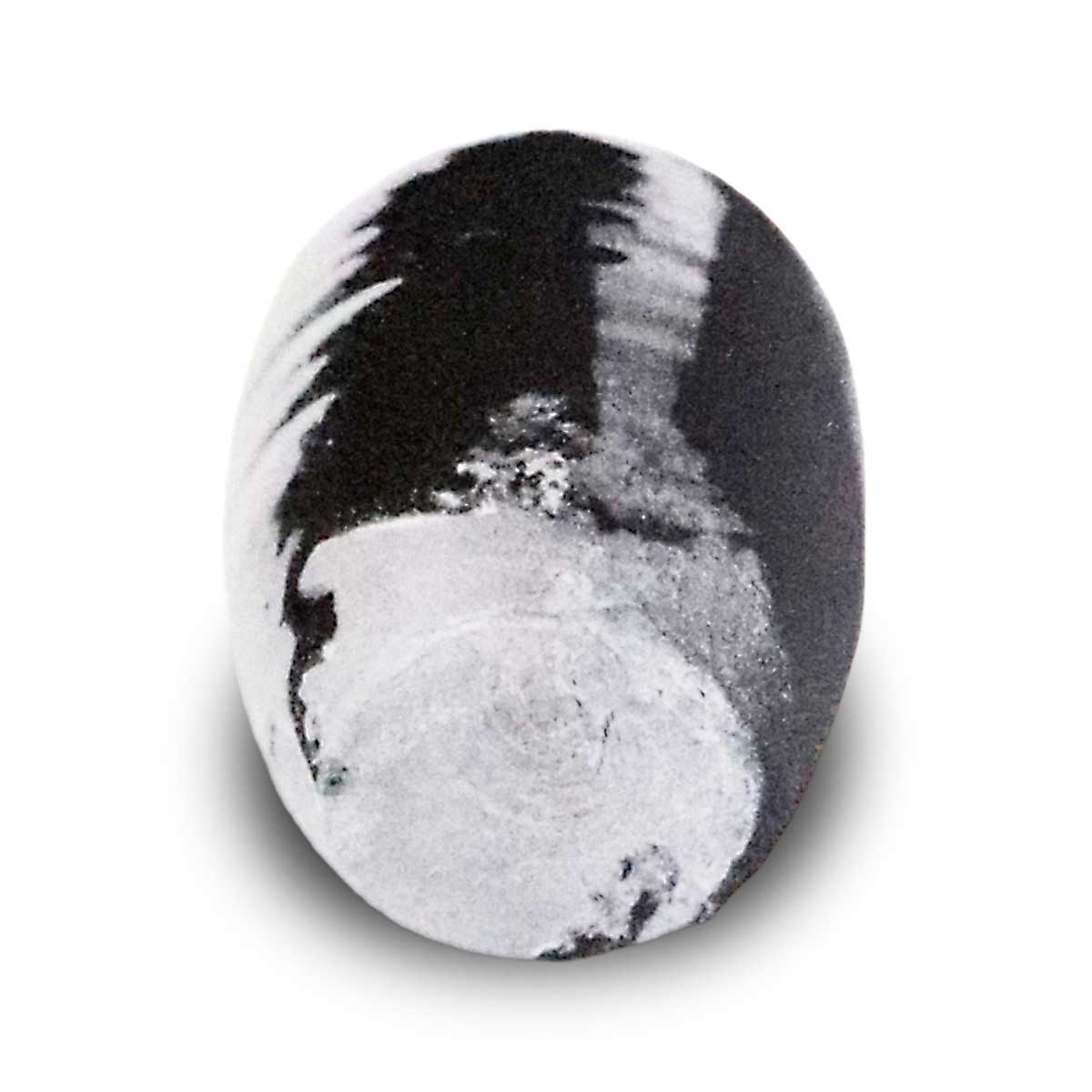
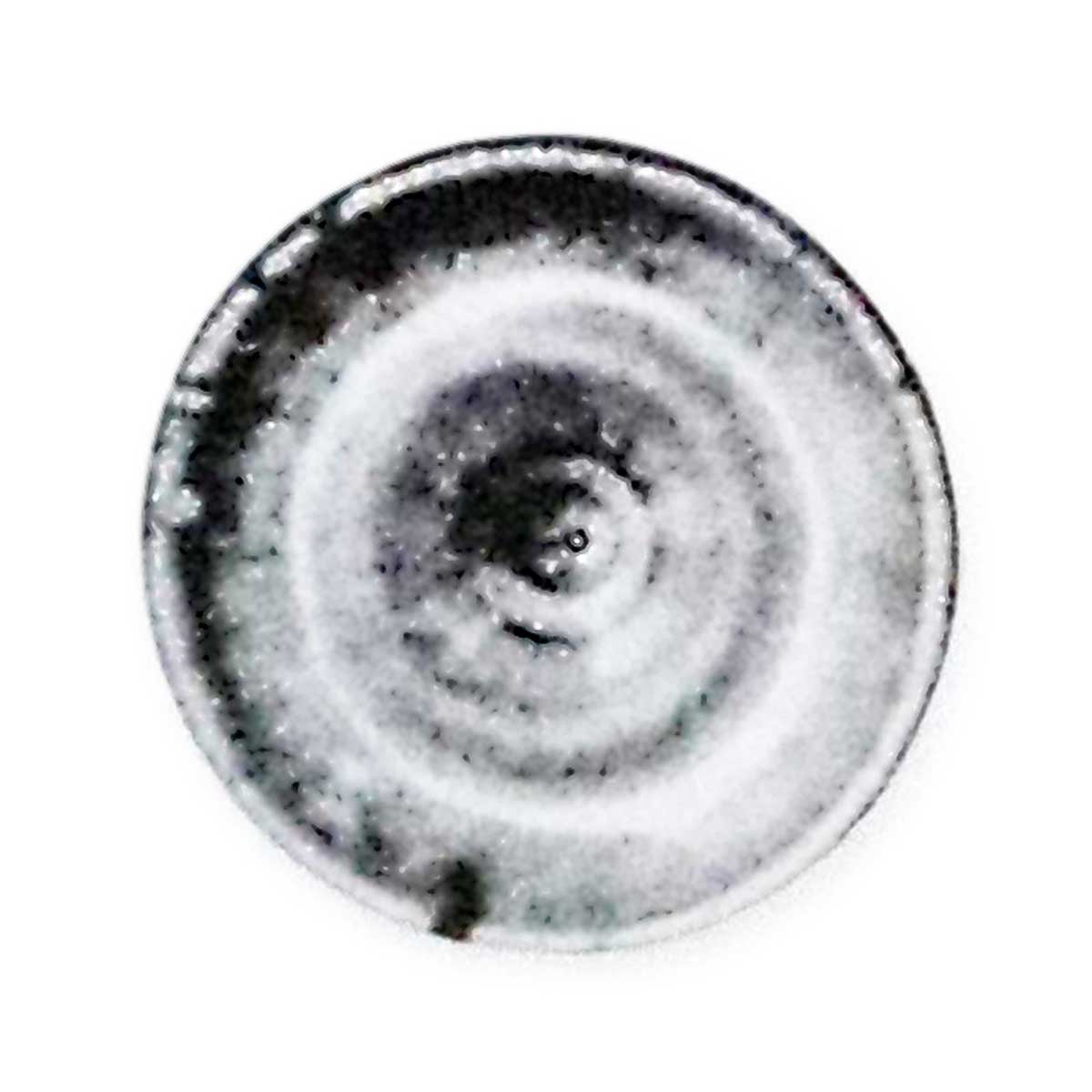
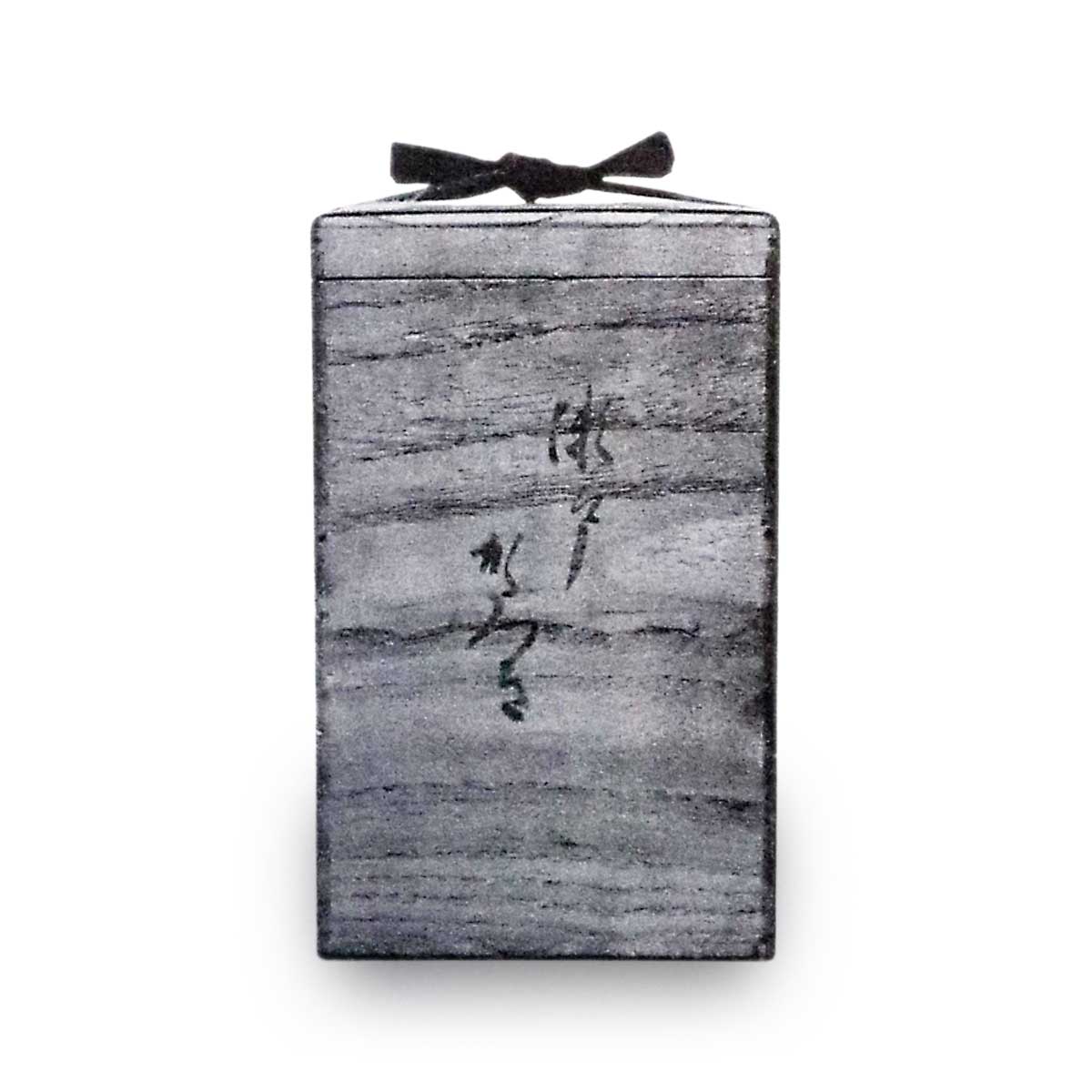
Old Seto ware; Collection of Mr. Chikichiro Hayakawa, Tokyo
Name
Among the renowned Daimeibutsu tea caddies is one known as “Kanamori Katatsuki” (also known as “Unzan”), which is said to have been owned by Kanamori Izumo-no-kami Shigechika. The “Old Seto Katatsuki” of the same name featured here bears an inscription in the box by Kanamori Sōwa, Shigechika’s son; therefore, it was likely owned by either Shigechika or Sōwa.
Dimensions
Height: Approx. 9.4 cm (3 sun 1 bu)
Body diameter: Approx. 6.5 cm (2 sun 1 bu 5 ri / measured at the center)
Mouth diameter: Approx. 3.0 cm (1 sun)
Base diameter: Approx. 4.2 cm (1 sun 4 bu) or approx. 3.9 cm (1 sun 3 bu)
Neck height: Approx. 0.3 cm (1 bu)
Shoulder width: approx. 0.6 cm (2 bu)
Weight: approx. 129.4 g (34 monme 5 bu)
Accessories
・Lid: 1 (no lining, with decorative inlay)
・Storage pouch: tea-colored tortoiseshell-patterned Donshu fabric, with purple cord
・Cover pouches: 3
- Aoki Koto (Lining: Kabe-choro; Cord: Floral pattern / Pale blue)
- Kenzaki Kinran (Lining: Gold-threaded Kai-ki weave; Cord: Purple)
- Wani-chigai Donshu (Lining: Gold-threaded Kai-ki weave; Cord: Purple)
・Wooden Mold: Paulownia wood (fits inside the Kenzaki Kinran pouch)
・Bag Case: Paulownia wood, natural finish, with calligraphy by Kanamori Sōwa
[Inscriptions on Outer and Inner Boxes]
Front:
Kanamori Katatsuki Bag Set of Three, No. 2 (Box for three Kanamori Katatsuki bags. One of two.)
Back:
Kanamori Katatsuki - Height: Approx. 93.9 cm (31 sun 1 bu)
- Circumference: Approx. 91.4 cm (30 sun 1 bu 5)
- Opening Width: Approx. 3.0 cm (1 sun), flared
End
・Hikiya (wooden container): Black lacquer
・Storage Box: Fursu-iro-kae-katashima (Lining: Yellow kaiki weave; Straps: Brown)
・Inner box: Paulownia wood, natural finish, with an inscription by Kanamori Sōwa
[The inner box of the two-box set]
Lid front: Seto, with raised patterns on the body
Miscellaneous Notes
Kanamori Katatsuki (Old Seto): According to an excerpt from the inventory register of the Honda family of Kaga Domain dated May 4, Meiji 15, it states: “Three pouches: Kinran old brocade, Donshu, and Kanto. The Hikiya is black lacquered.”
(From Tsureku no Tomo by Matsuyama Seika)
Provenance
This item was originally owned by Kanamori Izumo-no-kami Yoshishige or his son, Kanamori Muneyasu. However, since Honda Awa-no-kami Masashige—the chief retainer of the Maeda family—was a disciple of Muneyasu in the tea ceremony, it is believed to have been passed down from Muneyasu to the Honda family. Furthermore, since Mr. Hayakawa was an old acquaintance of Baron Honda Masayoshi, who hailed from the same hometown, it is said that he received the item directly from him around Taisho 3.
Field Notes (Record of Observation of the Actual Object)
On November 2, Taishō 9, the actual object was observed and appraised at the residence of Mr. Chikichirō Hayakawa in Shimo-Nibanchō, Kōjimachi Ward, Tokyo City.
The rim is rounded, and the neck is extremely short. A single fine raised line runs around part of the edge of the neck. The shoulder is rounded, the body flares out, and it tapers slightly toward the base. The entire piece is covered in a beautiful, lustrous black amber glaze, within which persimmon-colored metallic flecks appear in a mottled pattern. The rim is persimmon-colored, and the body is marked by coarse, stepped wheel marks; short body cords are visible in some areas. The off-white unglazed clay is visible below the rim, though the height of this exposed area is not uniform. In some places, the black amber glaze has run down to the base (the part in contact with the surface). The thread-cutting is rough, with a slight misalignment at the starting point. There are areas of chipped or worn clay around the base; the clay texture is coarse, and part of the base rim features a folded-over-like unevenness. Overall, the piece exhibits a wabi-style aesthetic.
Inside, the glaze covers only the rim; below that, the wheel marks of the body continue, forming a swirl pattern at the center of the base. It is in pristine condition; the luster of the black amber glaze is beautiful overall, and the coarse wheel marks on the body create a distinctive visual appeal. The persimmon-colored glaze is also magnificent, with glaze pools around the middle reflecting light like a mirror. This tea caddy features an intriguing design and offers many points of interest.