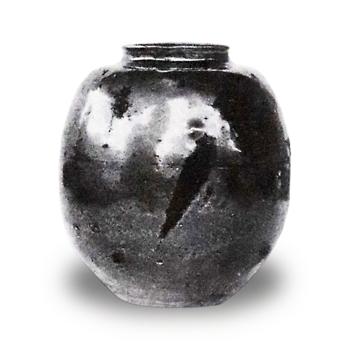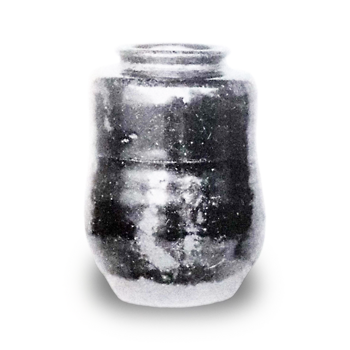
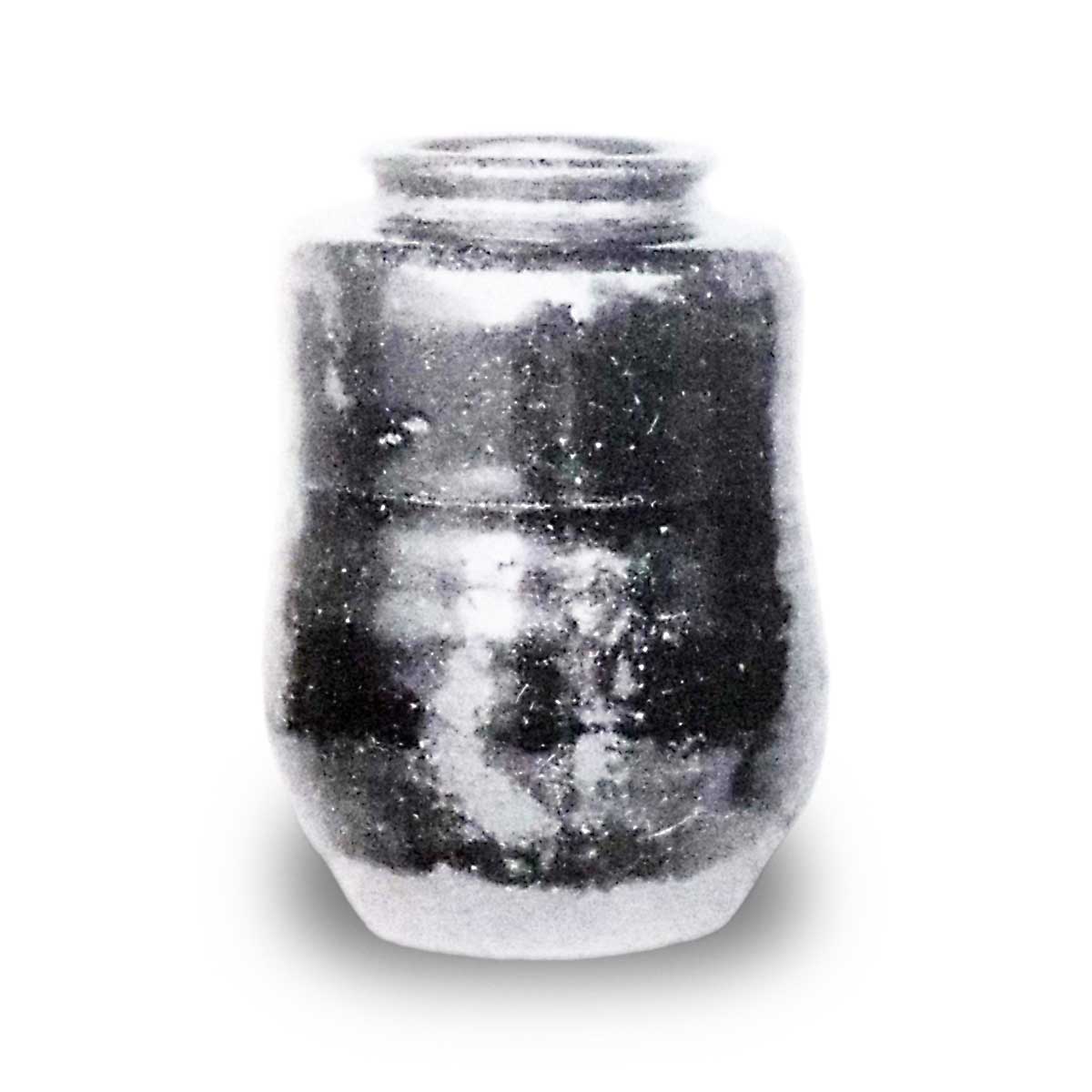
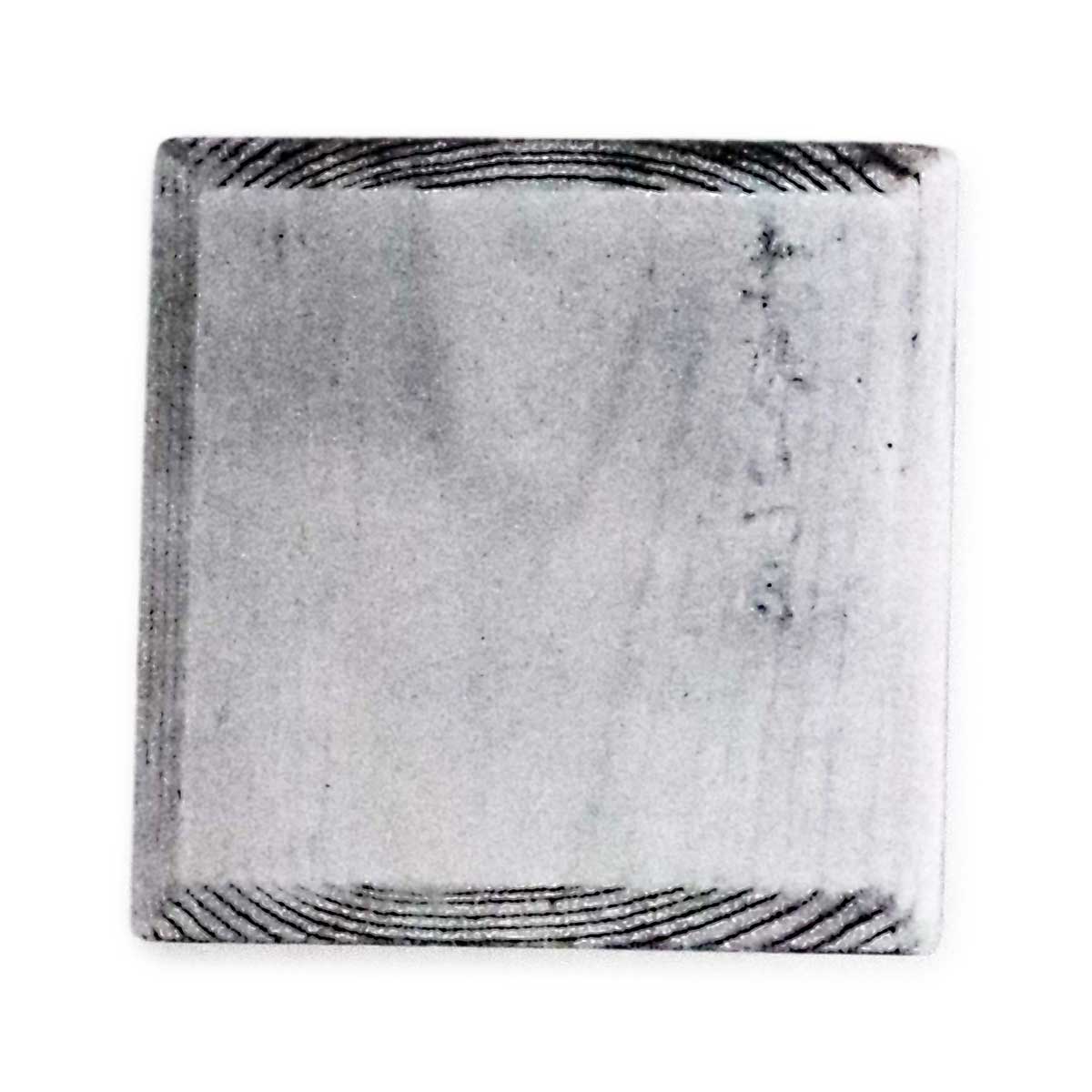
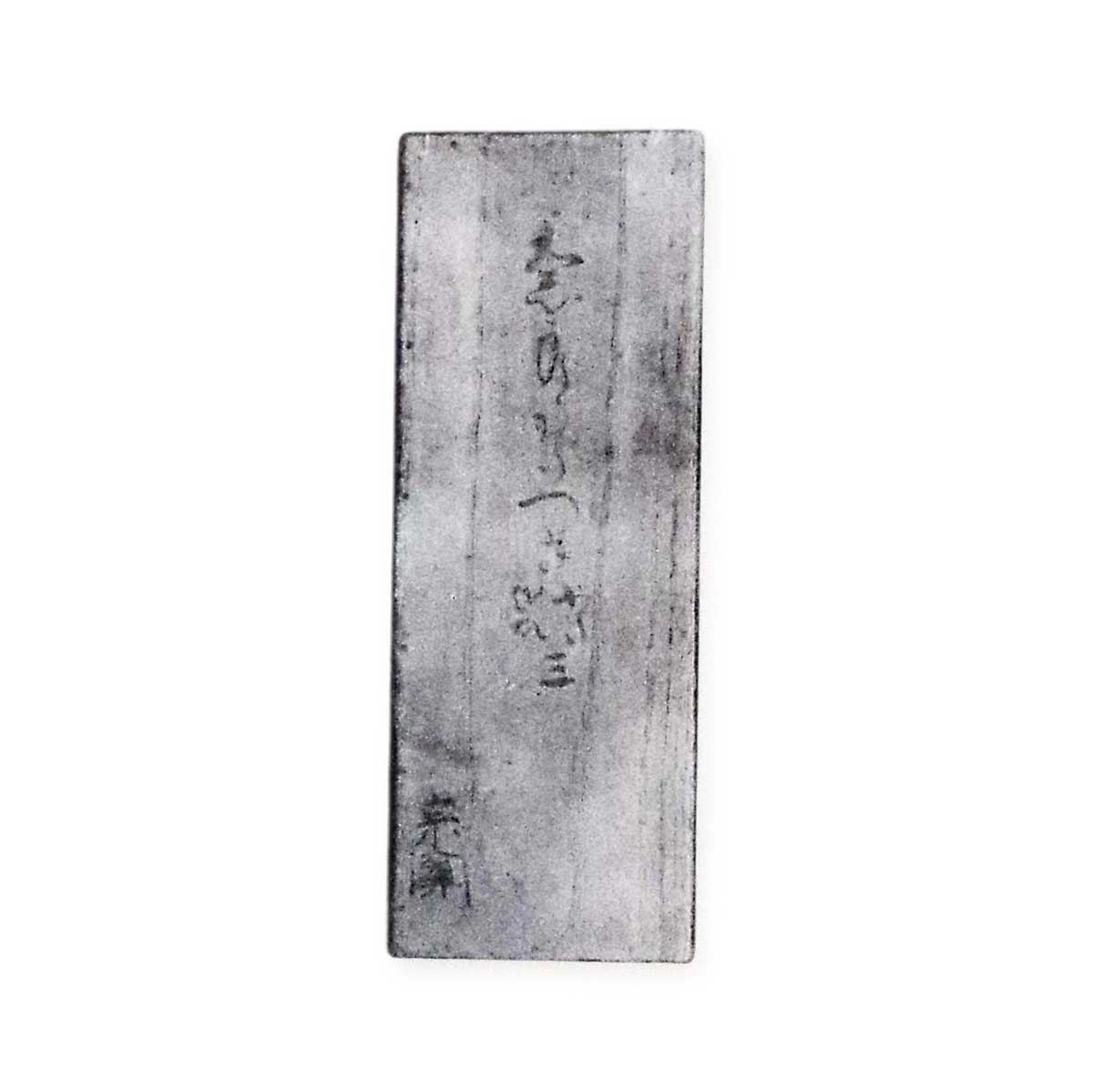

Old Seto; Collection of Mr. Sanjiro Hirase, Osaka
Origin of Name: The name likely derives from the fact that it was first sold (or introduced to the market) in Nara.
Dimensions (converted to centimeters)
Height: Approx. 7.6 cm (2 sun 5 bu)
Body diameter: Shoulder section approx. 5.8 cm (1 sun 8 bu) / Base: Approx. 5.9 cm (1 sun 9 bu 5 rin)
Mouth diameter: Approx. 3.6 cm (1 sun 2 bu)
Base diameter: Approx. 3.9 cm (1 sun 3 bu)
Neck height: Approx. 0.5 cm (1 bu 8 rin)
Shoulder width: Approx. 0.8 cm (2 bu 5 rin)
Weight: Approx. 137.6 g (36 monme 7 bu)
Accessories
・Lid: 1 (for storage cover/Paulownia box)
・Storage pouch: 1 (purple chirimen, purple cord)
・Storage covers (pouches): 3
- Floral-patterned silk with colored threads (lining: tamamushi, purple cord, Sakuma Shōkan style)
- White-Brown Silver-Lattice (Lining: Tamamushi; cord ties: purple; in the style of Katagiri Sekishū)
- Silver Pipe (Lining: Tamamushi; cord ties: dark pale yellow; in the style of Kobori Enshū)
・Wooden Molds: Paulownia, 3 pieces
・Paulownia box with ivory lid (inscribed in ink on the body: “Sashō Futafukuro”)
・Nara Katatsuki (Tea caddy body)
・Paulownia box with ivory lid (contained in a pouch lined with flower-patterned silk; the body bears the inscription “Fusa-bukuro Katashiki” in ink)
・Box contained in a White Tea with Silver Lattice pouch
・Paulownia box with ivory lid (the body bears the inscription “Koen Fusa-fukuro” in ink)
・Box contained in a Silver Mullein pouch
・Inner box of the first pouch: Paulownia (unfinished wood, inscribed by Katagiri Sekishu)
“Nara Kasatsuki—Pouch—Lid—Three—Sōkan”
・Outer box for the first pouch: Paulownia (with cypress inlay at the location of the lid inscription)
Front: “Nara Katatsuki Tea Caddy—Replacement Pouch—Lid Three—Three Pouches”
Back: “Flower-colored silk-lined pouch and lid—A favorite of Lord Sakuma Shōkan
White-tea-silver-lattice pouch and lid—A favorite of Lord Sōkan—Arabesque ground pattern
Silver-lined pouch and lid set—to the liking of Lord Kobori Enshū; ground pattern: flowers and grasses
On the box to the right, there is a handwritten inscription by Sōkan and Sōtei reading, ‘Nara Katatsuki, Three Pouches, Three.’
On this occasion, a new outer box was commissioned.
Late autumn of the Year of the Earth Dog, An’ei 7 (1778).”
・Inner Box 1: Paulownia (unfinished wood)
The Hirase family’s gourd seal is on the underside of the lid
・Outer Box 1: Cedar (unfinished wood)
“Nara Risatsuki”; the Hirase family’s gourd seal is on the underside of the lid
・Outer Case: Paulownia (unfinished wood)
The inscription on the underside of the lid reads as follows:
“The Nara Katatsuki tea caddy formerly owned by Kōkan Kōji, along with the replacement lid and three replacement pouches, and the accompanying documents—all of which are in his own handwriting—are included. As you are deeply devoted to the tea ceremony, these items were presented to you on this occasion by Chief Steward Sadaaki. I am recording this at your request.
Sugihara Yaemon
Naoyoshi (seal)
Kansei 12 (1800), Year of the Monkey, 9th month of autumn
To Lord Katsuno Gozaemon”
・Accompanying Letters: 4
“I have read your letter. As the warmth of spring increases day by day, I am delighted to hear that you are enjoying ever-better health.
Regarding your request to transcribe and send the meeting minutes from the tea ceremony held when Sōkan handled the Nara Katatsuki, I have fully understood the details. Upon investigation, I found the record of one such gathering, so I have transcribed it and am sending it to you.
Since many of Sōkan’s handwritten meeting records were taken to Edo by Roji Iwami-no-kami, I have instructed my staff to search for them among those documents. I will inform you as soon as they are found.
However, even if I am able to ascertain the general content, I may not be able to deliver the records immediately; I would appreciate your understanding in this matter. I will contact you again at a later date. With the utmost respect.
March 3
Sugihara Yaemon
To Lord Katsuno Gozaemon”
[Tea Ceremony Record]
The evening of November 14, Jōō 3 (1654)
Guests: Lord Awa-no-kami of Ueno, Kyūsei
Beginning:
A calligraphic work of “Genkatsu” was hung in the tokonoma, with a cover inscribed “Kafumi-tsubo-donsu” placed in front of it. The tea box was placed on the shelf beneath the black tea strainer, and the teapot was requested to be placed in front of the charcoal brazier. The charcoal preparation and subsequent procedures were the same as before.
Menu and Sequence: The flower vase in the tokonoma was a bud-shaped incense grinder from Kenchō-ji Temple, containing pale-colored Chayama flowers. The water jar was made of Buzen-yaki.
The tea box was placed beyond the window in the service area; the lid was turned face-up, and the tea scoop was placed on top of it. Inside the tea box were “Nara Katatsuki” and two types of tea.
When preparing tea, purify the tea bowl and place the men-tsu (tea bowl holder) on the lower shelf. Assemble the tea scoop; after the tea ceremony, remove the tea scoop from the upper shelf and place it on the lower shelf. Request additional charcoal, followed by a request for thin tea. The water jar, tea bowls, and water dripper are the same as before. Serve the tea in a pair of tea bowls. After the tea ceremony, remove the tea caddy from the upper shelf and place it on the lower shelf.
Miscellaneous Notes:
The men-tsu is made of green bamboo and is removed. After the tea ceremony, the ladle is removed and placed on the left side of the upper shelf.
A three-panel hanging scroll by Sesshū is displayed in the shoin; everything else remains as before.
The night of February 26, Jōō 3 (1654)
Guests: Lord Matsudaira Wakasa-no-kami, Lord Sakai Danjō, Lord Matsudaira Ichimasa
The kettle is from Inomidado. A calligraphic work by Zen Master Daikaku is hung in the tokonoma; within the doko, the charcoal scoop, gourd, and charcoal pot are arranged in a row; the raincoat and feather broom are hung on nails; and the handbox (a square, blue-and-white porcelain container) is retrieved from the kitchen. The mizu-tsugi, a Hida-lacquered kataguchi, and a hand towel are served.
After:
The flower vase in the tokonoma is a wicker basket, placed on the floor. The flowers are single-petaled goldenbell and camellias (red double-petaled and white “Shiratama”). The water jar is made of Shigaraki ware. The tea caddy is a Nara-style katatsuki, placed near the kitchen area; a pull-handle ladle is hung inside the “Dōkō,” and when it is time to prepare tea, a tea bowl (E-raku ware, black) is prepared and brought out. The tea scoop is a “Dōan,” and the water-draining scoop is a “Hitate-tsū.” After the tea ceremony, the scoop is removed and the water jar is placed in the “Dōkō.” One piece of charcoal is requested and tossed into the bottom. The hanging scrolls and other items are the same as before.
(Notes on the Decorations for Lord Sōkan’s Guests)
The night of March 1, Jōō 3 (1654)
Guests: Lord Bimon, Tōzen-in, Heishō-in, Jōkyō-bō, Rishō-bō
The kettle is from Inomida-dō. In the tokonoma hangs a calligraphic work by Zen Master Daikaku. Place the charcoal scoop and ash container beneath Michiyuki’s inner room; hang the raincoat and feather duster on nails; and retrieve the incense box (a square, blue-and-white porcelain piece) from the kitchen. The water carrier (wearing a Hida-nuri kataguchi) serves the hand towels.
Later:
The flower vase in the tokonoma is a basket, placed on the floor. The flowers are Japanese goldenbell and camellia (white and red). The water jar is Shigaraki-yaki. The tea caddy is a Nara katatsuki (placed in a pouch); it is hung on a nail on the wall of the kitchen, and a ladle with a straight handle is hung on a nail in Michiyuki’s inner room.
When preparing the tea, the tea bowl (E-raku-yaki, black tea bowl) is prepared and brought out. The tea scoop is Michiyasu; the water-pouring scoop is a flat-bottomed type with a straight handle. After the tea ceremony, the scoop is removed, and the water jar is placed inside Michiyuki’s room. Charcoal is requested afterward and tossed into the bottom of the jar. The hanging scrolls and other items in the study are as described previously.
(Notes on the Decorations for Lord Sōkan’s Guests)
The night of March 30, Jōō 3 (1654)
Guests: Lord Itakura Awa-no-kami, Lord Naitō Hida-no-kami, Lord Ōta Settsu-no-kami, Lord Itakura Jirōemon
The kettle and tokonoma are the same as before. On the shelf inside the Dōkō, place a blue-and-white square incense box; below it, arrange the charcoal scoop, gourd, and incense burner in a row, and bring out the raincoat and feather broom. After the reception, the charcoal is placed, and the metal water jug and hand towel are completely removed.
Later:
A basket is hung over the flower vase in the tokonoma, containing peonies (in various colors). The water jar is made of Shigaraki ware. The tea caddy (Nara katatsuki style) is placed in front. A ladle is hung on a nail inside Michiyuki’s room; when preparing the tea, a tea bowl (a black Eiraku-yaki bowl) is set aside and brought out. The tea scoop is by Rikyu. Remove the water jug and the tamentsu, and after the tea ceremony, remove the water jug and place the scoop inside the Michiyuki. Later, request charcoal and set aside the bottom. The Shōin is the same as before.
(Notes on the Decorations for Lord Sōkan’s Guests)
Provenance:
This was owned by Katagiri Iwami-no-kami Sadamasa (Katagiri Sekishū), the founder of the Sekishū-ryū school of tea ceremony, and records in the “Notes on the Arrangements for Lord Sōkan’s Guests” indicate that it was used at a tea ceremony in the third year of Jōō. It was subsequently passed down from Katagiri Shuzen-no-shō Sadaaki (the 5th generation) to Sugihara Yaemon; in the 12th year of Kansei (1800), Yaemon transferred it to Kuzuno Gozaemon; and after later coming into the possession of Hirase Rokō, a tea connoisseur from Osaka, it has been handed down within the Hirase family ever since.
Record of Actual Viewing:
On December 16, Taisho 10 (1921), I viewed the item in person at the residence of Mr. Sanjiro Hirase in Kitahama-cho, Higashi Ward, Osaka City.
[Characteristics and Form of the Tea Jar]
The rim is thick with a shallow fold, and a single band of glaze—a mixture of “jakatsu” and blue lapis lazuli—runs around the low neck.
The shoulders are slightly chamfered, and from there downward, loose wheel marks run gently around the body, which tapers to form a shape resembling a rice bale. A thin, single line runs down the middle of the body.
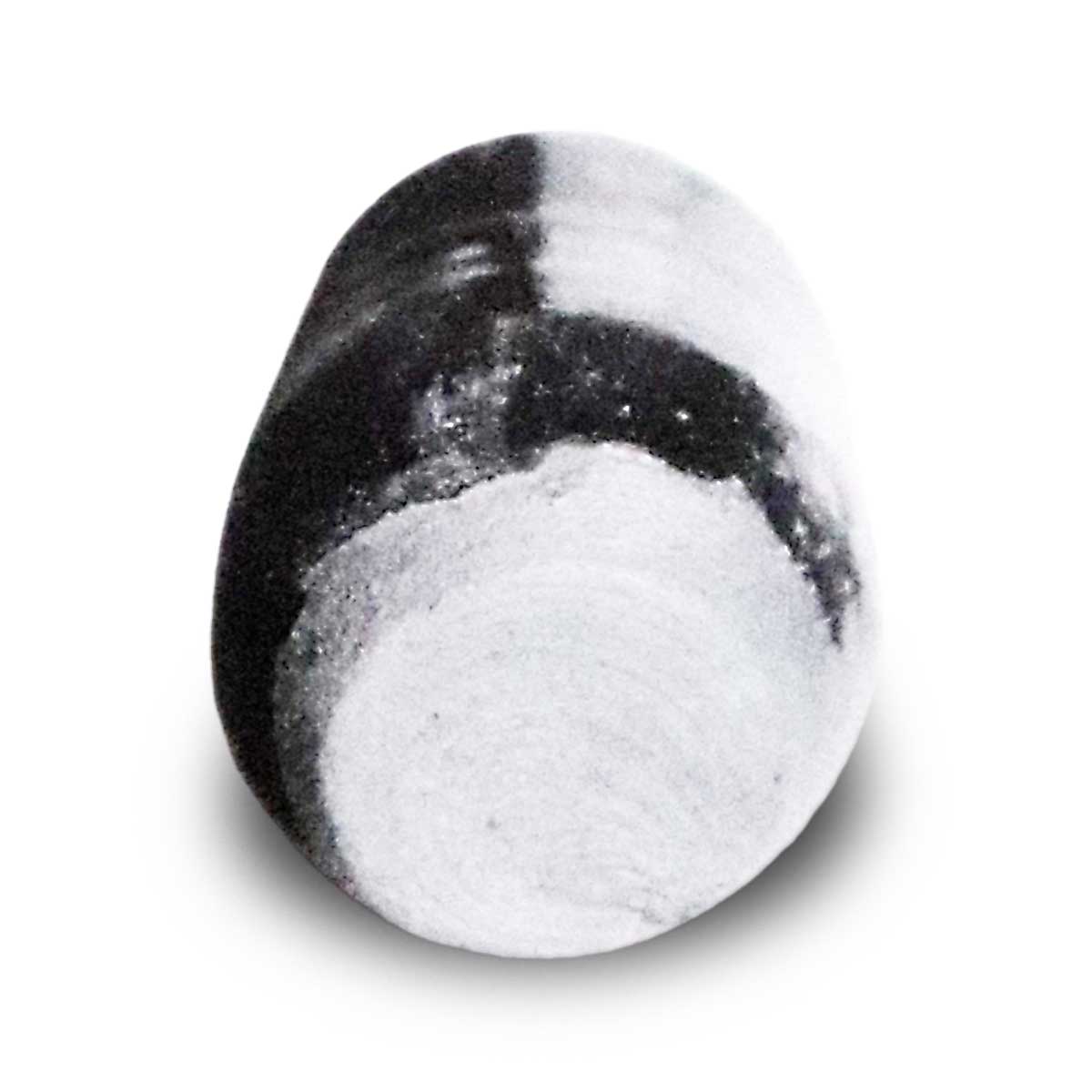
The lower section flares out; from the rim downward, a water-glaze coats the reddish-hued clay body. The rim cut is coarse, with a step (discrepancy) at the beginning and end of the cut.
Overall, the amber-colored body features a black glaze pattern, with patches of persimmon color (a tea-brown hue caused by iron) and areas where the metallic luster has faded appearing here and there. Blue-lapis-like specks glimmer within the black, creating a visual effect so fascinating it defies description.
The interior is entirely covered in an amber-colored glaze, with the unglazed clay visible in some areas of the base. The wheel marks are coarse and circular, forming a swirl in the center of the base.
The glaze is rich in color with a beautiful luster, and the tapered shape of the body lends it a charming appeal, making this a truly atmospheric tea jar.