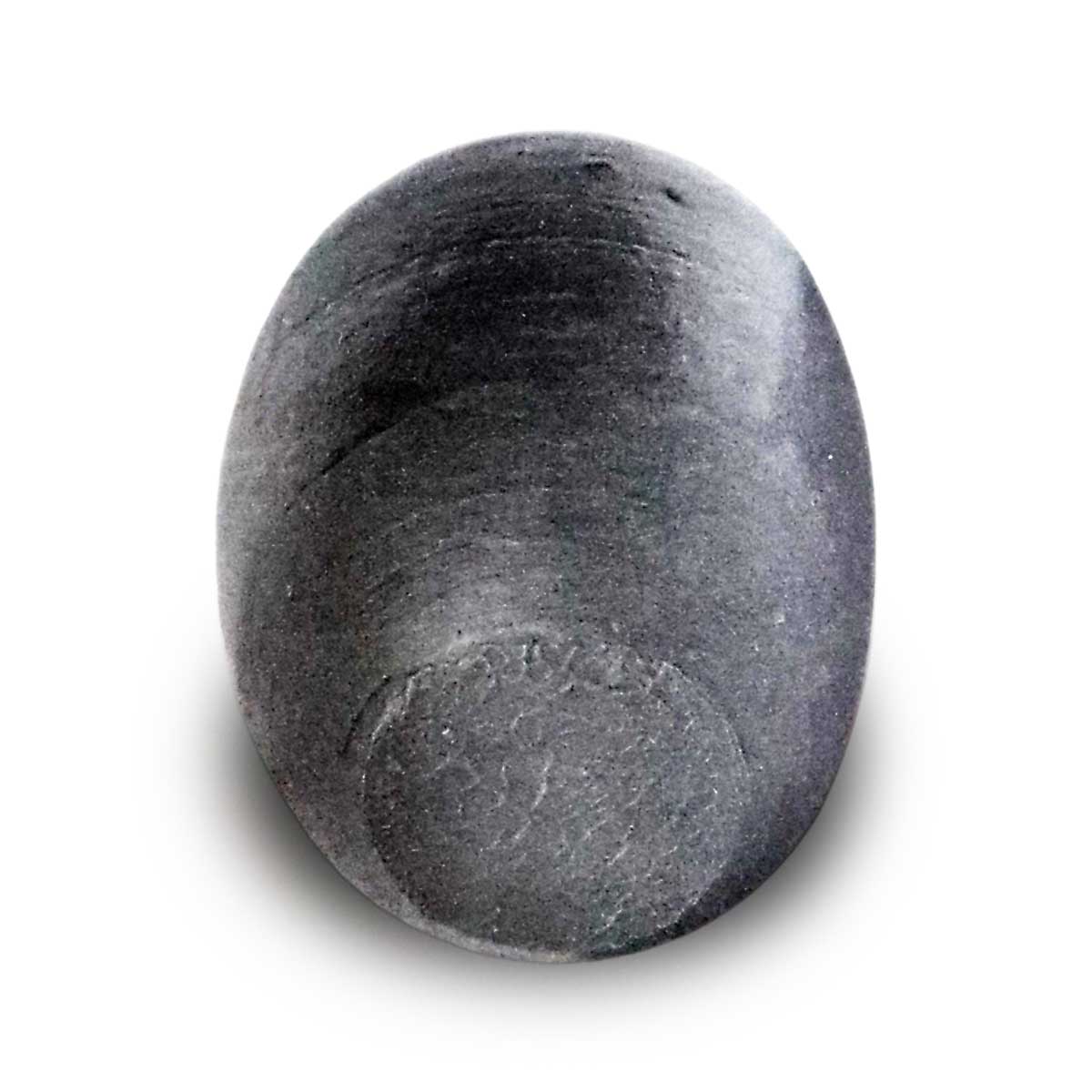
Asahi Shunkei—Daimeibutsu—Collection of Marquis Katsunosuke Inoue
[Name]
This name is believed to derive from the fact that the piece was formerly owned by Kizuya, a wealthy merchant from Nara who was the owner of the tea caddy named “Furusato” mentioned in the Matsuya Diary.
[Dimensions]
・Height: Approx. 9.7 cm (3 sun 2 bu)
・Body diameter: Approx. 7.9 cm (2 sun 6 bu)
・Mouth diameter: Approx. 3.9 cm (1 sun 3 bu)
・Base diameter: Approx. 4.2 cm (1 sun 4 bu)
・Koshidaka (height of the neck): Approx. 1.1 cm (3 bu 5 rin)
・Shoulder width: Approx. 1.2 cm (4 bu)
・Weight: Approx. 145.5 g (38 monme 8 bu)
【Accessories】
・Lid: 1 piece (yew wood)
・Pouches (lids): 9 pieces
- Main Bag (Main Cover): 1 piece
Solid red Guangdong satin; lining is Jiaqing-patterned Kaiki; cord fastening is brown Kaiki. This is an old bag. - Replacement Bags (Spare Covers): 8 pieces
- Kamakura Guangdong; lining is Jiaqing-style yellow Kaiki; cord fastening is Ten’i satin.
- Plain silk with plum blossom pattern on a wave background; lining is “Tamamushi” Kai-ki; cord ties are wisteria-colored.
- Donshu-style Guangdong silk; lining is “Tsugari” Ten’i satin.
- Striped velvet; lining is ‘Kuzuhiki’ Kai-ki; cord ties are purple.
- Unnamed Guangdong silk; lining is “Kuzuhiki” Kai-ki; cord ties are wisteria-colored.
- White-ground wave-and-dragon Tang-style weave, lined with “Kuzukii” in “Kai-ki” pattern, with wisteria-colored cord fastenings.
- “Kuzukii” ground Tang-style figure and floral pattern woven with gold thread, lined with “Uramon” in “Kai-ki” pattern, with purple cord fastenings.
- Tang-style angular dragon Kinran, with purple cord fastenings.
・Pouch boxes: 2 pieces
- “Kizuya—Two Pouches” with an inscription by Kobori Sōchū (a descendant of Kobori Enshū).
・Wooden mold: 1 piece (paulownia wood; lid made of Inukō wood)
・Hikiya: 1 piece (made of ivory)
・Box: 1 piece (unfinished paulownia wood box; bears the inscription “Kizuya” by Kobori Enshū)
・Accompanying tray: 1 piece (black lacquered tray of Chinese origin)
The inscription on the lid of the box when it was presented by Kobori Sōchū to the Kashima family reads as follows:
Dimensions: Approx. 19.4 cm (6 sun 4 bu) on each side, inner diameter approx. 14.8 cm (4 sun 9 bu), base approx. 15.9 cm (5 sun 2 bu 5 rin) on each side
・ Accompanying Hanging Scroll: 1 scroll (painted by Kobori Enshū)
The text includes the following passage: “Miyaki has brought the ‘Kizuya’ tea caddy with the inscription on the lid, etc. Shimotsuki 28.” The addressee is “Chūnagon-sama.”
(Note) “Chūnagon” is believed to refer to Komatsu Chūnagon, namely Maeda Toshitsune (the 2nd lord of the Kaga Domain).
・Accompanying Document: 1 (A document detailing the mounting and dimensions of the hanging scroll)
Painted by Enshū, titled “Chō Iga-tai Goku”
Cover: Medium-white tea-colored gauze with plum blossoms; oriole-patterned wind-bag fabric
Dimensions: Height approx. 98.5 cm (3 shaku 2 sun 5 bu), Width approx. 65.5 cm (2 shaku 1 sun 6 bu); the scroll rod is made of black persimmon wood.
・Accompanying documents: 2 (History of ownership)
“Transferred from the Kōnoike family in November of Meiji 39 (1906). Among the Daimeibutsu granted by the Shogunate to the Satsuma Domain (the Shimazu family) during the Tenpō era, ‘Shu-no-Koromo’ was created by Asahi Shunkei, and this Kizuya Katatsuki is also a work by the same artist.”
[Miscellaneous Notes]
・Tea caddy cover: Made of thick paper
・Ganka Meibutsu-ki: Kitsuya, Chinese-style katatsuki, Matsudaira Hida-no-kami.
・Kokin Meibutsu Ruiju: Kitsuya, Chinese-style katatsuki, Daimeibutsu, Matsudaira Hida-no-kami.
・Rinpō Kikan: Kitsuya, Chinese, Daimeibutsu, formerly owned by Jukō, Mandai Sōan, and Matsudaira Hida-no-kami. It has hera marks.
・Meibutsu-ki: Kitzuya; formerly owned by Juko and Mozuya Muneyasu; currently owned by Matsudaira Hida-no-kami. This vase has one spatula mark on each of its four sides, with additional marks at the top and bottom.
・Higashiyama Go-mono Naibetsu-cho: Kizuya; Kaga Chikuzen-no-kami.
・Kansei Shūshū Shokafu: On April 26, Genroku 15 (1702), when the 5th Shogun Tokugawa Tsunayoshi visited the residence of Maeda Tsunaki, this “Kizuya Katatsuki” tea caddy and a hanging scroll depicting a heron painted by Xu Xi were presented to him in private.
・Bakuan Bunko, Series B, No. 12: Kizuya Katatsuki, a Chinese-style Daimeibutsu, belonging to Matsudaira Hida-dono (currently located in Kashima).
・Bakuan Bunko, Series A, No. 17: Kizuya, a Chinese-style Daimeibutsu, attributed to Asahi Shunkei. The box inscription reads “Enshū,” and the accompanying letter is addressed to the Chūnagon. The shoulder is covered with a thin, uneven layer of yellow glaze, and the body features patches of yellow glaze on a persimmon-colored background. The surface has an overall rough texture, and the base plate is raised.
・Matsuya Nikki: Lord Kaga Hizen-no-kami (Maeda Toshitsune) purchased a Seto Katatsuki from Kitsuya in Nara. It was named “Furusato” during the time of Lord Ko-Enshū (after a poem in the Ise Monogatari).
・Tsurezure Premium / Friends of Tsurezure (by Seika Matsuyama): Kizuya Katatsuki, made by Shunkei. One of the six treasures of the Kashima family. It features splashes of yellow glaze, and the body has diagonal wheel marks. It was mounted on a wooden base. It is accompanied by a letter from Enshū addressed to the Chūnagon. It entered the Inoue family’s possession in Meiji 41 (1908).
[Provenance]
It is unclear whether the “Kara-mono Kizuya” mentioned in the above notes—which was passed down through Murata Jukō and Mandai Sōan—is the same piece as this “Kizuya by Asahi Shunkei.” However, the notation “Owned by Matsudaira Hida-no-kami” indicates that it was passed down to Maeda Toshinao, the grandson of Maeda Toshitsune, the lord of the Kaga Domain.
It is speculated that when Toshitsune purchased the “Furusato Katatsuki” from Kizuya in Nara, this tea caddy was also delivered from Kizuya to the Maeda family of the Kaga Domain.
The Kansei Shūshū Shokafu records that when Shogun Tsunayoshi paid a visit to the Kaga domain residence on April 26, Genroku 15 (1702), this tea caddy was presented to him in private; therefore, it is believed that it temporarily became the property of the Tokugawa shogunate at that time.
Although the exact circumstances of its subsequent history are unclear, it eventually passed into the possession of Kishima Seibei, a wealthy merchant from Fukagawa. The Kashima family referred to this tea caddy, along with Emperor Huizong’s “Peach and Pigeon” painting, Xia Gui’s “Landscape” painting, Honkoze’s “Short Sword (Bochō Masamune),” a tsuishu incense container with a goose motif, and a Hakuan tea bowl, as the “Six Treasures of the Kashima Family.”
In October of Meiji 37 (1904), all of these items—with the exception of Xia Gui’s “Landscape Painting” (which was acquired by the Baron Fujita family in Osaka)—were transferred to the Konoike family, a wealthy merchant family in Osaka; and in Meiji 40 (1907), they were further transferred from the Konoike family to the household of Marquis Kaoru Inoue (Seigai) (Katsunosuke Inoue).
[Field Notes (Record of Actual Observation)]
On October 22, Taisho 8 (1919), I viewed the piece in person at the residence of Marquis Katsunosuke Inoue in Miyamura-cho, Azabu Ward, Tokyo.
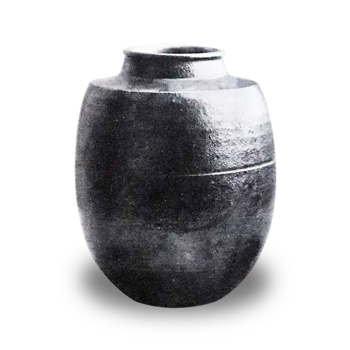
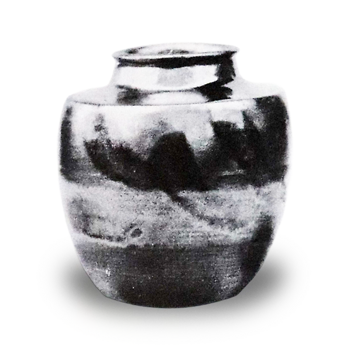
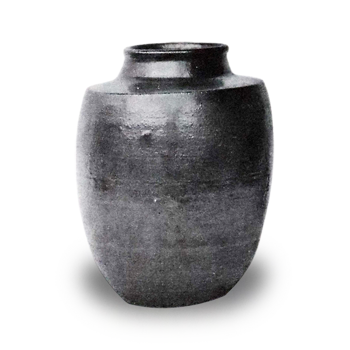
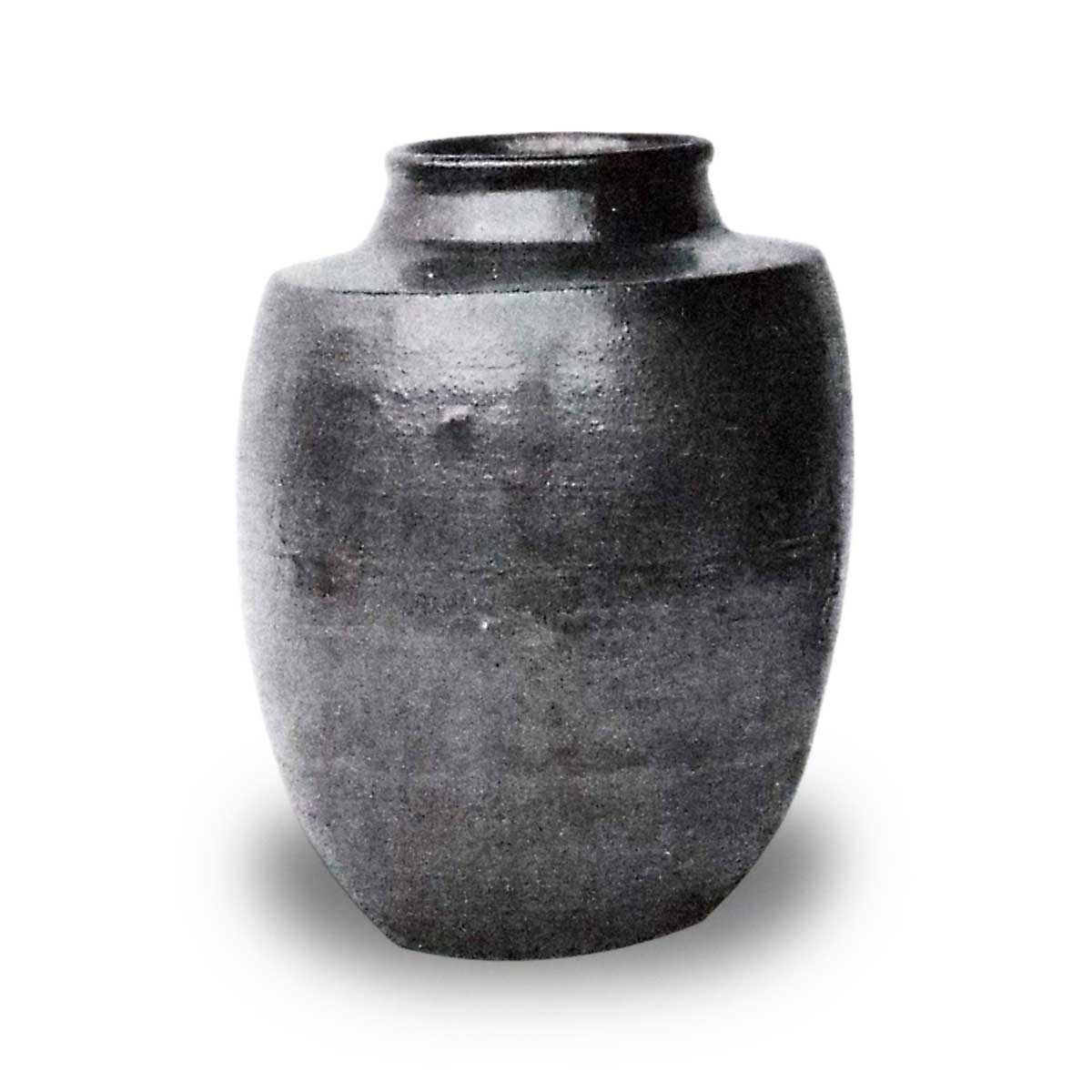
The rim is folded over and thin; the base protrudes slightly; the shoulders are sharply angular; and the body swells slightly from the shoulders down before tapering toward the base. Overall, a black iron glaze is applied in patches over a persimmon-colored iron glaze, and from the shoulders to the body, a yellow glaze appears in places, forming patterns resembling round stars or drifting clouds. The incised grooves on the body are offset in places, forming a double layer, and along these grooves runs a vertical band approximately 2.1–2.5 cm (6–7 bu) wide, resembling an “odori-taga” (dancing band). Additionally, there are small areas of glaze loss within the persimmon-colored iron glaze. From the rim downward, the body is a mouse-gray unglazed clay; the wheel marks are shallow, and the base is “raised,” featuring fine irregularities and ridges. Inside, the glaze covers the rim, and shallow wheel marks continue along the interior.
The shape and glaze color most closely resemble the (Meibutsu) “Yodo” style.
Some tea ceremony books in circulation describe this piece as a “Tang-style katatsuki by Kizuya.” It is currently impossible to determine whether this is a case of mistaking this tea caddy for a Tang-style piece (or a forgery), or whether there is a separate object with the same name but different characteristics; in any case, it is highly appropriate to classify this tea caddy, along with the “Yodo,” as the work of “Asahi Shunkei.”