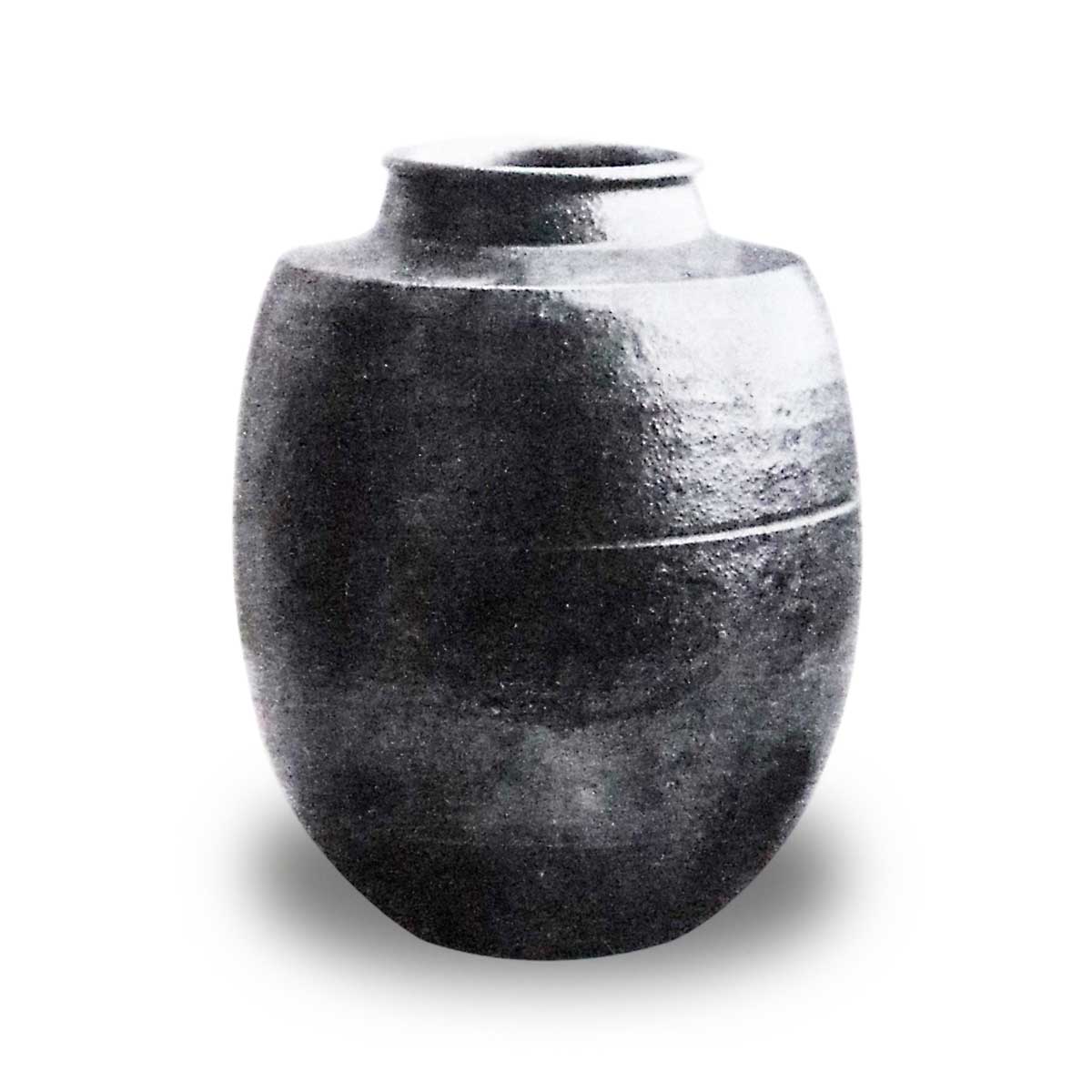
From the collection of Baron Asahi-te, Mr. Koyata Iwasaki
Name
This name derives from the fact that this tea caddy was once owned by Ikeshima Ritsuzan, a lid maker and connoisseur.
・Lids: 4
(1 with vertical ridges, 1 with vertical ridges, 1 with vertical ridges and a raised center, 1 without ridges)
・Storage Pouch: White chirimen
・Covering Cloths (4 pieces)
- Donshu silk with a faded yellow lion crest pattern (Lining: Tamamushi; Cord: Tamamushi)
- Kinran brocade with a red ground and interlocking sea pine crest pattern (Lining: Tamamushi; Cord: Tamamushi)
- Donshu with “Daikichi” characters (Lining: Purple; Cord: Purple)
- Antique brocade with arabesque pattern (Lining: Pale yellow; Cord: Purple)
・Wooden Form: Karin (Chinese quince) 1 piece
(Housed in the bag with the red ground, interlocking sea pine motif, and Kinran)
・Bag Boxes: 2 pieces
[Inscribed in ink: Ikeshima Katahira—Pouch]
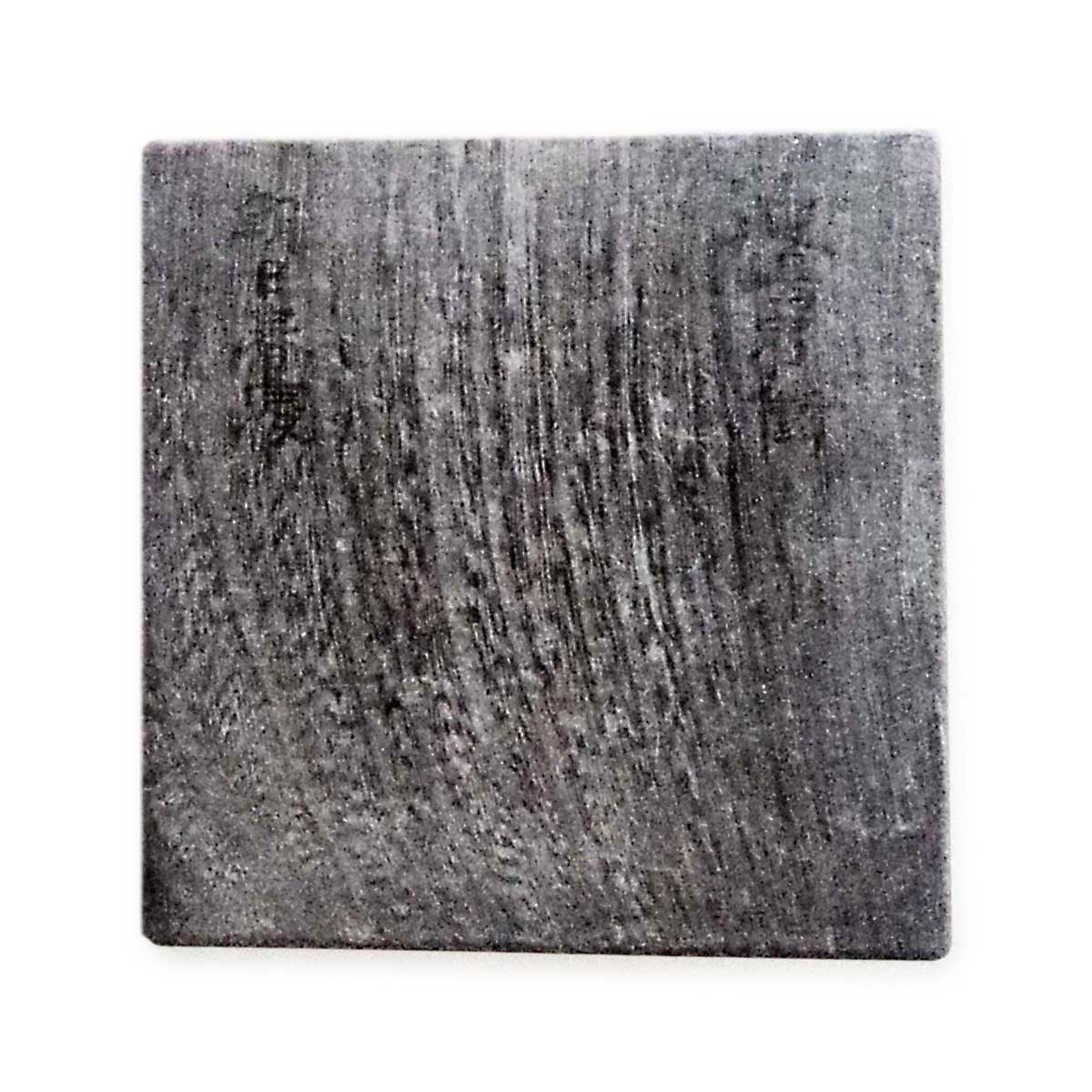
・Lid: Hikiya wood, Shunkei lacquer finish, gold-powder lettering
[Inscribed in ink: Ikeshima Katahira]
[Inscribed in ink: Ikeshima Katahira—3 lids, 2 pouches]
Cover: Vertically striped cotton from the Kanto region (Lining: Mon-donsu, Cord trim: Brown)
・Box: Hikiya wood, natural finish
[Inscribed in ink: Ikeshima Katahira]
[Inscribed in ink: Asahi Shunkei]
Miscellaneous Notes
Owned by Ikishima Katahira, Asahi Shunkei, and Ikishima Ritsuzan. Height: approx. 11.2 cm (3 sun 7 bu); body diameter: approx. 9.1 cm (3 sun); mouth diameter: approx. 4.2 cm (1 sun 4 bu); base diameter: approx. 4.4 cm (1 sun 4 bu 5 rin).
(Meibutsu Record)
History of Ownership
Originally owned by Ikishima Ritsuzan, who was a lid maker for tea caddies; the details of its subsequent history are unknown. The year it entered the Iwasaki family’s collection is also unknown.
Record of Actual Observation
On November 4, Taisho 9 (1920), observed at the residence of Baron Iwasaki Koyata in Takanawa Minamicho, Shiba Ward, Tokyo.
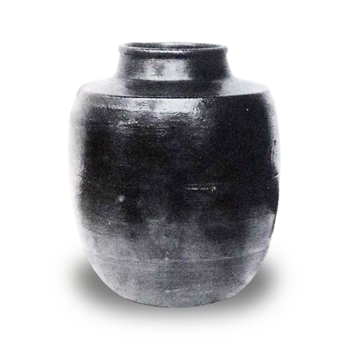
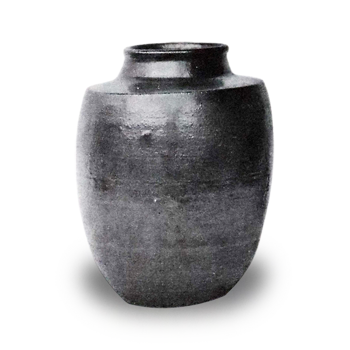
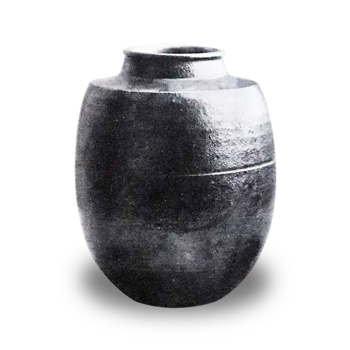
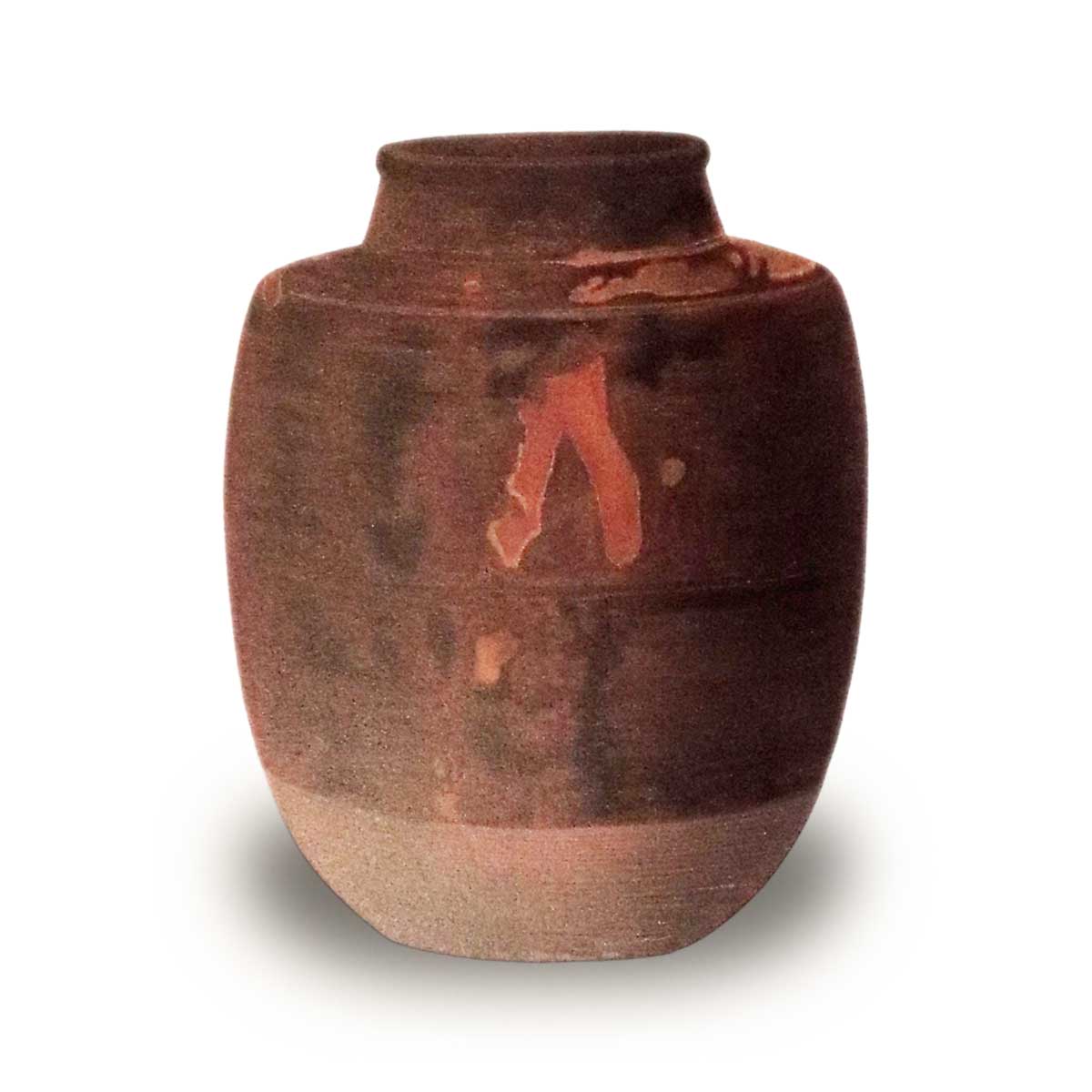
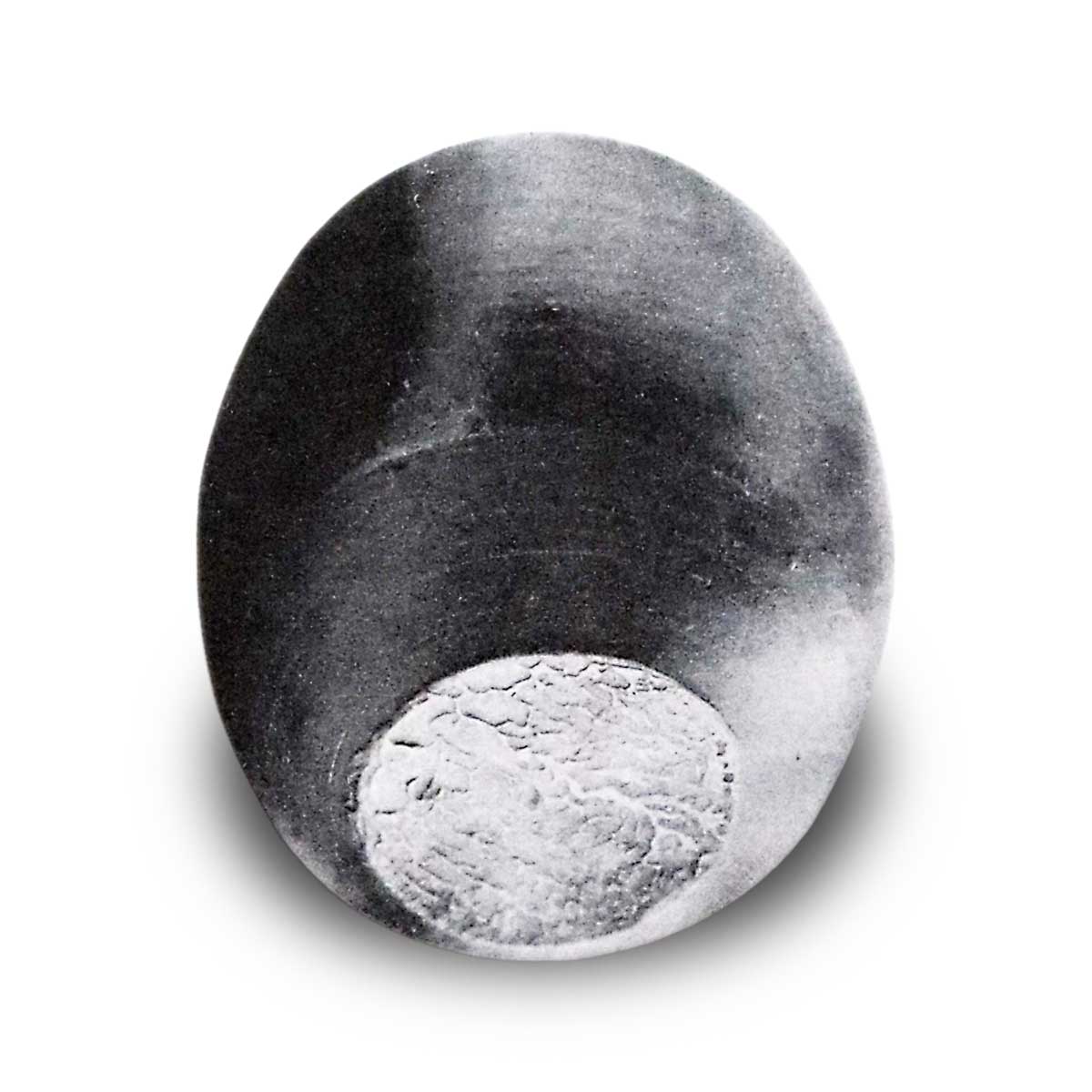
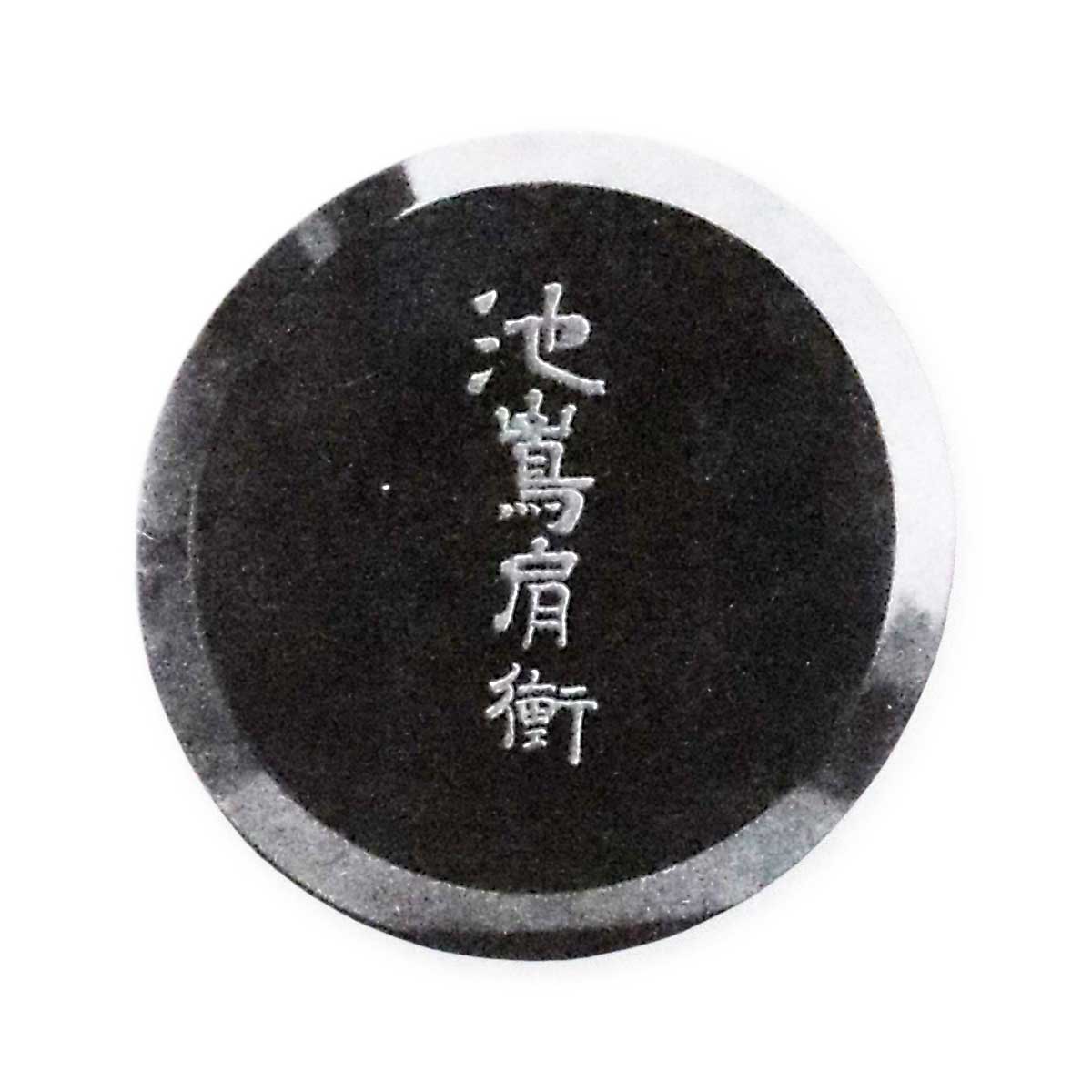
The rim is round, and the flaring is shallow. The body is low and flared at the base, and the shoulders are sharply defined. The body is full-bodied, with a single horizontal indentation running around it. From the lower rim downward, the red-clay-colored unglazed body is exposed, over which fine wheel marks run all around. The base is raised, and the clay reveals an “ichi-ichi” pattern.
Overall, the base color is a reddish chestnut brown, with specks of yellow glaze scattered throughout. A black, metallic glaze runs in a ring around the body’s thread mark (body cord), and five yellow glaze dots of varying sizes are lined up along its edge, creating an interesting visual feature.
The interior is glazed up to the rim; below that, fine wheel marks run around the vessel, and the center of the base forms a swirl pattern. Crafted in the Shunkei style, it feels light in the hand, and the yellow glaze creates an intriguing visual effect. In particular, there are three similar splashes of glaze at the tips of the shoulders, making this a large tea caddy with a harmonious and magnificent form.