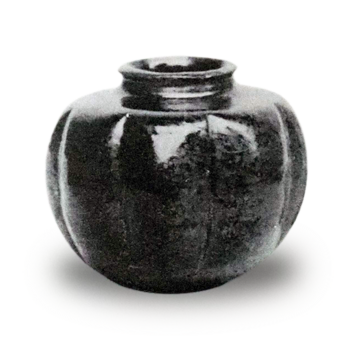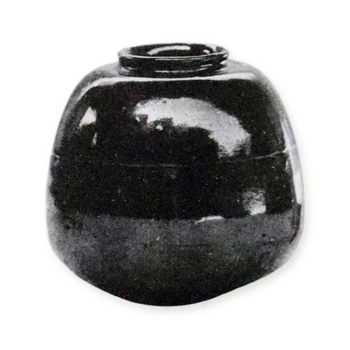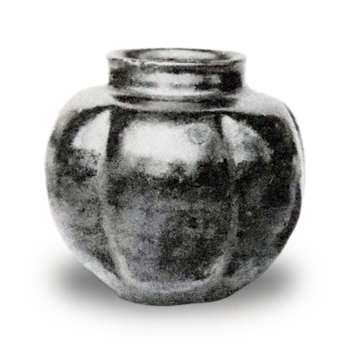
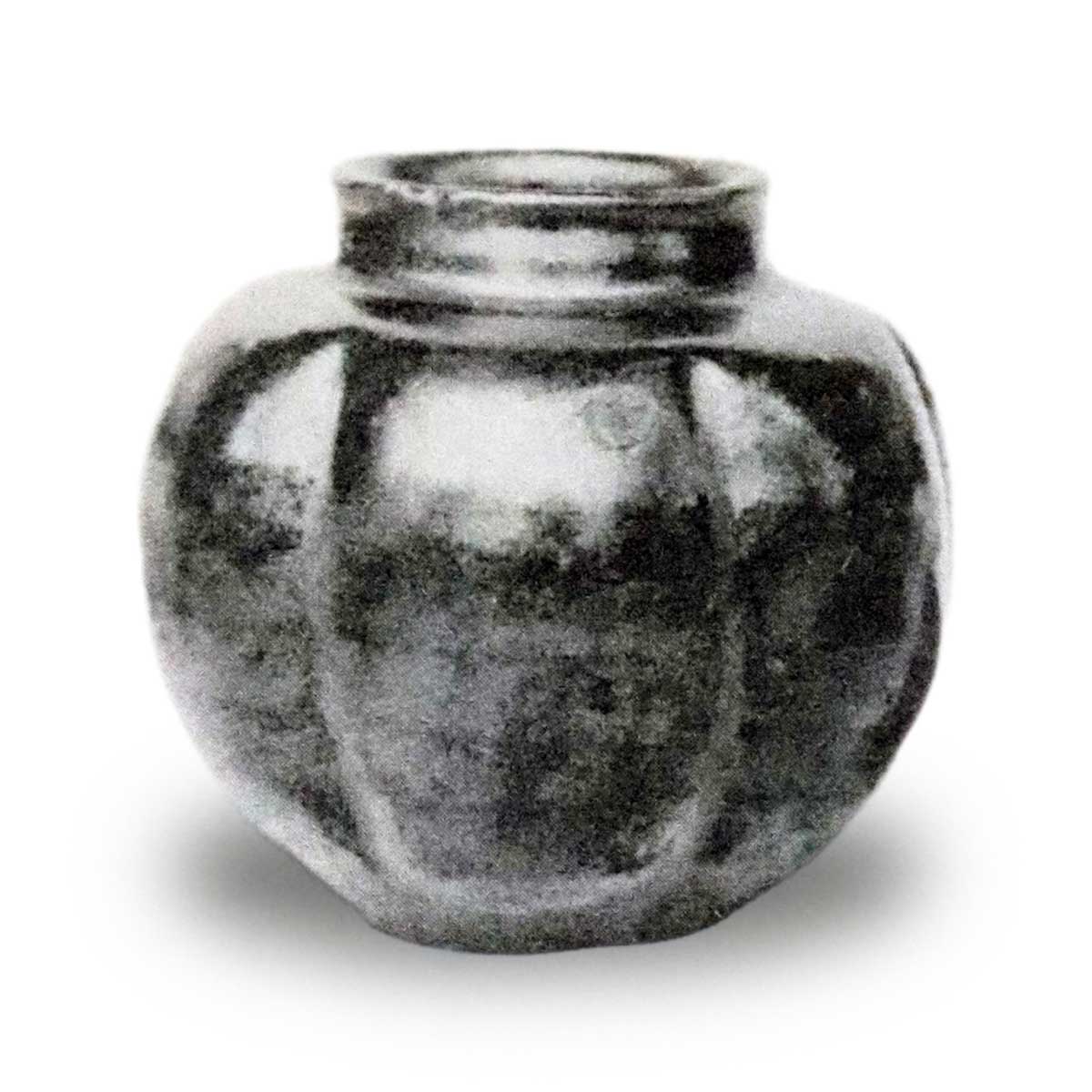
Chinese Import; Collection of Baron Heitaro Fujita
Name
In Enshū Shūi
“Nonaka, Chinese Import
I think it would be lovely to plant this even in the fields—the tangerine trees that used to stand beneath people’s eaves.”
(I think it would be lovely to plant this even in the fields—the tangerine trees that used to stand beneath people’s eaves.)
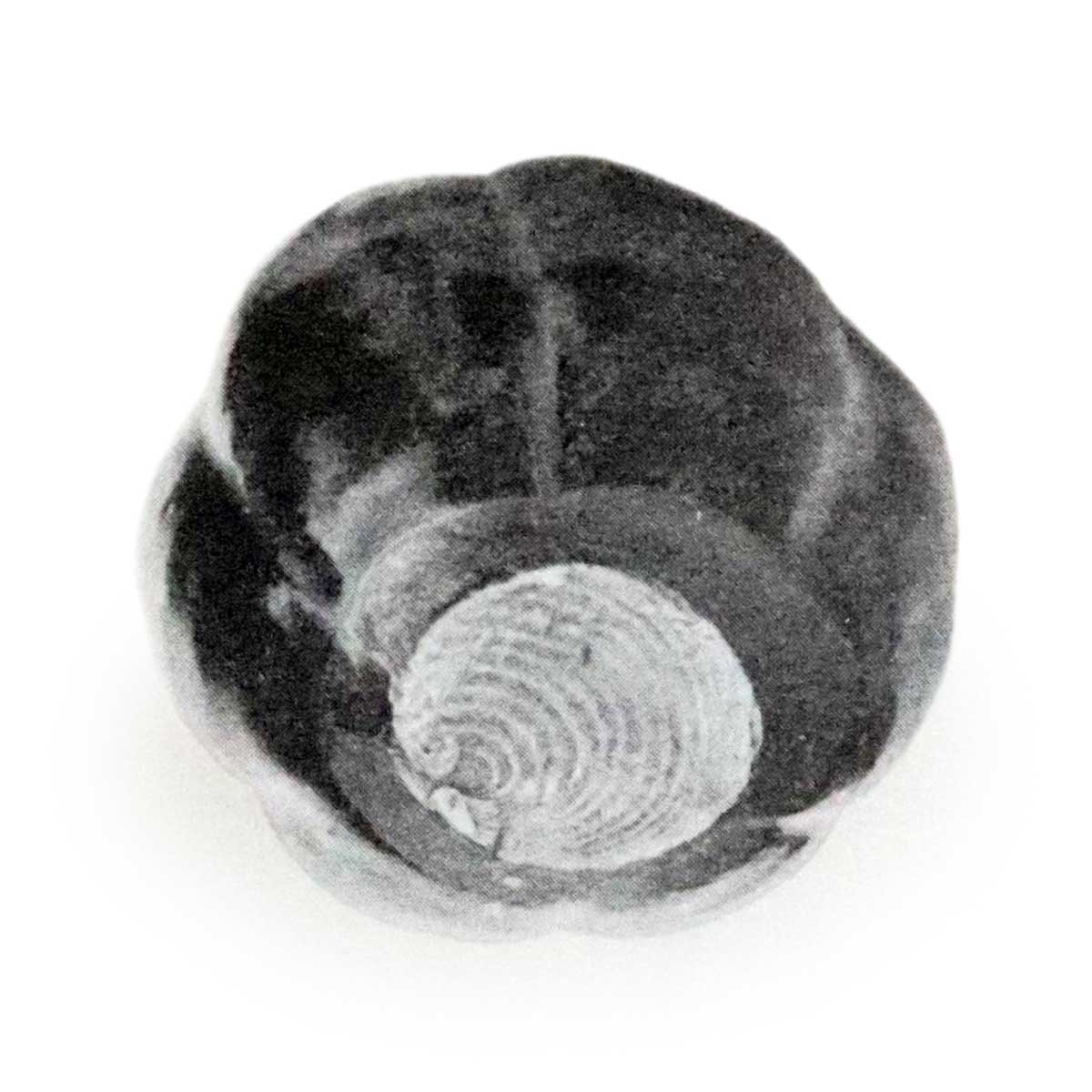
In other words, since the shape of this tea caddy resembles a tangerine fruit, it was likely named “Nonaka” in reference to the sentiment expressed in the waka poem by Monk Jichen (Jien) cited above.
Dimensions
Height: Approx. 3.6 cm (1 sun 2 bu)
Body Diameter: Approx. 5.6 cm (1 sun 8 bu 4 rin)
(Features six incisions resembling tangerine segments)
Mouth diameter: approx. 3.0 cm (1 sun)
Base diameter: approx. 2.1 cm (7 bu) or approx. 2.4 cm (8 bu)
Height of the neck: approx. 0.7 cm (2 bu 2 rin)
Shoulder width: approx. 0.8 cm (2 bu 7 rin)
Weight: approx. 44.6 g (11 monme 9 bu)
Accessories
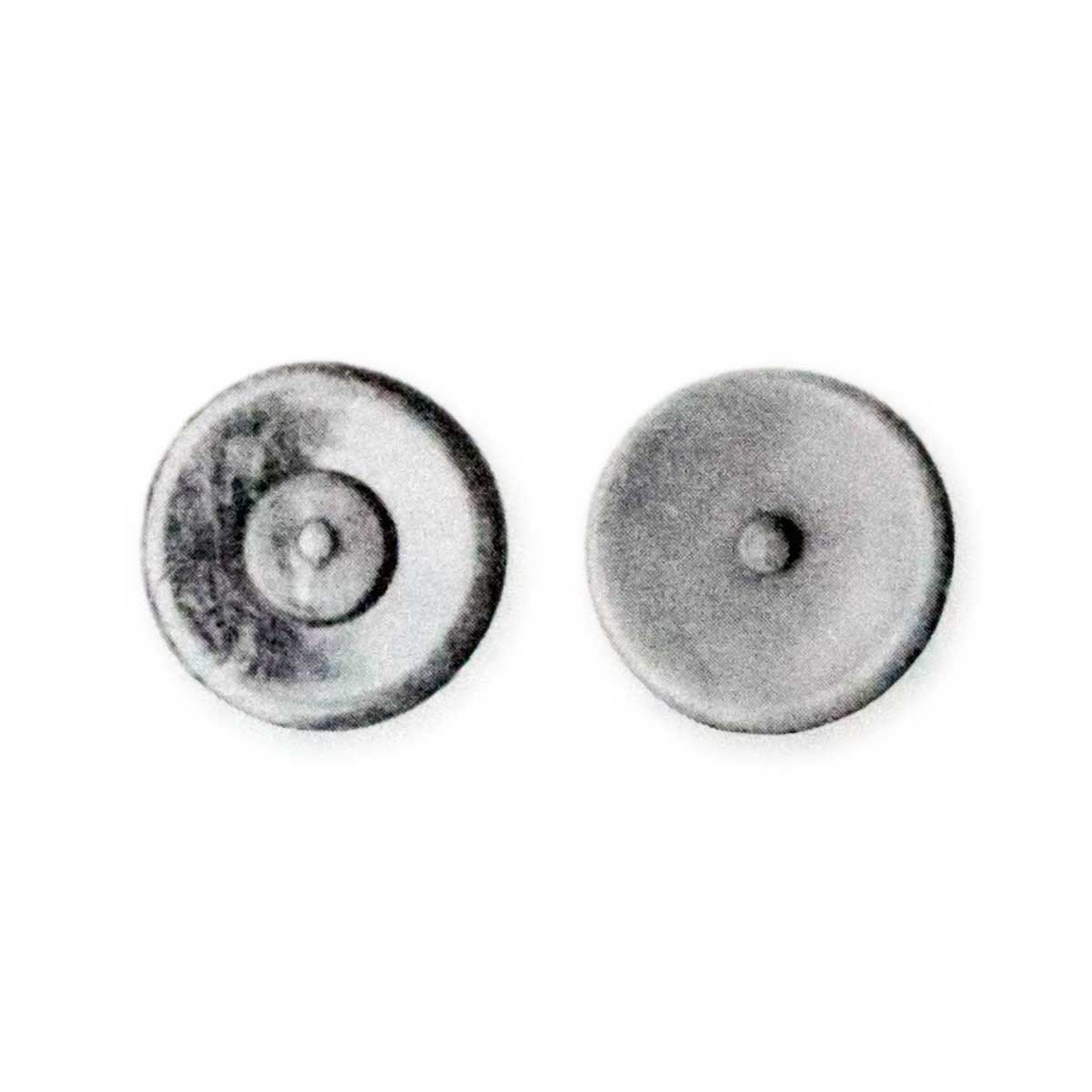
・Lids: 3 pieces
1 Chinese-style lid, 1 plain scooping lid, 1 lid with a raised indentation
“Nonaka”
・Storage pouch: Habutae silk; white tying cord
・Pouches: 2
Kamiyanagi Kinran (lining: pale green “Kaiki” fabric; tying cord: brown)
Satsuma Koto (lining: pale green “Magai-ori” fabric; tying cord: brown)
・Pouch box: Paulownia wood, natural finish; inscription by Kobori Enshū
“Nonaka Pouch”
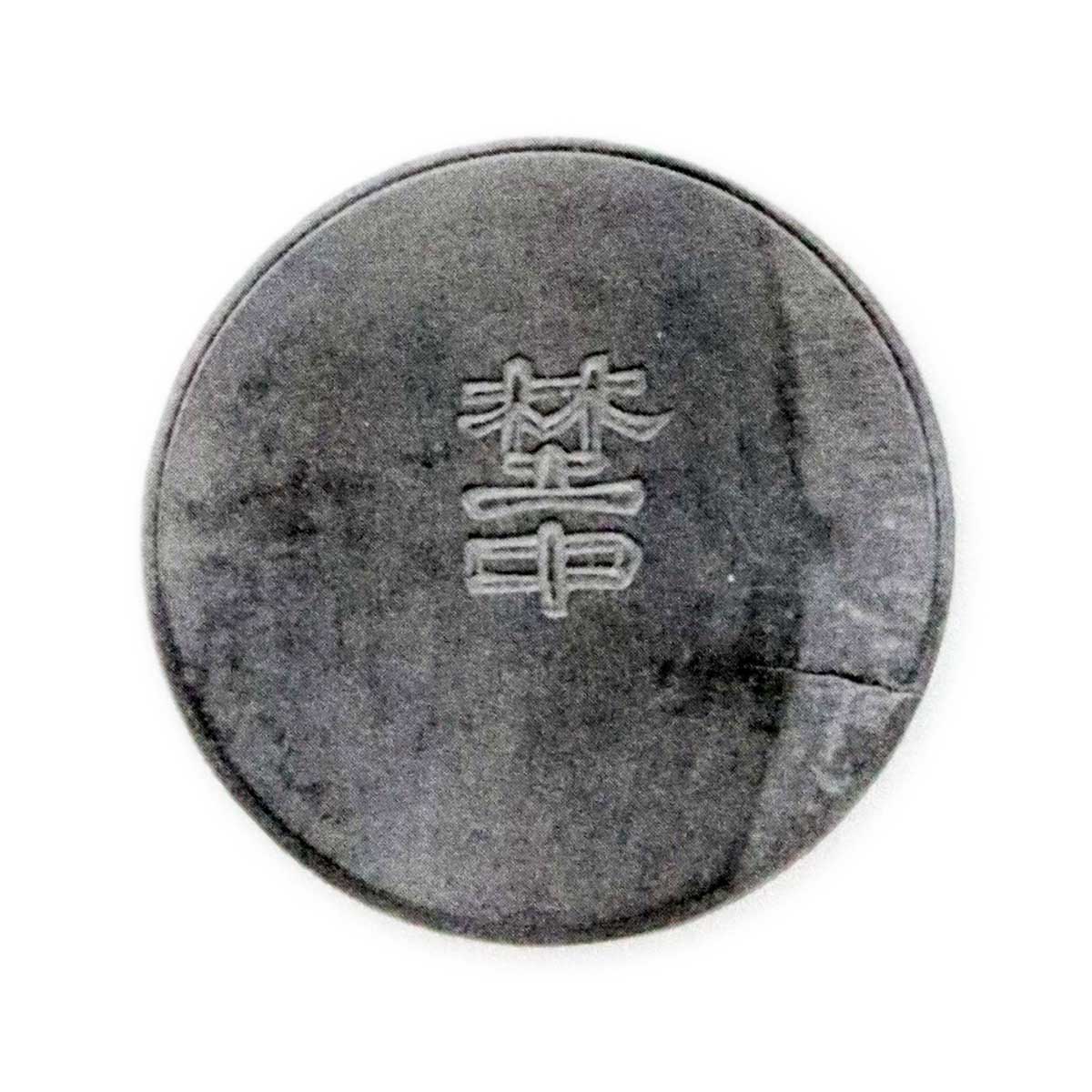
・Hikiya (a tube for storing a tea caddy): Sandalwood (mixed with shirata); inscription by Shokado
(in a circular frame) “Nonaka”—double-carved
Pouch: Red woolen fabric with vertical stripes of colored thread (lining: pale yellow Donshu fabric with cloud pattern; tying cord: brown)
・Inner box: Paulownia, natural wood; inscription by Shokado
“Nonaka”
・Outer Box: Paulownia, natural wood finish; inscribed “Shunkei-nuri” by Shokado
・Accompanying Bowl: Inscribed “Naraya”; vermilion-lacquered, square shape with rounded corners (listed in the Kobori Zōchō)
Mouth Diameter: Approx. 16.4 cm (5 sun 4 bu) or Approx. 16.1 cm (5 sun 3 bu)
Base Diameter: Approx. 13.9 cm (4 sun 6 bu)
Height: Approx. 2.1 cm (7 bu)
Pouch: Light brown with a chrysanthemum-circle crest (lined with pale yellow silk; brown tying cord)
Box: Paulownia, natural wood; inscription: Shokado
(in a bordered frame) “Vermilion Naraya”
・Main Box: Pure lacquer; surface decorated with wisteria and birds in maki-e
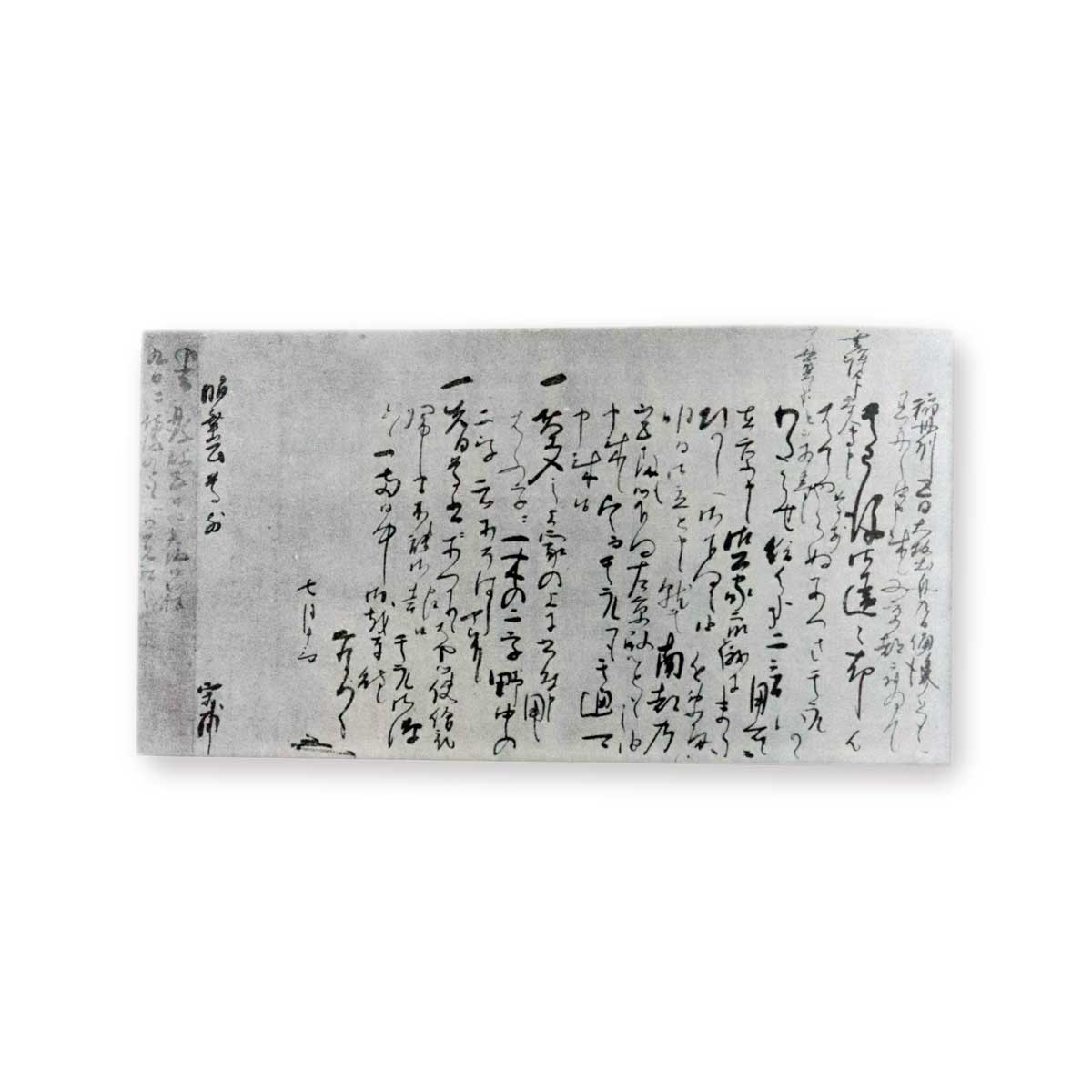
・Accompanying Scroll: 1 scroll
Exchange of letters between Donshu and Shokado
The inscription on the box was written by Chaya Sōko
(in a frame)
Front
To Shokado
Letter from Lord Sōfu (Enshū) — July 3
Back
Letter from Nochū — written by Shokado
The text reads as follows
It is reported that Inaba Tango-no-kami departed Osaka by ship on the 5th and arrived in Tomo, Bingo, on the 9th. Furthermore, Genji Hōin hosted a tea gathering in Kyoto and inquired whether you (Shokado) were in good health.
Since then, I have been out of touch with you entirely. The heat is unbearable here—how are things on your end? I am currently in Kyoto for a couple of days on business. It is said that the court nobles will suddenly be traveling east (to Edo) again, and Lord Konoe is scheduled to depart tomorrow.
In connection with this, His Imperial Highness from Nanto (Nara) will also be traveling east, and Lord Sakyo has informed me that he will be accompanying him. I am sure word of this will reach you as well.
First, regarding the inscription on the outer box of the tea caddy: please write the character “fu” (cloth), followed by the two characters “Ichiki” and the two characters “Nonaka”—these two sets of characters.
- I received your letter the other day, but since the monk who delivered it has already returned, I was unable to reply. I look forward to your visit within the next day or two, whenever you have a moment to spare. With deepest respect.
July 13th, Sōfu (seal)
To Lord Shōjō (Shōkadō)
Miscellaneous Notes
Owned by Nochū Kobori Daizen. It is shaped like six “akota” (Akota melons), and could be referred to as “kanko” or “tachibana” based on its form. It is very small, dates from the same period as the Honno-ji Bunrin piece, and is of comparable craftsmanship. Two streaks of vermilion clay run down the surface, and the finish is rough. The body is made of Donshu clay, the base is made of rosewood with a “katami-kawari” pattern (where the grain differs on each half), and the lid is a slender, cylindrical shape with finely chamfered edges. The inscription reads “Nonaka,” and the carved characters are large. The box is made of unpainted paulownia wood, bearing the inscription “Nonaka” in ink in the Shokado style. No waka poem is inscribed.
(From Tōan Bunko, Series A, No. 7)
In the notes on the tea utensils of Lord Kobori Tōtōmi-no-kami (Enshū):
Nonaka: A Chinese citrus container.
“Though it may seem like something simply left in the wild, in days of old it was a flower blooming beneath people’s eaves.”
Nonaka: Same as above (written in the hand of Sōfu).
(From Sakurayama Ichiyu’s Notes)
(From Enshū’s Record of Collected Utensils)
Nonaka: Chinese ware “I think it would be a shame to plant it in the wild; in days of old, it stood beneath people’s eaves.”
(From Enshū Shūi)
Since the Nonaka tea caddy is a Chinese import and resembles the shape of a tachibana (citrus), Enshū’s inscription reads
“I think it would be a shame to plant it in the wild; in days of old, it stood beneath people’s eaves.”
(From Kan’ya Chawa by Ii Tairō)
Nonaka: The inscription on the base indicates “Shokado,” and the upper box is likely by Sōfu (Enshū). It weighs 11 monme 8 bu (approx. 44.3 g), with a mouth diameter of approx. 2.9 cm (9 bu 5 rin) and a height of approx. 5.2 cm (1 sun 7 bu). The base is made of rosewood. This item has been passed down through generations, and this note serves as a record of a treasure to be cherished for generations to come.
(From The Kobori Family Utensil Register)
It had been passed down in the Kobori family since the time of Enshū, but after the Meiji Restoration, it was passed from the Kobori family to Mr. Watanabe Ki. Following Mr. Watanabe’s death, his widow transferred it—along with the “Chūzai-an Tea Caddy” and numerous other utensils—to Mr. Fujita Roan (Fujita Densaburō).
Record of Actual Observation
On May 18, Taisho 9 (1920), I viewed the actual piece at the residence of Baron Heitaro Fujita in Amishima, Kita Ward, Osaka City.
The rim has a shallow fold, and the glaze covering the thinned portion of the rim to create a pattern is likely the result of a change in the kiln. There is a single “chipped spot” below the shoulder. The body bulges outward while the base tapers inward; from the shoulder to the base, there are six deep vertical spatula marks, giving it the shape of an “akota” (a type of gourd). The area below the base reveals the vermilion-clay-colored clay, and the thread-cutting is on the coarse side.
Within the overall black-amade glaze, which has a deep purple hue, a pattern resembling swirling clouds appears in a slightly darker shade of the same glaze; faint wheel marks run around the body. Inside, the glaze covers the rim, while wheel marks extend below it, and the center of the base forms a swirl pattern. Small in size and with a plump, soft-looking form, it fully embodies the spirit of the tea ceremony.
Not only is the overall deep purple hue extremely rare, but there is also a bluish-black glaze around the base. Although it is an ancient piece and small in size, it is a rare vessel that possesses the dignity of a “Meibutsu” (famous piece).