

Chinese Ware—From the Collection of Marquis Toshitame Maeda
Name
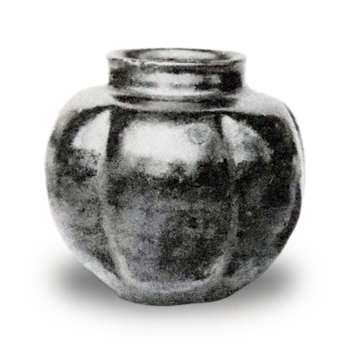
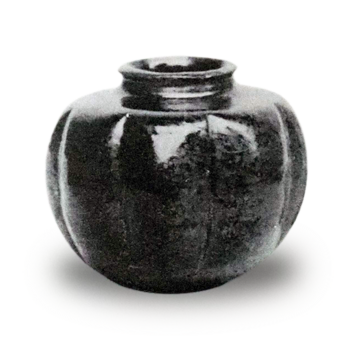
Named for its resemblance to a kōji (a type of mandarin orange).
Dimensions
Height: Approx. 4.7 cm (1 sun 5 bu 5 rin)
Body diameter: Approx. 5.3 cm (1 sun 7 bu 5 rin) or Approx. 5.5 cm (1 sun 8 bu)
Mouth diameter: approx. 2.3 cm (7 bu 5 rin)
Base diameter: approx. 1.8 cm (6 bu)
Height of the neck (koshi): approx. 0.5 cm (1 bu 5 rin)
Shoulder width: approx. 0.9 cm (3 bu)
Weight: approx. 37.9 g (10 monme 1 bu)
Accessories
・Lid: 1 piece, with a “su” (pattern)
・Storage pouch: Purple silk; purple tying cord
・Hikiya (cylinder for storing the tea caddy): Period-style plain komaguramono (spindle-turned wood); interior black, exterior vermilion lacquer
Pouch: Suō-style white solid-striped woven fabric (lining: pale yellow ground with white patterned weave; tying cord: Enshū brown)
・Inner box: Paulownia, natural wood; the inscription is said to be by Lord Maeda Toshitsune
Front inscription: “Chinese import: Kanko”
Back inscription: “Kanko”
・Outer box: Paulownia, natural wood; paper label with inscription
Front inscription: “Chinese import: Kanko”
Inscription on the back: “Kanko (written in vermilion). Confiscated from Miyake Bōyō, a Kyoto townsperson; there are other accounts of its provenance as well.”
・Outer Box (outermost box): Paulownia, natural wood; new
“Chinese Import: Kanko”
Miscellaneous Notes
The Kanko tea caddy is fired with a spatula-like pattern to resemble the shape of a kanko fruit.
(From Chayū Shōden Shū)
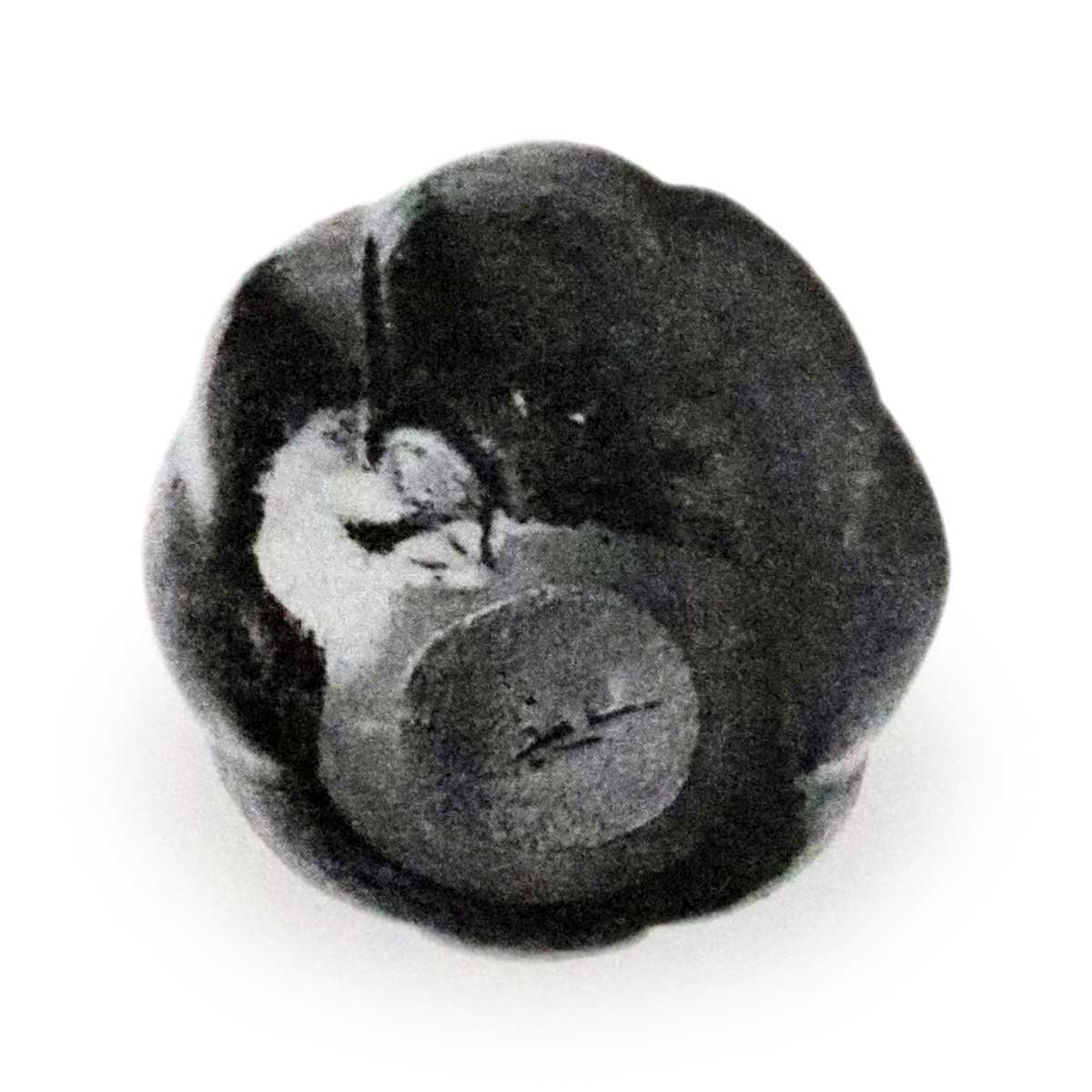
Kanzu: The bottom bears the flower seal (omitted) of Lord Sōfu (Kobori Enshū) in vermilion lacquer. The lid is a plain Hikiya, and the Hikiya itself is shaped like a hat. The pouch is made of Chōshō Akajima (Cochin Akajima). The outer box is made of paulownia wood and bears Lord Sōfu’s inscription: “Kanzu, Chinese Import.” (Illustration of the tea caddy included)
(From Maeda Family Treasure Catalog, Volume 2)
Tea caddy: Tang ware; the clay is purple; the underglaze is amber-colored, and the overglaze is the same color. The rim (near the base) features a thread-cut pattern. It bears a vermilion signature, though the artist is unknown. The inner body consists of eight segments; there are cracks in the glaze of the decorative pattern, and there is a repaired crack running from the body of the pattern to the shoulder.
(From The Marquess Maeda Family’s Register of Artifacts)
This kanko is likely a so-called “Han-saku” (Chinese-made) piece. However, while it is not particularly rare among the Marquis’s collection, it may be classified as a valuable item due to its documented provenance in historical records.
(From Memorandum on the Osumi Seihaku Exhibition)
(Note) Tachibana Tea Jar: A vessel resembling the shape of a tachibana (citrus fruit). The clay is purple, and the shape of the rim is called a “suppon-guchi” (turtle-neck rim). The thread-cut finish is standard. Leaf-shaped indentations, resembling those of a tachibana, are carved into the body. Length: approx. 5.3 cm (1 sun 7 bu 5 ri); body circumference: approx. 20.3 cm (6 sun 7 bu); mouth diameter: approx. 2.7 cm (9 bu); base diameter: approx. 3.4 cm (1 sun 1 bu 1 rin). The base glaze is a pale black persimmon glaze with a pitted texture (era: a bumpy pattern).
The overglaze is black and worn in places. (Illustration of the tea caddy available)
(From Manpō Zenshū)
Provenance
It was originally owned by Miyake Bōyō, who is said to have presented it to the Maeda family. Bōyō was a native of Izumi Province; he excelled at waka poetry, was fond of Confucianism, and studied the tea ceremony under Sen Sōtan. He passed away in the first year of Keian (1648) at the age of 70. The existence of a famous Meibutsu known as “Bōyō Donshu” attests to the extent of his appreciation for refined arts.
Record of Actual Observation
On December 1, Taishō 8 (1919), I viewed the actual piece at the residence of Marquis Toshitame Maeda in Honfuji-chō, Hongō Ward, Tokyo City.
The rim is tightly drawn, and the lip and the section beyond it are thinly crafted. The overall amber-colored glaze features a pattern in the same hue; there are eight vertical spatula marks around the body, giving it the shape of an “akota” melon. This is the reason for its name, “Kanzu.” There is a single spot of blue-lapis-lazuli color in a pool of glaze at the rim. From the rim downward, the vermilion-clay body is exposed, and the thread-cut mark on the base is faint. Although the artist’s handwriting is unclear, there is a signature written in vermilion on top of it. Since the Maeda Family Collection Catalog records the presence of Lord Sōfu’s (Kobori Enshū) seal mark, it may have been written by Enshū himself. There is a repair on the body that appears to have been caused by a crack so severe it likely split the vessel in two. Inside, glaze covers the rim, while below that, the wheel marks are visible. Although a small piece, it can be considered a charming example of a Tang-style tea caddy.