A Famous Piece from the Revival Period: Shunkei Gourd, from the Collection of Count Tadamichi Sakai
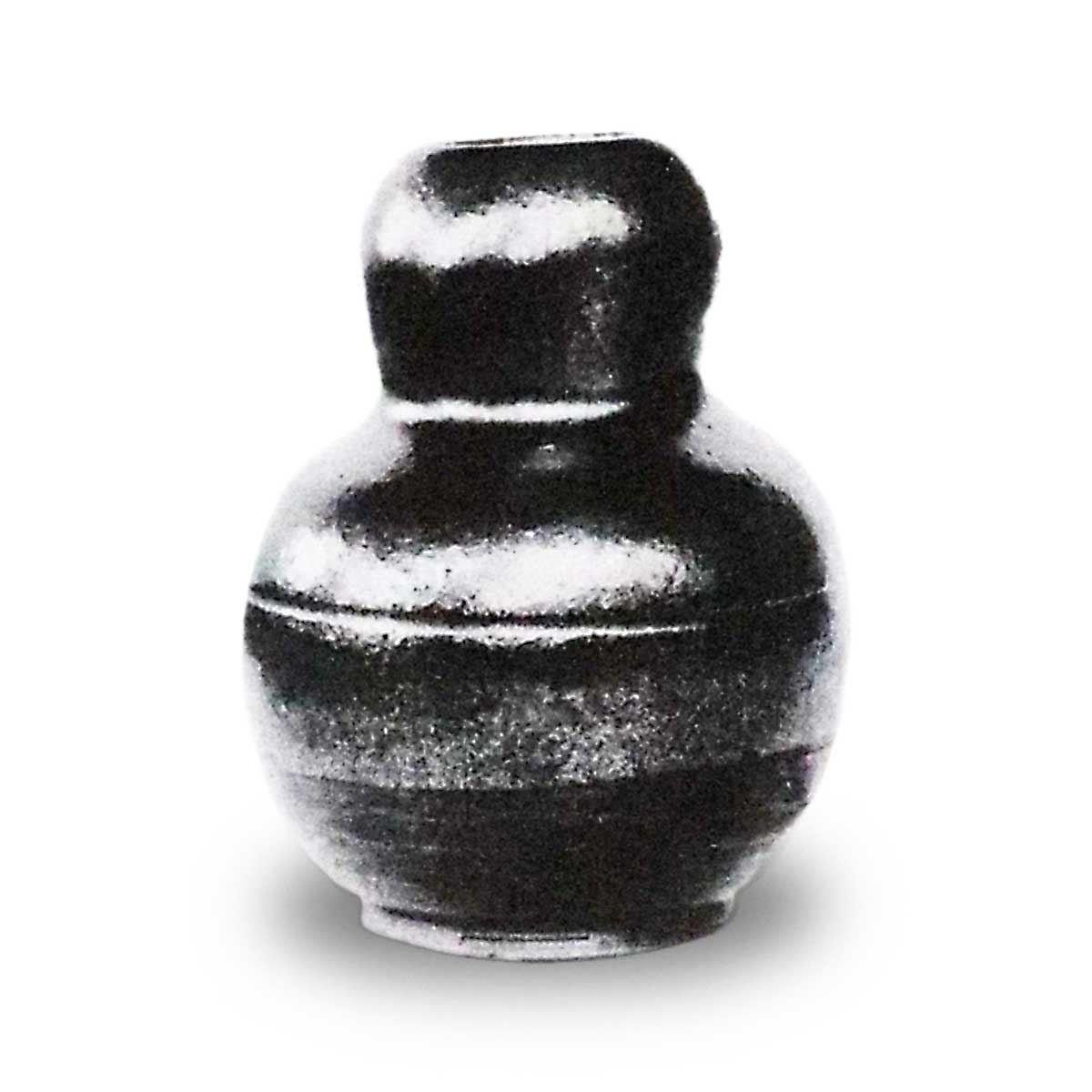
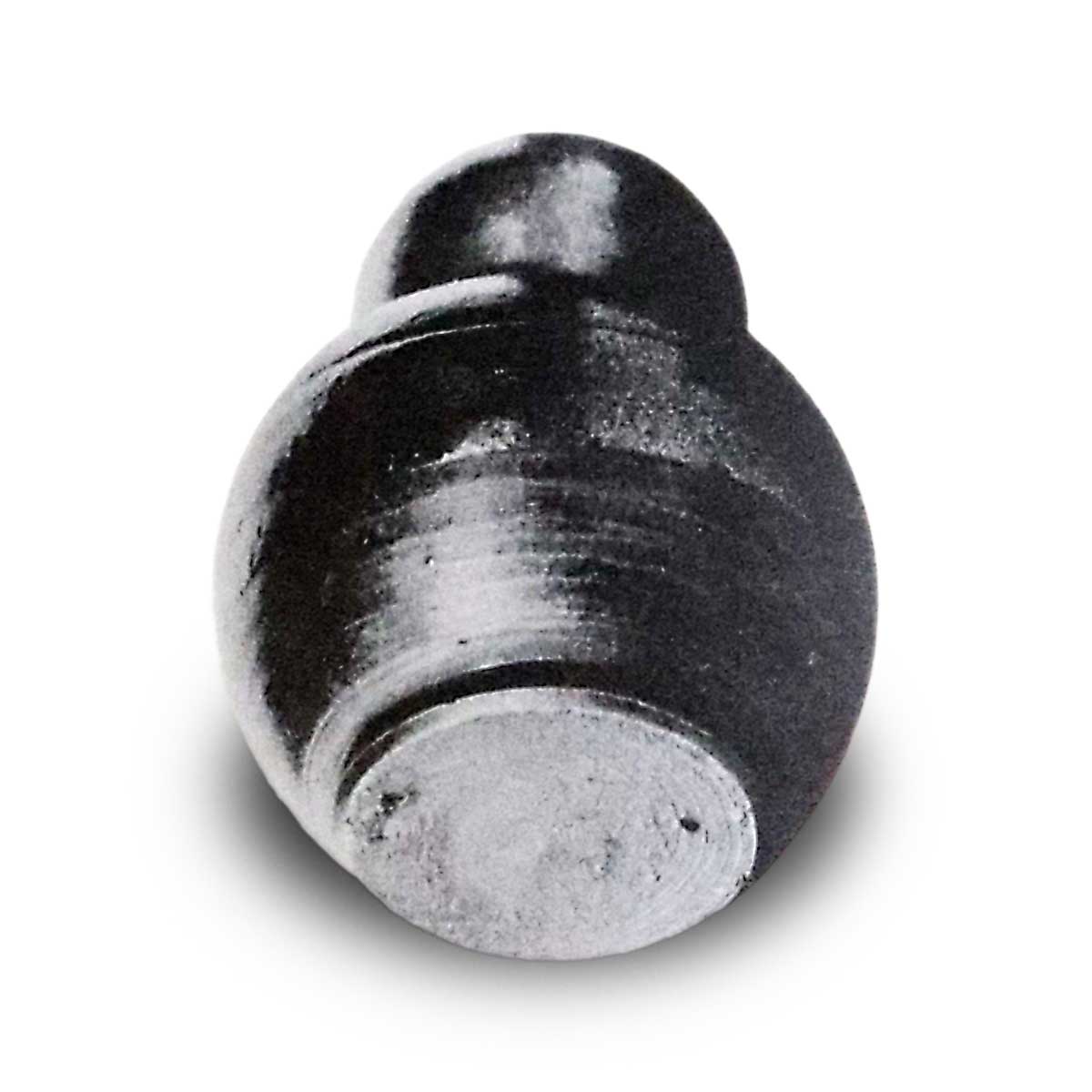
Overview: As the name suggests, this is a gourd-shaped tea caddy created by Shunkei (the founder of Hida Shunkei lacquerware, or attributed to Shunkei).
Dimensions and Weight (Unit Conversion)
・Height: 2 sun 6 bu 9 rin (approx. 8.15 cm)
・Body Diameter (at the lower body ridge): 2 sun 8 rin (approx. 6.30 cm) / Body Circumference (wrapped measurement): 6 sun 5 bu (approx. 19.70 cm)
・Body diameter (at the upper bulge): 1 sun 2 bu 5 rin (approx. 3.79 cm) / Body circumference (circumference): 4 sun 5 bu (approx. 13.64 cm)
・Mouth diameter (outer diameter): 9 bu (approx. 2.73 cm)
・Mouth diameter (inner diameter): 7 bu 5 rin (approx. 2.27 cm)
・Base diameter (round foot): 1 sun 2 bu (approx. 3.64 cm)
・Weight: 22 monme 2 bu (approx. 83.25 g)
Accessories
・Lids: 2 (ivory lids)
- In the style of Sōfu (Kobori Enshū)
- Made by Ikeshima Ryūsa
・Imperial storage pouch (cover): Habutae
・Pouches (covers): 3 - White ground with dragon pattern (Shiroji Ryūzume), lining: Tamamushi-kabe gold brocade, cord fastening: Enshū brown
- Kantō-ori-dome weave, lining: Moegi-kaiki, cord fastening: Purple
- Indigo-ground diamond-patterned swastika design (Konji Hishimanji Junsu), lining: Tamamushi-kabe gold brocade, cord fastening: purple
・Storage box: Paulownia, natural finish
(Contains wrapping paper for the replacement lid. Bag tag: Unshirō)
・Wooden case: Karin wood, with carved front panel
・(Attached) Gourd: Painted by Sōfu (Kobori Enshū)
Pouch: Champa weave, Lining: Twill checkered stripe, Cord fastener: Enshū brown
One box: Paulownia, natural wood, “Shunkei Gourd” painted by Sōfu
・One outer box: New paulownia, natural wood (Dimensions and a list of accessories are inscribed on the underside of the lid)
・One accompanying letter (cover letter):
“This Shunkei Gourd tea caddy was used by Kobori Enshū when he invited Hotta Kagamori (Hotta Masamori) to a ‘Daifuku no Cha’ tea ceremony, placed on a black-lacquered square tray. Following that precedent, this square tray is included here. However, Lord Enshū stated that this tray could also be used with a Chinese-style katatsuki tea caddy.”
(Note) That accompanying tray is currently lost.
Miscellaneous Notes (Summary of Various Sources and Records of Famous Artifacts)
[Shunkei Hyotan]
Owned by Tsuchiya Soshu (Tsuchiya Sagami-no-kami). A note written in vermilion states: “Owned by the Lord of Wakasa (the Sakai family, lords of the Obama Domain in Wakasa Province); transmitted together with the Hatakeyama Katatsuki.”
Dimensions: Height 2 sun 6 bu (approx. 7.88 cm), body circumference 2 sun 8 rin (approx. 6.30 cm), upper curvature 1 sun 2 bu 9 rin (approx. 3.91 cm), mouth 9 bu (approx. 2.73 cm), base 1 sun 2 bu (approx. 3.64 cm).
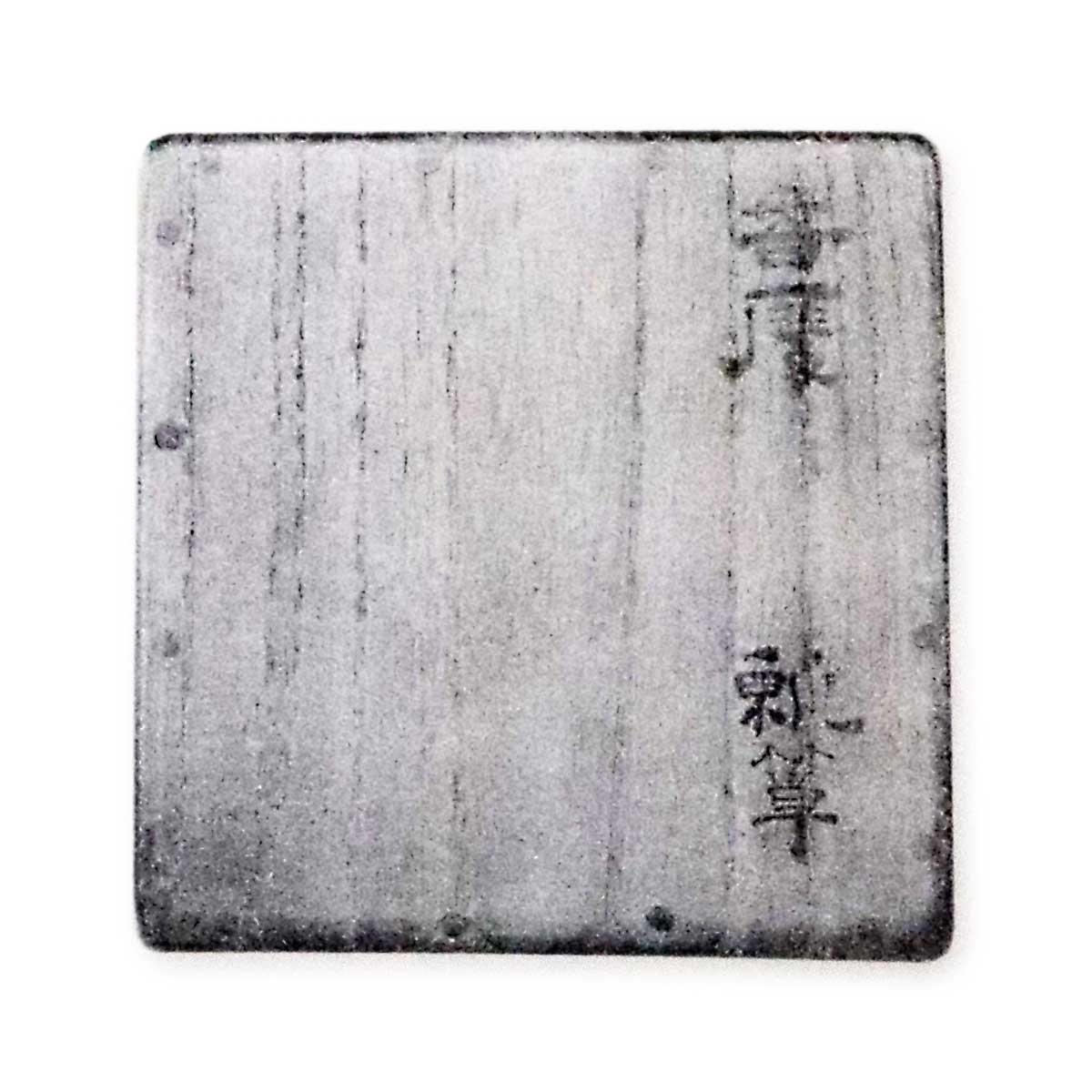
Three pouches (white ground with dragon claws; navy ground with diamond-shaped manji patterns; Kando/Guangdong), one lid (ivory). The nameplate, made of karin wood, bears the angular inscription “Gai Hyotan,” and the pouches are made of cham-ba weave. The box is made of untreated paulownia wood and bears the inscription “Shunkei Hyotan.”
[Descriptions from Enshū Meibutsu-ki and Kokin Meibutsu Ruishū, etc.]
Morning tea ceremony on the last day of May, Kan’ei 10 (1633) (attended by Priest Kōgetsu, Dōkan, Sōfu, and others): The “Shunkei Hyōtan” was used as the tea caddy.
Morning tea ceremony on January 21, Kan’ei 19 (1642): The “Shunkei Hyotan” was used as the tea caddy.
February 2, Shōhō 2 (1645): A “Daifuku Ochano-yu” tea ceremony was held at the request of Lord Masamori Hotta. A colored paper scroll bearing a waka poem by Lord Teika (on the Imperial Procession to the Oi River) was hung in the tokonoma, and the “Shunkei Hyotan” was used as the tea caddy. After the tea ceremony concluded, Lord Masamori immediately went to the castle and reported to Shogun Tokugawa Iemitsu, who is said to have been deeply impressed (from the Sōyūki).
The book also records an anecdote (from the Gensai Monogatari) regarding the tray (a square tray with pine-wood lacquer and a gold-leaf-style finish) that was presented to Horita Kaga-no-kami.
[Provenance]
Owned by Kobori Enshū. On January 2, Shōhō 2 (1645), this tea caddy was used at the “Daifuku Ochaya” tea ceremony at the request of Horita Masamori. It was subsequently passed down to Hotta Kagamori, and during the Kyōhō era, it came into the possession of Tsuchiya Sagami-no-kami. Later, along with the Hatakeyama Katatsuki tea caddy, it was passed down to and housed by the Sakai family of Wakashū (the lords of the Obama Domain and a count’s family).
[Inspection Record (Inspected on April 28, Taishō 8, at the residence of Count Tadamichi Sakai in Yagura-chō, Ushigome, Tokyo)]
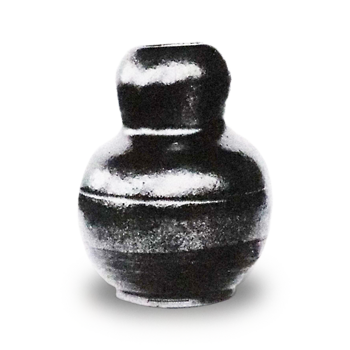
This piece features a persimmon-colored glaze (kaki-yū) with a strong golden sheen; there are two or three areas from the rim to the body where the glaze has spattered, creating a golden sheen with an amber-like hue. A single sunken horizontal ridge runs along the bulbous body; the foot (base) has been high-cut, exposing the raw clay, and wheel marks run circumferentially around it. The base is circular, with a flat area at the center of the thread-cut rim, where 4–5 small stone particles are visible.
Beneath the body ridge is a glaze-missing pattern resembling floating clouds. Additionally, there is a repair on the rim, from which a thin crack about 5 bu (approx. 1.5 cm) long runs in a straight line.
The interior is unglazed, revealing the raw clay throughout. With its elegant shape and exceptionally refined style (a tasteful design), this piece deserves to be called a masterpiece—unparalleled even among teapots of this type (gourd-shaped teapots and traditional Japanese-style teapots).