Excavated from Okusayamaji-Akai, Koda-cho, Nukata-gun, Aichi, Japan
14th century
Height 26.0cm, Bore 4.3cm, Body 17.4cm, Bottom 9.5cm
Tokugawa Reimeikai
In November 1936, during road construction, 20 pieces of kurakotsu vessels were excavated, including a Kosedo four-mimi jar, Keiko, and a Tokoname jar. There is a Tendai sect temple called Jodoji on the mountainside here, and the site is located to the south of the temple, so it is thought to belong to the former Jodoji cemetery.
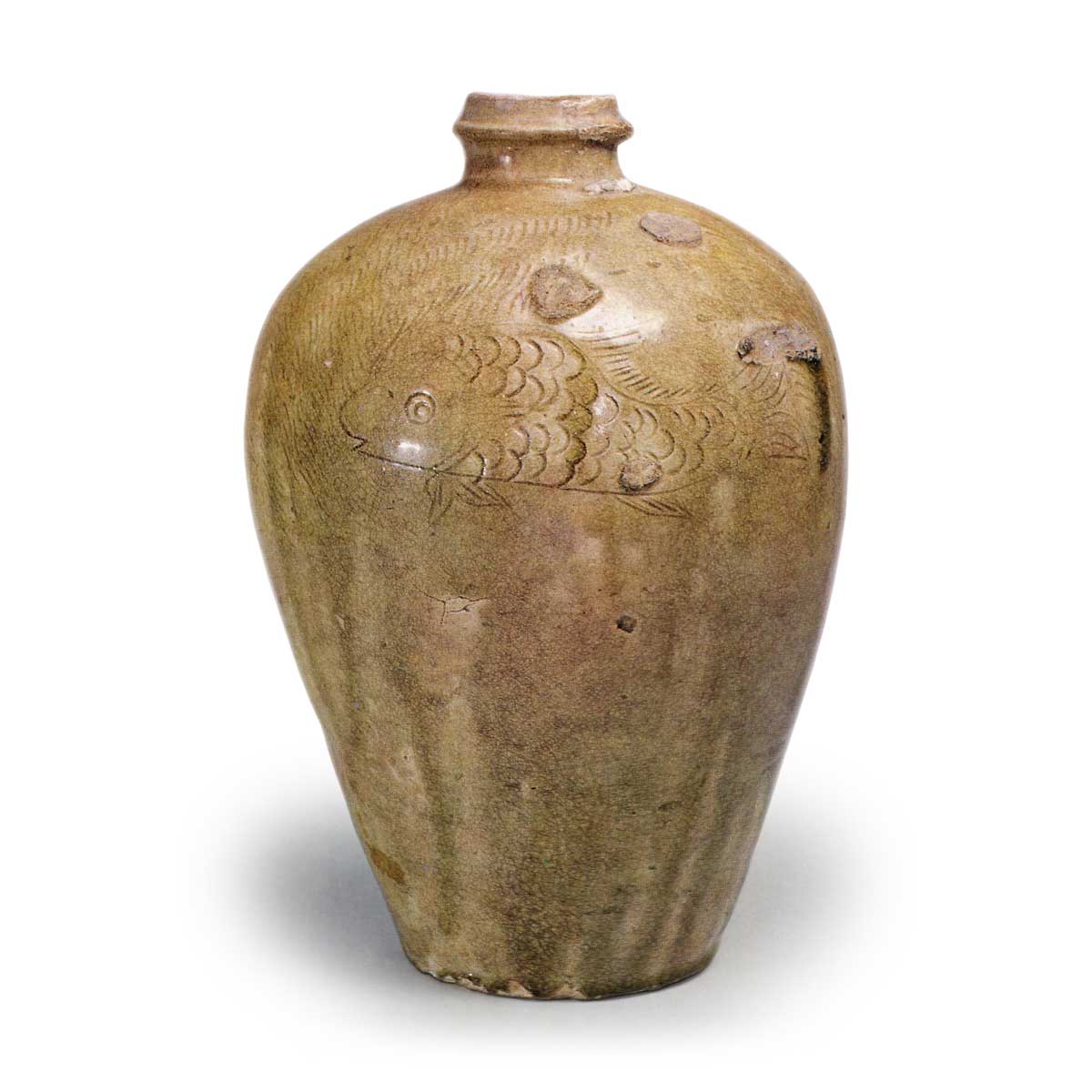
The small neck of this vase has a small protruding band just below the mouth rim, and is carefully made. The slightly tapered shoulders and the small, squashed bottom are also characteristic of the ancient style. The fish motifs are painted in the so-called “oishi” style, in which three fish boast a face. The space between each fish pattern is filled with short waves of painted patterns. The fish have V-shaped open mouths, large breasts, and narrow tails, and are drawn with flowing lines to beautifully depict dynamic figures. Several pieces of ash-glazed ware with the same fish wave design have been excavated from the Shimizu Kogama kiln, and are thought to have come from the same kiln. The fish design was one of the most popular motifs in Kosedo pottery, and this is the only piece in this form that is completely finished (part of the mouth rim is missing), and the stable, yellowish-green ash glaze is a perfect match for it.