Chinese Ware—From the Collection of Baron Heitaro Fujita
Name
Among the possessions of Yagyu Tajima-no-kami was an item called the “Yashima Katatsuki,” and Rikyu Hyakukai Kai notes that this was owned by Yashima Kyuzaemon, a retainer of the Lord of Aki Province. Could this Yashima Taikai also have belonged to the same person? For now, I will leave this as an open question.
Dimensions
Height: Just over 6.06 centimeters
Body diameter: Just under 8.94 centimeters
Mouth diameter: Approximately 5.15 centimeters
Base diameter: Approximately 4.55 centimeters
Koshiki height: Approximately 0.76 centimeters
Shoulder width: Approximately 0.76 centimeters
Weight: approx. 89.25 grams (23 monme 8 bu)
Accessories
- Lid: 1 piece (with a recess)
- Storage pouch: White ha-niji silk; cord tied in a white tsugari knot
- Pouches: 4 pieces
Tea-colored ground with cloud pattern in satin; lining in iridescent silk; cord tied in a tea-colored tsugari knot
Kakukura Kinran; lining in iridescent silk; cord tied in a tea-colored tsugari knot
Hōryū-ji Kōtō; lining in iridescent silk; cord tied in a purple tsugari knot
Kiyomizu-style Buddha with mandarin orange motif; lining in iridescent silk; cord tied in a long tea-colored knot
One storage box: natural white paulownia wood
“Meibutsu Yashima Pouch: Tea-colored Cloud-Patterned Satin; Kinran Brocade; Hōryū-ji Kōtō; Kiyomizu-zori”
One inner box: Unfinished paulownia wood; bears an inscription by Kobori Enshū
“Yashima”
Pouch: Enshū satin; lining: light green silk; cord: brown tsugari knot
One outer box: Paulownia wood; Shunkei lacquer; cut edges black; bears an inscription in silver characters
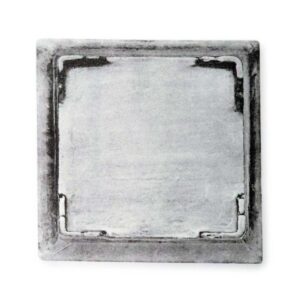
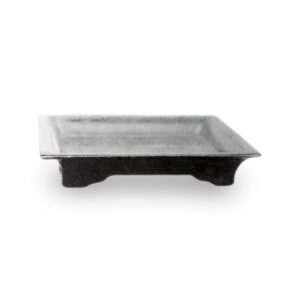
One accompanying tray: Chinese-style vermilion square tray; spotted bamboo rim
Approx. 19.09 cm square, tsuba side approx. 12.88 cm, base side approx. 15.45 cm, height approx. 3.33 cm
Pouch: Light green-ground ran-ken satin; lined with peach-colored habutae; cord tied in a brown tsugari knot
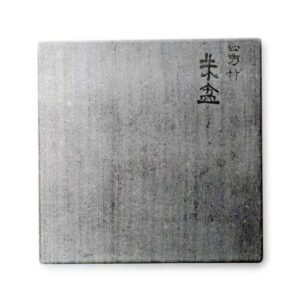
Box: Paulownia; body opening finished in black persimmon lacquer; bears an inscription by Kobori Sōkei
“Square Bamboo, Vermilion Tray”
Pouch: White-and-tea-flower-colored ichimatsu weave; lining: light green mon-kaiki; cord: brown tsugari knot - Authentication Tag: 1 piece; ancient calligraphy by Ryōchū
Inscription on the front of the inner box lid. The two characters “Yashima” are an authentication by Sōfu (Kobori Enshū) - Outer Box: Paulownia; black surface with Fujishima maki-e; inscription in gold powder
Miscellaneous Notes
Yashima Chinese import; formerly owned by Kobori (Enshū). Height: approx. 6.12 cm; body diameter: approx. 8.79 cm; mouth diameter: approx. 5.27 cm; base diameter: approx. 4.48 cm. The lid is a single piece with a recessed center; the underside is lined with sand-patterned cloud-and-lily paper. It comes with one pouch made of tea-colored brocade with a cloud pattern; the lining is “Tamamushi Kaiki,” and the cord is tied in an “Enshū-cha Tsugari” knot. The box is made of untreated paulownia wood and bears the inscription “Yashima.” Such is its description. (Illustration of the tea caddy included)
(Meibutsu-ki)
Karahachijima (Dimensions and details of accessories are the same as in Meibutsu-ki)
(Kokin Meibutsu Ruiju: Shii-no-bu)
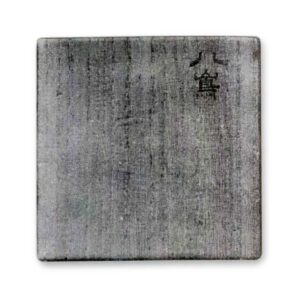
Hachijima: In the handwriting of Sōkei (Kobori Sōkei)
(Enshū Zōchō)
Yashima: Natsuyamate style. Height: approx. 6.12 cm; body diameter: approx. 8.82 cm; mouth diameter: approx. 5.30 cm; base diameter: just under 4.55 cm. The lid is a single piece with a recess and a flat, straight-edged surface. The pouch is made of tea-colored satin with a cloud pattern; the lining is kabechoro; the cord is tied in a tsugari knot. The box is made of paulownia wood, and the lid bears the inscription “Yashima” in the handwriting of Enshū-no-kami (Kobori Enshū). There are streaks of yellow glaze, and the thread-cut finish is faint. (Illustration of the tea caddy included)
(Appendix to the Record of Meibutsu)
Yashima Karamono—also known as Fujishiro. Owned by Kobori (Enshū). It has an overall rusty appearance with red clay and features a ring-shaped itokiri.
(Collection of Famous Tea Utensils from Various Families)
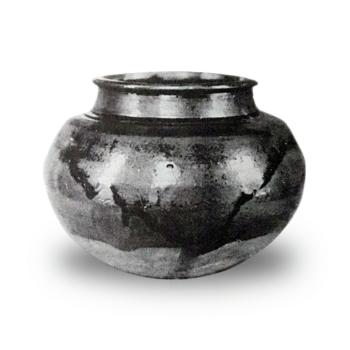
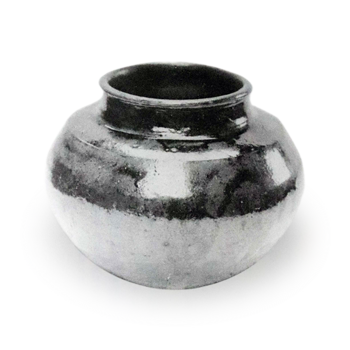
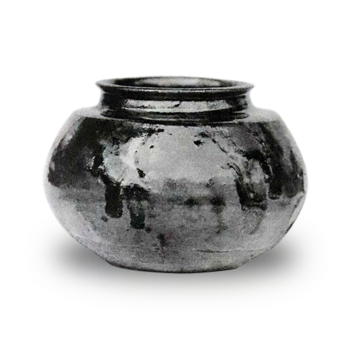
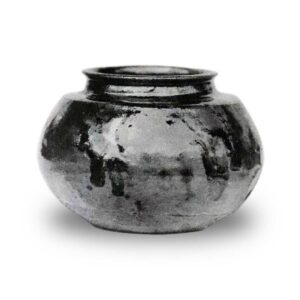
Yashima Taikai—A Karamono from the collection of Lord Fujita Densaburō, considered a “Revival-era” Meibutsu. Black and yellow glazes blend together, giving it a finish reminiscent of Shunkei-yaki, and it features a full itokiri. Height: approx. 6.67 cm; mouth diameter: approx. 5.27 cm; base diameter: approx. 4.48 cm; body diameter: approx. 8.79 cm. It comes with five pouches: Enshū satin, tea-colored cloud-patterned satin, Hōryū-ji Kōtō, Kakura, and Kiyomizu-kirī. The inscription on the box reads “Hōkō” (Kobori Enshū). The accompanying tray is a Chinese-style red square tray with a spotted bamboo rim; the pouch is made of crimson ran-ken satin; the inscription on the box reads “Sōkei-den,” and the outer title is “Kobitsu Ryōchū.”
(Written by Matsuyama Seika, Tsurezure no Tomo)
Provenance
This piece has been passed down through the Kobori family and was purchased by the late Mr. Denzaburō Fujita, the predecessor of the current owner.
Field Notes
On May 18, Taishō 9 (1920), I examined the piece in person at the residence of Baron Heitarō Fujita in Amijima, Kita Ward, Osaka City.
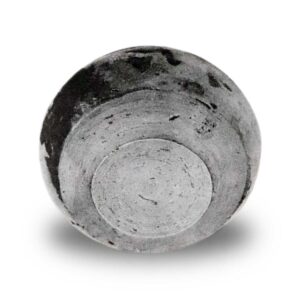
The rim is deeply flared, with the edge thin and blade-like in shape; the body is low, and the shoulders rise sharply. The body is full, tapering gradually from the lower rim downward; the thread-cut pattern at the base is extremely fine and not very distinct. Overall, the color is a persimmon-like reddish hue (kaki-kin-ki), intermingled with yellow and dark amber glazes; in some places, the glazes flow down in cascades, while in others, the yellow glaze stands out particularly prominently. A band of black glaze encircles the rim of the steamer; shallow wheel marks are visible on the body, and fine, white, stone-like spatter is present in places. Several streaks of glaze flow from the shoulder to the rim, with black glaze drifting like clouds in varying shades of light and dark between them, creating a rich and varied visual pattern. From the rim downward, the mouse-gray clay is exposed, with fine horizontal striations running across it; there is a single small splatter of reddish glaze, resembling a persimmon, on the rim of the base. Inside, glaze covers the rim, with wheel marks extending below it, and the center of the base forms a swirl pattern. It possesses a beautiful luster, and the abundance of yellow glaze patterns is a rare feature among Tang-style “Great Sea” tea caddies.