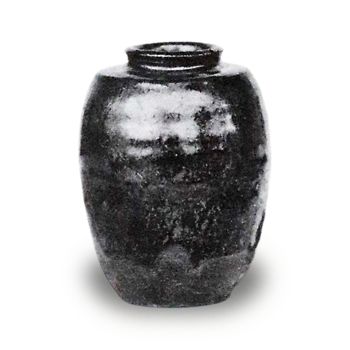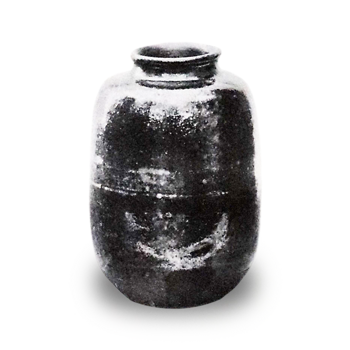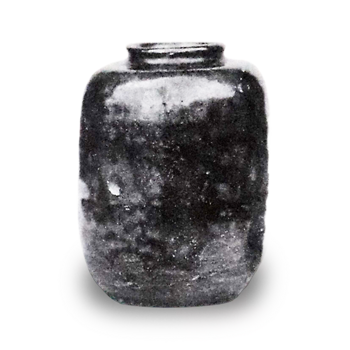
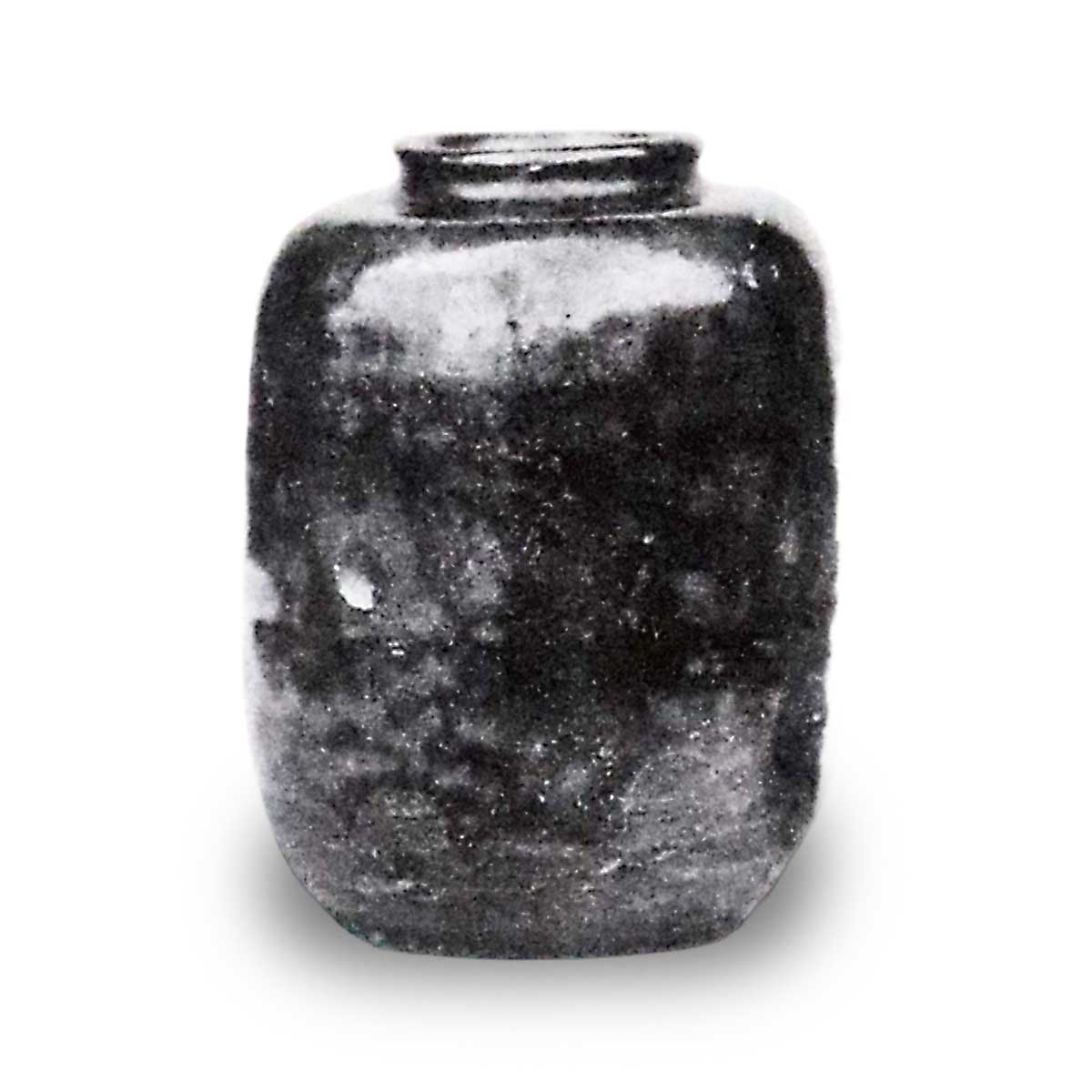
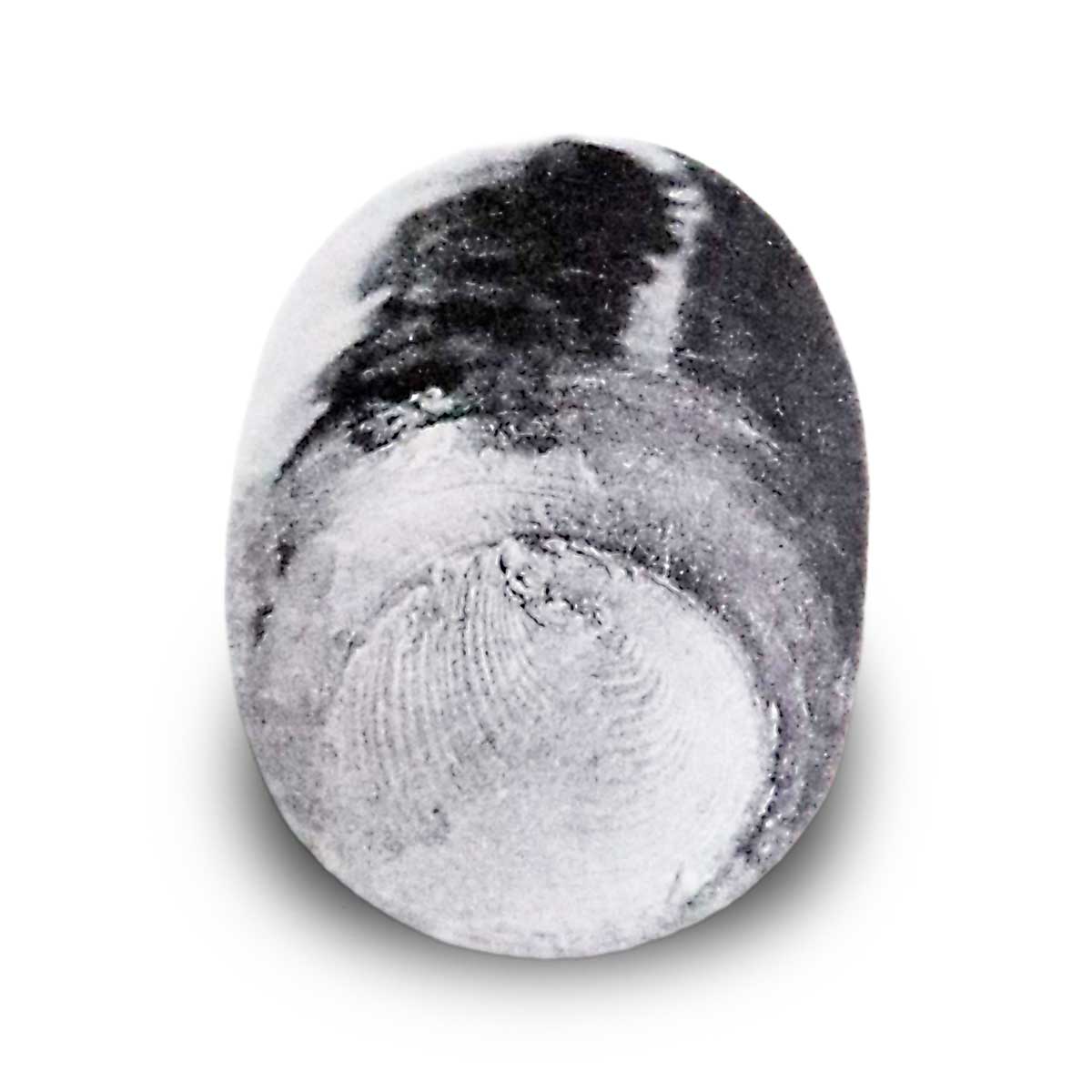
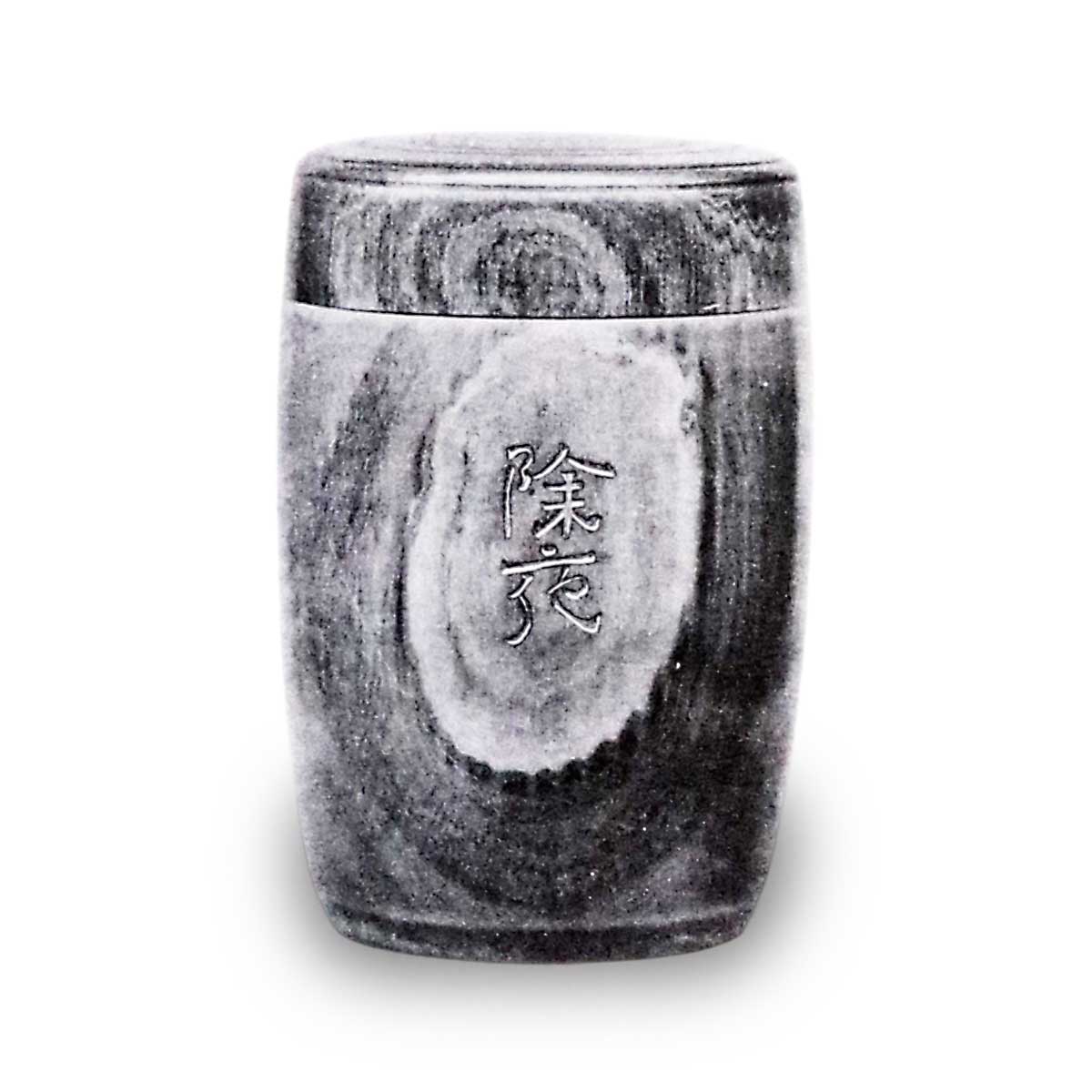
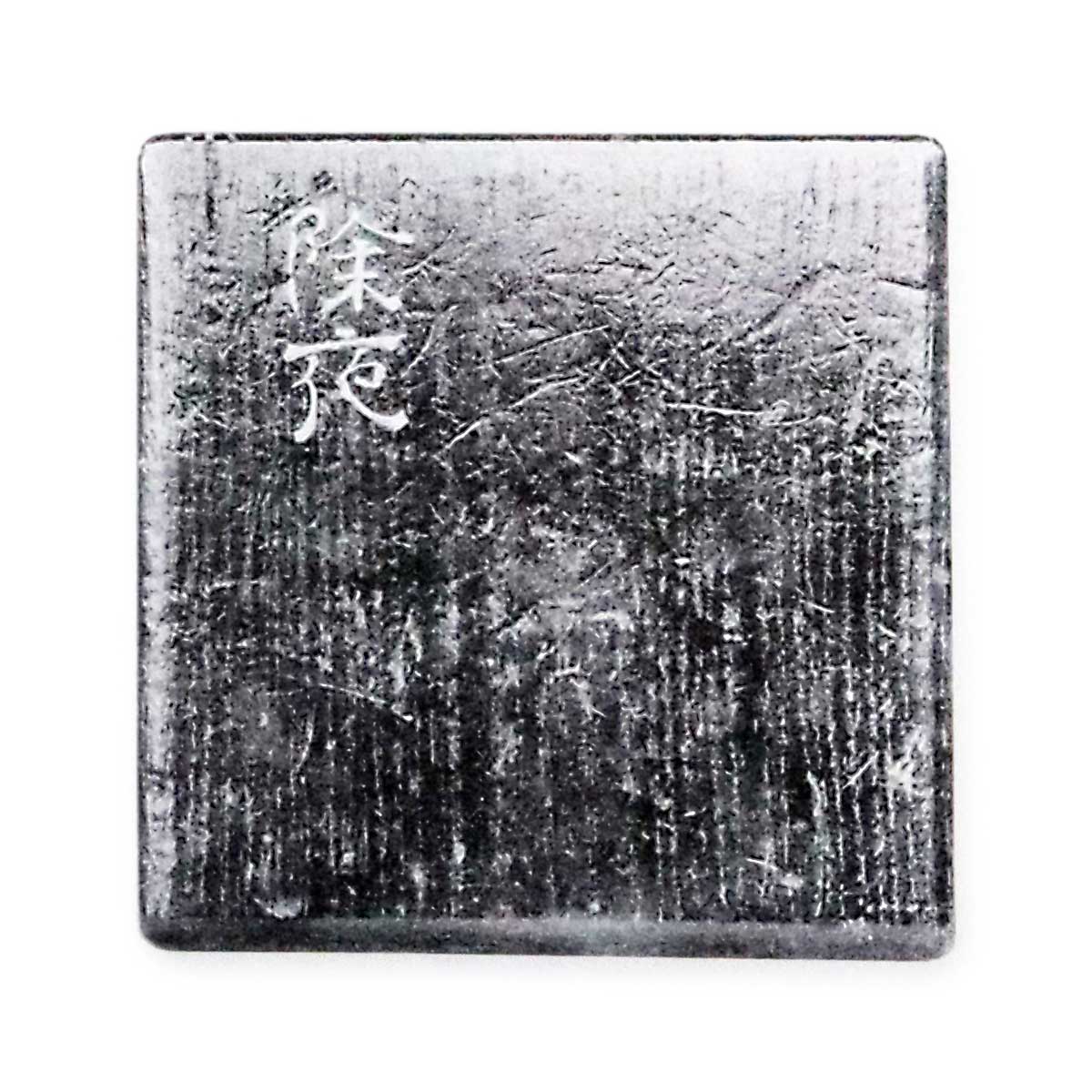
This likely refers to a tea caddy suitable for a New Year’s Eve tea ceremony.
[Dimensions]
・Height: Approx. 7.27 cm (just under 2 sun 4 bu)
・Body diameter: Approx. 5.64 cm (1 sun 8 bu 6 rin)
・Mouth diameter: Approx. 2.73 cm (9 bu)
・Base diameter: Approx. 3.33 cm (1 sun 1 bu)
・ Neck Height: Approx. 0.45 cm (1 bu 5 rin)
・Shoulder Width: Approx. 0.76 cm (2 bu 5 rin)
・Weight: Approx. 137.6 g (36 monme 7 bu)
[Accessories]
・Lid: 1 (made of ivory)
・Storage Pouch: 1 (white chirimen silk; cord and fastener: white)
・Covers: 3 sets
- Light blue ground with small peony design in antique Kinran (Lining: kabechoro; cord and fastener: purple)
- Satin ground with single-layer vine peony Kinran (Lining: kabechoro; cord and fastener: purple)
- Tawaraya-giri (Lining: Kabechoro; Strings and Ties: Purple)
・Storage Box (Paulownia, natural wood)
(Label on the box: Old Seto, New Year’s Eve)
Covers and Pouches
・Hikiya: Made of ivory; the lid features a spinning top (koma) pattern; the body is carved with the two characters “New Year’s Eve” (除夜), inlaid with silver powder.
・Cover: Dutch cotton (sarasa; striped pattern below the waist; lining: Onodo-ji Donshu; cord and fastener: brown)
・Box: Paulownia wood, Shunkei lacquer (black lacquered interior), with calligraphy by Kobori Enshū in gold powder.
[Miscellaneous Notes]
・“Joya” (New Year’s Eve): Old Seto-style shoulder-press pot, Nesaka-de style. Height: approx. 7.27 cm (2 sun 4 bu); body diameter: approx. 6.67 cm (2 sun 2 bu); mouth diameter: approx. 3.33 cm (1 sun 1 bu); shoulder width: approx. 3.03 cm plus a little (1 sun slightly over). It features a hon-ito-kiri finish; the clay is fire-clay with visible wheel marks. The tea caddy is heavy, and the rim is thick. The inscription “Joya” is by Lord Enshū. (Illustration of the tea caddy available)
(From Kaishū’s Meibutsu-kō)
・“Joya” Old Seto Katatsuki, formerly owned by the Kōnoike family. (Illustration of the tea caddy available)
(From Chaki Jōbō)
・“Joya” (New Year’s Eve): Ancient Seto. Believed to have been owned by Kobori Enshū. Purchased for 50 ryō in gold during an auction conducted by Jōmu in the first month of the Year of the Goat, Kyōhō 20 (1735). Although it bears a large scratch (with restoration marks), it is a high-quality piece featuring the “Hon-ito-kiri” technique. The piece is slightly larger than average and exhibits an excellent artistic style. Height: approx. 7.27 cm (2 sun 4 bu); mouth diameter: approx. 2.88 cm (9 bu 5 rin); comes with two pouches (Tahara-ya, white ground with antique Kinran pattern). (Illustration of the tea caddy included)
(From the Kagaya Sōzō Kō: Kōnoike Zōchō from the Manji era)
[Provenance]
It is said to have originally belonged to Kobori Enshū and was acquired by the Kōnoike family for 50 ryō in gold during an auction held by Nezumiya Jōmu in the first month of Kyōhō 20 (1735).
[Record of Actual Observation]
On May 18, Taisho 10 (1921), I observed this piece in person at the villa of Baron Konoike Zen’emon in Kitae Village, Nakagawa District, Osaka Prefecture.
The rim is slightly rounded, and the neck is extremely short. The shoulders are rounded, and the portion below the rim displays an earthy color with an iron-like hue. The height of the thread-cutting marks is uneven; the marks (traces of the thread used to cut the bottom) appear somewhat rough and distinct, with a slight misalignment at the starting point.
Overall, the black glaze forms a quail-spot pattern across a purplish ground; there is a repair mark (lacquer repair) where a large crack ran from the rim down the body. Additionally, there is a single round indentation inside the body, and the glaze covering it creates an interesting visual feature.
Inside, the glaze covers the rim, while a shallow wheel mark runs below it. The base shows “hitsuki” (marks where the piece stuck to the kiln), and no wheel marks are visible there.
The ancient Seto quail-spot pattern is magnificent; the piece exudes a profound sense of wabi and lacks any air of pretension, which is likely why it earned this name as being truly suitable for a “New Year’s Eve Tea Ceremony.”