
Hereditary in the Hirase Family
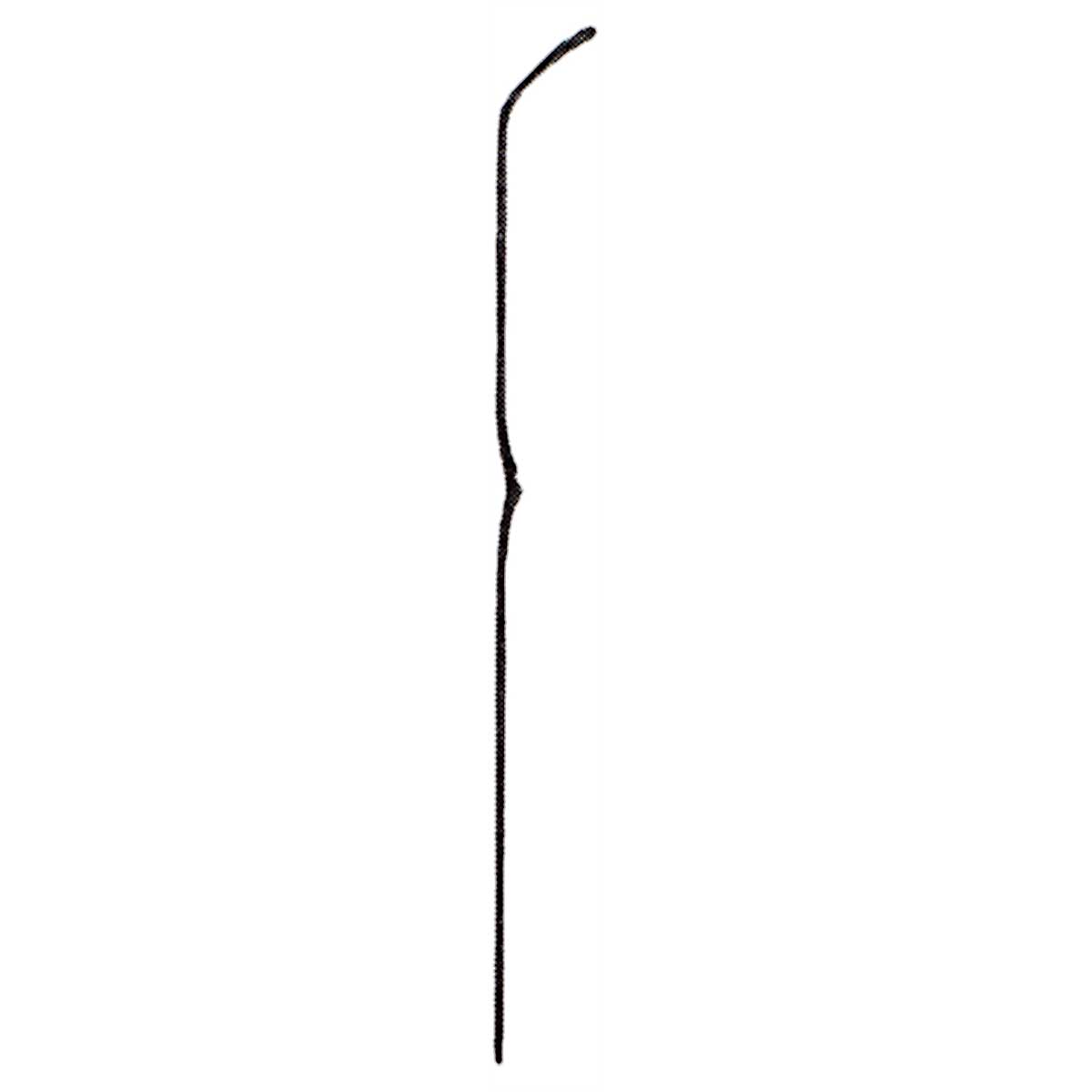
Tea Scoop
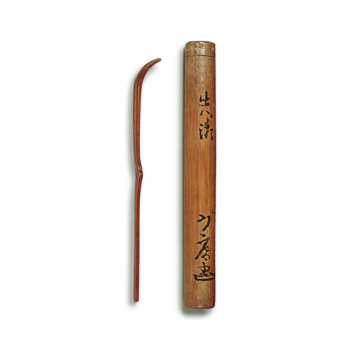
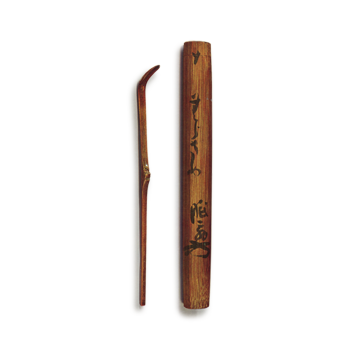
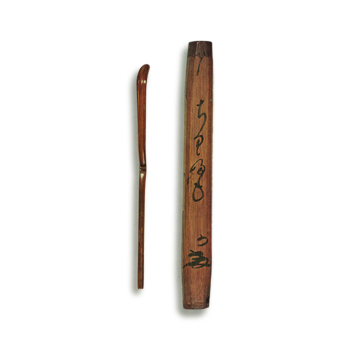
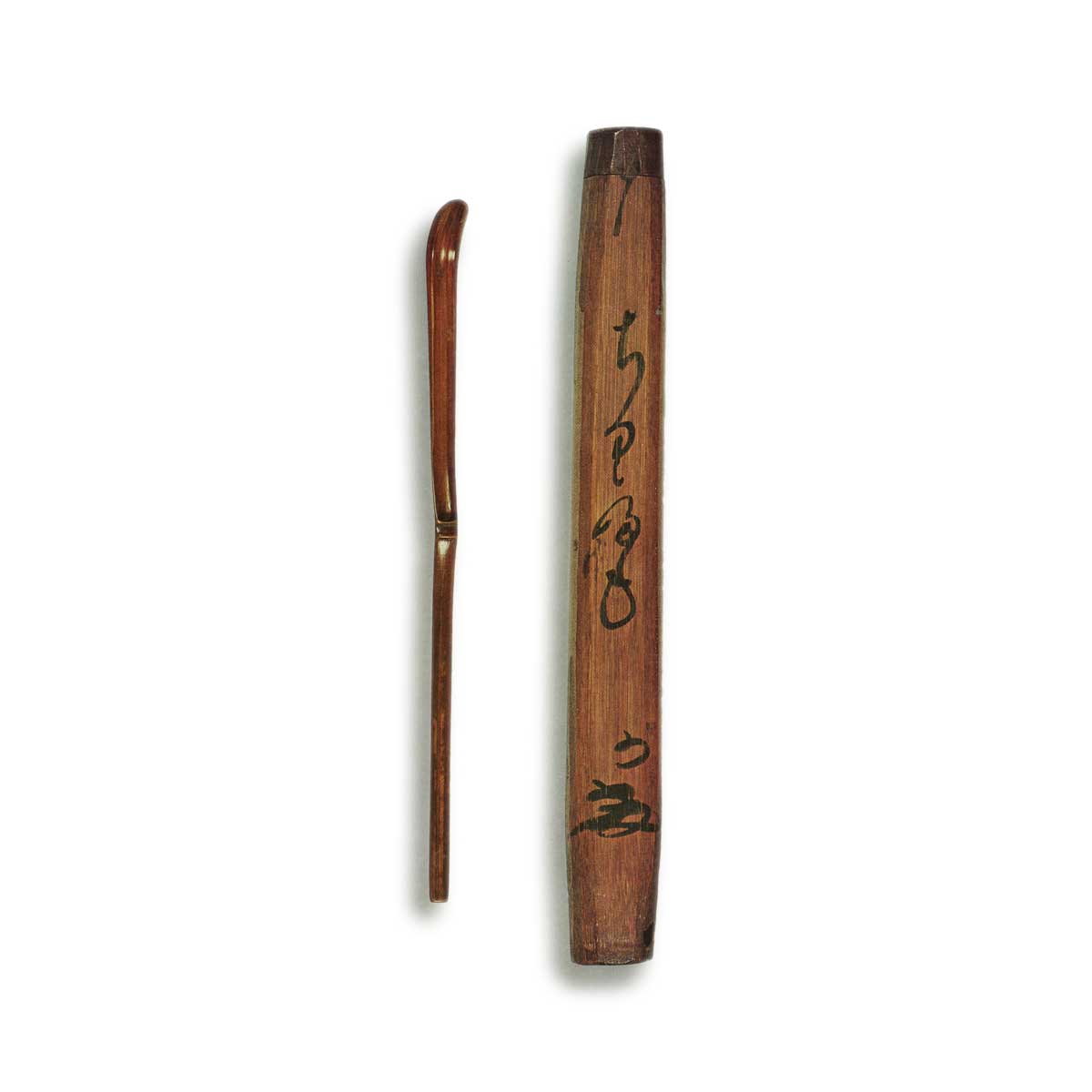
Slim in form, used for wiping lacquer. A representative work of the delicate Sōan style.
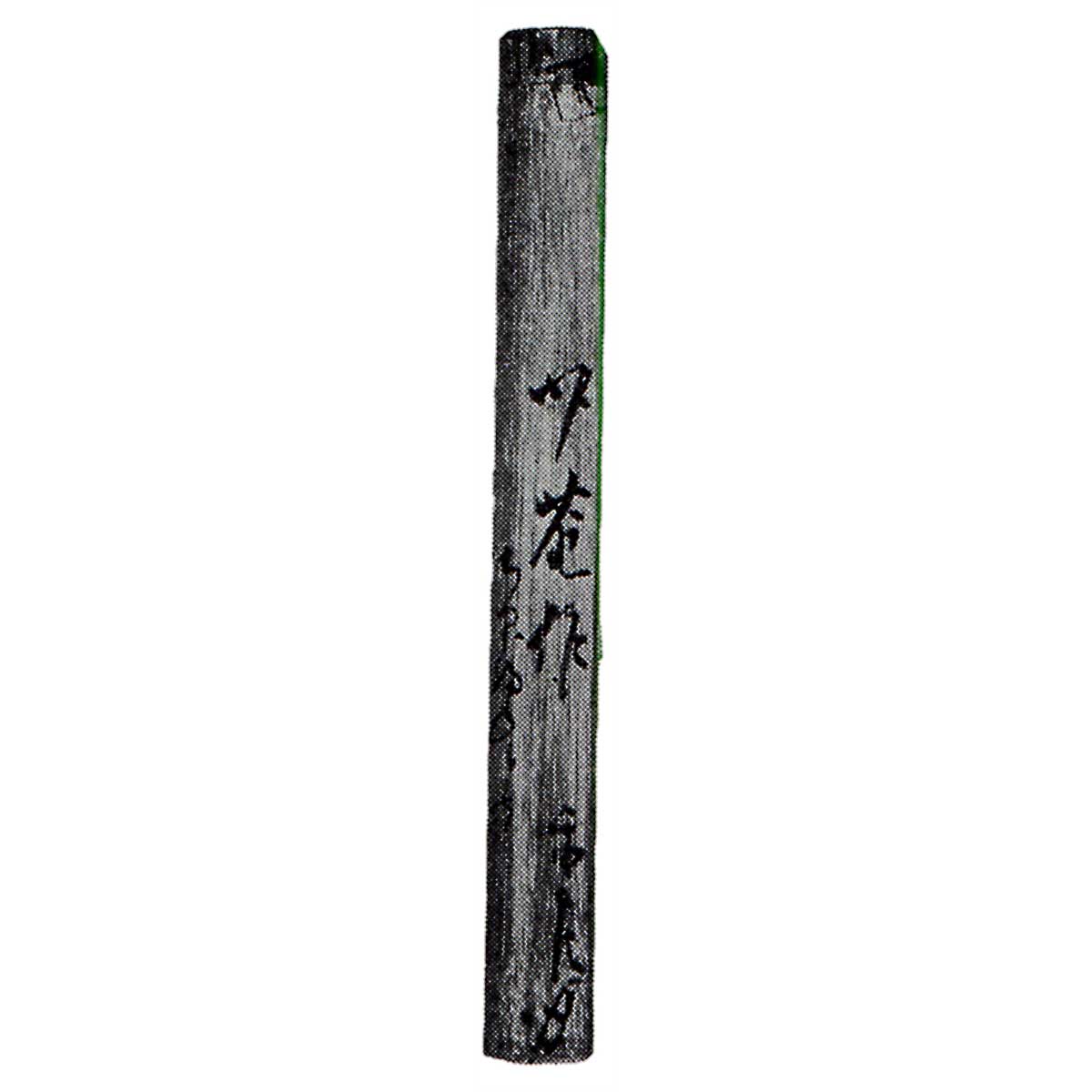
The grass-like case, which could be called roughly carved, bears Sōan’s own handwriting for “Chirifune,” written with free-flowing ease.
Accessories
Replacement tube, inscription by Kakukusai Ganso: “Made by Sōan. Sōsa (signature seal)”
Box: Paulownia, unfinished wood. Inside lid: Inscription by Ryōryōsai Sōsa
“Shōan tea scoop case, also inscribed ‘Chirifune’. Includes replacement case. Sōsa (signature).”
Accompanying note by Kubota Hōan
“Considerations on the Inscription
Chirifune: Likely meaning ‘a boat laden with dust and debris’, akin to ‘inafune’ (a boat laden with rice). Though a boat laden with refuse may seem filthy, within this vessel lies immeasurable treasure. This does not refer to the chance presence of silver coins or copper cash, but rather that this substance becomes fertilizer for fields and the foundation for abundant crops of rice, wheat, and other produce. Thus, the dust boat is akin to a treasure-laden vessel. Bōan”
Postscript
Mr. Hōan Kubota was a native of Naniwa, a disciple of Hirase Rōkō. Some theories suggest the concept of the dust boat originates from the Zhuangzi.
Published in
Three Hundred Selected Tea Scoops
Dimensions
Tea Scoop
Length: 17.0 cm
Width: 0.5–0.8 cm
Thickness: 0.2 cm
Tube
Length: 23.0 cm
Diameter: 1.8 cm