Inheritance
Kozu Family, Seishu
Dimensions
Height 6.0cm
Body diameter 5.3cm
Bottom diameter 3.1cm
Weight: 57.5g
Owner
Tokyo Hatakeyama Memorial Museum of Fine Art
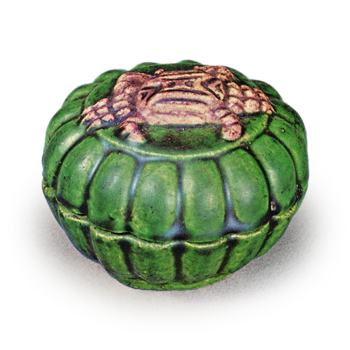
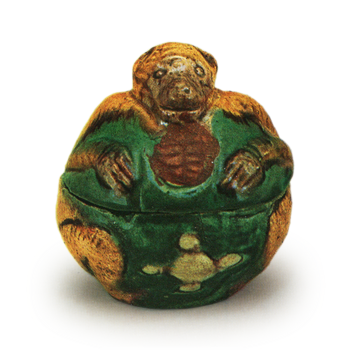
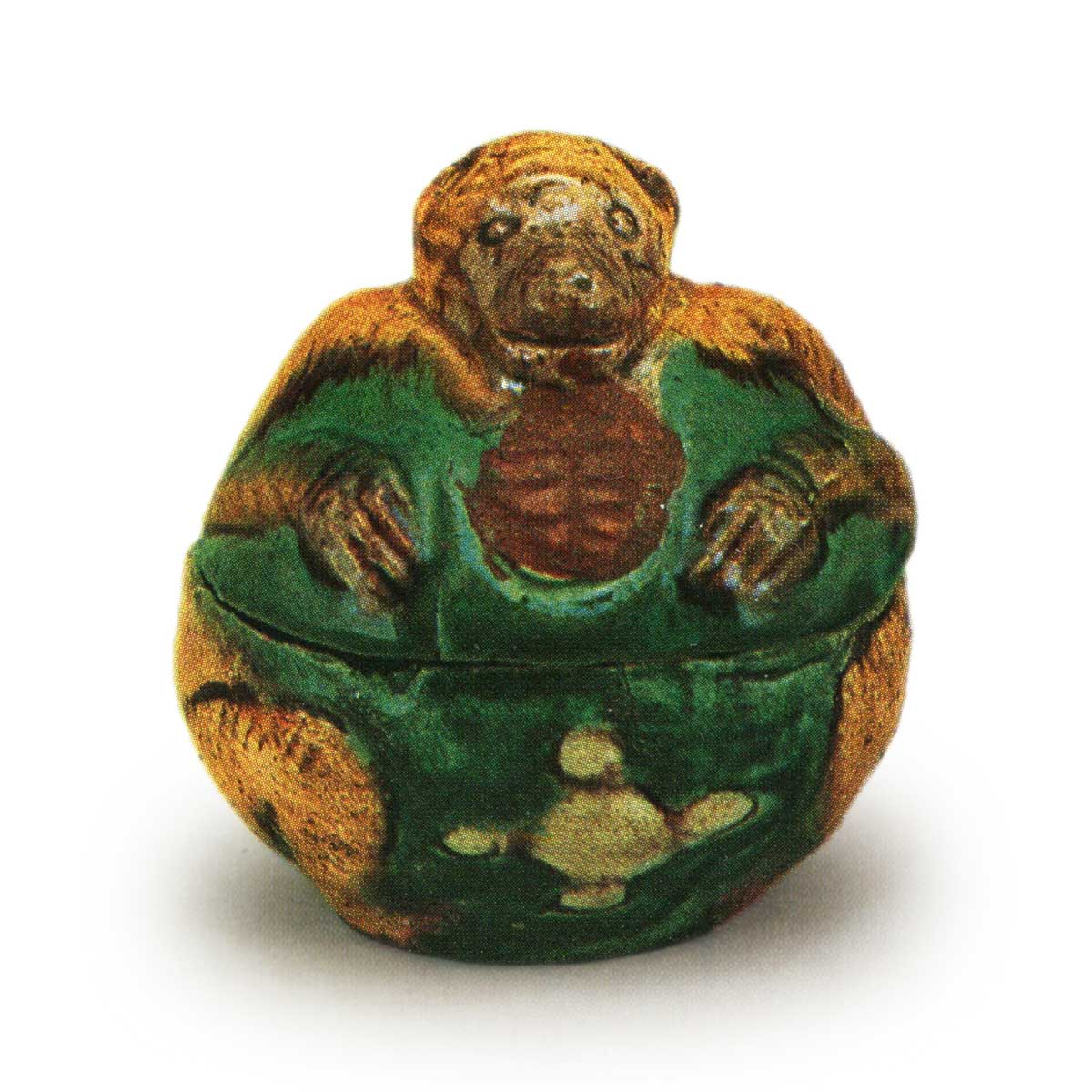
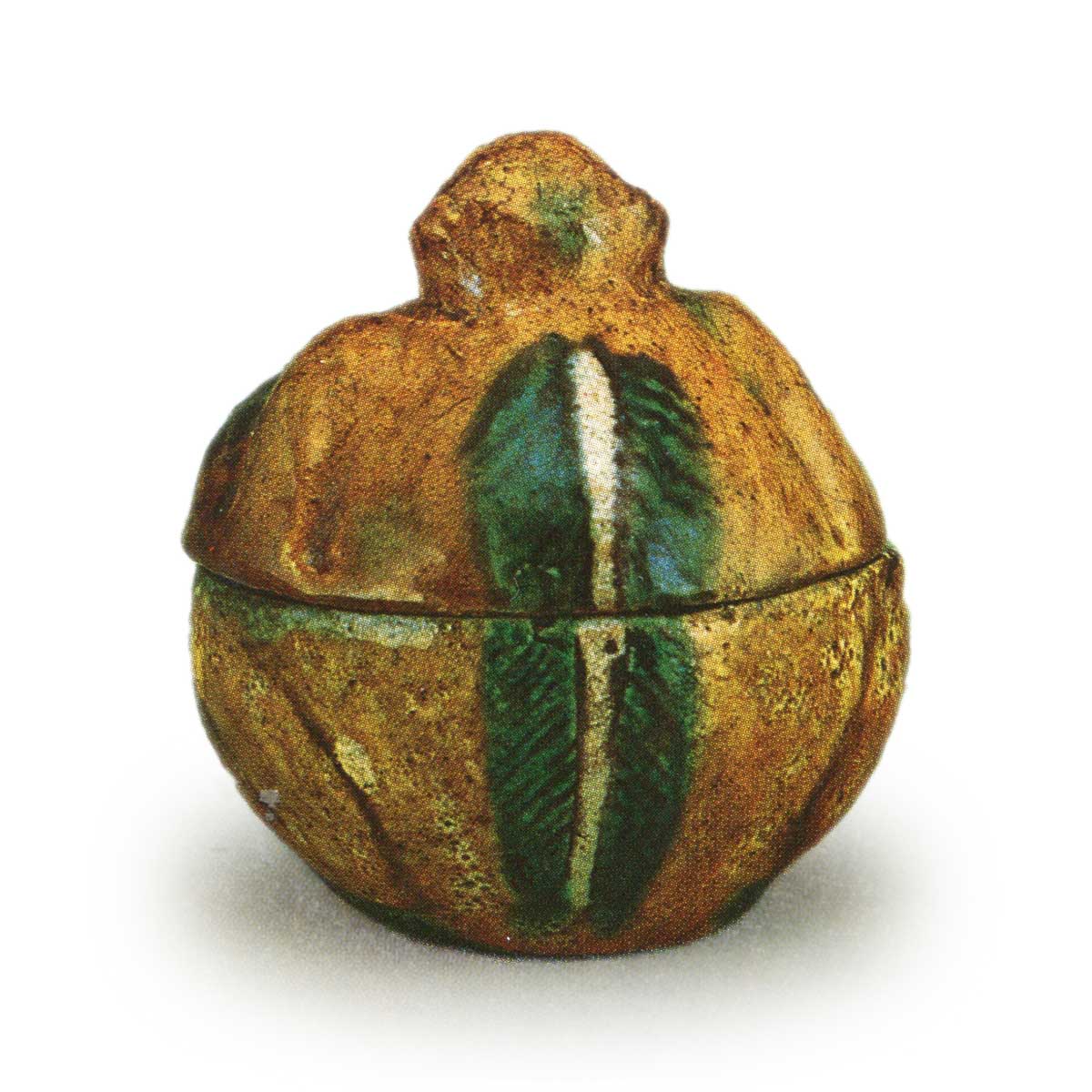
This incense container is ranked 6th in the “Mono Kogai Ranking” and is said to be the oldest of all Cochin incense containers.
Recently, some people have attempted to explain that this incense container was ordered by Kobori Enshu, but there is no doubt that it came to Japan around the end of the Momoyama period. This is evidenced by the fact that copies of this type of pottery can be found in Oshikoji ware. Moreover, the old box-shaped description of the shape as “raccoon dog” indicates that this type of pottery was called ‘kagai’ much earlier than “kagai-banzuke.
Originally, this kagou was a figure of a monkey. It is said that the tea masters named it “raccoon dog” in abhorrence of the common Japanese monkey. This was a popular belief in recent times, but it has since been corrected.
The author has seen many other examples of the same type of incense container, and the charming clownish appearance of this incense container has been interesting and interesting since ancient times, and it was probably made in imitation of the original.
This incense container is noted as an iroe (color painting) in the ranking list, and is an outstanding masterpiece with its vivid colors. Each of the Sansai is beautiful and perfect in its own way, and this may be the reason why it has been appreciated by ordinary tea masters as a lovely form of ceramics.
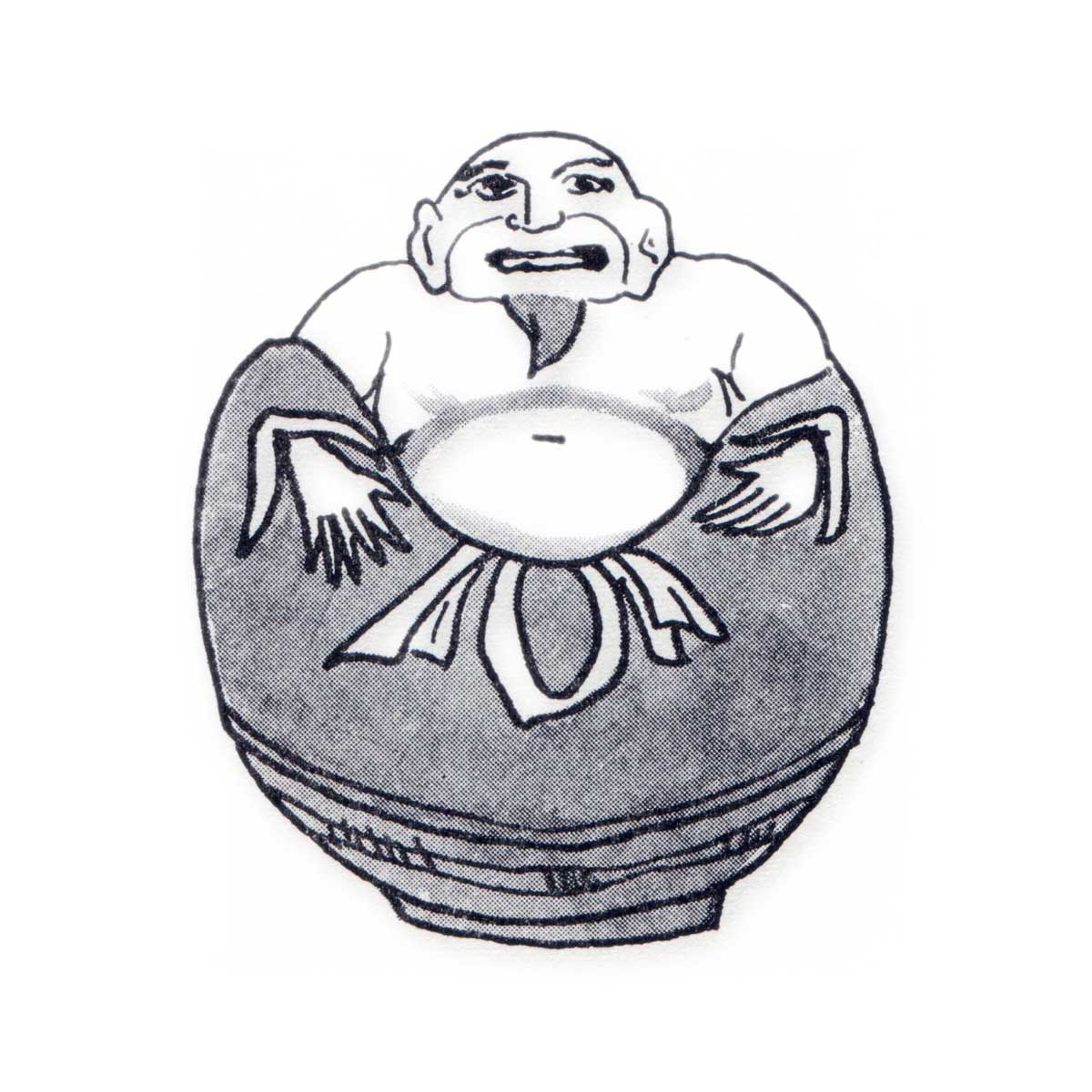
Cochin Hotei
According to the Senke Meibutsu, “Cochin muffukuro incense container, 1.8 cm high, 1.6 cm in diameter, 3.3 cm in possession of Iehara Jisaki and Dou Konoike Michikazu.