Dimensions
Height: 17.3 cm; Mouth diameter: 2.7–2.9 cm; Body diameter (top): 6.9–7.4 cm; Body diameter (bottom): 9.8–10.3 cm; Base diameter: 6.0–6.7 cm
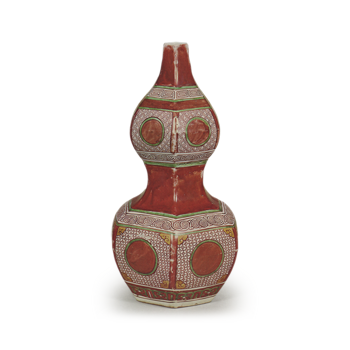
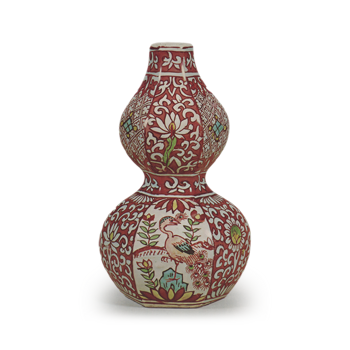
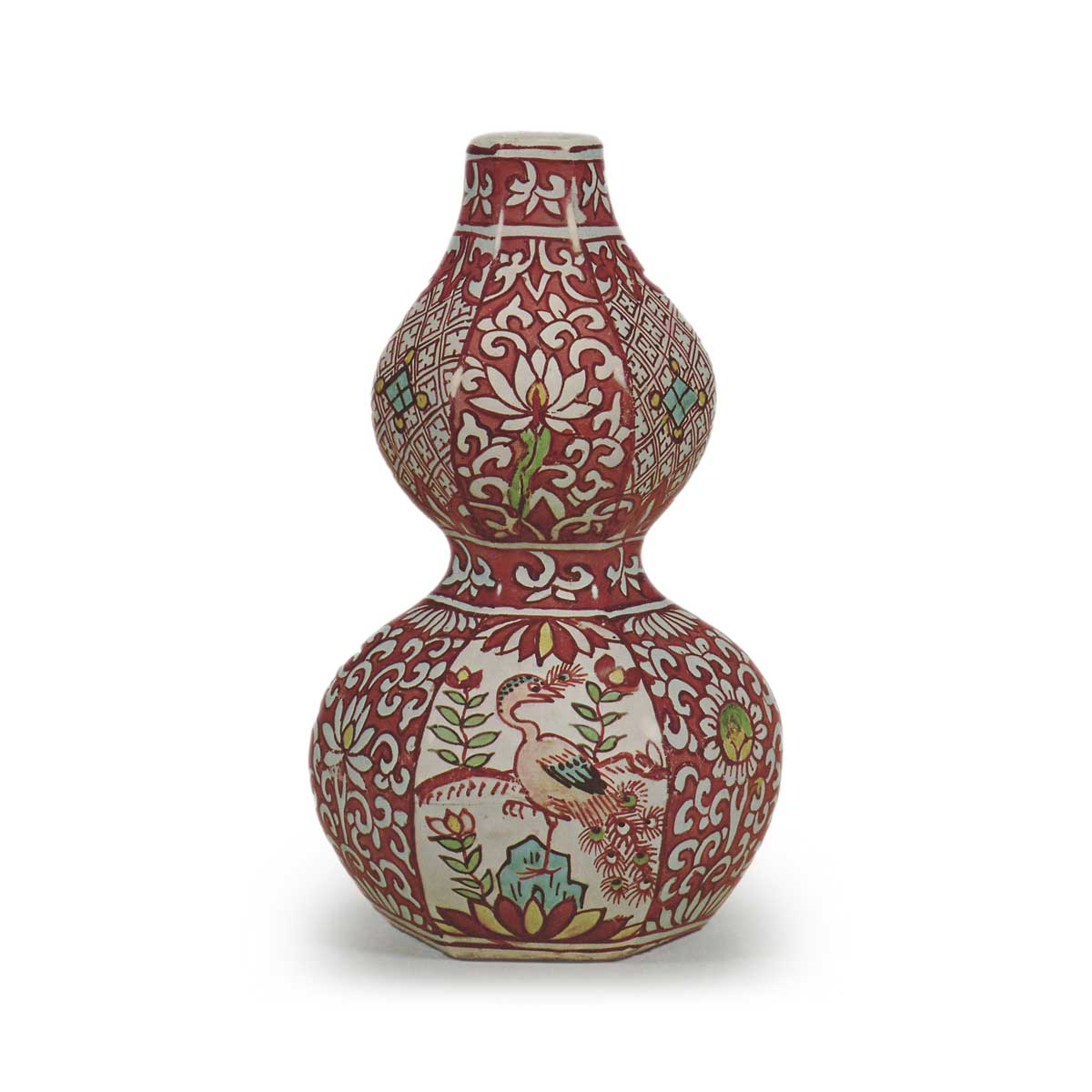
This flower vase is traditionally known as “Koa-e” and is a painted ceramic produced during the Jiajing, Longqing, and Wanli periods of the Ming Dynasty.
The outlines of the patterns are thick, the colors are rich, and the yellow stands out particularly well.
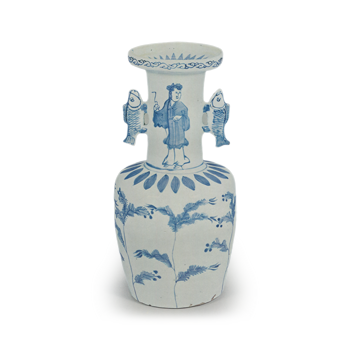
The water jar permanently displayed at the entrance of the Hatakeyama Memorial Museum, the fish-painted jar at the Hakutsuru Art Museum, and the Wanli-style face bowl—considered the finest summer water jar—are all of the same style.
Although not originally created with tea in mind, these pieces possess a mysterious tea-like quality, making them highly prized by tea masters.
This gourd-shaped vessel features a design painted in a “kakemono” style within a hexagonal frame, skillfully employing five colors: yellow, red, green, turquoise, and black.
In the lower section, a pheasant is depicted in the center, while the corners are meticulously adorned with arabesque patterns.
It is indeed worthy of being a favorite of the great tea master Masuda Don’o.