Accessories: Box, label, inscription by Priest Kokkei
Two accompanying letters: From Itamiya Sōfu to Hariya Sōshun, including a document detailing the history of Odawara
Paper bag, inscription by Sen no Rikyū
Dimensions
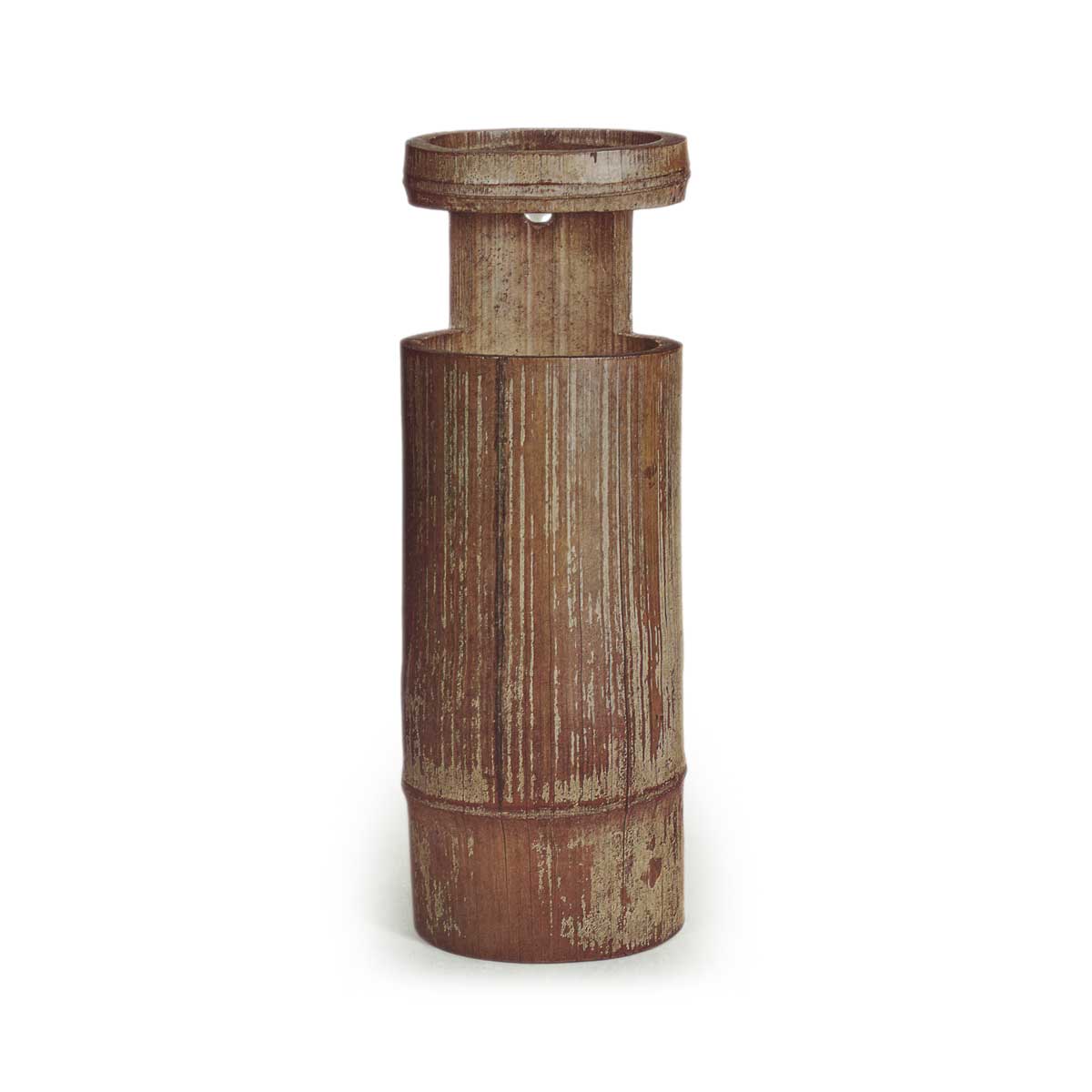
Height: 31.6 cm; Mouth diameter: 10.0–11.1 cm; Body diameter: 12.4 cm; Base diameter: 10.5–10.8 cm; Weight: 550 g
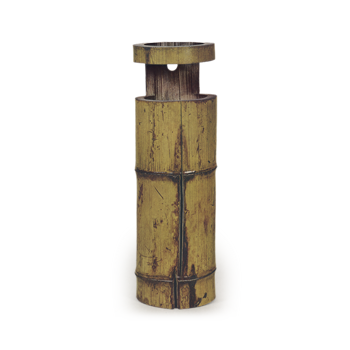
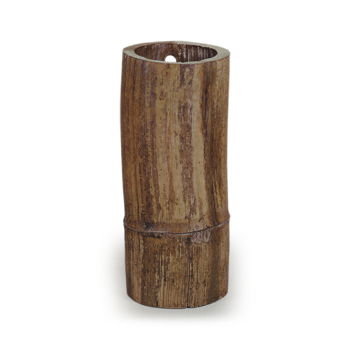
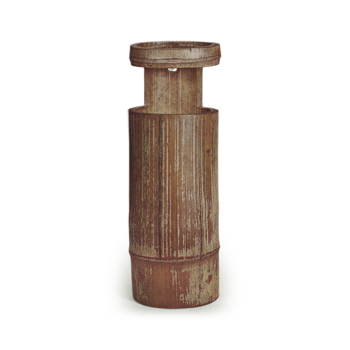
This flower vase is made of Nirayama bamboo and was undoubtedly created at the same time as the aforementioned “Onjo-ji.” Although it is also made of Nirayama bamboo, the quality of the bamboo is slightly inferior, and the dimensions are shorter.
Rikyu brought this back to Kyoto, placed it in a paper bag, inscribed “Odawara Kyu” on the label, and presented it to Kokkei Sochin of Daitoku-ji. Kokei later gifted it to Itamiya Shomu (Shinpu) of Sakai, and since then it has been used at every tea gathering as a family treasure of the Itamiya family.
By the time of Shomu’s son, Sōfu (Kyūkōan), a scroll detailing the vase’s history was commissioned from the monk Tenrin of Daitoku-ji.
Shobu subsequently sent this tube to Hariya Soharu in Kyoto. In the accompanying letter, it is stated that Rikyu remarked that the name “Odawara” was given to the tube because of its pot-bellied appearance. It is also noted that Shobu’s father, Shomu, explained that “Odawara” was a pun on the shape of the belly. It was once used at the inaugural gathering of the “Three Great Masters” in Nagoya. Passed down through the Masuda family.
Paper bag (partial) with inscription by Sen no Rikyu
Odawara
Rikyu
Accompanying Document: History of Odawara
Tube Name: Made by Rikyu. On the 14th day of the 11th month of the third year of the Hōei era (1706), Sakai Itamiya Shōmu purchased this tube; there is a certificate from Genzaemon. Possessed by Shinpōan; supervised by Yamatoya Dōkyō.
It is said that this Odawara tube was used when the elderly Rikyu, during Lord Hideyoshi’s campaign at Odawara, was seated in a small hut. He cut bamboo from Mt. Nira, placed flowers in it, and served tea to the lord. Thus, it is said to be the origin of the bamboo flower vase. Later, Rikyu brought it to Kyoto, placed it in a paper bag, wrote “Odawara Rikyu” on the tube, placed it in a box, and presented it to the monk Kokkei of Murasakino. The monk pasted paper on the lid of the tube, wrote “Odawara Tube Flower Vase” on it, and kept it. Later, he presented it to Itamiya Shomu of Senshu, who presented it to Shinsho. Upon receiving it, Shinsho’s descendants treasured it as a family heirloom, admiring it at every tea gathering. Later, Sofu of Kyuko-an requested a record from Priest Tenrin of Murasaki-no, and had it mounted as a scroll. This is the box bearing the inscription. Later, the Venerable Tetsuo of the same temple lent this tube to Sōfuku Sōken, the son of Haruya Sōshun. The letter and the label affixed to the box at that time remain as evidence.
The current owner is Sōnao of the Ōshio Okamoto family of Banshu. I have recorded this after hearing the account of its history. Preserved here.