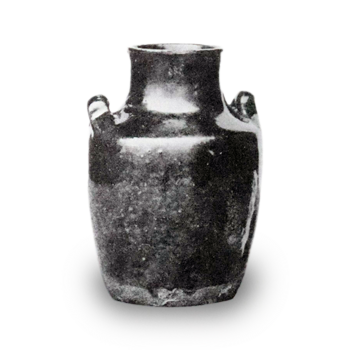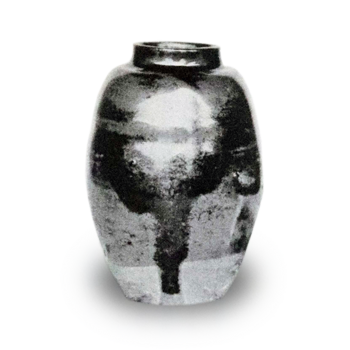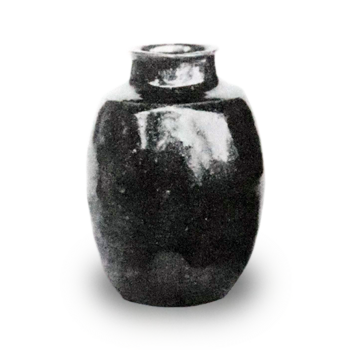
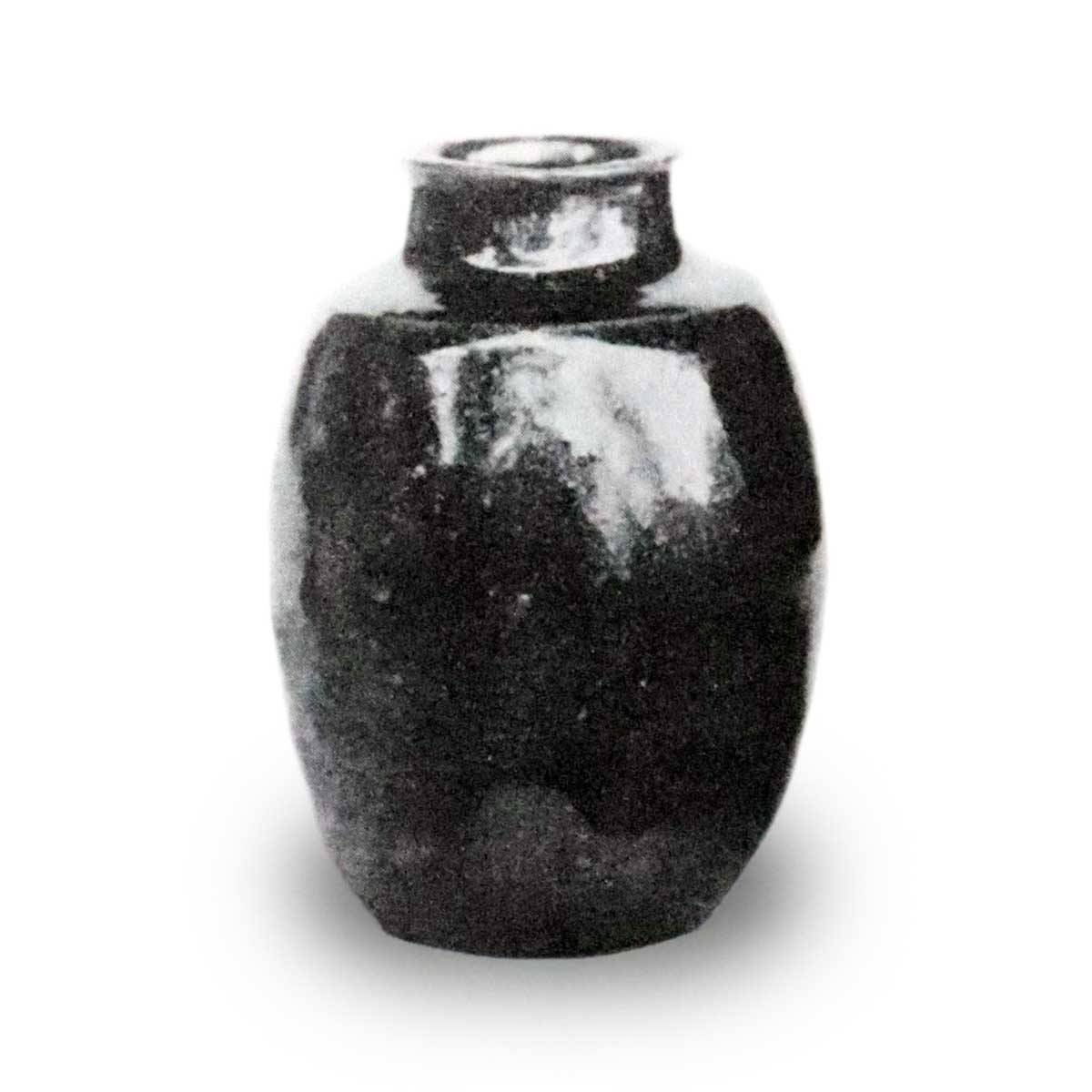
Chinese Import; Collection of Duke Motoaki Mōri
Name
An object shaped like a standing crane is called a “tsuru” (crane); one with a long neck is called a “tsuru-kubi” (crane’s neck); and a small crane is called a “tsuru-no-ko” (crane’s child). This tea caddy is, in fact, a Chinese “tsuru-no-ko.”
Dimensions
Height: Approx. 6.1 cm (2 sun)
Body diameter: Approx. 4.4 cm
(1 sun 4 bu 5 rin)
Mouth diameter: approx. 2.1 cm (7 bu)
Base diameter: approx. 2.4 cm (8 bu)
Height of the neck (koshiki): approx. 0.8 cm (2 bu 5 rin)
Shoulder width: approx. 0.5 cm (1 bu 8 rin)
Weight: approx. 59.3 g (15 monme 8 bu)
Accessories
・Lid: 1 piece, ivory
・Storage pouch: White ground with Kinran (lining: kabechoro; tying cord: purple)
・Pouches: 2
Striped Guangdong pattern (lining: kabechoro; tying cord: pale yellow)
Pale yellow ground with bamboo vine pattern (lining: umi-ki; tying cord: purple)
・Storage box: Paulownia, natural wood
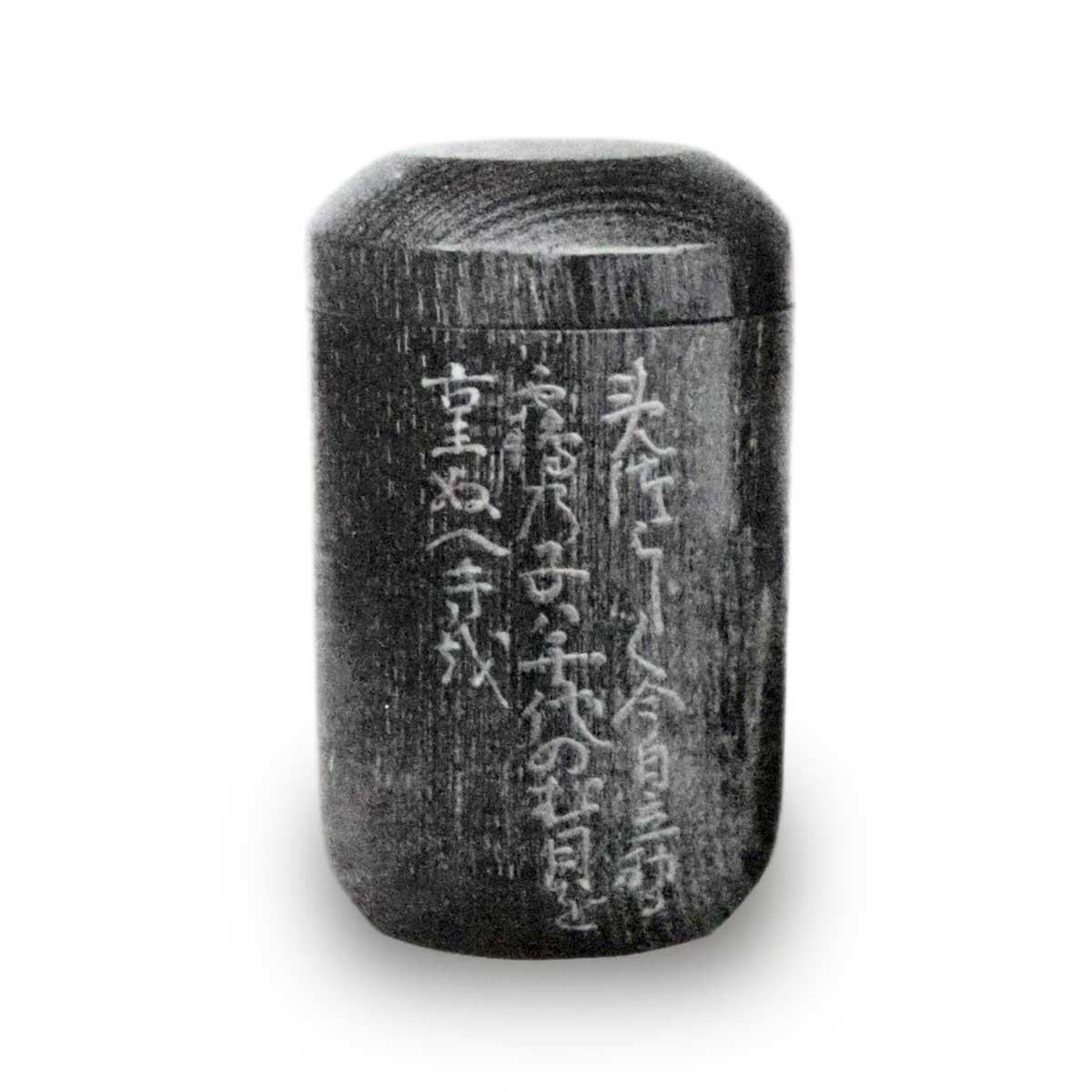
・Hikiya (a tube for storing the tea caddy): White-wood Japanese zelkova; the lid and body are inscribed with a waka poem in gold leaf
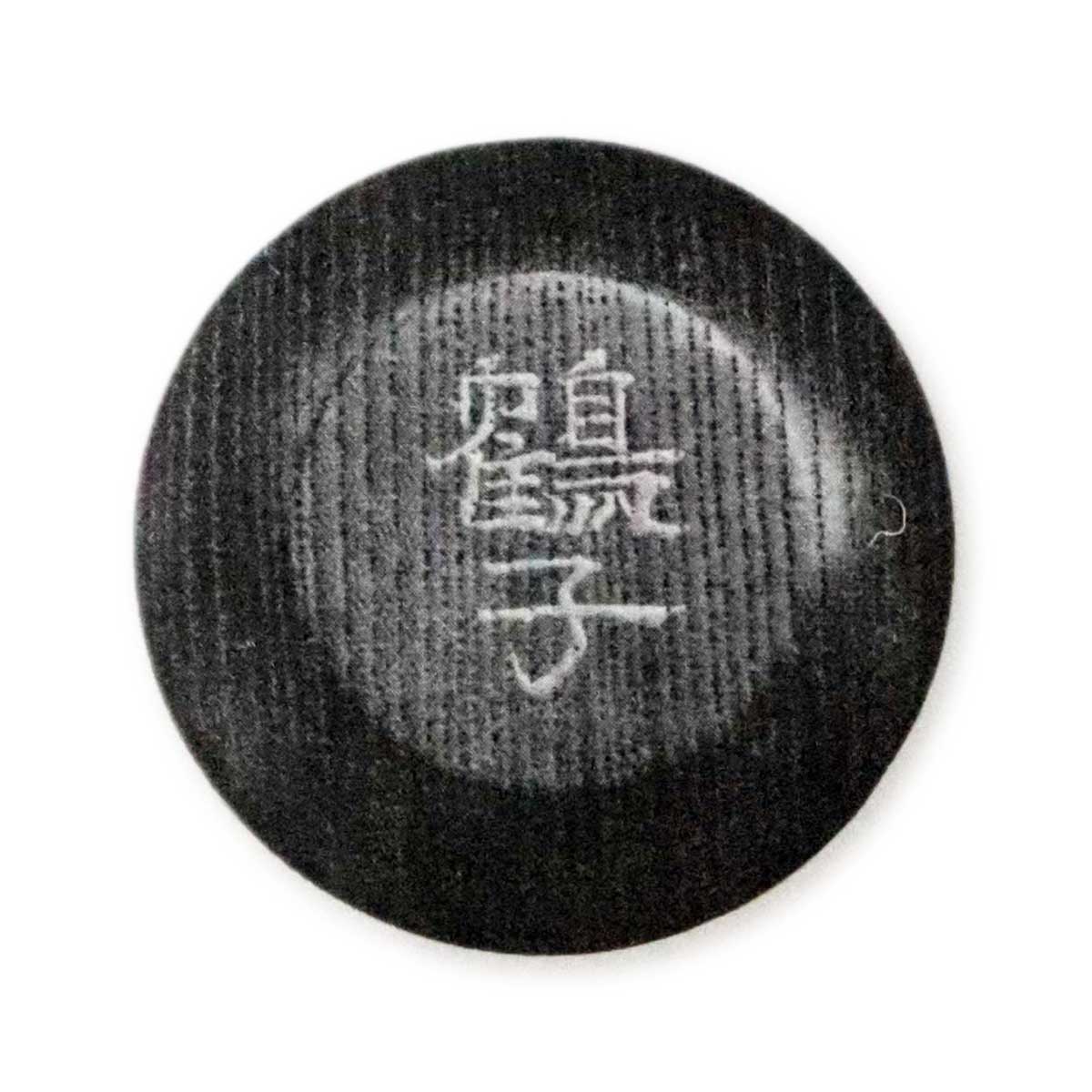
“Tsuruko”
(Encircled in a circle) Tsuruko
Waka poem inscribed on the body
“How rare it is—the crane’s chick, rising for the first time today, may it pile up a thousand Sen Chiyo months of harmony.”
Pouch: Striped satin (lining: umi-ki; tying cord: onado-iro)
・Inner box: Paulownia; vermilion rubbed lacquer (shu-momi-ai-nuri)
The two characters “Tang ware” are inscribed on the colored paper on the underside of the lid
・Outer box: Paulownia; natural wood
Record of Actual Inspection
On September 21, Taishō 10 (1921), I viewed the actual object at the residence of Duke Motoaki Mōri in Takanawa Minamichō, Shiba Ward, Tokyo.
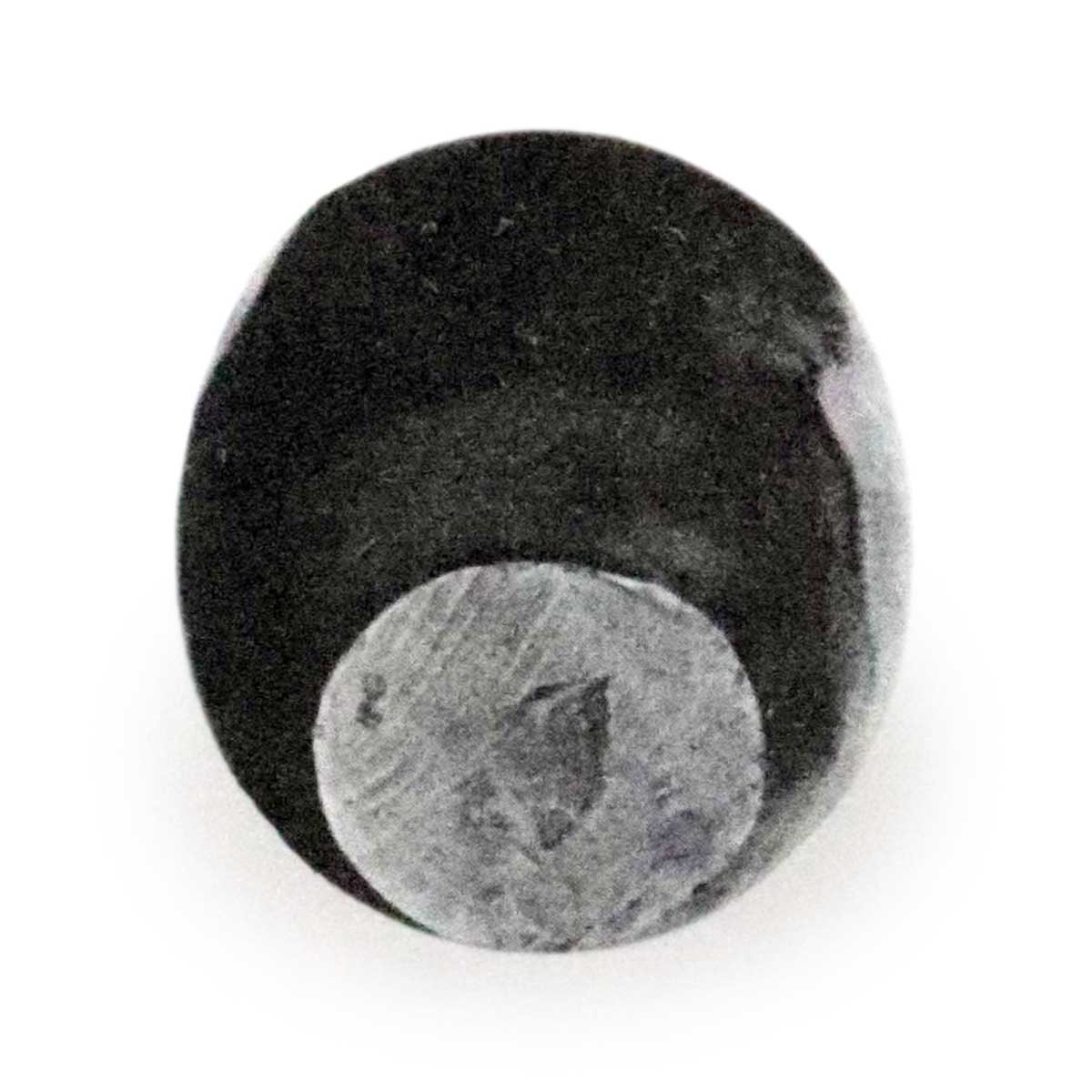
The mouth is small with a shallow rim. The base protrudes outward, the shoulders jut out distinctly, and the body is slightly rounded. From the waist down, the clay is vermilion-colored; the flat bottom features numerous fine vertical striations, and the clay in the center is slightly chipped away.
Overall, the black amber glaze is interspersed here and there with a persimmon-gold hue (a persimmon color with a metallic luster), creating an exceptionally beautiful sheen, with a hint of blue-lapis lazuli color appearing around the rim. Inside, the glaze covers the rim, while below that, the wheel marks are coarse and irregular, and the bottom is flat. The clay has an extremely fine grain, and it feels remarkably heavy in the hand; it is likely the work of the Tenmoku kiln. It is compact and completely free of flaws, and belongs to the smallest category of tea caddies—which is likely why it is named “Tsuru no Ko” (Crane’s Child).