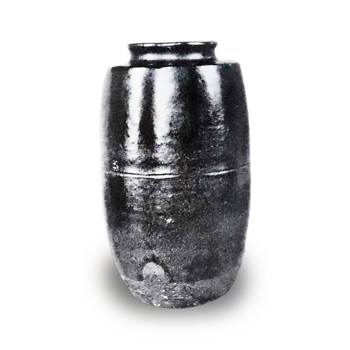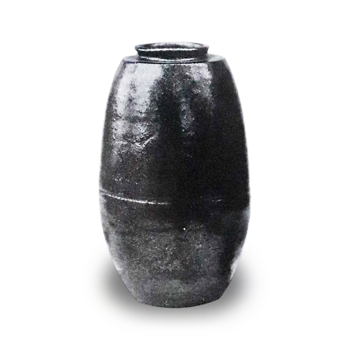
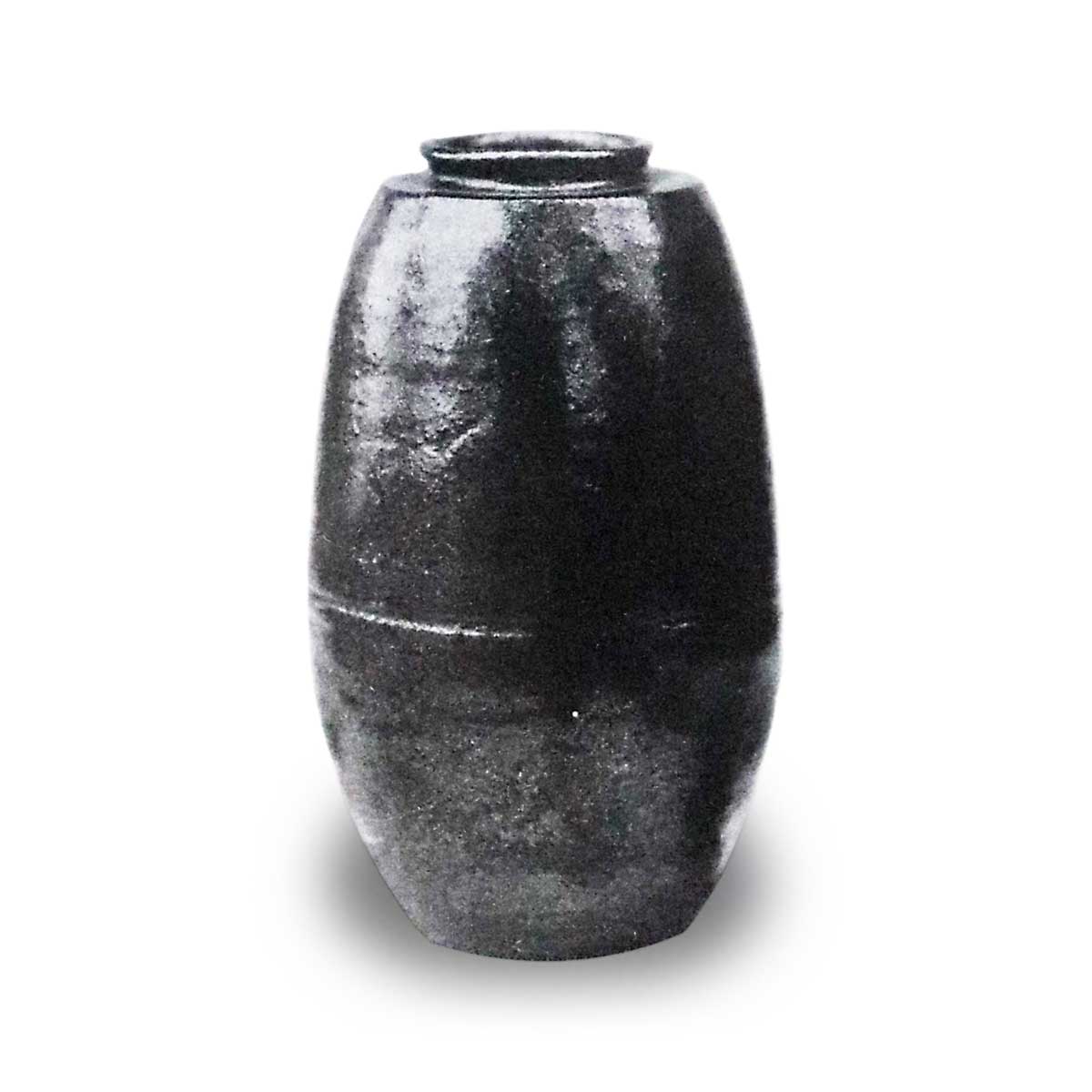
Old Seto—Daimeibutsu—Collection of Count Tadamasa Sakai
Name
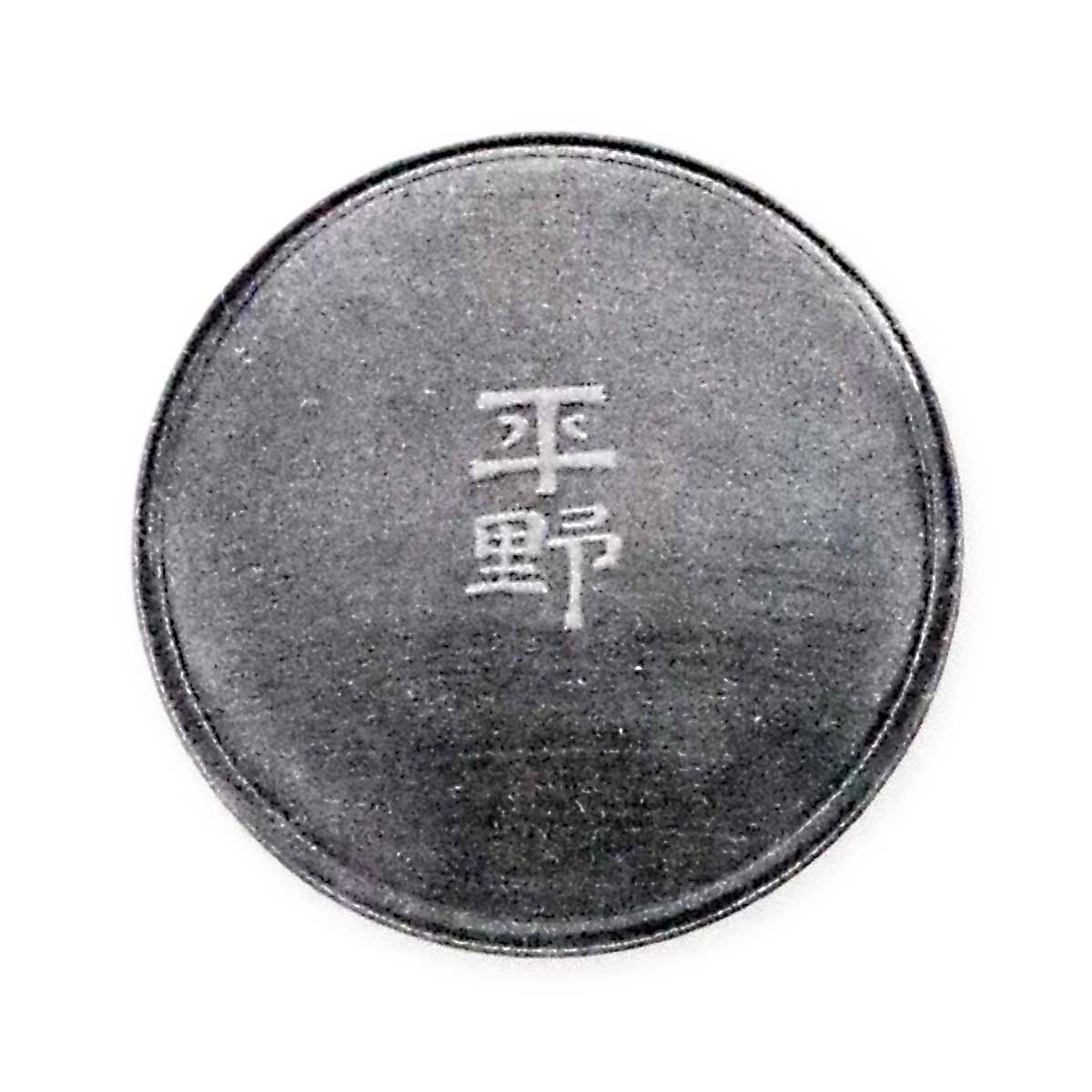
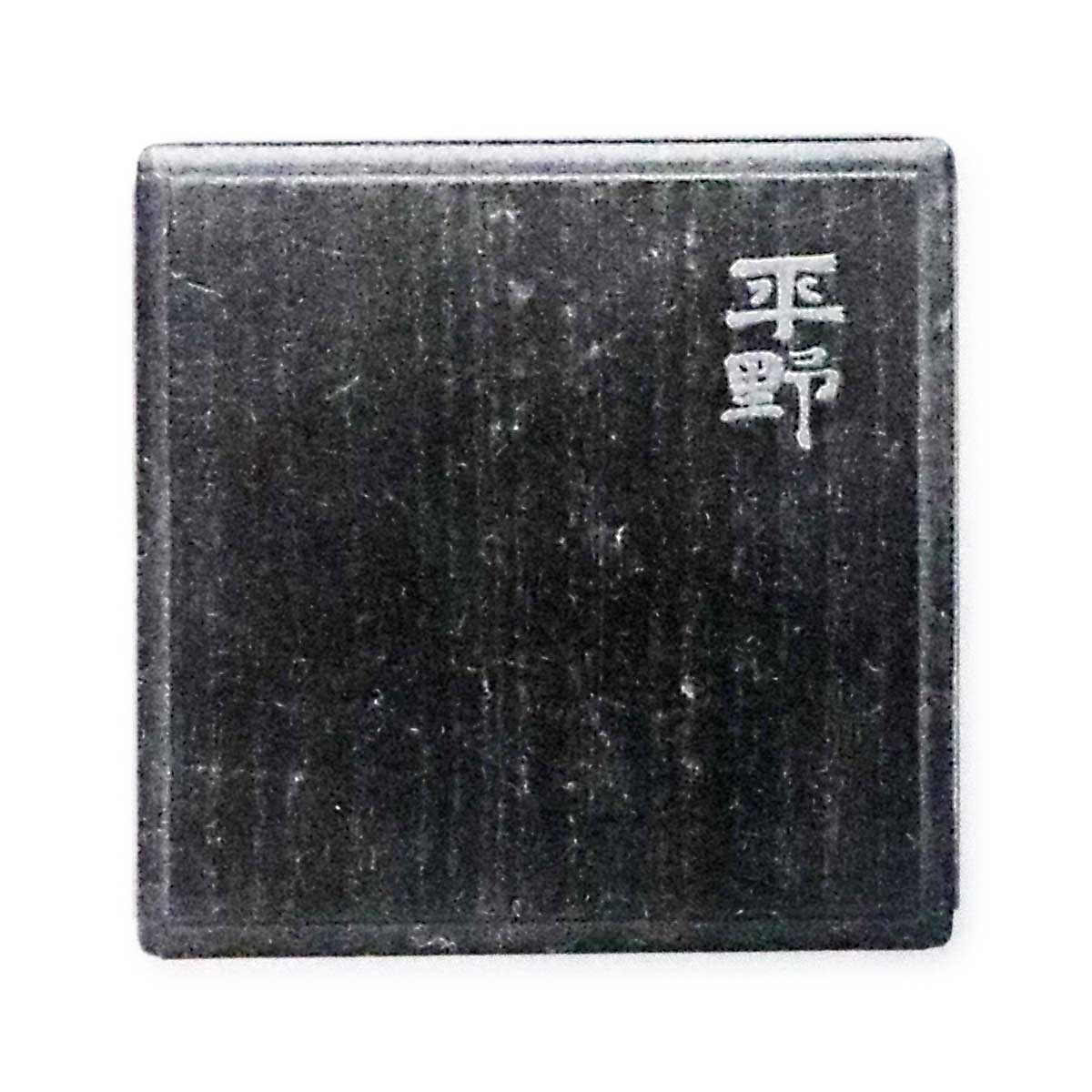
During the Tenshō era (1573–1592), Hirano Dōze owned a Chinese tea caddy known as “Hirano Katatsuki,” and this Old Seto tea caddy was likely also owned by the same person. The Yukimagusa Sado Wakukai states, “In the past, it was owned by Hirano; before that, it was owned by Inaba Tango-no-kami.”
Dimensions
Height: Approx. 12.27 cm (4 sun 0.5 rin)
Body diameter: Approx. 7.42 cm (2 sun 4 bu 5 rin) (Measured at the cord/belt section)
Mouth diameter: approx. 3.48 cm (1 sun 1 bu 5 rin)
Base diameter: approx. 4.55 cm (1 sun 5 bu)
Neck height: approx. 0.55 cm (1 bu 8 rin)
Shoulder width: approx. 0.61 cm (2 bu)
Weight: approx. 198.38 g (52 monme 9 bu)
Accessories
・Lids (teapot lids): 4 pieces
(Rikyu-style, Enshu-style, Oribe-style, Sekishu-style)
・Lid box: Unfinished paulownia wood box, with an inscription by Matsudaira Fumai
(“Hirano Lid,” “Hirano Shoulder-Strike”)
・Storage pouch: Pale yellow (light blue-green) habutae silk
・Cases (covering pouches): 2
- Kongō-gire fabric, lined with “hechoro,” with purple cords
- Keitō-gire fabric, lined with iridescent green, with kuzureki (pale yellow) cords
・Case for the pouches: Unfinished paulownia wood box
The interior has four compartments; currently, two pouches are stored inside.
(Note) The Sekishū Kaganroku lists a total of four pouches—including Kongō and Keitō, as well as “Yasōemon-gire” and “Kamiyanagi-gire”—so it is believed that two of them are currently missing.
・Hikiya (wooden box for a tea caddy): Made of karin wood; characters are written in gold powder on the lid.
(Inscription by Kobori Enshū, “Hirano”)
Hikiya pouch: Arisugawa Donshu; lined with Iro-kae Donsu; brown cord
・Outer box: Paulownia wood box, Shunkei-nuri lacquer finish, with characters written in gold powder.
(Inscribed “Hirano” by Kobori Enshū)
Miscellaneous Notes
Hirano (Kose-to, Chuko Meibutsu, Fuyuki). Height: approx. 12.36 cm (4 sun 8 rin), body diameter: approx. 7.42 cm (2 sun 4 bu 5), mouth diameter: approx. 3.27 cm (1 sun 8 rin), base diameter: approx. 4.39 cm (1 sun 4 bu 5). The pouch features a Kongō-giri cut (with a lining of Umi-ki), the handle is a Hikiya style, the inscription is by Sōfu, and the gold clasp bears the characters “Hirano.” The pouch is made of “Makai” (a type of woven fabric), with a diamond pattern (the lining features a checkered flower-and-bird pattern in five-color satin). The tea box is finished in Shunkei lacquer, and the inscription, written in gold paint (kin-de), reads “Hirano.”
(From Kokin Meibutsu Ruiju)
(Note) While the Hirano Katatsuki is listed in the “Old Seto” and “Revival Masterpieces” sections of Kokin Meibutsu Ruiju, the inventory of tea utensils (dogu-tsuki) that Matsudaira Fumai handed down to his son Gettan in Bunka 8 (1811) classifies it under the “Daimeibutsu” section.
Hirano (Owned by Inaba Tango-no-kami. The descriptions of dimensions and accessories are the same as in Kokin Meibutsu Ruiju.)
(From Meibutsu-ki)
Hirano (Old Seto. Owned by the Lord of Unshu (Matsudaira Fumai) and Matsui Shōzaburō. It features a persimmon-colored base covered with black glaze, with glaze runs and a strong metallic luster; white clay (shirotsuchi) was used. It is coated with a water glaze (transparent glaze), and the thread-cut pattern on the bottom is fine. It appears as if black sesame seeds have been scattered across the surface, and there are two ridges below the body. The handles are of the “chicken head” and “Vajra” styles. It includes dimensions, a description of the accessories, and an illustration of the tea caddy.)
(From Rinpō-kuryū)
Hirano (Ōseto. Hon-ito-kiri, water glaze. Includes a description of the accessories and a detailed illustration of the tea caddy.)
(From Kichimasu’s Illustrated Guide to Gansōan Tea Caddies)
Hirano Katatsuki (Seto. Owned by Fuyuki Kiheiji. It has four lids; of these, the Rikyu-style and Soho-style lids feature “kō” (holes), while the Oribe-style and Sekishū-style lids do not. It comes with three pouches (Keito, Dōtō Kongō), and the handle is made by Hikiya (Tagayasan), with the inscription “Hirano” written in gold powder by Kobori Enshū. The pouch is of the Arisugawa style (with a stone-paved lining), and the satin box features a meticulous beveled edge; the inscription “Hirano” is written in gold powder by Enshū. The Sanada cord features a white and navy stripe pattern. The overall color is persimmon-brown with a golden sheen, and the upper portion is purplish-black. The mottled pattern shifts in extremely fine details, creating a magnificent effect. It is glazed in a mouse-gray color, with red water glaze appearing in the areas where the glaze has pooled. The thread-cut pattern on the base is extremely fine. The rim is shaped like a “hana-sakana” (a tight, beautiful form), and the base of the neck has a slightly indented shoulder. The shoulders have a slightly substantial feel, and the shoulder tips have been skillfully carved with a sharp blade, creating a magnificent finish. From the body downward, there is a slightly tapered “giri” (taper). An illustration of this meticulously crafted tea caddy is included.)
(From Fushimiya Meibutsu Chaki-zu and Hoki)
Hirano (The base glaze is persimmon-colored, and the upper glaze is black. The mottling across the entire surface transitions with extremely fine detail, creating a magnificent effect. There is a golden sheen throughout, and the base features a “hon-ito-kiri” finish. The craftsmanship of the shoulder is truly superb. Includes dimensions, a description of the accessories, and an illustration of the tea caddy.)
(From Detailed Record of the Kamio Family’s Utensils)
Hirano Katatsuki (Ōseto. The rim is thin; this is an Ōseto piece crafted by a master artisan. It lacks an amber-colored glaze. The persimmon-colored base features black sesame-like speckles and a golden sheen, with an asymmetrical design (where the appearance differs between the left and right sides). It has water glaze. Overall, the glaze appearance resembles that of black Raku; the thread-cut pattern on the bottom is fine, and water glaze covers the rim of the base. The clay body is beautifully visible along the tatami-zuri (the rim of the base), and there are 53 thread-cut lines.)
(From Shuan Bunko, Series A, No. 9)
Hirano (Owned by this individual from Bunsei 7 (1824) onward. Includes illustrations of the lid and the tea caddy. Other descriptions are largely the same as those in the aforementioned Fushimiya Hoki Meibutsu Chaki-zu.)
(From Shuan Bunko, Series A, No. 7)
Hirano (O-Seto. Formerly owned by Lord Inaba Tango-no-kami, it has now passed to the Fuyuki family. The colors have a lustrous sheen. Height: approximately 12.42 cm (4 sun 1 bu). It comes with four lids (Rikyu, Oribe, Enshu, and Sekishu). The pouch is a Yazaemon-style kan-ko with a cock’s-head cut. The inscription on the box is by Kobori Enshu.)
(From Sekken-sō: A Guide to the Mysteries of the Tea Ceremony)
Hirano Katatsuki (Old Seto. Passed down through Inaba Shun’ō and Ueda Sōgo; currently owned by Lord Unshū (Matsudaira Fumai). Bears an inscription by Kobori Enshū.)
(From Famous Meibutsu of the Sen Family’s Revival)
Hirano (Ōseto. Owned by Inaba Tango-no-kami and Fuyuki Kiheiji. The box is finished in Shunkei lacquer with a gold-powder inscription; the inscription, along with the name of the maker, is in the hand of Kobori Enshū (Sōfu). It includes details on dimensions and accompanying accessories.)
(From Chaki Meibutsu Zui by Kusama Waraku)
Hirano (Originally owned by Inaba Tango-no-kami. Along with “Yari no Saya,” “Hasegawa,” and “Ikoma,” it is counted among the “Four Great Seko” [Daimeibutsu katatsuki tea caddies] of the realm. It comes with two pouches, four lids, and an inscription by Kobori Enshū.)
(From Sekken-sō by Toda Ro’in)
Hirano Katatsuki (Along with the “Ikoma Katatsuki” and “Hasegawa Katatsuki,” it is considered one of the three Meibutsu of O-Seto ware.)
(From the Fushimiya Kaku-chō (Fushimiya Ledger), Kansei 2)
Hirano (An Old Seto piece. It dates from the same period as “Yama-no-i,” “Ikoma,” “Yari no Saya,” “Otori,” and “Shimayama,” and furthermore, it shares the same technique and glaze characteristics as “Yama-no-i” and “Ikoma.”)
(From The Origins of Seto Pottery by Matsudaira Fumai)
Hirano Katatsuki (Old Seto. It is listed in the “Kirin” section of the Daimeibutsu [Record of Famous Works]. It also appears in the “Phoenix” section of Rin-Hō-Kame-Ryū [Phoenix, Dragon, Tortoise, and Dragon].)
The bag features Kongō-giri, Yasōemon-kangō, Keitō-giri, and Kamiyanagi-giri cuts.
(From Sekishū-ryū Kagenroku [Record of Observations on the Sekishū School])
Noon, October 12, Bunka 11 (1814) — Kuchikiri Tea Ceremony at Dokuraku-an
Guests: His Lordship (Matsudaira Gettan), Nezu Sosei
Host: Matsudaira Fumai
(Mediator/Attendee): Fushimiya Jinbei
- Hanging Scroll: Calligraphy by Zen Master Nanso
- Flower Vase: Sekishū Ichijū-giri
- Tea Jar: Hirano (with a bag in Keitō-giri style)
- Tea Bowl: Akikaze, Tamago-de style
(From Daikoku-an Kaiki)
Daimeibutsu
- Rokujō Katatsuki (Kose-to) 1. Hasegawa Bunrin (Chinese import) 1. Yama-no-i (Ōse-to)
- Honno-ji Bunrin (Chinese import) 1. Kamiya Katatsuki (Ōse-to) 1. Enjōbō (Ōse-to, with Matsuki tray)
- Iki Katatsuki (Chinese)
- Hirano (Ōseto) (omitted below)
These are Meibutsu renowned throughout the land and should be cherished and cared for for generations to come.
September of the Year of the Goat, Bunka 8 (1811)
To Dewa-no-kami (addressed to Gettan)
Fumai (Seal)
(From Unshū Matsudaira Family Documents)
History
Originally owned by a certain Hirano, it later passed from Inaba Tango-no-kami to Ueda Sōgo, known as Fuyuki in Edo. From there, Lord Matsudaira Fumai acquired it; this tea caddy is listed in Lord Fumai’s handwritten inventory of tea utensils (Dogu-tsuki) from Bunka 8, and was also used at the Kuchikiri tea ceremony in Bunka 11. However, since the book Rinpō Kiryū (Lion, Phoenix, Tortoise, Dragon), written by Motoya Ryōun, states, “Hirano was the Lord of Unshū; now it is Matsui Shōzaburō,” it is believed that this tea caddy subsequently passed to the Matsui family and was later entrusted by them to the Sakai family of Himeji.
Record of Actual Observation
On December 5, Taishō 9 (1920), I had the opportunity to view this piece in person at the residence of Count Tadamasa Sakai in Haramachi, Koishikawa Ward, Tokyo.
The rim is relatively small, the rim’s fold (niri-gaeshi) is shallow, and the neck is extremely low. The shoulders are sharply angular, with some areas slightly chamfered. The body is full-bodied, with a single thick, sunken ridge running all the way around it, and it tapers slightly toward the rim.
Around the base, a thick layer of black glaze covers a persimmon-colored purple glaze; in particular, there is a section where the black glaze cascades down from the tip of the shoulder, containing a hint of gold within the black, and reaches all the way to the rim. The black color where the glaze has pooled is particularly beautiful, and the areas where the black glaze predominates naturally contrast with those where the purple glaze predominates, creating a “katamigawari” effect that adds a particularly intriguing visual appeal to the tea caddy.
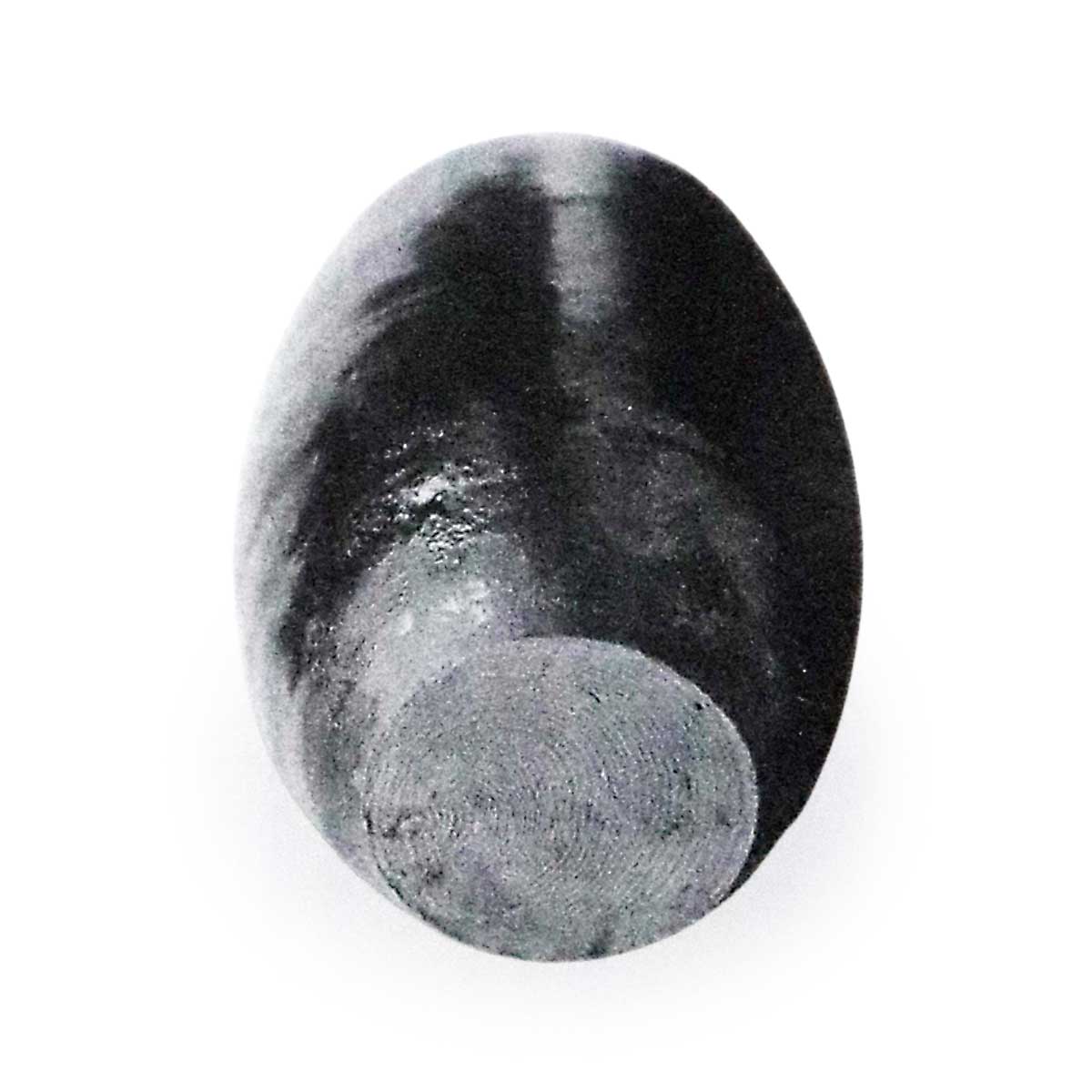
Additionally, persimmon-colored streaks with a hint of gold run from both sides of the shoulder, resembling the rungs of a ladder, and in some places, they extend up to the cord-like indentations (sunami-suji) on the body before stopping. From the rim downward, there are areas where the clay body is visible through the reddish water glaze (transparent glaze). Apart from some repairs (restoration) on the rim, the piece is generally intact. The interior is glazed at the rim, while the rest is covered entirely in a water glaze. The wheel marks are coarse and evenly distributed, and a distinct, spiral-shaped mark from the thread-cutting tool stands out clearly in the center of the base. It exudes a dignified and stately presence, making it a magnificent tea caddy imbued with the spirit of the Tenshō era.