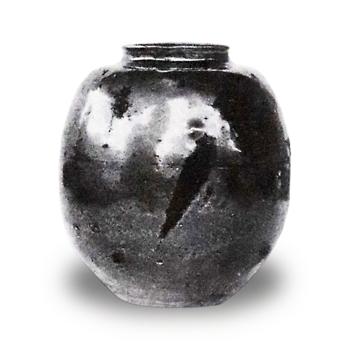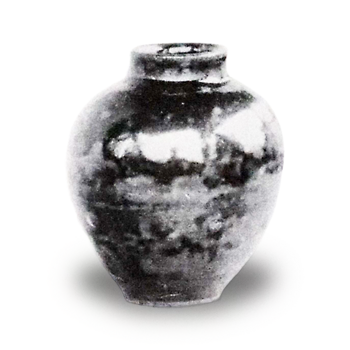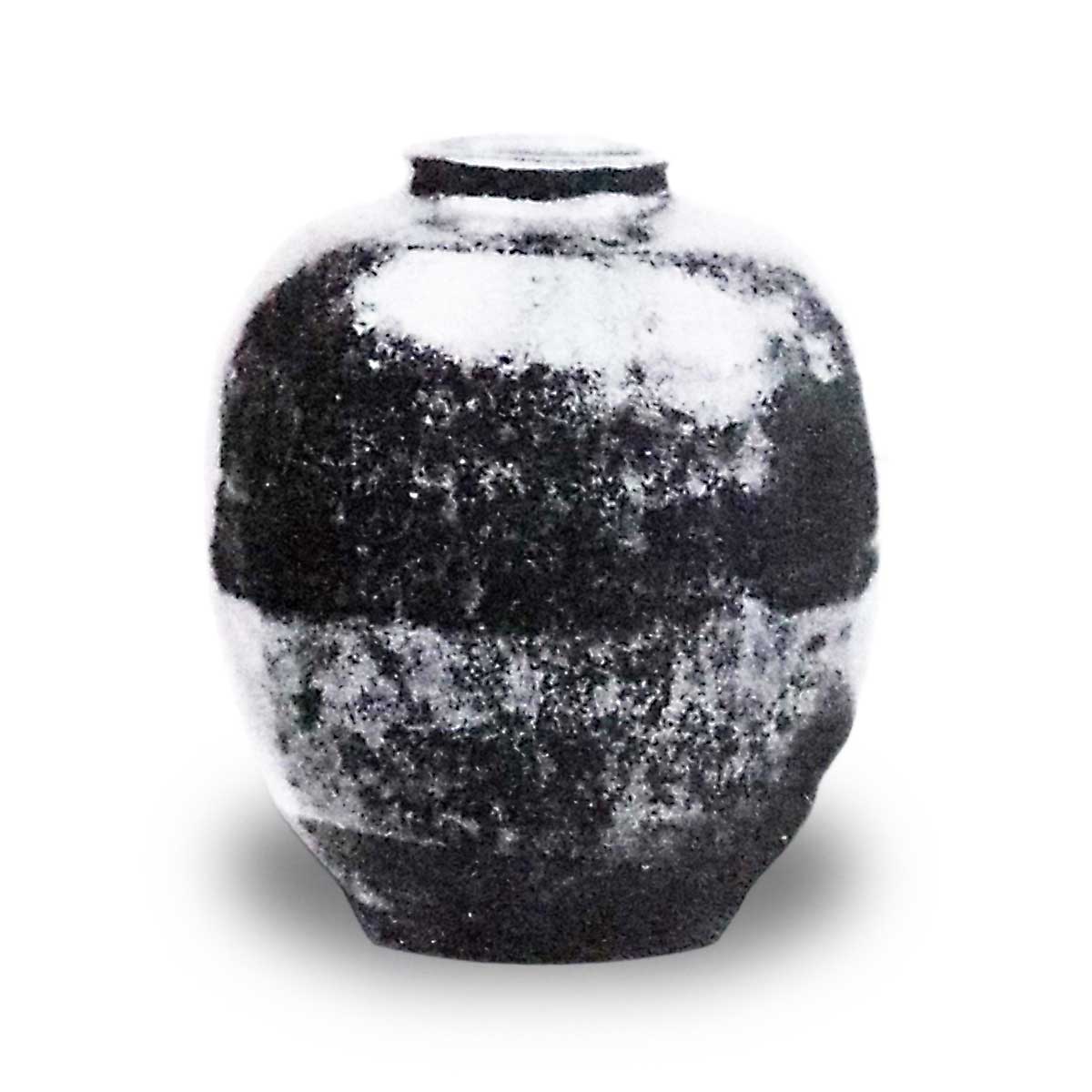
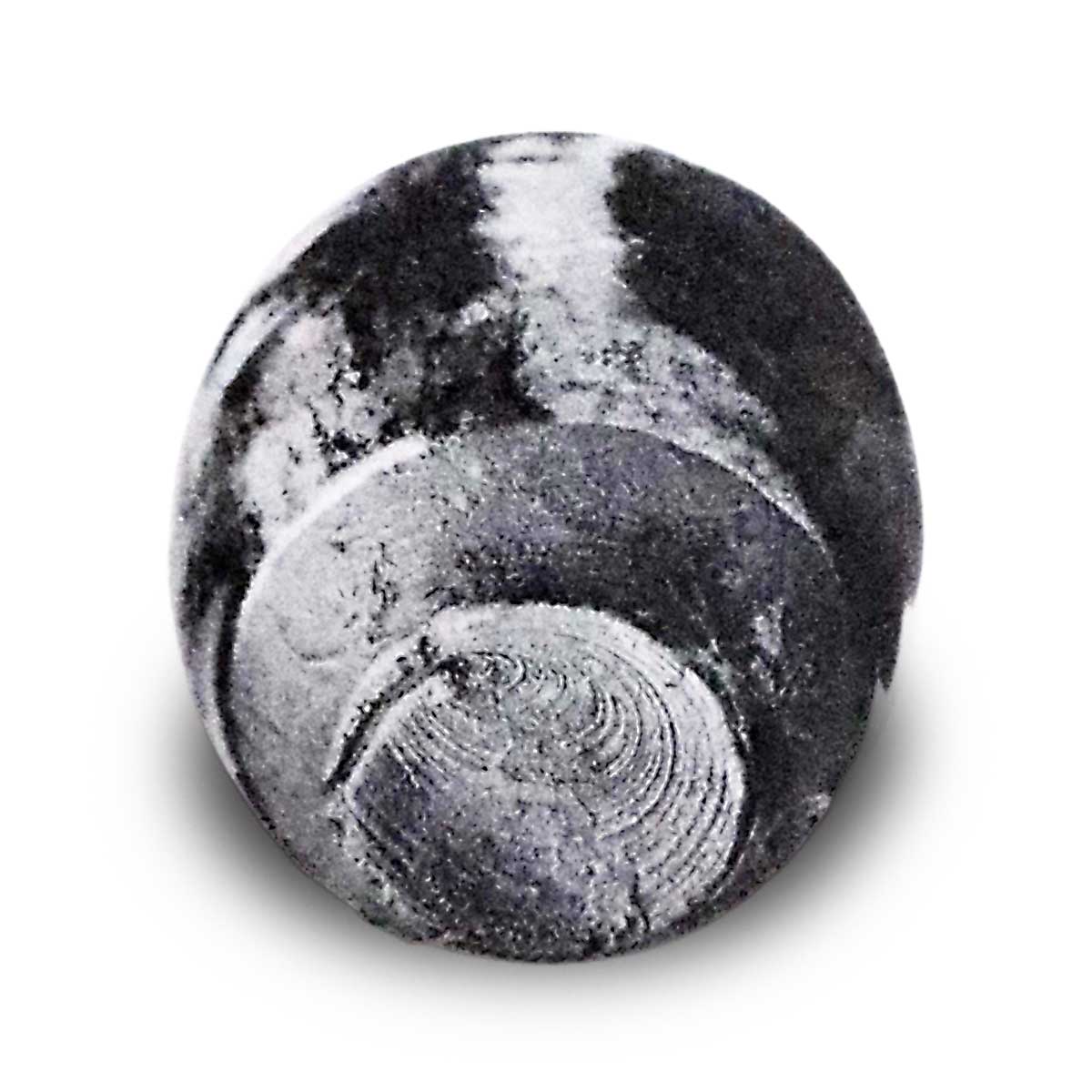
Former Name: Bunrin Murasame
Classification: Kose-to / Daimeibutsu
Collection: Tokyo, Collection of Mr. Kyohei Magoshi
[Dimensions]
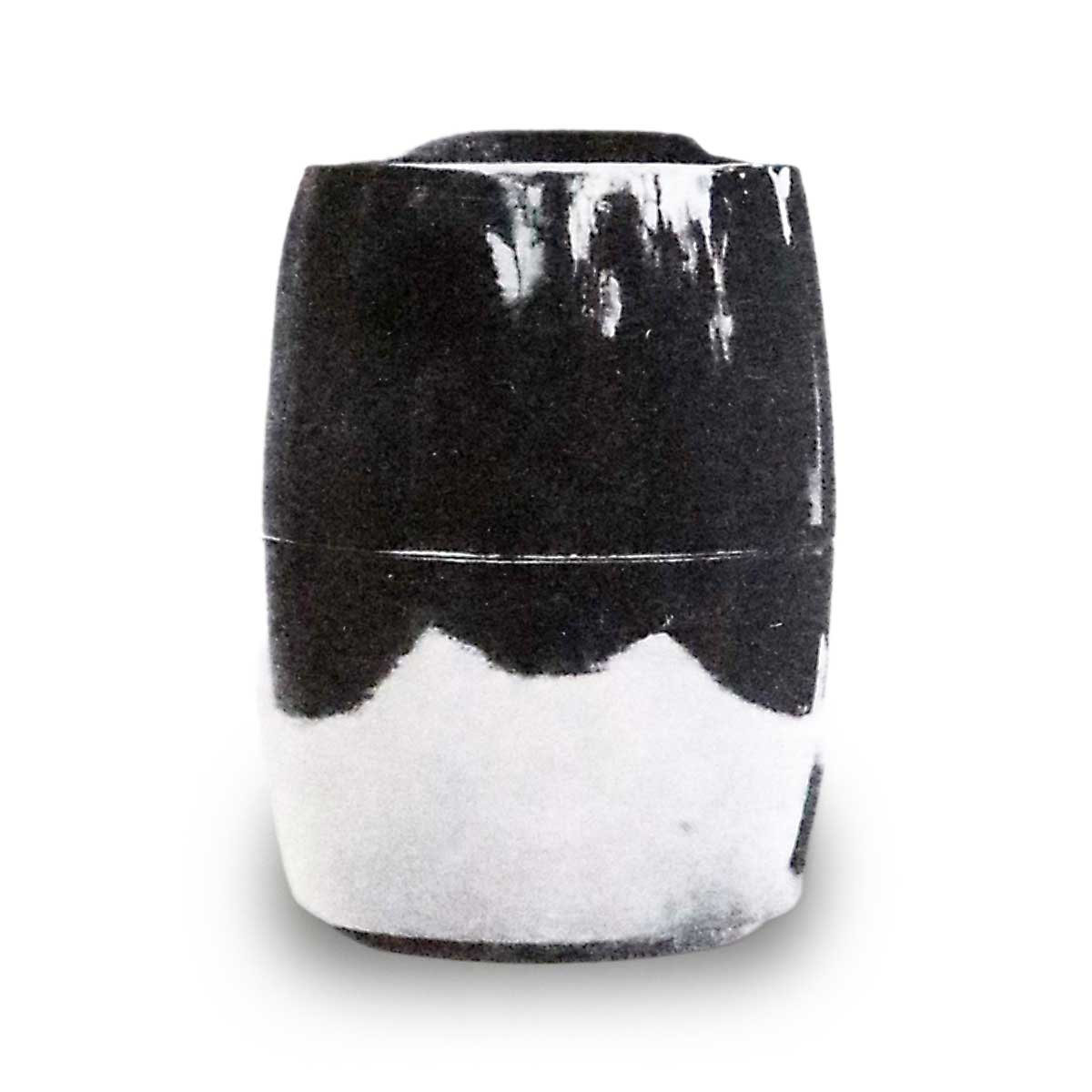
・Height: Approx. 7.6 cm (2 sun 5 bu)
・Body Diameter: Approx. 6.6 cm (2 sun 1 bu 7 rin)
・Mouth Diameter: Approx. 2.4 cm (8 bu)
・Base Diameter: Approx. 3.5 cm (1 sun 1 bu 5 rin)
・Rim Height: Approx. 0.4 cm–0.5 cm (1 bu 2 rin–1 bu 5 rin)
・Weight: Approx. 100.1 g (26 monme 7 bu)
[Accessories]
・Lids: 3 pieces
- Kawa-ki Tamabuchi (rim with beads along the side of the bowl): In the style of Kamio Shogen; artist unknown
- Bowl (Ka): In the style of Kamio Shogen; made by Ryusa
- Bowl without inlay (no inlay): An accessory from long ago; artist unknown
・Storage pouch: Tea-colored chirimen
・Covering pouches: 4 pouches
- Faded yellow ground with small stone-paved pattern and gold accents; lining is iridescent kabechiyoro; cord fasteners are pale yellow
- “Old Gold Lantern, Flower, and Rabbit” (Kokinran Hanausagi), lined with peach-colored kabechiyoro, cord fasteners in wisteria purple
- “Bamboo Vine, Donshu” (Sasazuru Donshu), cord fasteners in light blue
- “Shogendo Cloth” (Shogendo no Gire), lined with “Dew Tea, Sea Mist” (Tsuyu-cha Kaiki), cord fasteners in wisteria purple
・Divider Box: Paulownia, natural wood (holds 6 dividers, 4 pouches, and 3 lids)
・Hikiya: Black lacquer, crafted by Mori-ami
- Hikiya Pouch: Brown fusube leather, with wisteria-colored cord
・Hikiya Box: Paulownia, natural wood, with calligraphy by Kobori Enshū
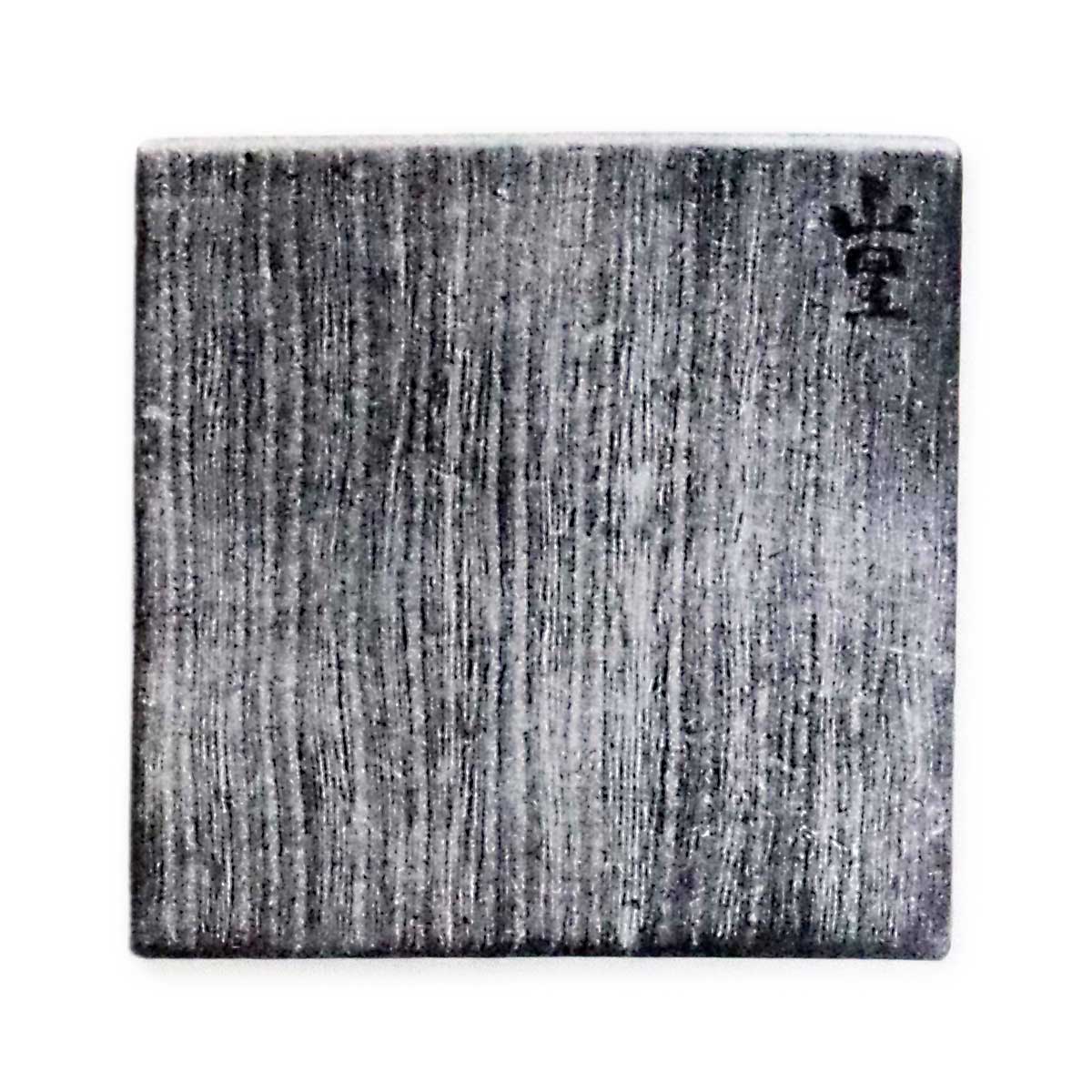
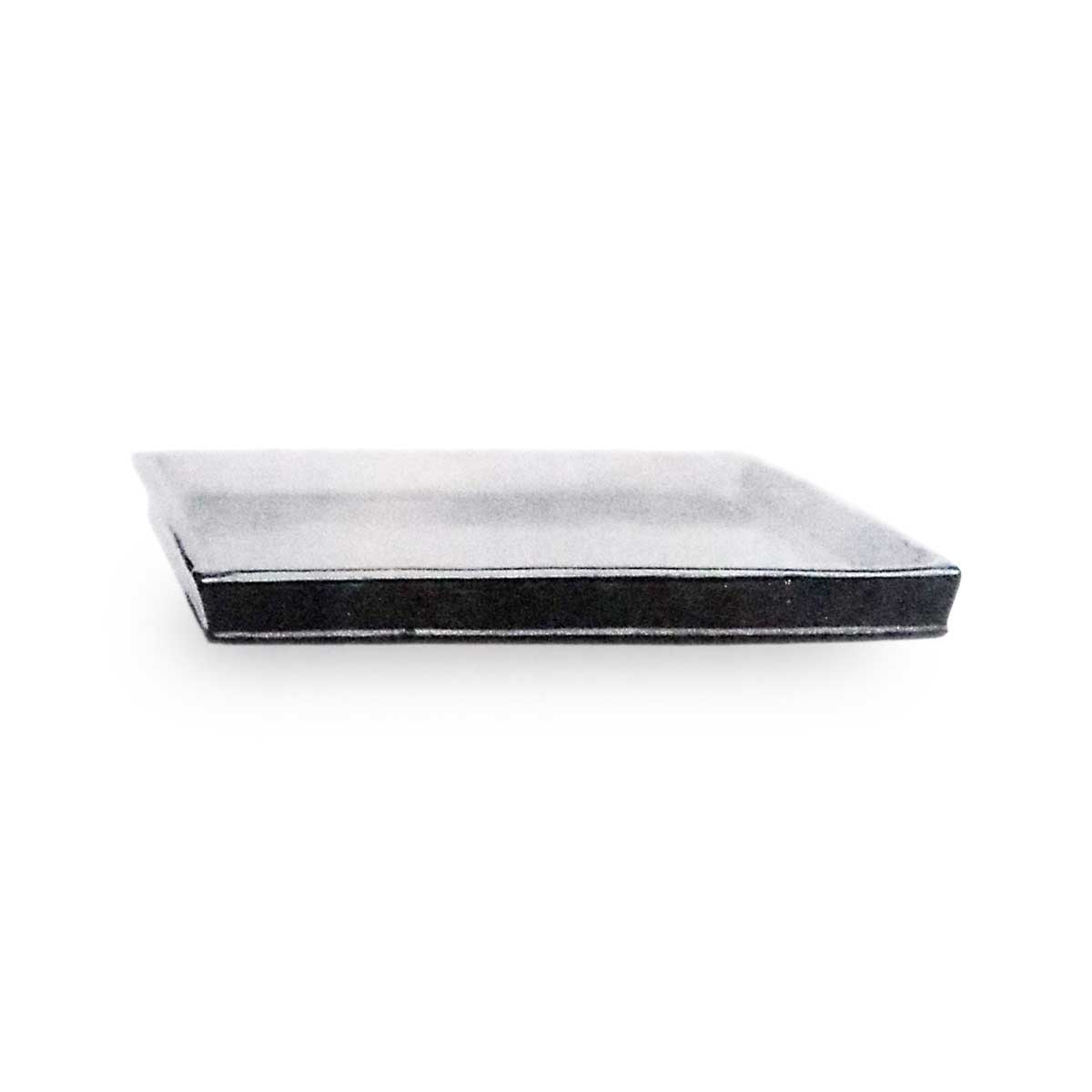
・Supporting Tray (Soebon): Square tray, interior lacquered red
- Diameter: Approx. 18.8 cm (6 sun 2 bu)
- Rim width: Approx. 0.6 cm (2 bu)
- Inner bottom diameter: Approx. 16.4 cm (5 sun 4 bu)
- Bottom diameter: Approx. 18.2 cm (6 sun)
- Height: Approx. 2.0 cm (6 bu 5 rin)
- Soebon box: Paulownia, natural wood
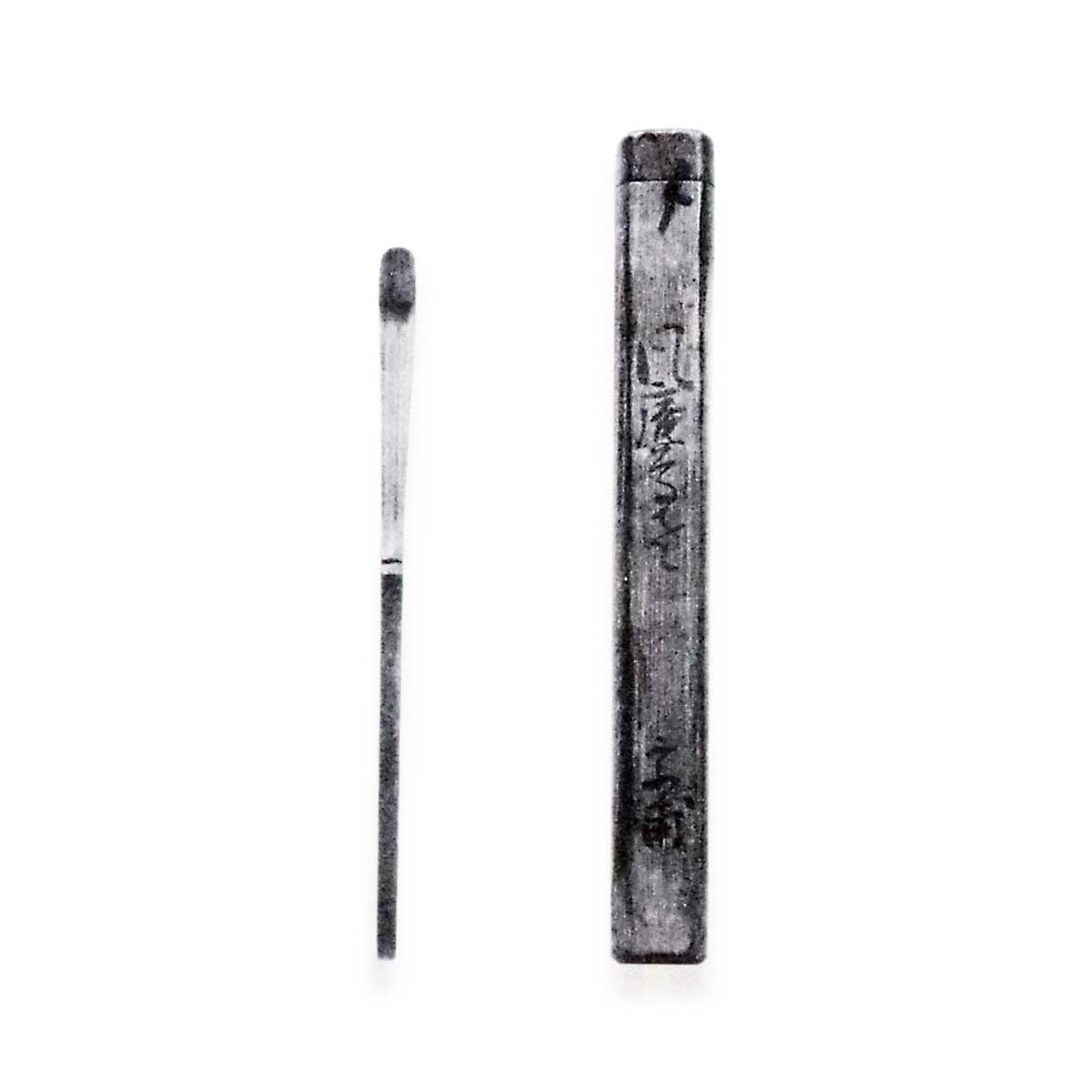
・Soetake Shaku (bamboo scoop): 1 piece, with accompanying bamboo tube
- The inscription on the tube is as follows
[Inscription on the wrapping paper]
“Bokufūan Sonrō Sōho”
“Made in Enshū; with a bamboo rim (Fuchi-take); paired with a Yamazato katatsuki; presented by Lord Kamio Sahei; when this tea caddy, requested by Kato Fu-an, was passed down, it came with this inscription on the tube; designated as a ‘Meibutsu’ (famous artifact)”
・Accompanying documents: 2 letters
[1] “The History of the Yamazato Tea Caddy”
This tea caddy was named “Murasame” by Sen no Rikyū. Later, when Kato Fu’an came to own it, he renamed it “Yamazato.” It is said that the name was derived from a waka poem by Jien in the Shin Kokin Wakashu:
“In the mountain village, composing a poem alone, I reflect on the strength and resilience of the hearts of those who live in this world.”
(While composing a poem alone in the mountain village, one contemplates the strength and resilience of the hearts of those who live in this world.)
It is said that the name was taken from this waka poem.
[2] “Inscription by Yoshikawa Kōji (July 13, Taishō 5)”
“Yamazato” (formerly known as “Murasame Bunrin”) is listed in the Kokin Meibutsu Ruiju as a top-grade ancient Seto ware, valued at 30 me, made by Tatesa (descriptions of dimensions and accessories omitted).
Sent by Lord Kamio Saburō. Formerly owned by Rikyu, then by Kato Fu’an, and later by Kamio Sho’en. The accompanying document is as described above. The box was inscribed by Soho (Kobori Enshu). The accompanying tray is a square tray (approximately 18.8 cm on each side) with a red lacquered interior. This item is presented as a token of gratitude to Mr. Kyohei Umakoshi, who made tremendous efforts in connection with the recent sale of these tea utensils.
July 13, Taishō 5
House of Count Date; Steward to Count Date Munemoto
Junior Fifth Rank, Third Class of the Order of Merit, Fifth Class of Merit
Koji Yoshikawa (Seal)
[Miscellaneous Notes (Records of Various Materials)]
・Yamazato: Chinese Imports: Matsudaira Mutsu-no-kami (only the illustration of the tea caddy is included)
・Yamazato: Daimeibutsu: Chinese Imports: Matsudaira Mutsu-no-kami
・“Yamazato, inscribed by Kato Fu’an”: The Rikyu inscription is “Murasame.” Part of the collection of Lord Date Muneoki among the works exhibited at the Art Association in April, Meiji 26. Includes three tea caddy covers (Ishidatami Kinran, Satsuma Rin-gata, and Sasamatsu Donsu); the accompanying tray is a Chinese-style red-lacquered square tray, with a description noting that gold flecks appear unevenly on the persimmon glaze (illustration of the tea caddy included).
・“Yamazato (also known as Murasame Bunrin)”: Owned by Rikyu, later by Kato Fu’an and Kamio Sho’en. Exhibited at the Special Exhibition in April, Meiji 35 (owned by Lord Date Muneoki). Three tea caddy covers (Cockscomb and Bamboo Vine, Hooked Stone Pavement). The tea caddy is black-lacquered, and the box bears an inscription by Soho. Accompanied by the poem: “Alone in the mountains…”
[June 18, Taisho 6: Yamazato Bunrin Unveiling Ceremony (Tea Gathering)]
Host: Kyohei Umakoshi
Guests: Kaisei Mitsui, Don’o Masuda, Hoki’an Takahashi, Kodo Segawa, Ken’an Iwahara
Tokonoma: Painting of a pomegranate by Mokkei
Flower Vase: Kojiguchi with wani-sahari inlay; flowers: Ōyama Renge
Tea Jar: Meibutsu antique Seto ware, inscribed “Yamazato”
Tea Bowl: Plain white Enshū ware, inscribed “Ariki”
[History]
Originally owned by Sen no Rikyū, who called it “Murasame Bunrin,” but when it passed into the hands of Kato Fu’an, the name was changed to “Yamazato.”
Kato Fu’an was a retainer of Kato Kiyomasa and the lord of Higo Yatsushiro Castle. Although he devoted himself to his lord’s family (the Kato clan), his aspirations went unfulfilled; he eventually became a ronin and settled in Kyoto, where he cultivated a taste for tea ceremonies and the arts. At times, he reportedly made substantial profits on the Osaka rice market—so much so that the term “Fuan Market” came into use during that era. He is said to have once owned the “Kuya Bunrin” and to have been on friendly terms with Ueda Sōko, the head of tea ceremonies for the Asano clan.
This tea caddy (Yamazato Bunrin) was subsequently passed down to Kamio Wakasa-no-kami Shōgen, and Kamio Sahei presented it to Matsudaira Mutsu-no-kami (of the Date clan, lords of the Sendai domain). Since then, it has been passed down as a treasured artifact of the Sendai Date clan; however, during the sale of the Date clan’s artifacts in Taisho 5, Count Date Munemoto presented it to Mr. Kyohei Umakoshi—who had worked tirelessly to organize the auction—as a token of gratitude.
[Field Notes (Record of Examination and Appraisal of the Actual Object)]
On October 29, Taisho 9, the object was examined at the residence of Mr. Kyohei Umakoshi in Sakuragawa-cho, Shiba Ward, Tokyo.
The rim is tightly sealed, and the flaring (kurikaeshi) is shallow; glaze has been applied over a chip on the rim, giving it a very wabi-sabi appearance. The shoulder is rounded, the body flares out, and it tapers toward the rim. Wheel marks remain on the body, and the area below the rim reveals the grayish-brown unglazed clay body. To the right of the thread-cutting mark on the base, there is a slight step (discrepancy). From the base to the thread-cutting mark, reddish glaze skips are visible. On the inside of the base, there is a kiln mark (a trace left by contact inside the kiln) that partially covers the thread-cut edge.
Overall, the simple persimmon-glazed (kaki-yū) base is adorned with a cascading pattern of black glaze streaks and specks (chicken-spot glaze), creating an indescribable charm. The former name “Murasame” can likely be interpreted as deriving from this scene, which resembles falling rain.
The base is slightly tapered, and the form is unhurried and exudes great elegance. While the interior and rim are glazed, the absence of wheel marks on the inner surface of the body below that level is somewhat unusual, and the center of the base protrudes slightly.
Its style is exceptionally austere for a Bunrin tea caddy, and the bumpy, fire-blister-like spots on the body lend this piece an even deeper sense of wabi. Although Kokon Meibutsu Ruiju lists this piece in the “Tang Ware” section, its characteristics as ancient Seto ware are clearly evident, leaving no room for doubt that it is indeed ancient Seto ware. It is likely that the editor of Ruiju classified it as Tang ware based on hearsay, without having seen the actual piece.