Gokama Kiln, Man’emon, Revival Meibutsu
Accessories
Lids: Two (One Inner Lid with Nest Pattern, Imitation Fallen Grain Lid) Lid Box: Paulownia, Unfinished Wood, Inscription by Matsudaira Fumai
Covering Cloth: Four, Covering Cloth Box: Paulownia, Unfinished Wood, Inscription by Kobori Enshu
House One: Vermilion brush-stroke finish, black lacquer interior, Hikiya lid, silver powder inscription, inscription by Kobori Enshū
Inner box: Paulownia, natural wood, inscription by Kobori Enshū
Outer box: Paulownia, natural wood, inscription by Matsudaira Fumai
Provenance
Kobori Enshū → Kobori Sōkei → Tanaka Sukenosuke → Tsuchiya Sagami-no-kami → Matsudaira Fumai
Recorded in
Recorded in: Kokon Meibutsu Ruiju (Collection of Famous Objects Through the Ages), Meibutsu Ki (Record of Famous Objects), Sekishū Kagenroku (Record of Things Seen in Sekishū), Fushimiya Nikki Meibutsu Chaki Zu (Fushimiya Notes: Illustrated Record of Famous Tea Utensils), Tōshū Gosenshu Jūhachi Hin (Eighteen Pieces Selected by Tōshū), Tōshū Hyakukai Ki (Tōshū’s Record of One Hundred Gatherings), Sakurayama Ichi’s Notes, Tsuchiya’s Inventory Ledger, Daien’an Tea Gathering Records, Taishō Meiki Kankō (Guide to Famous Utensils of the Taishō Era)
Dimensions
Height: 6.1 cm, Mouth Diameter: 2.8 cm, Body Diameter: 6.2 cm, Weight: 90g
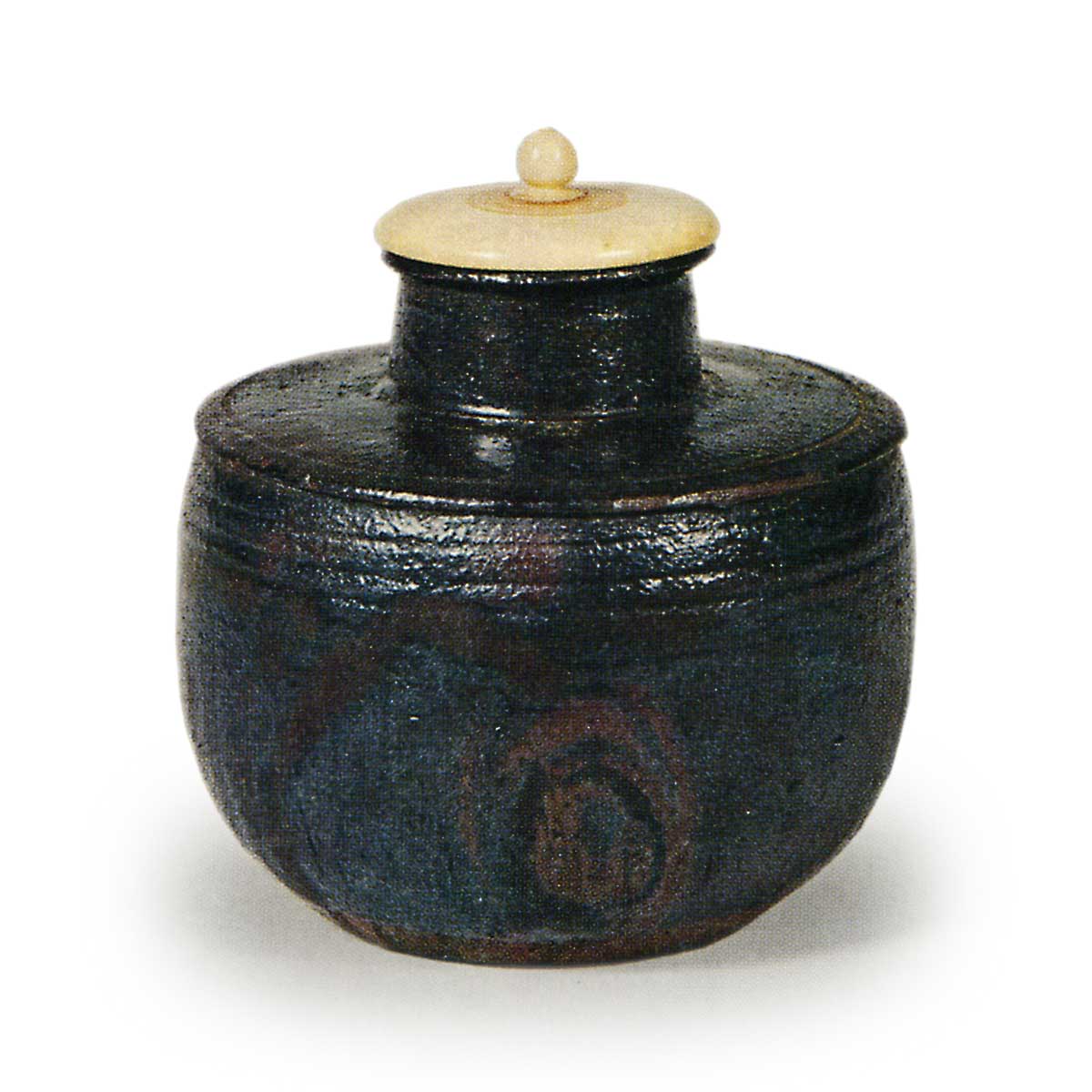
This tea caddy is called furitsuzumi.
Furikō is another name for the bird-scaring rattle used in rice fields. Enshū named it thus because the shape of this tea caddy resembles that rattle, and also because its original inspiration was the fallen ears of rice.
Its maker, Man’emon, lived in Kyoto and was a tea caddy maker during the Genna and Kan’ei eras.
He is said to have excelled at replicating Chinese wares. Among his many pieces, Enshū selected this particular form, praised it, and added it to his collection of prized Meibutsu.
This tea caddy, resembling a round jar with a distinctive shoulder-like protrusion, has no known parallel. All examples feature an iron glaze with only slight mottling visible. Yet, its indescribable glaze color and form undoubtedly met Enshū’s discerning eye.
Four shifuku (tea caddies). All share Enshū’s taste, each with excellent matching.
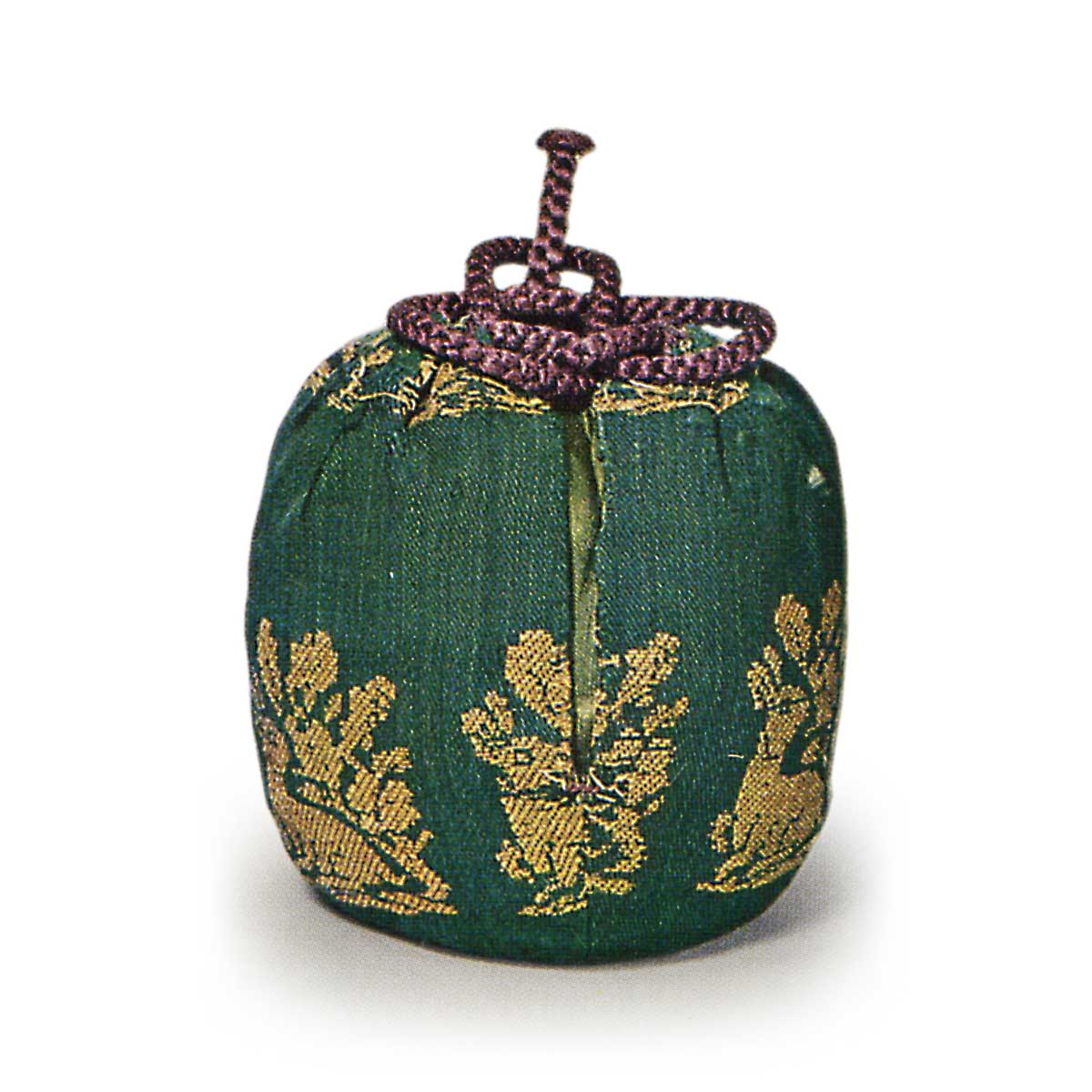
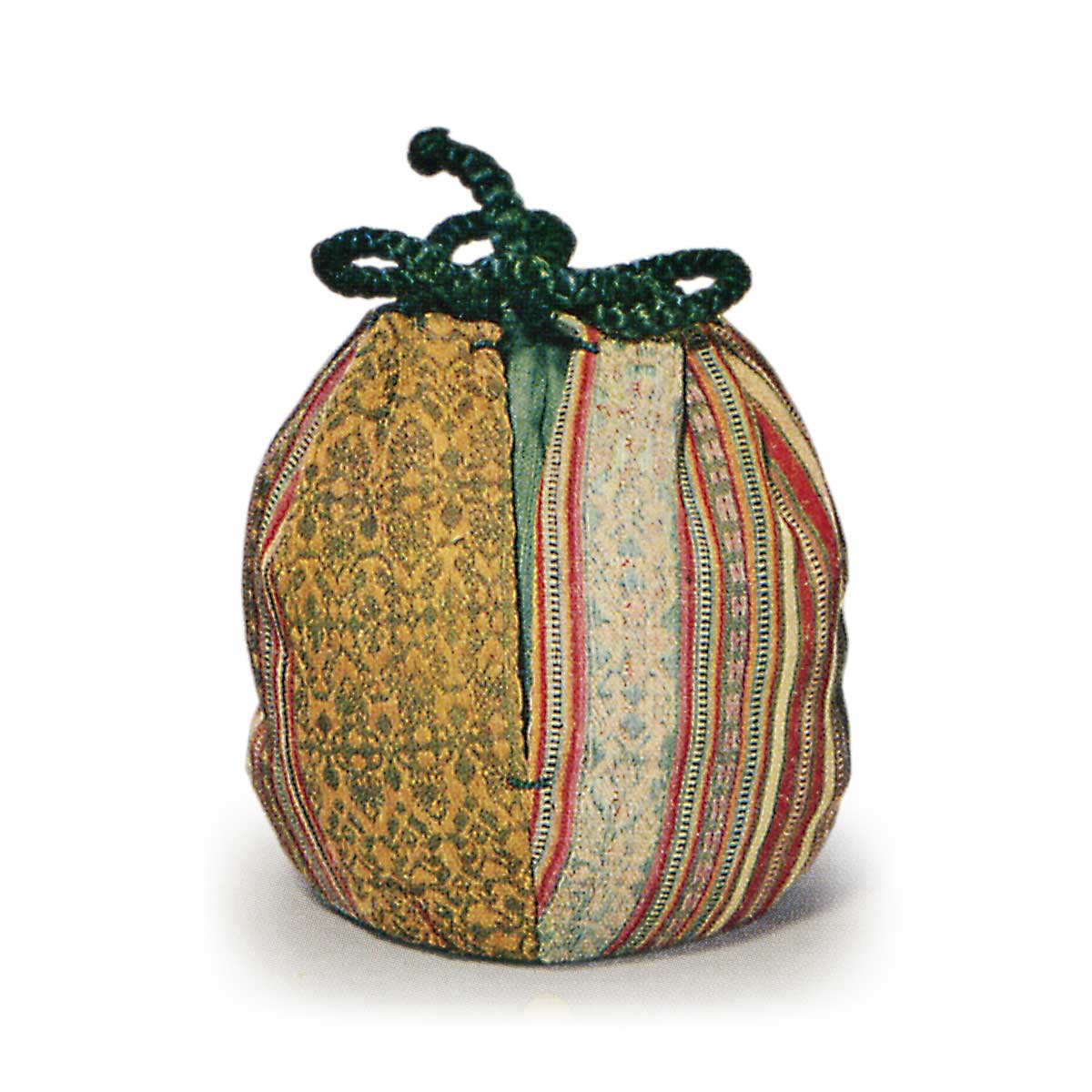
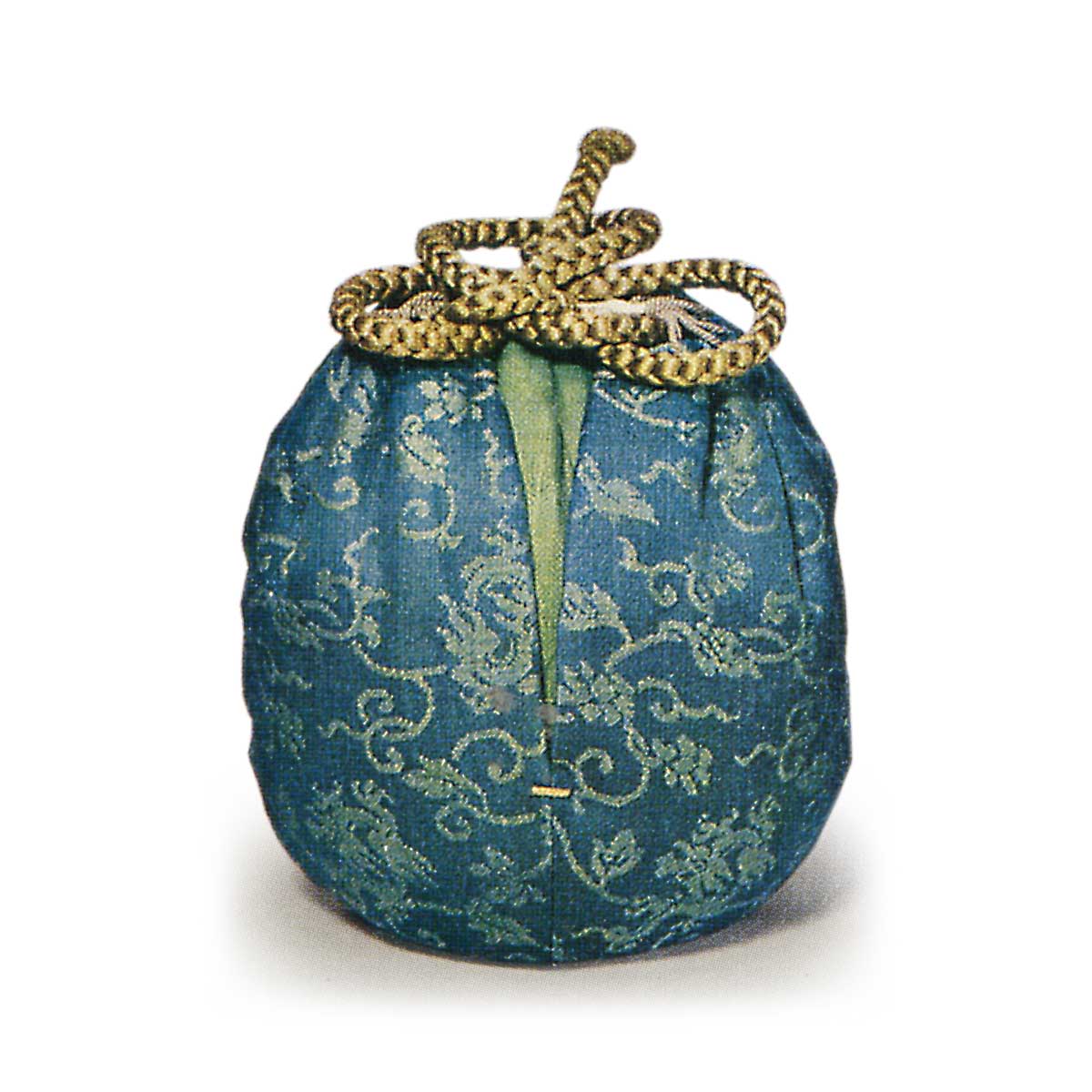
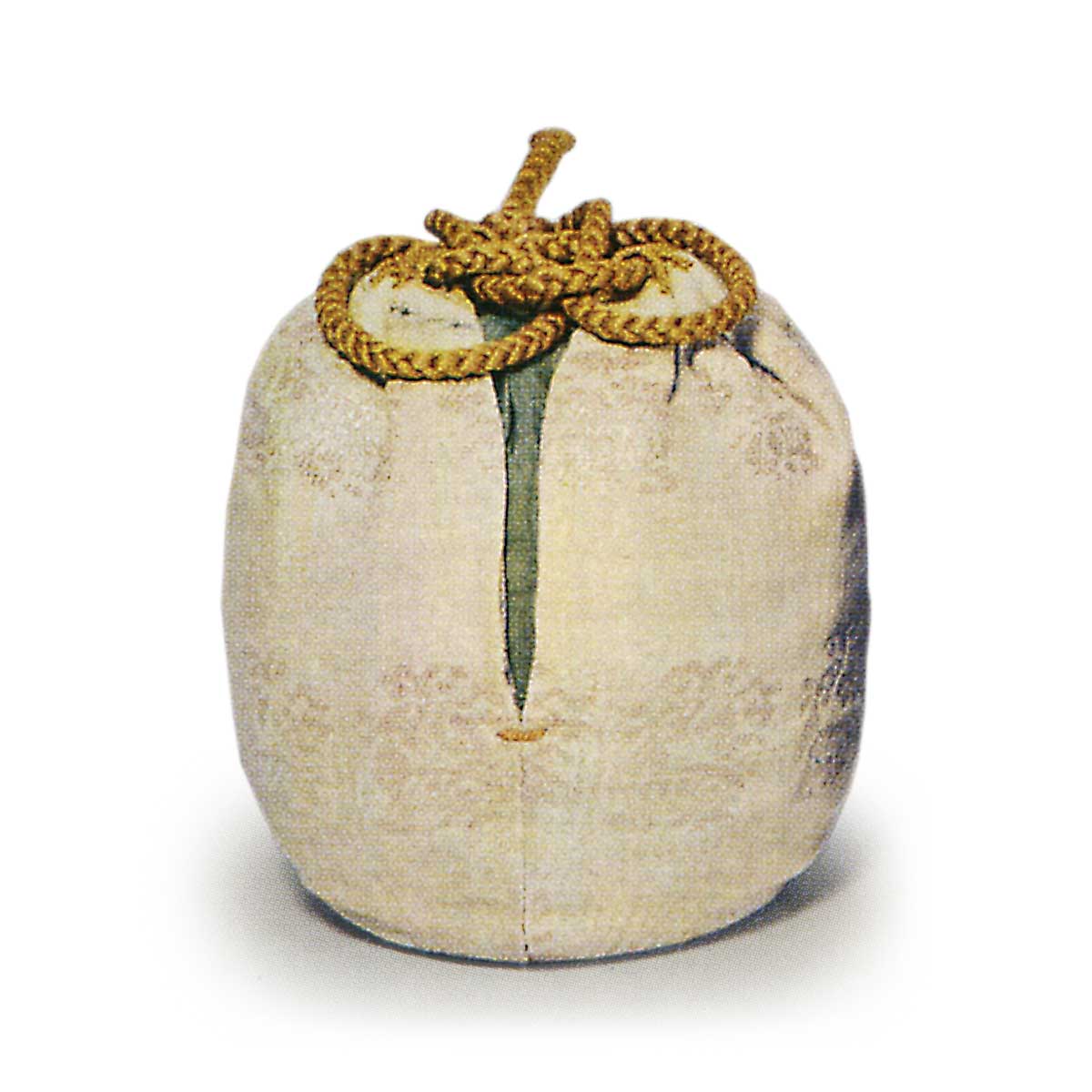
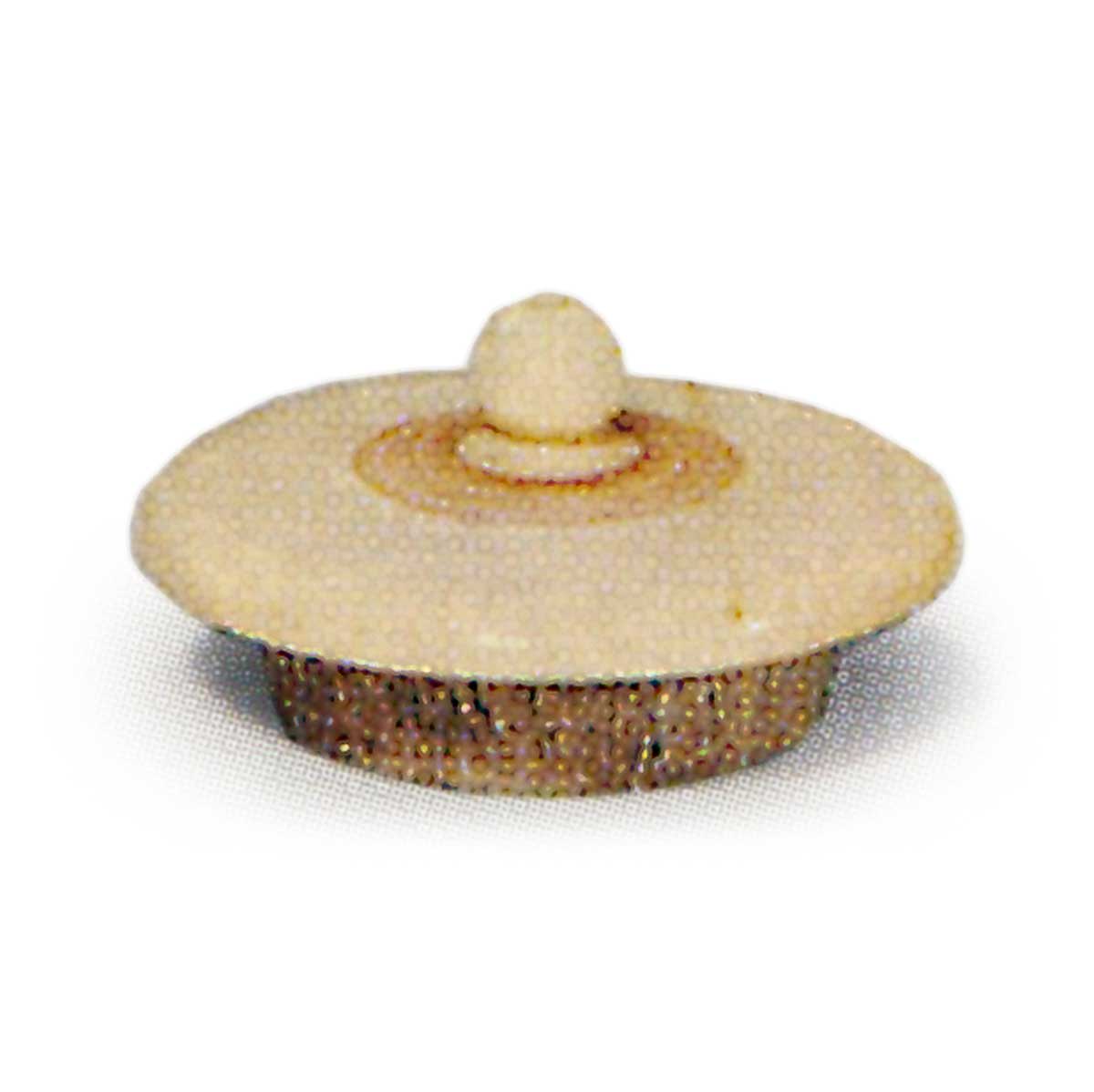
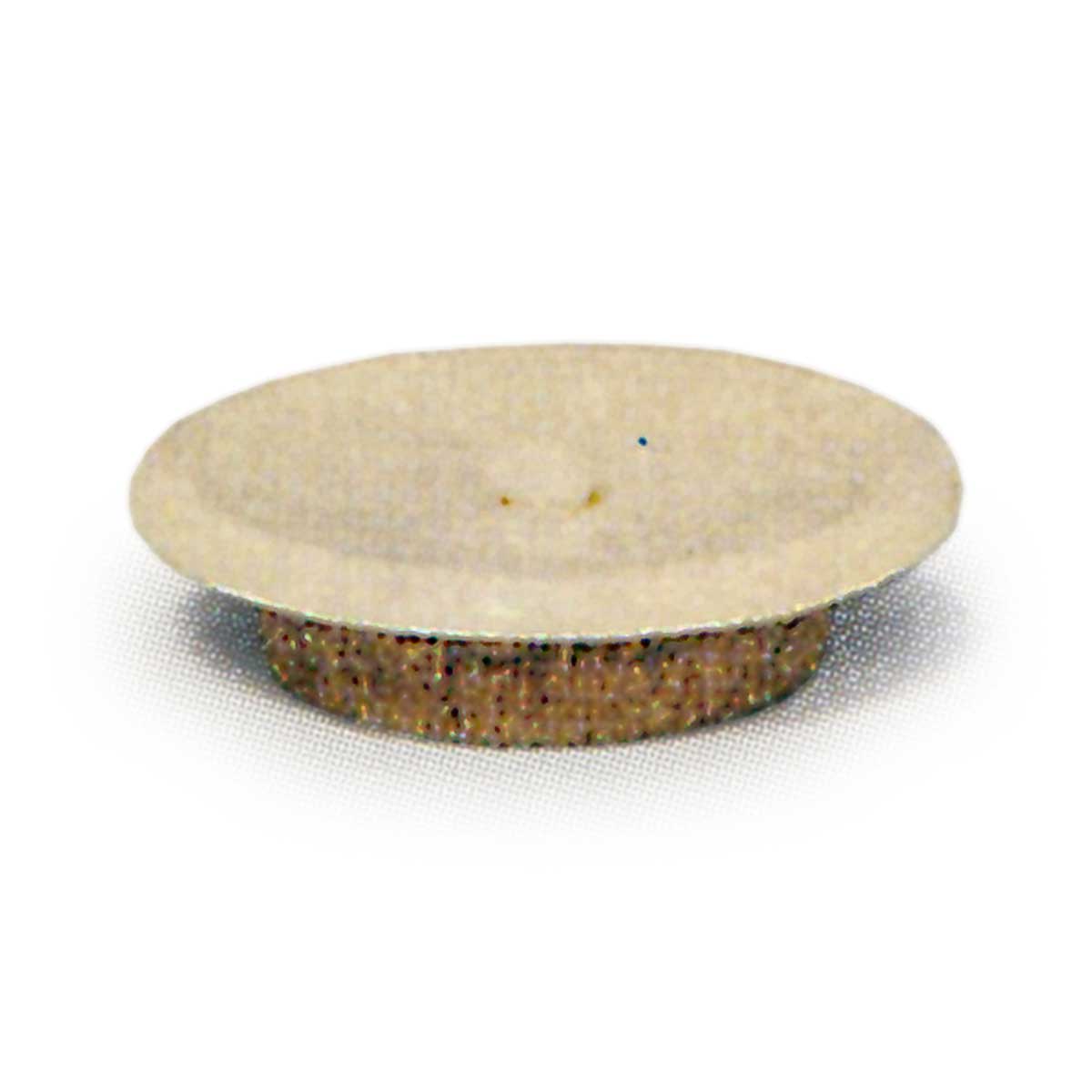
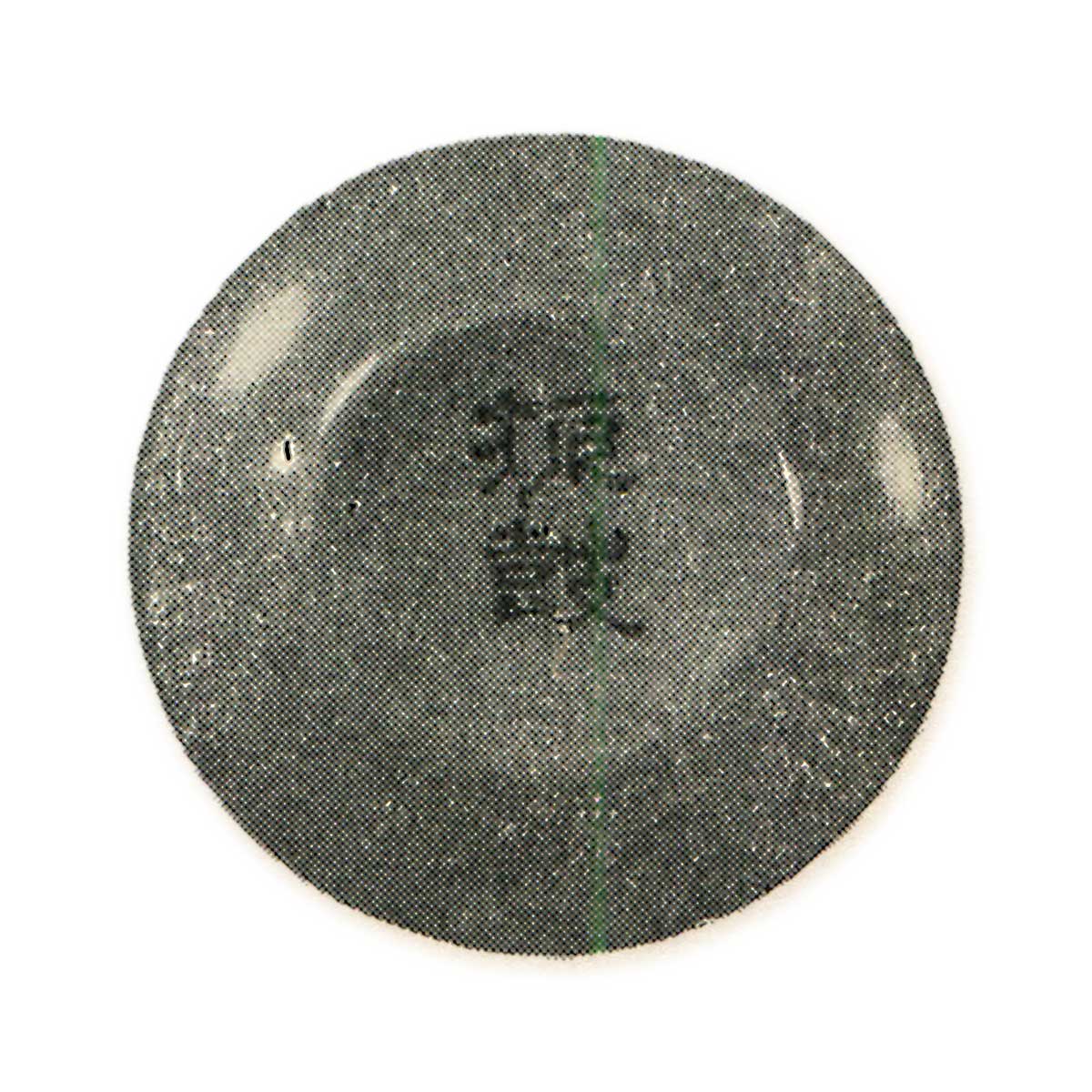
Hikiya: Silver powder inscription, inscription by Kobori Enshū
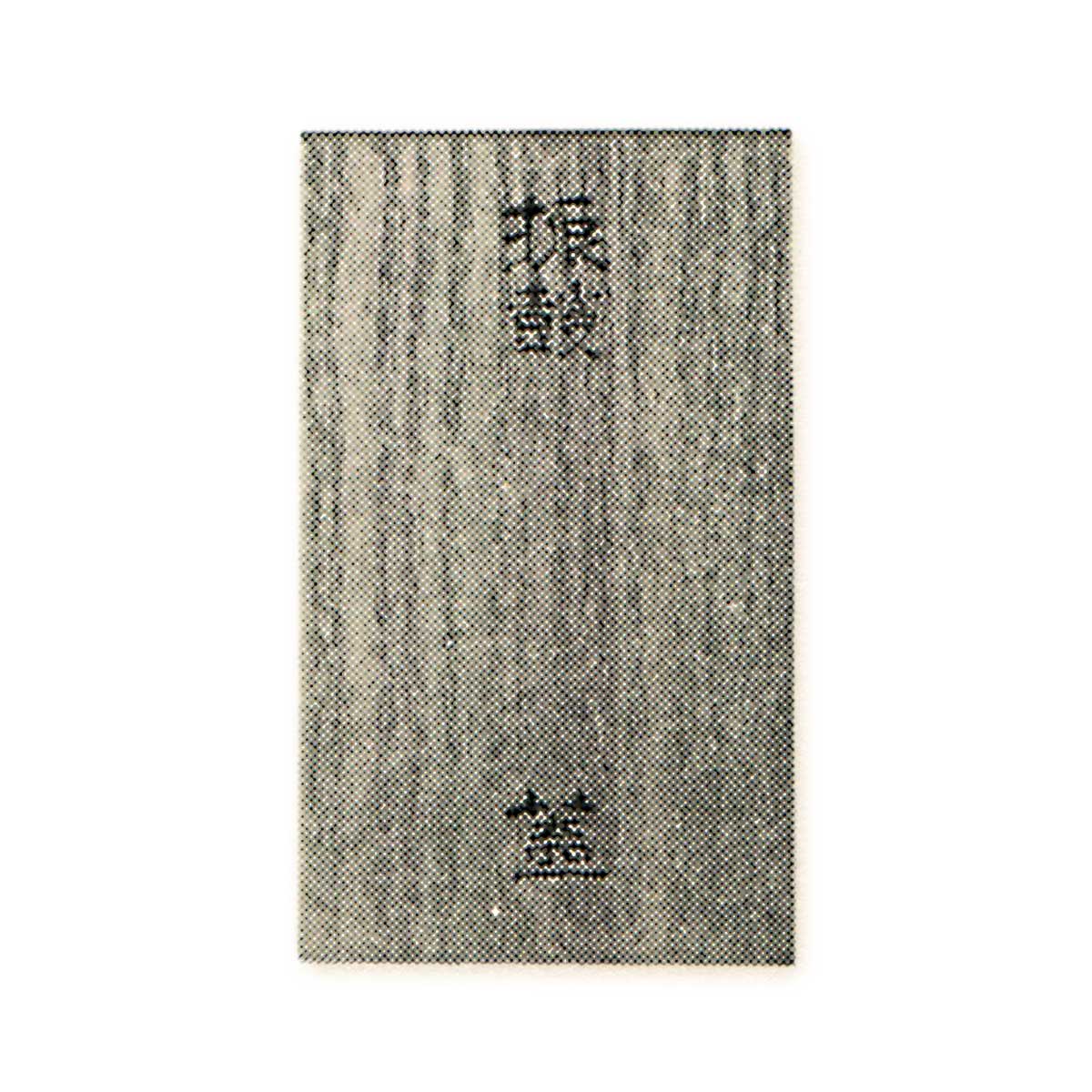
Inscription by Matsudaira Fumai
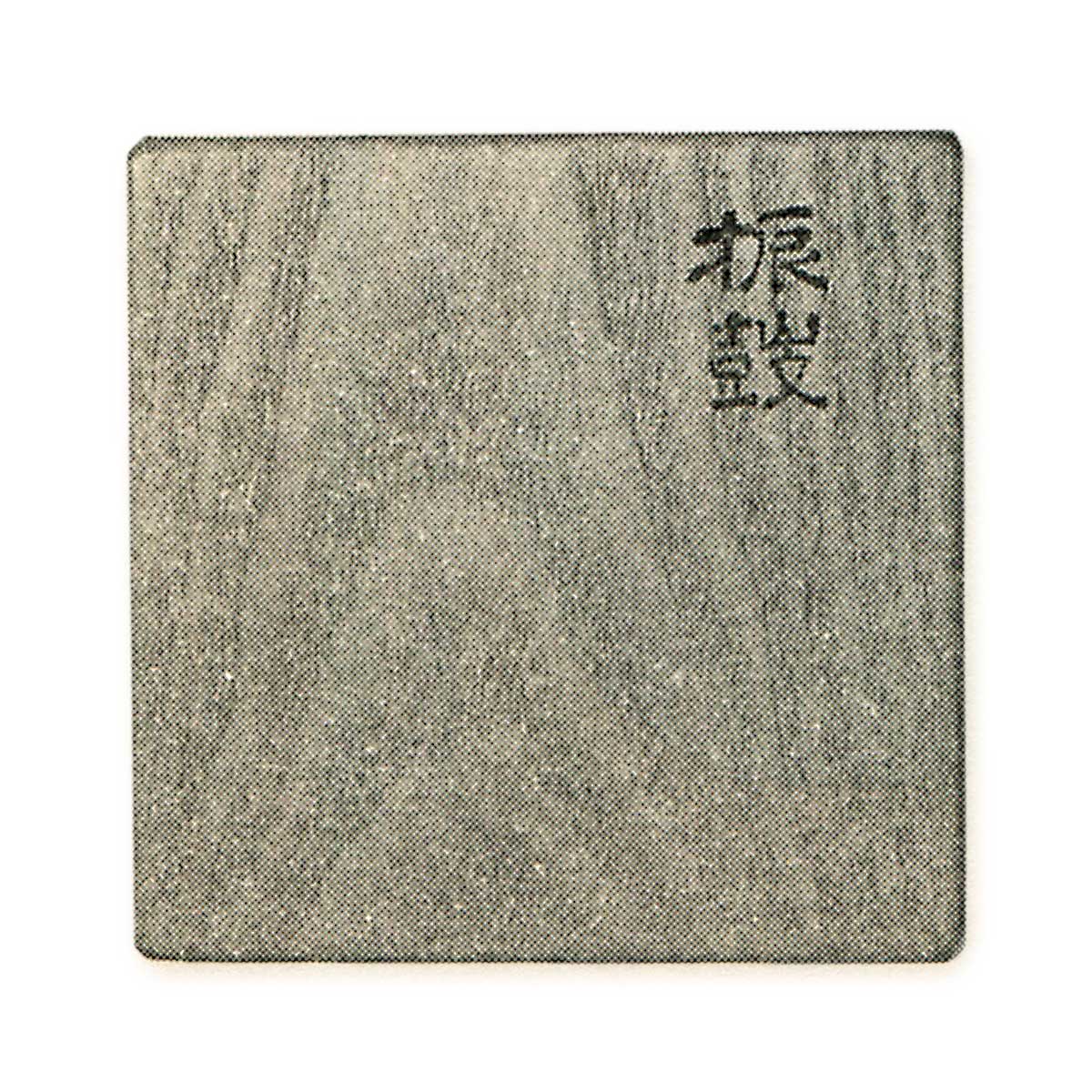
Inscription by Matsudaira Fumai