Meibutsu
Attachment
Inner box, paulownia (paulownia), white wood, calligraphy
Inheritance
Kamiou family – Matsudaira Fumaira no Shoroku Kokin Meibutsu Ruiju Tsuchiya Kuracho
Dimensions
Height 5.0cm
Mouth diameter 4.8-5.0cm
Body diameter 5.9-6.0cm
Bottom diameter 3.9-4.0cm
Weight 101g
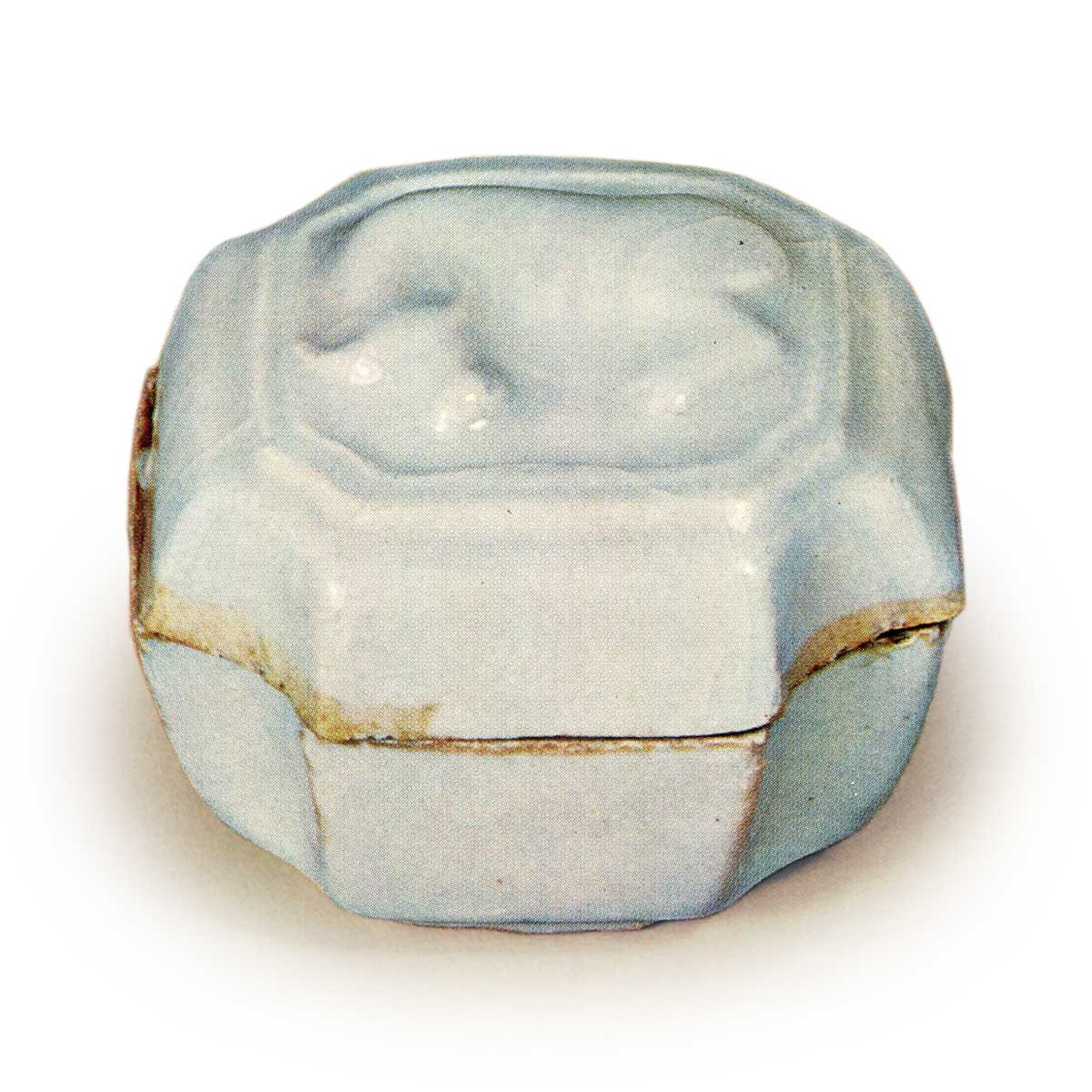
Kuresu taigiu is designated in the Kagoibanzuke as a kanjingen no jyushi (executive officer), probably because it was considered one of the oldest and best examples of kuresu.
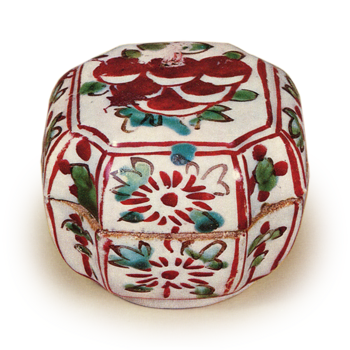
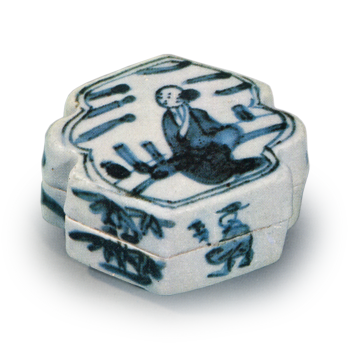
The fact that the shape of this piece is exactly the same as that of the Cochin daiyu is evidence that it was made in the same mold. As has been recently suggested, both Cochin and Wuju were made in the kilns near Canton in southern China.
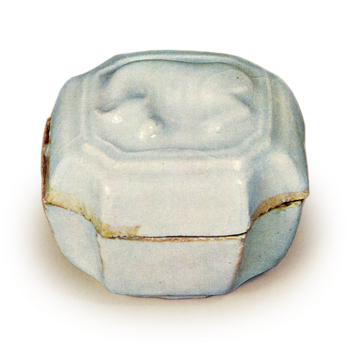
The reason why this incense container was included in “Kokin Meibutsu Ruiju” as a celadon ox, is probably due to the bluish finish of the gosu glaze.
There are only a few examples of this type in existence, and there are also two types of alternating patterns, of which the author has seen only five. It is no wonder that they have been so prized since ancient times.
In southern China, there was a custom of honoring cows as mystical animals, which is why they were decorated in this way.
The shape of this piece is the four-way square, which is often seen in Ming dynasty ceramics.