

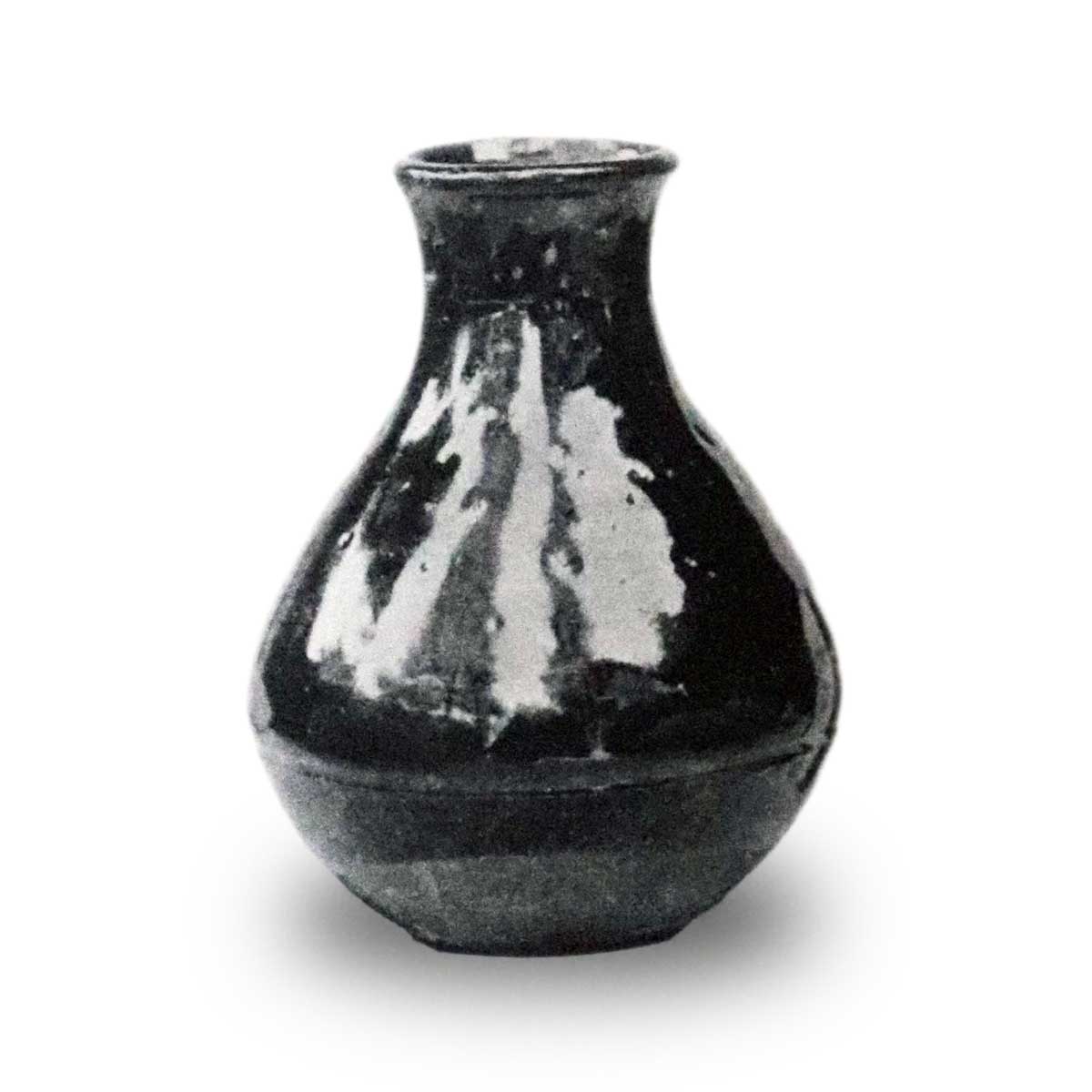
Chinese import; Kyoto; Ryukō-in Collection
Name
Named for its status as a crane-neck teapot passed down as a treasured artifact (ceremonial implement) at Ryukō-in.
Dimensions
Height: Approx. 7.3 cm (2 sun 4 bu)
Body diameter: Approx. 5.5 cm (1 sun 8 bu 3 rin)
Mouth diameter: Approx. 2.4 cm (8 bu)
Base diameter: Approx. 2.4 cm (8 bu)
Neck length: Approx. 2.1 cm (7 bu)
Weight: Approx. 46.5 grams (12 monme 4 bu)
Accessories
・Lid: 1 piece, plain (no pattern)
・Pouch: 1
Small peony-patterned Kinran (lining: sea mist; long cord: brown)
・Hikiya (cylinder for storing the tea caddy): Paulownia wood, black lacquer
・Box: Paulownia wood, natural finish; inscription by Monk Kōsetsu
“Tang-style Crane Neck”
“Tea Jar”
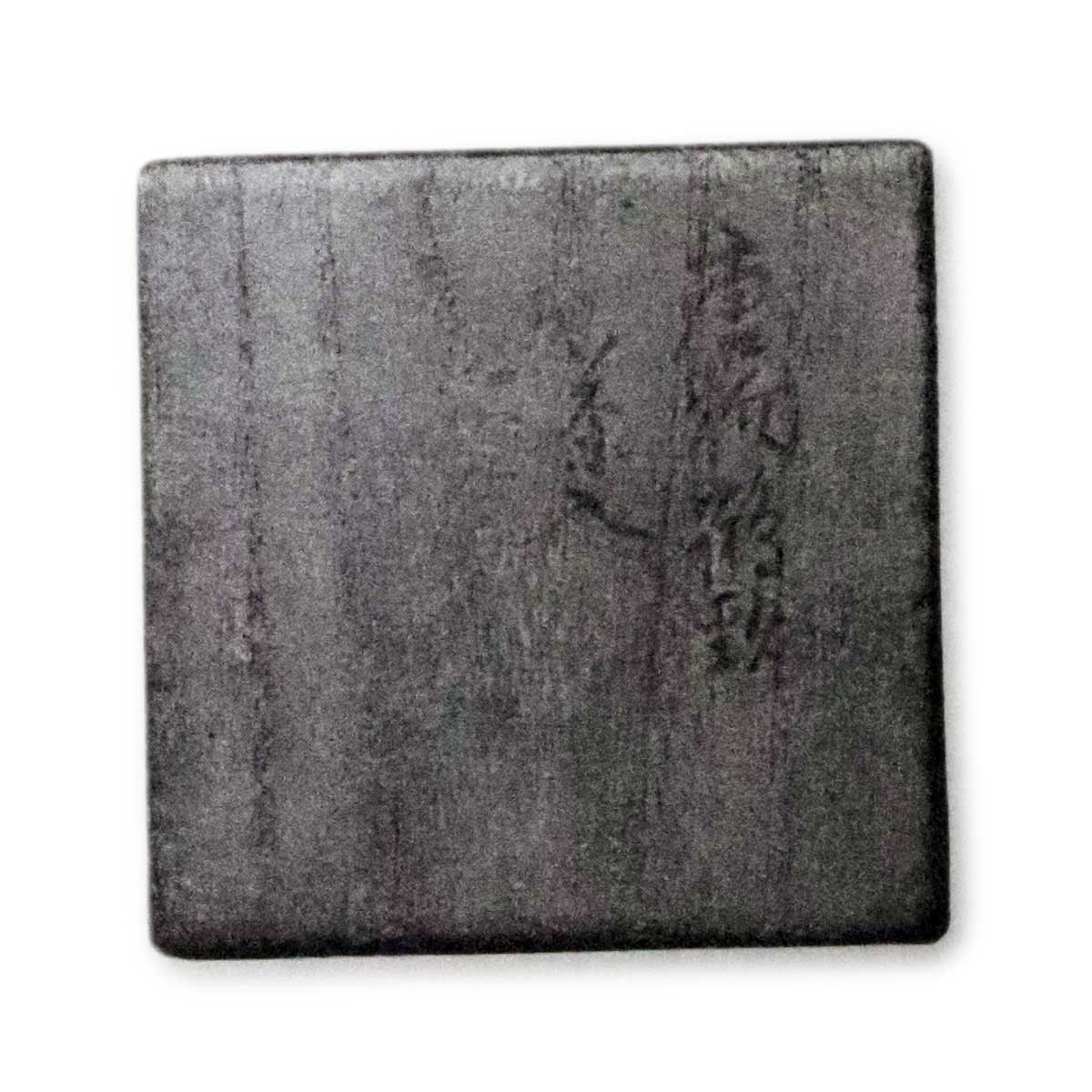
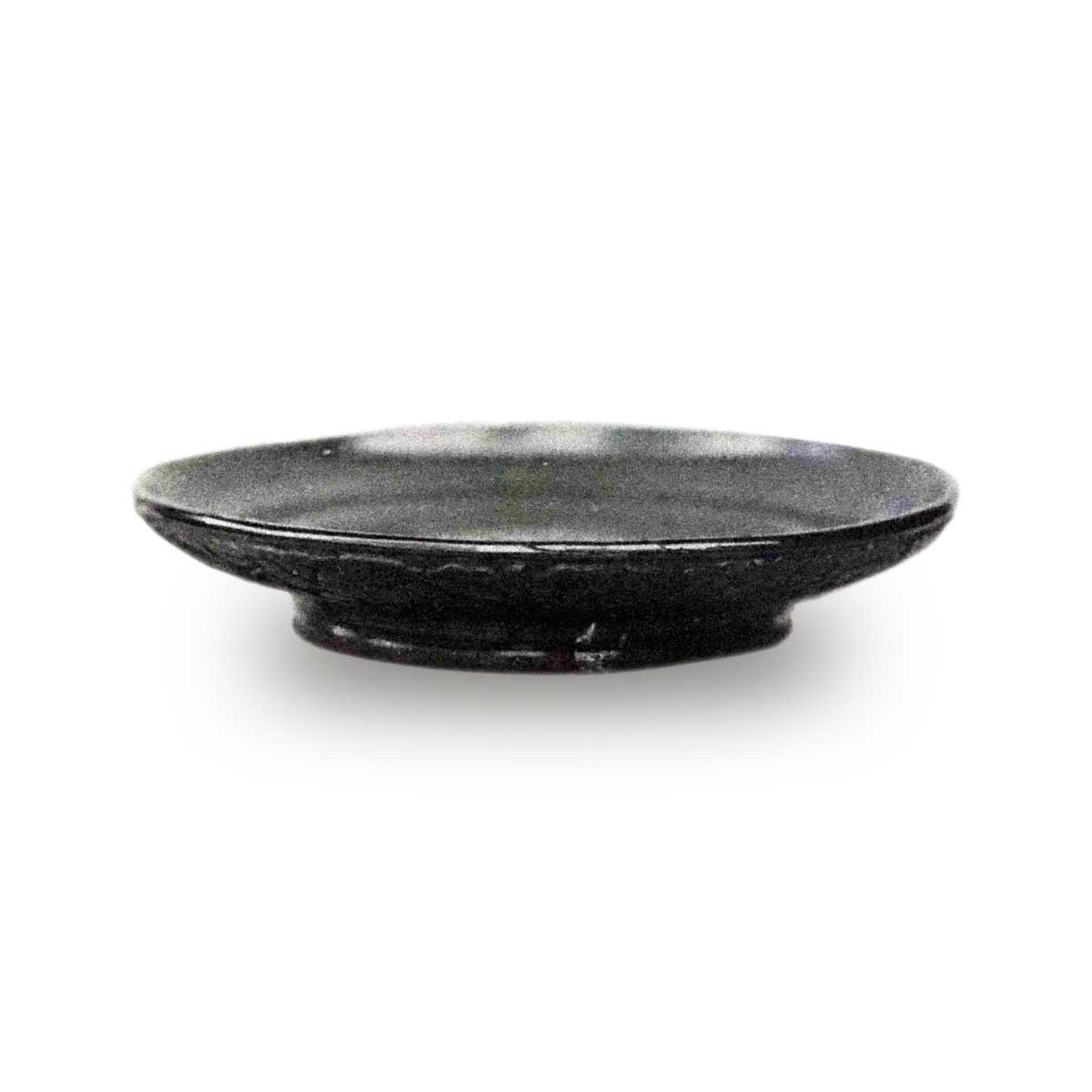
・Accompanying Tray: Round tray with tsuishu lacquer; exterior features a Tang floral pattern; interior of the bottom is black
“Ryukō-in Crane Neck”
Diameter of the exterior: approx. 17.6 cm (5 sun 8 bu); diameter of the bottom: approx. 10.6 cm (3 sun 5 bu)
Inner box: Magari-tame lacquer
Outer box: Paulownia, natural wood
“Red Inner Tray: Ryukō-in”
Miscellaneous Notes
On September 25, Tenmei 8 (1788), I went to visit Daitoku-ji. I climbed the mountain at half past four (either at dawn or late in the afternoon) and proceeded to Zui-gen-in. From there, guided by the Kenzu-za, I toured the various temples within the mountain precincts.
At Ryuko-in, a tea ceremony was held with a hanging scroll by Mittan on display. After the ceremony concluded, I was shown the entire set of tea utensils. They were as follows:
・Ido tea bowl
・Blue-shell tenmoku stand
・Tsuru-gashira (crane-neck tea caddy)
・Uchi-aka tray
・Yōhen tenmoku
・Sōyuki maru-tsubo
・Shunkei hyōtan
・Magari-wa tray
・Yuteki tenmoku
・Chikushi Bunrin
・Hishi-bon
・Chashō (tea scoop) by Sōyuki
Twelve items in total.
(From Yōkō Nikki by Sakai Gagaku-no-kami Sōga)
The Chinese-style Tsuru-kubi (crane-neck) tea caddy is part of Ryūkō-in’s collection; the lid of its box bears the inscription “Tsuru-kubi Tōmono” in the handwriting of Priest Kōsetsu.
(From Tōrin-sen Meishō Zue)
The “Tsuru-kubi” is a ritual implement that has been passed down and preserved since the time of the founding abbot, Master Kogetsu.
(From Unshū Matsudaira-ke Honmeiki-roku)
In accordance with the preference of Tsuda Sōyuki of Tennōjiya, a long cord was attached to this “Tsuru-kubi” tea caddy. Master Kenkyū once mentioned that this particular tea caddy is still preserved today as a treasure of Ryūkō-in.
(From Sakurayama Ichiyu’s Notes)
History of Transmission
Originally owned by Tsuda Sōyuki (Master Kōgetsu’s father), it was passed down to Master Kōgetsu and became a treasured artifact (ritual implement) of Ryūkō-in.
Record of Actual Observation
On May 16, Taishō 9 (1920), I viewed the actual object at Ryūkō-in in Murasakino Daitoku-ji-chō, Kamigyō-ku, Kyoto City.
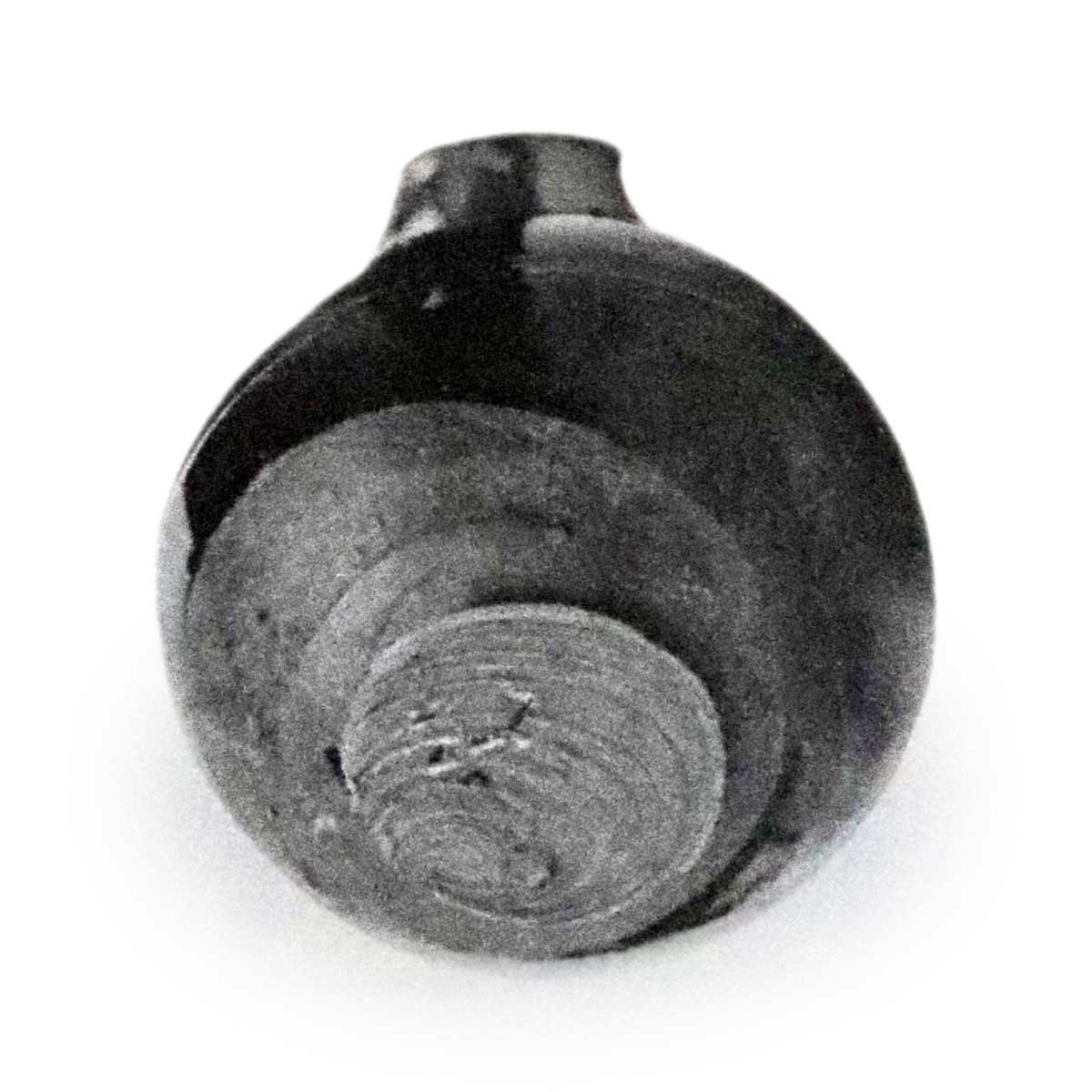
The rim is slightly rounded, with an extremely shallow flange. The neck is slender, and the recessed groove running around the middle is interrupted in one section. Half of the rim is raised, while the other half is lower; vermilion-colored clay is visible, and three bands of wheel marks encircle it. The thread mark at the base is fine, with glaze splatters visible on the inner side. A beautiful black-amber-colored glaze covers the entire piece, with scattered grains of sand (suna-me) visible within it. Inside, the glaze covers the rim, while below that, the wheel marks run very shallowly around the interior. Because the entire piece is black-amber in color, the interior’s appearance and character are not clearly discernible; however, the quality of the glaze is excellent, making this a very refined tea caddy.

