
Old Seto—Meibutsu from the Revival Period; Also Known as: Dōkyū Katatsuki
From the Collection of Baron Heitarō Fujita
Name
The Sakurayama Ichiyu Notes states: “This is an unparalleled, magnificent tea caddy discovered by a discerning connoisseur at a place called ‘Zai-chū-an’ in Sakai, Enshū. It should be treasured as a family heirloom for generations to come.” The same book also notes: “It is also called ‘Dōkyū’ because it was found at a temple called Zai-chū-an, or because it was passed down from a person named Dōkyū.” The Matsuya Notes state: “Chuzai-an is located in Sakai and is the temple where Dōkyū served as chief priest. Dōkyū was a native of Sakai, and Kyushige also recalls that he accompanied Kanamori Izumo-no-kami to the Kuno residence for a tea ceremony.” The Sōyūki also records: “Chūzai-an is the name of the hermitage of a man named Dōkyū who lived in Sakai, Izumi Province, and Lord Kobori Enshū (Sōfu) named a tea caddy after this hermitage name. The ‘Dōkyū’ mentioned in the tea ceremony records refers precisely to this renowned tea caddy.” The Sekken-sō: A Guide to the Mysteries of the Tea Ceremony states: “Chūzai-an is still in the possession of the Kobori family; it is also called ‘Dōkyū’ because it was once owned by a man named Dōkyū. ‘Chūzai-an’ is the name of the hermitage. It is said to have belonged to the previous owner of Rinshi Temple—which means ‘Clear Water’—and has long been renowned as the finest tea caddy in the land.” Volume 5 of the Enshū Shūi states: “The ancient Seto-style shoulder-rest tea caddy known as Chūzai-an originated from the hermitage called Chūzai-an. Fortunately, since the two characters ‘Chūzai’ evoke the footsteps of the Sage, they were adopted as the inscription. Kobori Enshū discovered this tea caddy at Chūzai-an in Sakai and, delighted to find that the two characters ‘Chūzai’ perfectly matched the passage from the Analects—‘Drink water, bend one’s arm to use as a pillow; joy is also found therein’—he adopted the hermitage’s name directly as the name of this tea caddy.”
Dimensions (converted to centimeters)
Height: approx. 9.6 cm
Body diameter: approx. 6.4 cm
Mouth diameter: approx. 3.0 cm
Base diameter: approx. 3.0 cm
Koshiki height: approx. 0.7 cm
Weight: just over 128.3 g
Accessories
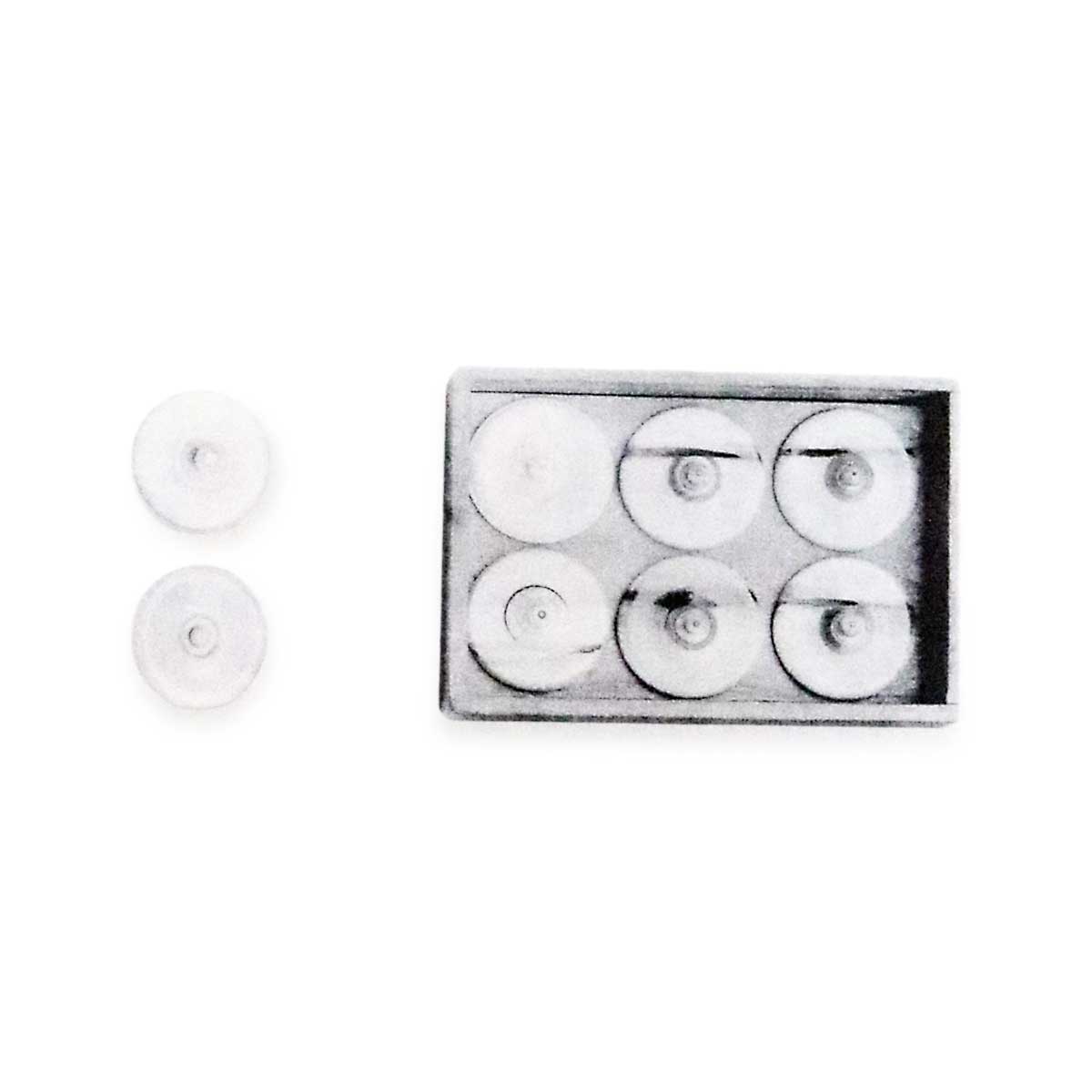
・Lids for the protective covers: 8 pieces
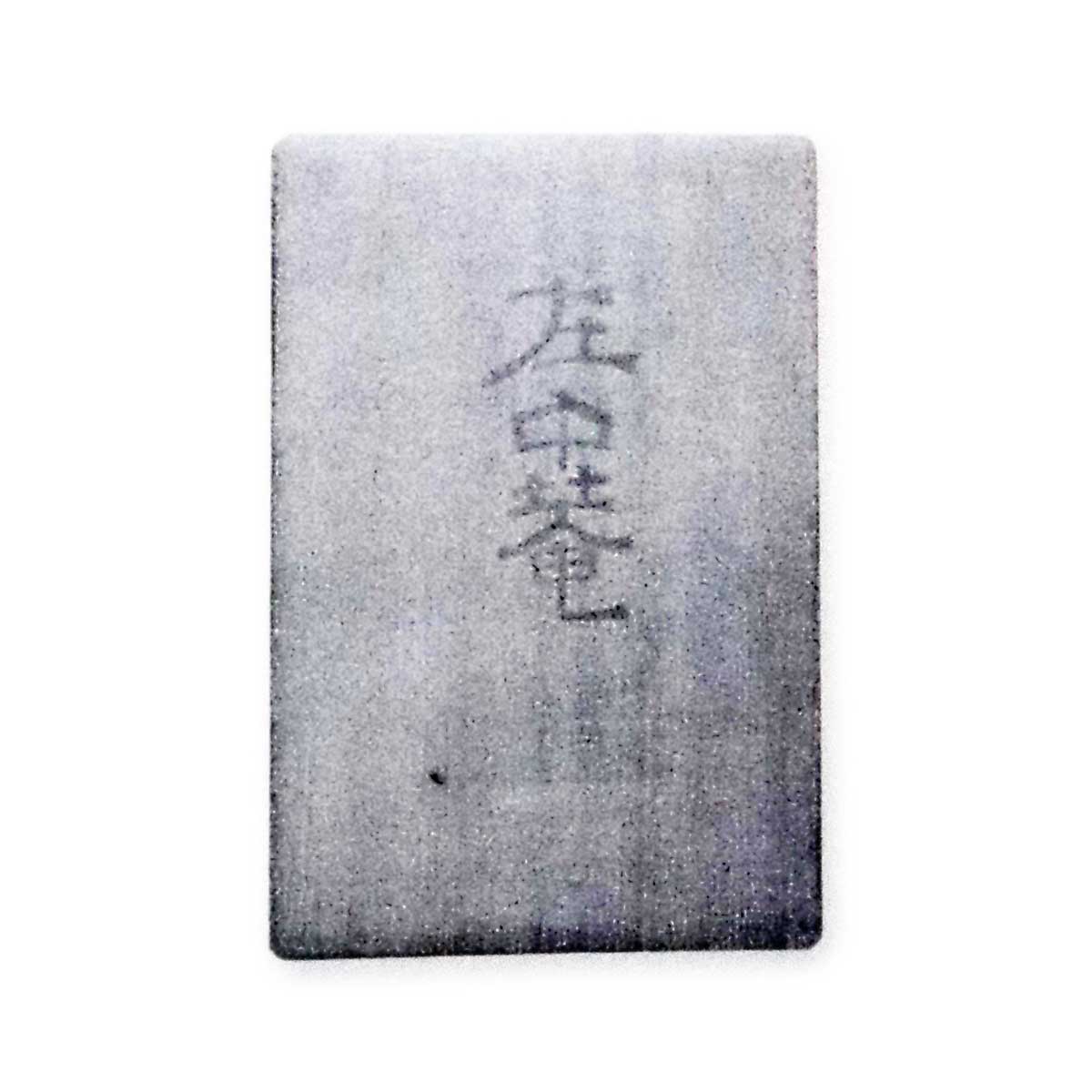
・Lid box: Paulownia wood, natural finish (with an inscription by Kobori Enshū)
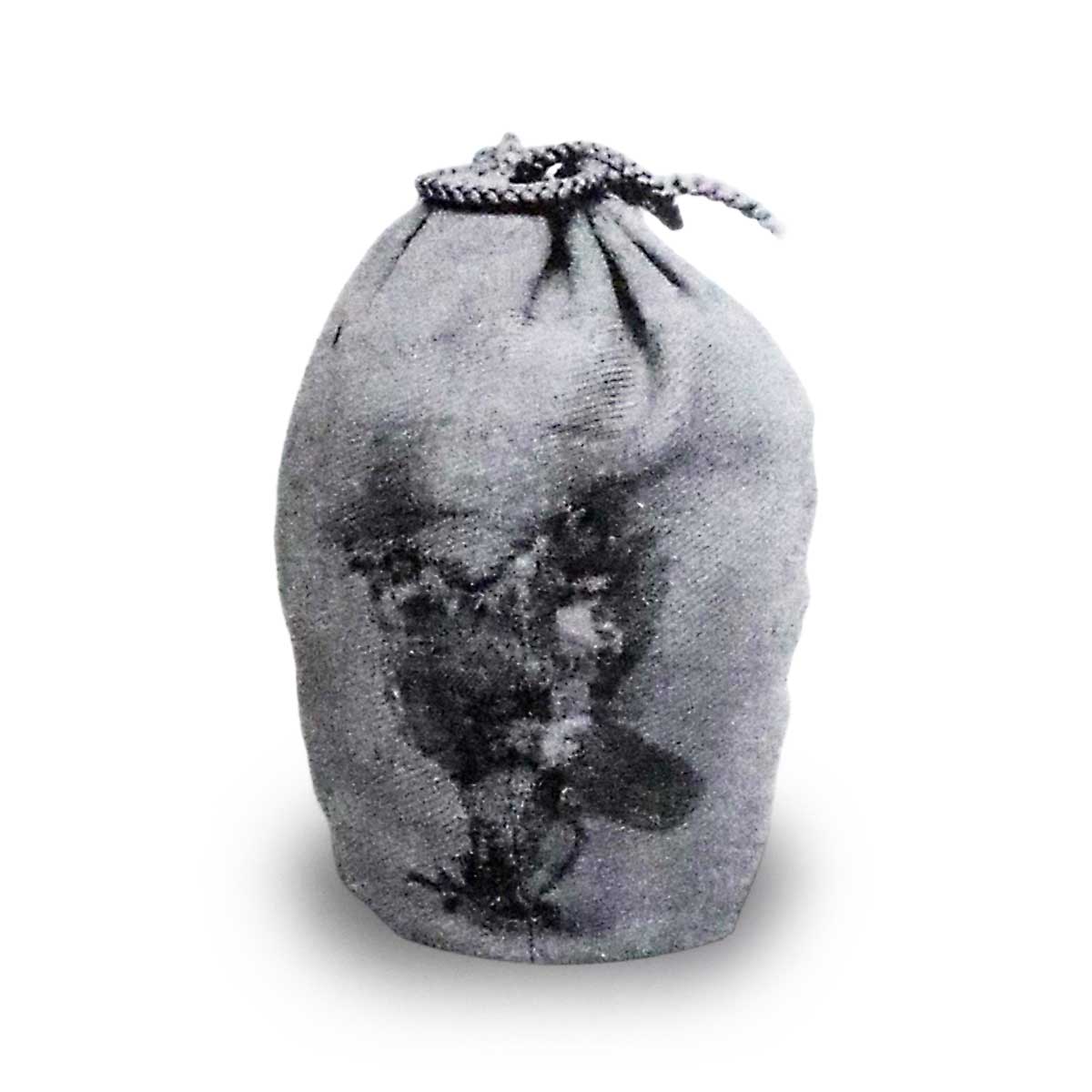
・Storage pouches: 8
(Including: “Cockscomb Large Lantern” antique Kinran; “Light Persimmon Ring-Interlaced Bird Pattern” Kinran; “White Flower Rabbit Ground Pattern” satin; “Vermilion Ground Cockscomb Chinese-Style” Kinran; “Guangdong Weave”; “Light Green Butterfly Fine Vine” Kinran; “Yellow Ground Segmented Weave” moire; “Light Green Pansy with Colored Threads” Kinran, etc.—the specifications for the lining and cords are specified in detail for each)
・Bag’s box: Paulownia wood, natural finish (inscribed with the name “Kobori Enshū”)
・Hikiya (wooden outer container for the tea caddy): by Takenaka Tsugu (featuring lathe-turned patterns on the exterior and Shunkei lacquer finish)
Hikiya bag: persimmon-colored brocade with a cross-patterned paulownia design
・Inner box: Paulownia wood, natural finish (inscribed with the names of artists such as Kogetsu Sōgan)
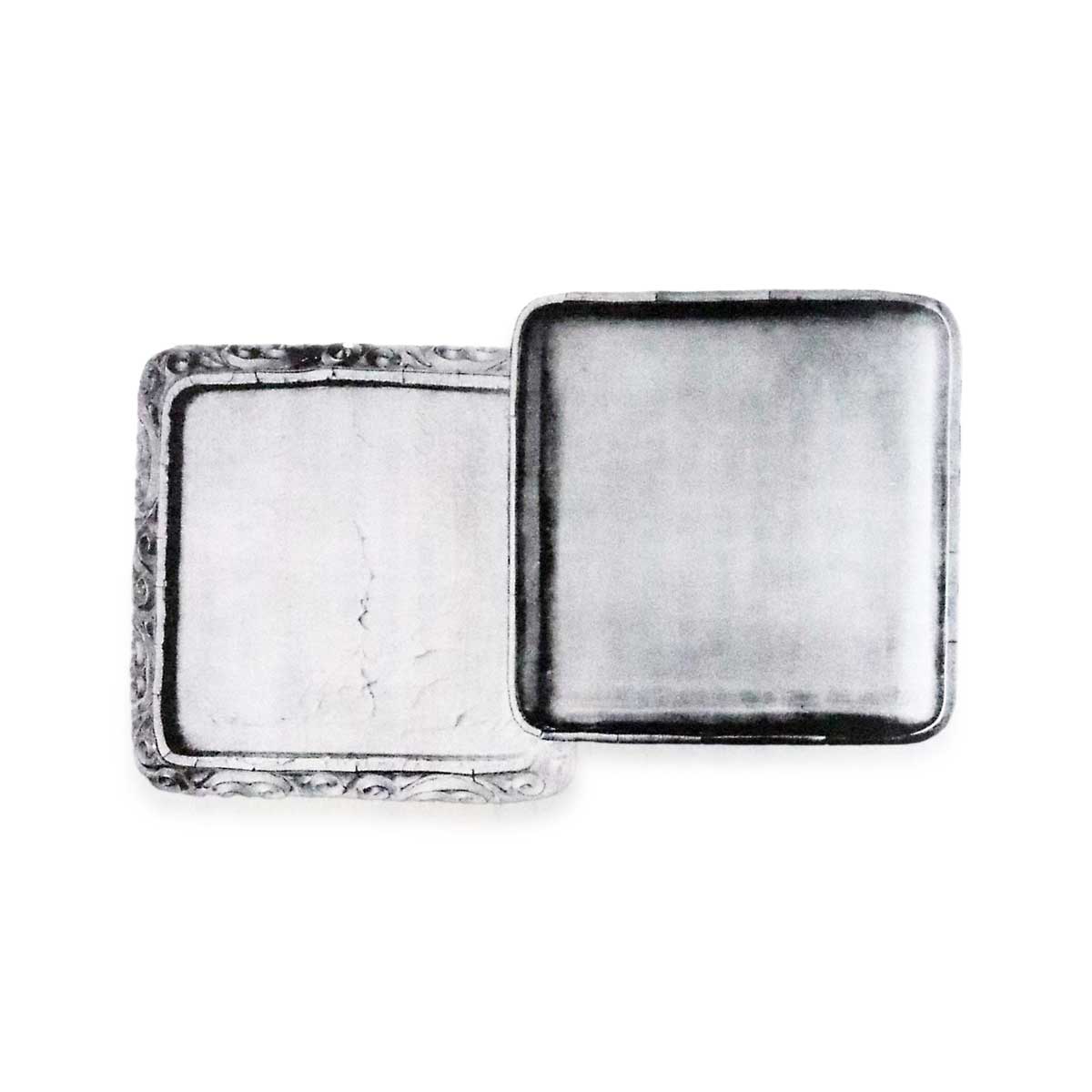
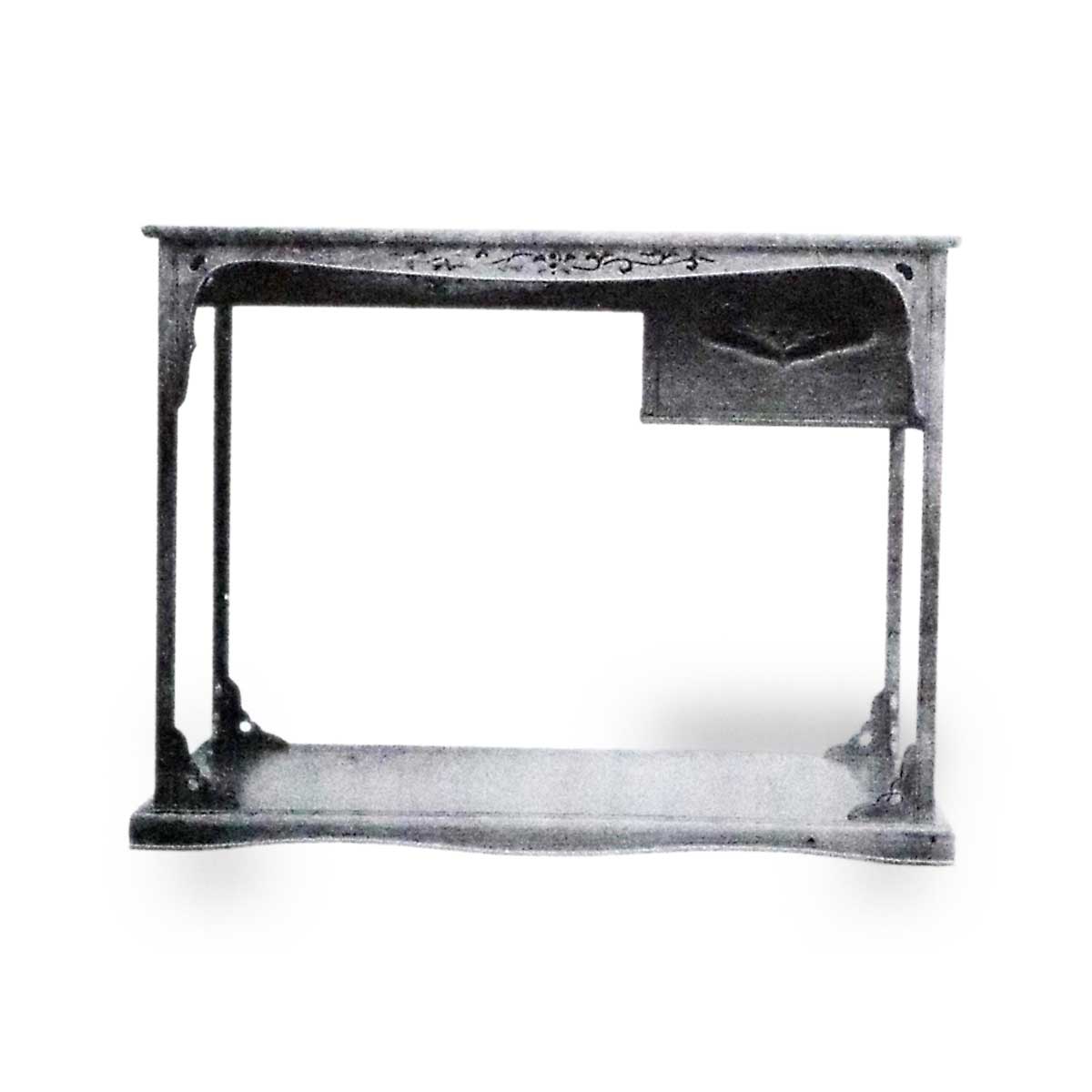
・Accompanying tray: Chinese-style black-rimmed, curved-edged square tray (approx. 19.7 cm square; base approx. 16.7 cm square)
Tray box: Paulownia wood, natural finish (with an inscription by Kobori Enshū)
・Accompanying scroll: 1 scroll
Scroll pouch: Blue-ground satin with chrysanthemum and arabesque pattern
(Letter from Kobori Enshū to Mizuno Hyakuro—Summary)
“Regarding the debt incurred after suffering two fires, there is absolutely no shame in having pawned your property. Everyone in the world understands the circumstances. I was relieved to hear yesterday that you were taking it easy. As for the incense container I received from you at that time, I showed it to someone else, but they said they did not like its shape and returned it, so I am returning it to you. If I find something nice to replace it, I will send it to you at a later date. I would very much like to see the tea utensils that arrived from Nagasaki.
There’s something I forgot to mention the day before yesterday: I’ve spread a rumor in Kyoto that I pawned the ‘Chu-zai-an Teapot’ in my possession at a pawnshop to borrow 7,000 ryō. If you hear such talk in the future, please be sure to confirm the story exactly as I’ve described—that it is indeed pledged as collateral. As long as I live, I will absolutely never part with this teapot. Since I’ve made significant changes to my cover story (camouflage strategy) recently, I’m letting you know the details in advance.”
Origin and Anecdote
When Kobori Masakata, the grandson of Kobori Enshū, was serving as a guard at Osaka Castle, he became so infatuated with a geisha that he neglected his official duties. One morning, after returning home late from a night out, the truth was on the verge of being fully exposed. His retainers were deeply concerned and devised a plan to bribe his colleagues to cover up his transgression.
The Kobori family had long treasured a famous Meibutsu (teapot or tea caddy) known as “Chūzai-an” as a family heirloom. This item had originally been acquired by Ashikaga Yoshimasa from the Ming Dynasty; it eventually passed down to Masakata and was cherished as the family’s most important treasure.
The retainers secretly pawned this treasure for a vast sum of money—a fortune—to secure the substantial funds needed to cover up the incident. Through this, they succeeded in concealing the matter for a time.
However, one day, when Masakata met with Kyōto Shoshidai Kuse Izumo-no-kami (Kuse Hiroaki) on official business, the conversation naturally turned to the “Chūzai-an teapot.” When Izumo-no-kami pleaded, “I would very much like to see it at least once,” Masakata was stunned (since the teapot was no longer in his possession, having already been pawned).
Upon returning home, Masakata consulted his close retainers, but they were all simply astonished and could not come up with a good solution. Just then, Masakata’s concubine, Yoshiko Nakai, overheard the conversation. She summoned a retainer named Miyagawa (Sōdayū) and, speaking calmly, said:
“All you need to do is immediately send someone to Osaka, pay the money to buy back that teapot, and fulfill the Governor’s request. You can raise the sum of about a thousand gold pieces by imposing a tax on the wealthy merchants within your domain. We can discuss how to repay the merchants at a later date. This is, after all, a simple matter, so there’s no need to worry so much.”
Shōdayū was overjoyed and immediately reported this to Masakata. Masakata followed this plan; on the very same day, he summoned 27 wealthy merchants from Fushimi, explained the situation to them, and was able to raise 1,000 Sen in the blink of an eye to buy back the teapot. Masakata was overjoyed.
This woman, named Yoshiko, was the daughter of Han’i Ritsusen, a physician in Edo. She possessed both talent and beauty and excelled in waka and haikai. However, she had originally been free-spirited; as a child, she had roamed about as she pleased, to the point where even her own parents had effectively disowned her. Yet, while Masakata was in Edo, he happened to spot her on the street, fell in love with her beauty, and took her into his service as a concubine. On this occasion, thanks to her resourceful and ingenious plan, they were able to easily secure a thousand gold pieces, repurchase the treasure, present it to the Governor-General, and, fortunately, bring the matter to a peaceful and successful conclusion without incident.
This “Chūzai-an” is the crown jewel among the tea caddies owned by Kobori Enshū; it is listed first in the tea caddy section of Enshū’s collection catalog and appears as the very first entry in Matsudaira Norimura’s Meibutsu-ki (Record of Famous Objects). It is clear from the aforementioned letter that Enshū cherished this piece throughout his life and never parted with it. Furthermore, a review of Enshū’s tea gathering records (such as the Hyakukai-ki) reveals that this tea caddy was used more frequently than any other, demonstrating just how deeply he cherished it. In particular, on May 21, Kan’ei 13, when Shogun Tokugawa Iemitsu visited the Shin-shiki Yose in Shinagawa, this tea caddy was displayed; it goes without saying that it was, in both name and reality, the preeminent tea caddy in Kobori Enshū’s collection.
Later, following the Meiji Restoration, in the early Meiji era, Mr. Chiaki Watanabe acquired the Kobori family’s principal tea utensils—contained within two nagamochi chests—for 2,000 yen. After Mr. Watanabe’s death, a portion of these items was put up for sale at the Hoshigaoka Saryo in Meiji 25; however, the dozen or so key pieces, including this “Chuzai-an,” were transferred directly from Mr. Watanabe’s widow to the Baron Fujita family (Heitaro Fujita).
Field Observation Record (Survey Record from Taisho 9)
On May 17, Taisho 9, I viewed this piece with my own eyes at the residence of Baron Heitaro Fujita in Amijima, Kita Ward, Osaka City.
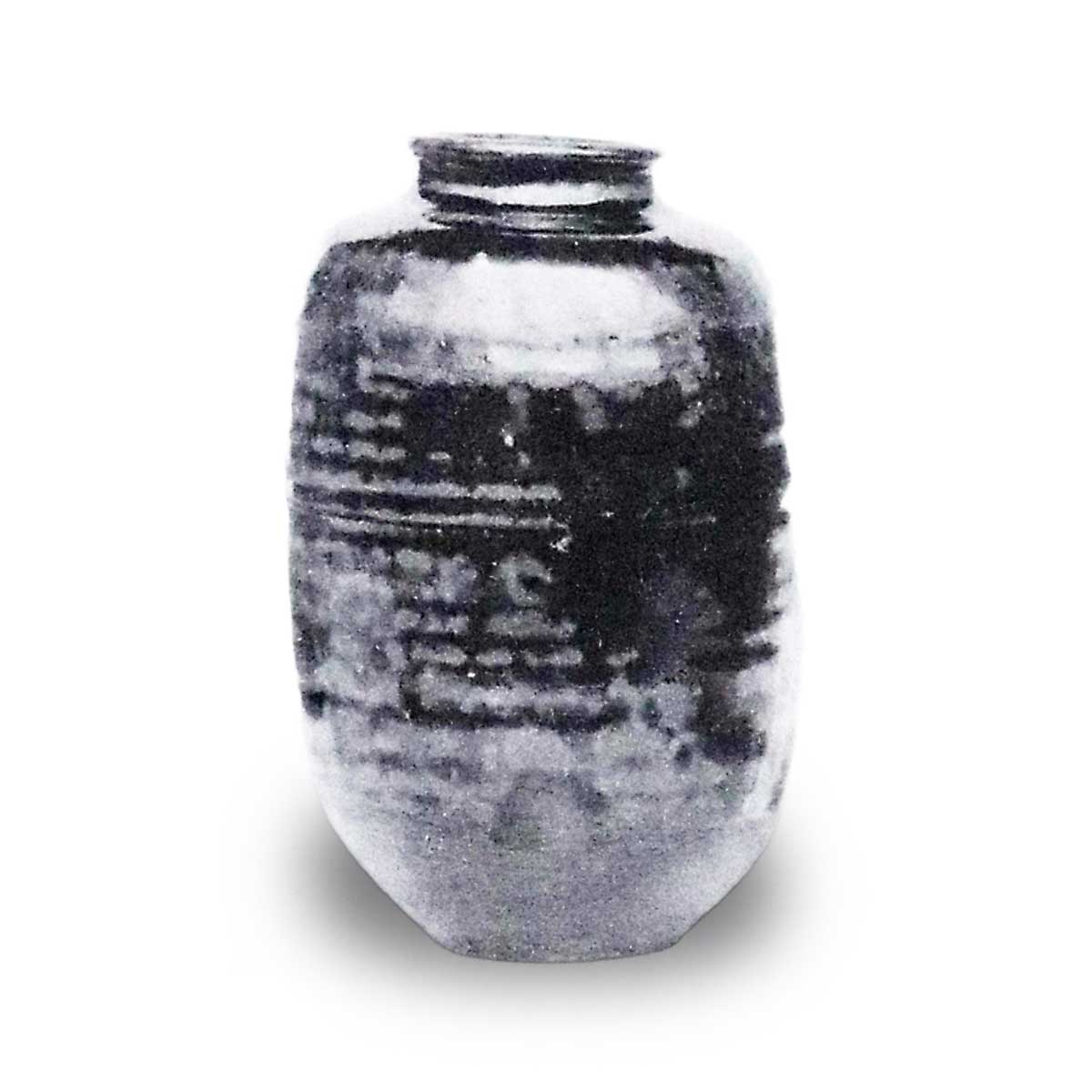
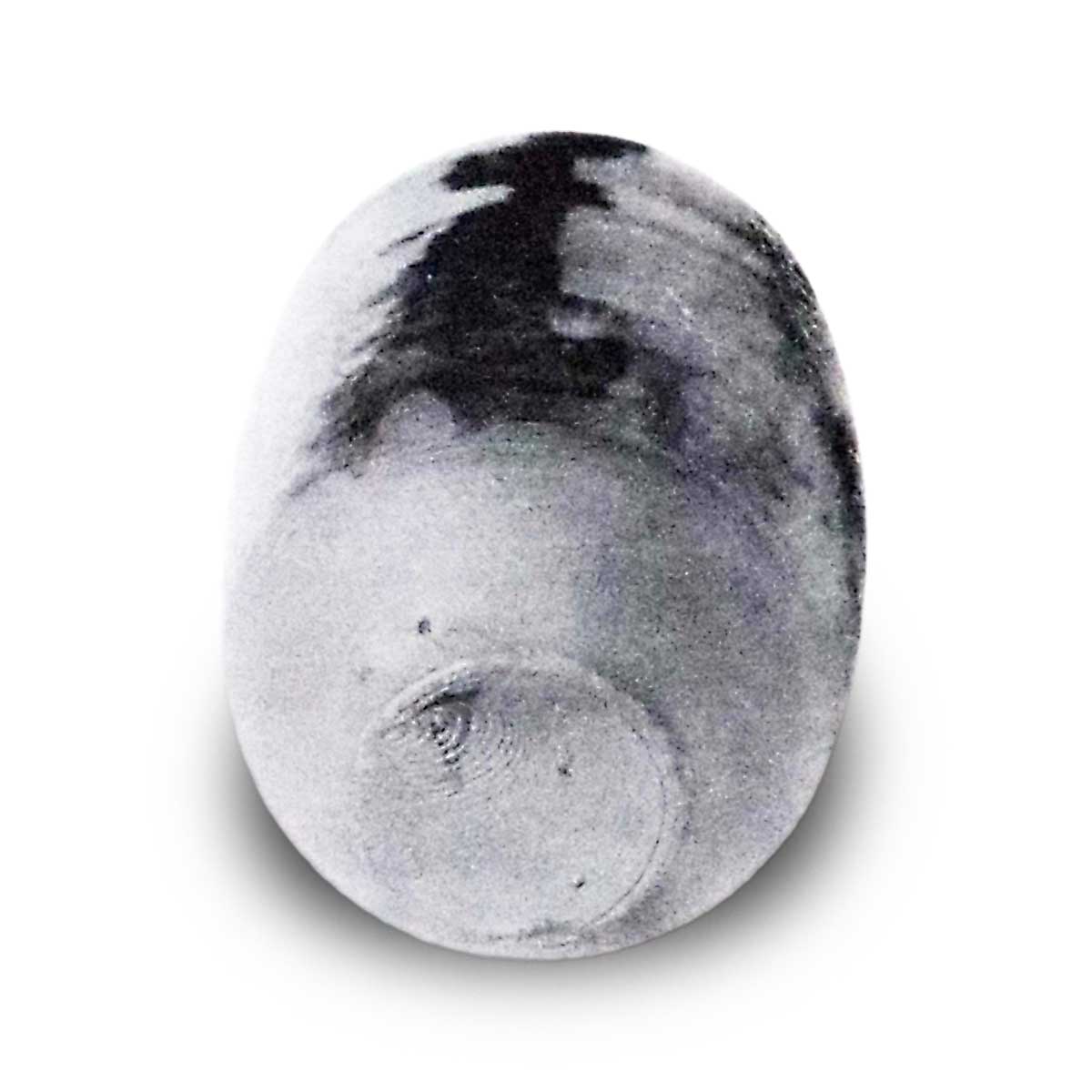
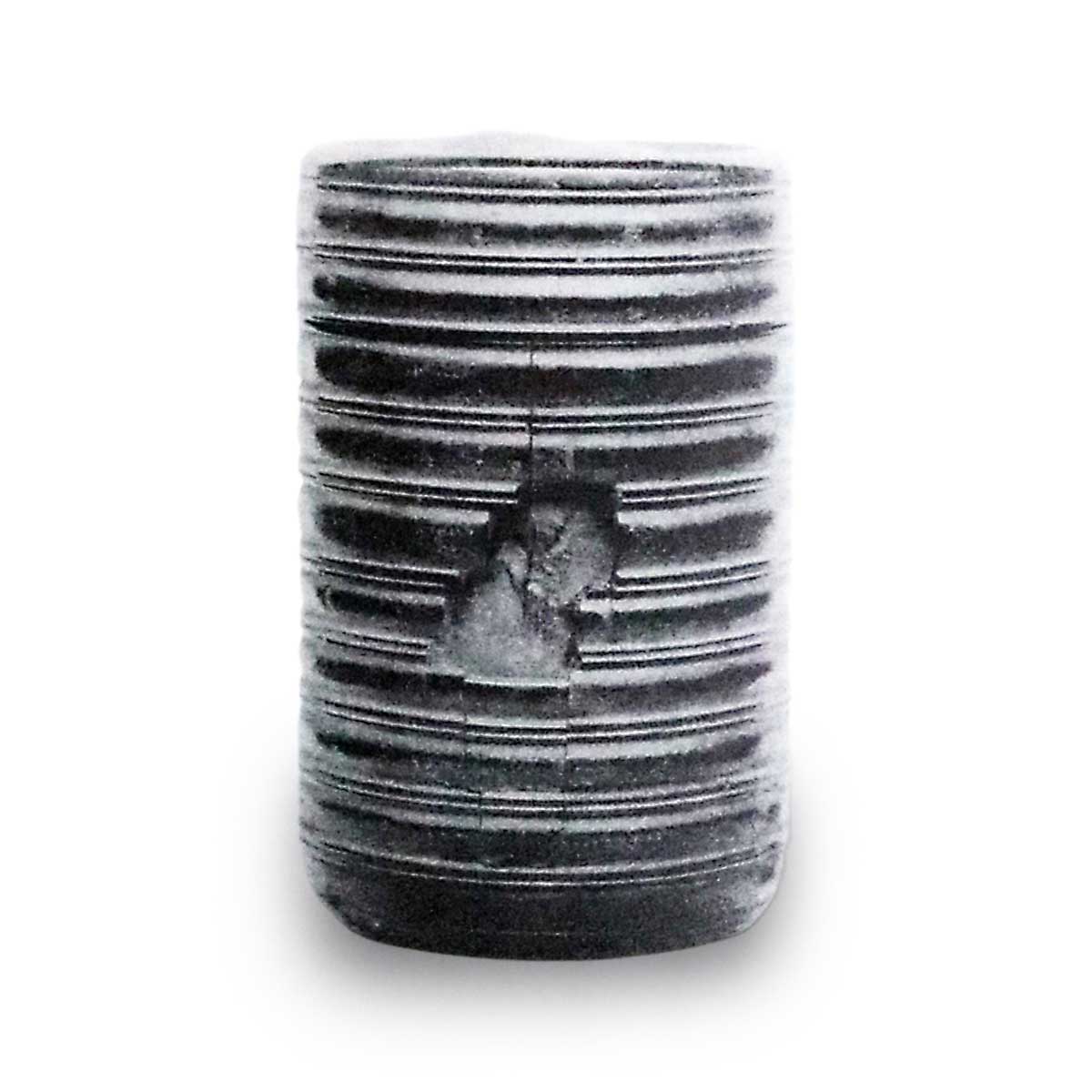
The rim is rounded, and the lip is shallow. The area below the neck is flared, and the shoulder has a gentle, “smooth-shouldered” shape. The wheel marks on the body are somewhat coarse, and the vermilion-clay-colored body (unglazed clay) is visible from the rim downward. The “ito-kiri” (bottom pattern) is extremely fine; half of it is missing glaze, while the other half features a crescent-shaped rim. At the starting point of the “ito-kiri,” there is a splatter of persimmon-colored glaze, and inside the base, there is a single small hole with a single splatter of black glaze.
Overall, an extremely lustrous and beautiful black glaze is applied over a purplish base color. The glaze forms a pattern resembling quail spots, and black streaks wrap around part of the body. In the “rice rim”—the area that contacts the serving tray—there are spots where the black glaze is thickly applied. The glaze drips are widest on the body, gradually narrowing toward the hem, and stopping precisely at the edge of the clay.
Glaze also covers the inner rim, and the exquisite carving from there down to near the wheel-thrown base is beyond words. It is precisely because of this magnificent craftsmanship that Enshū held this tea caddy in such high regard.
Although there are slight signs of wear around the shoulder, the magnificent black glaze has a superb luster, making this a truly rare masterpiece. The excellence of its glaze is virtually unparalleled, and it is rich in an antique and elegant charm, as evidenced by the fine thread-like glaze cracks. It is by no means an exaggeration to call this “the crowning masterpiece among ancient Seto tea caddies.”

