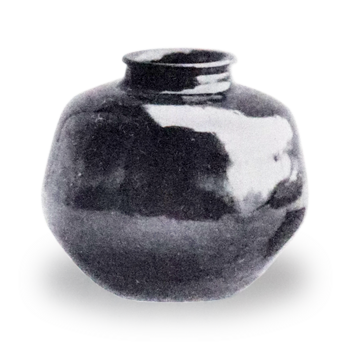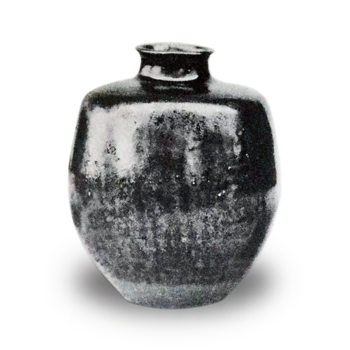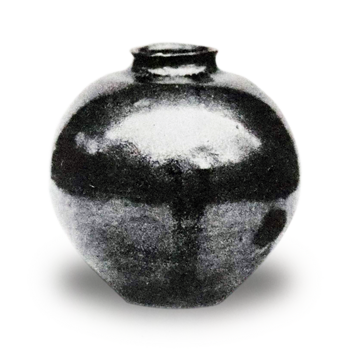
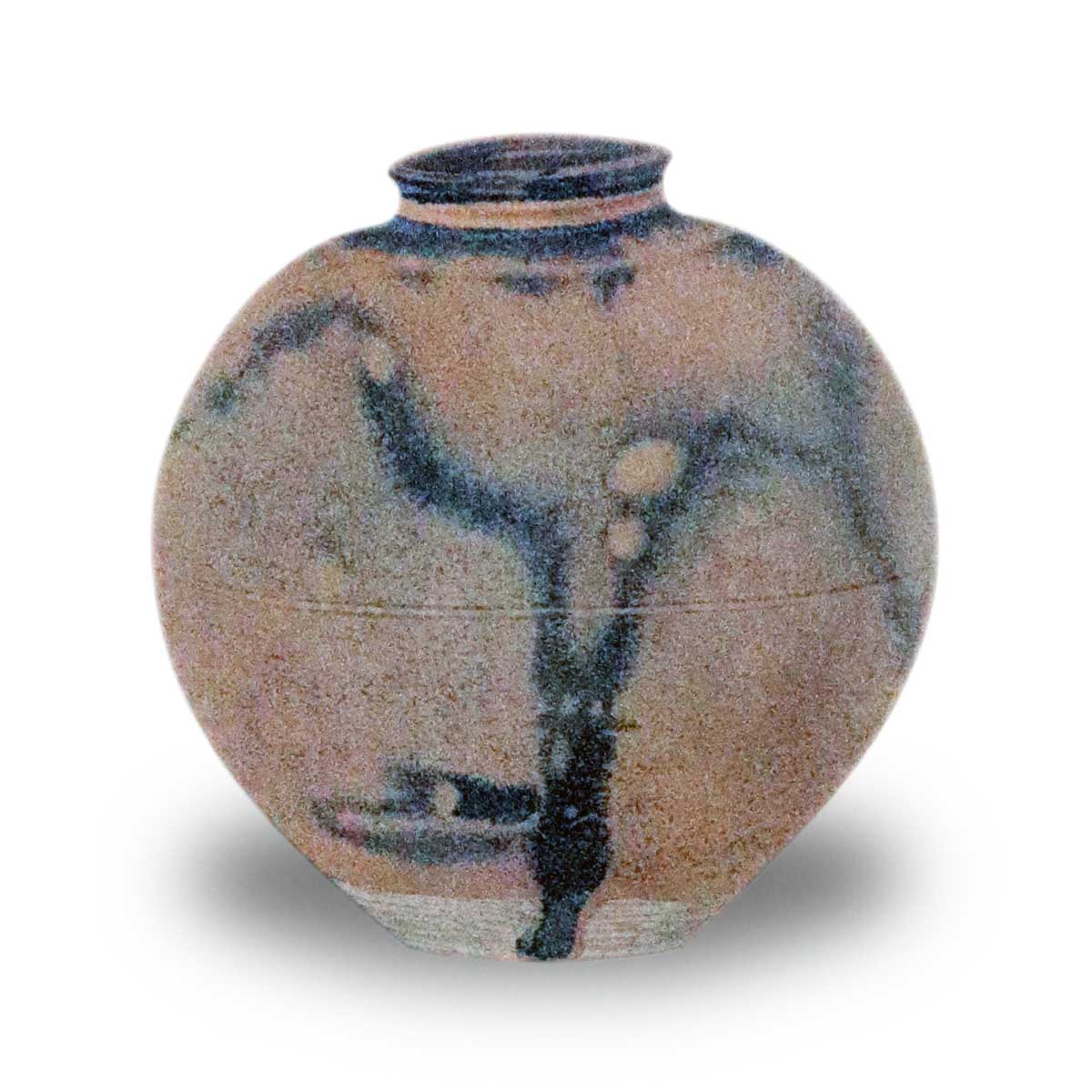
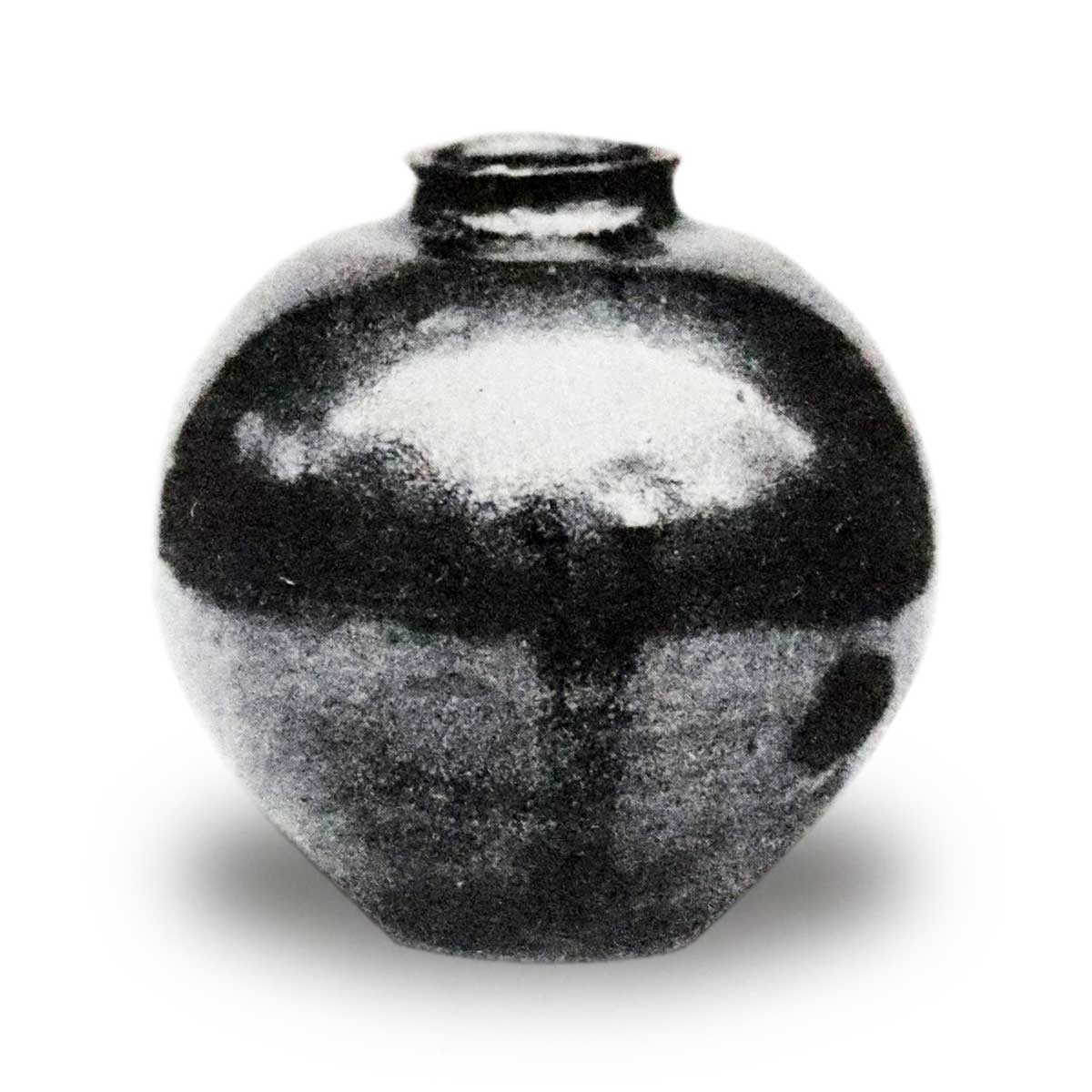
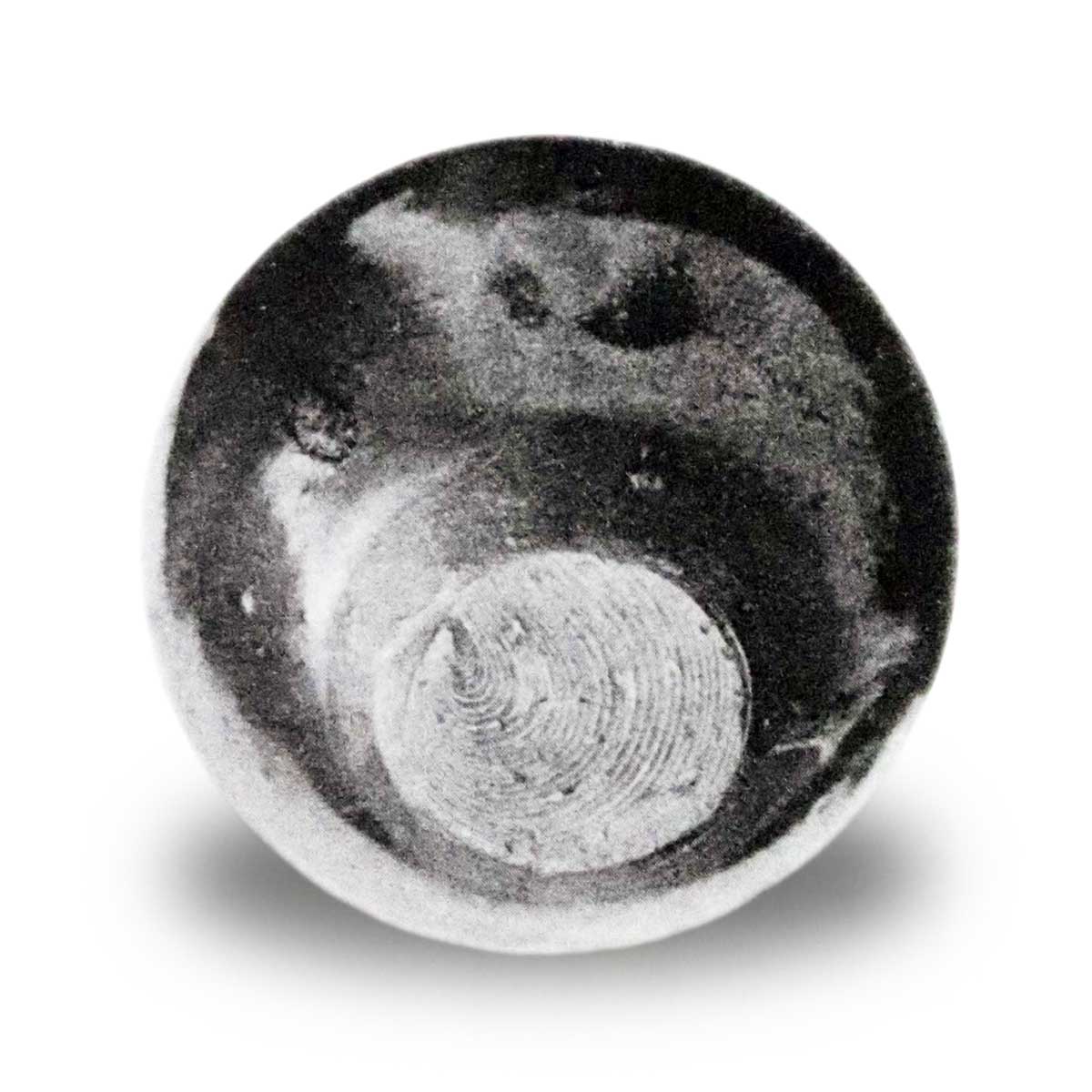
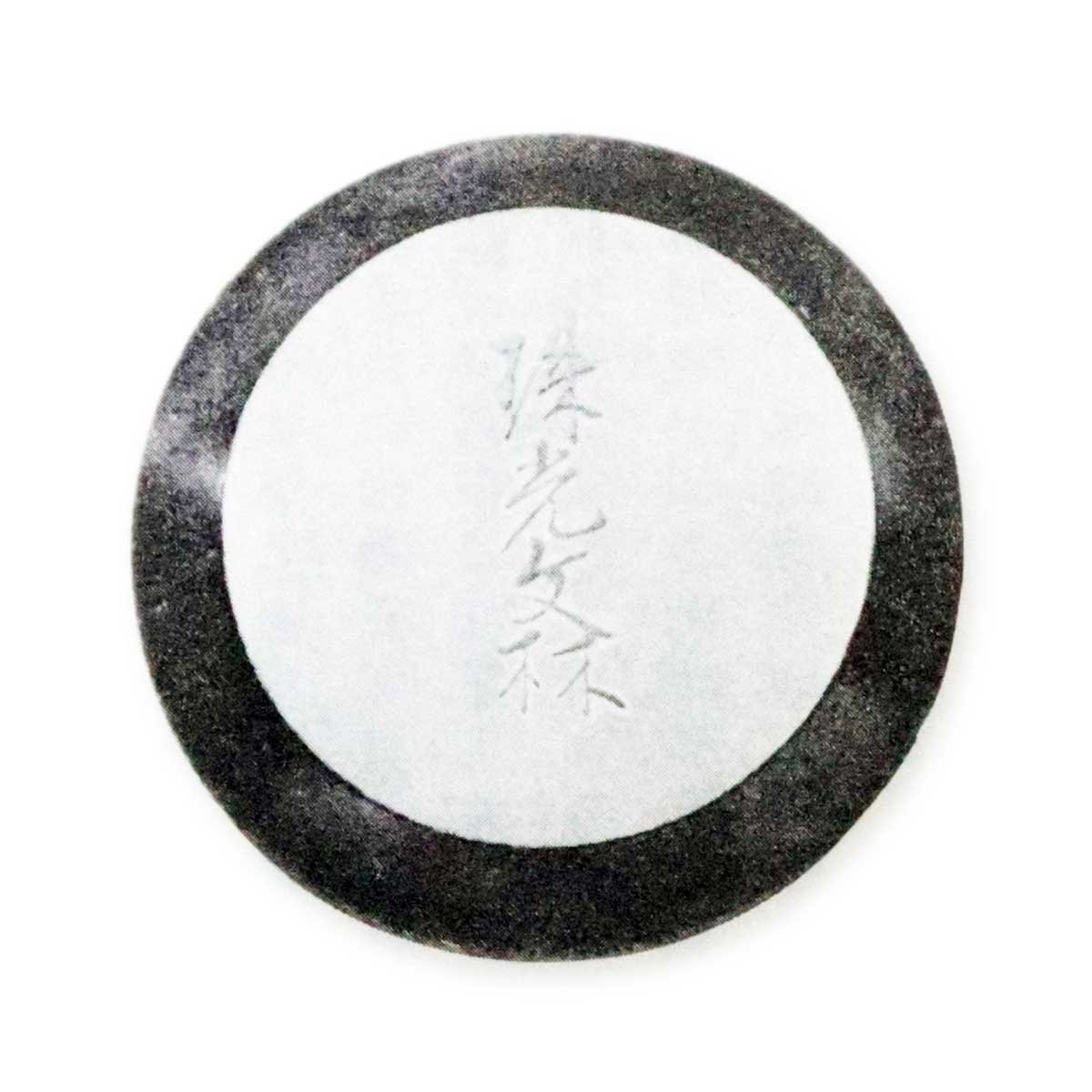
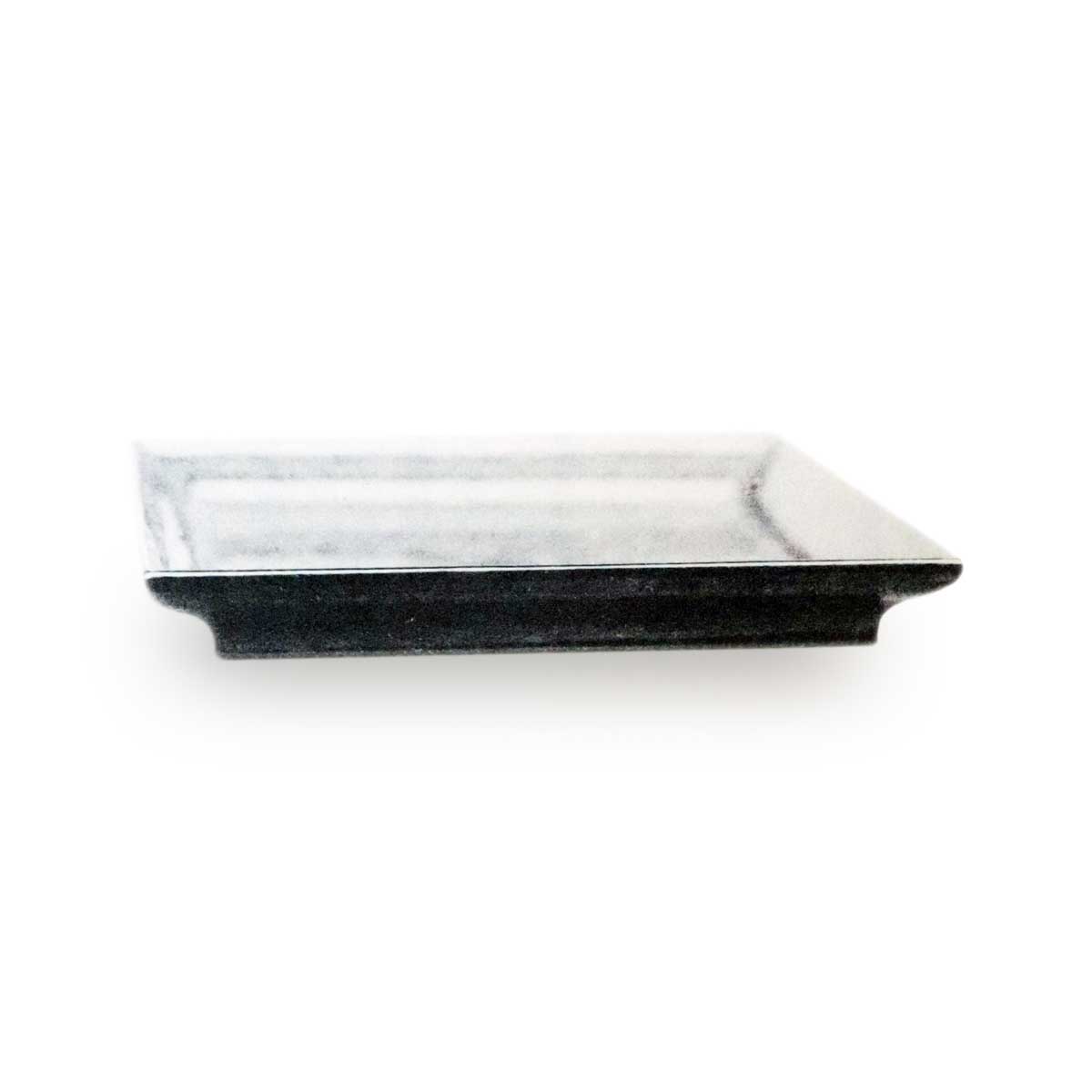
Made in China; a “Daimeibutsu” (masterpiece); also known as Sōgyū Bunrin or Tennōjiya Bunrin
Collection: Count Toshizumi Nanbu
Origin of Name: Originally called “Jukō Bunrin” because it was owned by Murata Jukō, the founder of the tea ceremony. Later, it passed to Sōgyū of Tennōjiya, a wealthy merchant of Sakai, and thus came to be known as “Sōgyū Bunrin” or “Tennōjiya Bunrin.”
Dimensions (converted at 1 sun ≈ 3.03 cm)
Height: Approx. 6.97 cm (2 sun 3 bu)
Body diameter: Approx. 7.12 cm (2 sun 3 bu 5 rin)
Mouth diameter: approx. 2.42 cm (8 bu)
Base diameter: approx. 2.73 cm (9 bu)
Koshiki (rim) height: approx. 0.45 cm (1 bu 5 rin)
Weight: approx. 82.9 g (22 monme 1 bu *1 monme = 3.75 g)
Accessories
・Lids: 8 pieces
Shukō style: Ivory (hammered)
Shukō style: Horn (no paper lining)
Shukō style: Black persimmon wood (variegated)
Takeno Jōō style: Ivory (dome-shaped lid, no paper lining)
Sen no Rikyū style: Ivory (stained)
Hosokawa Sansai style: Ivory (concave shape)
Furuta Oribe style: Ivory (Kubo)
Funakoshi Iyo-no-kami style: Ivory (dyed)
The above 8 lids are each wrapped in white ha-niwa (silk fabric) with ink inscriptions and tied to their respective lids with thread. These are housed in the inner box (kake-ko) of the bag-style case.
・Gomono-fukuro (bag for the tea caddy): White ha-niwa, with white tying cord
・Six protective covers (pouches)
Blue ground with Kinran (lining: iridescent Kai silk; cord: wisteria purple): Juko style
Kinran with Seigaiha wave pattern (lining: iridescent Kai silk; cord: brown): Shoo style
Moe-green ground with jewel-shaped pattern (lining: light blue Kaiki silk; cord: wisteria purple): Rikyu style
Chicken crest satin (lining: grayish-brown shichiko weave, cord: navy blue): Sansai style
Vertical-striped Guangdong weave (lining: brown kaiki, cord: purple): Oribe style
Light blue ground with arabesque pattern satin (lining: iridescent Kai silk, cord: purple): Funakoshi Iyo-no-kami style
・1 wooden mold (Karin)
It is contained in a light blue satin bag with an arabesque pattern.
・Bag box: Made of natural paulownia wood, with a hanging compartment (inner box) featuring 6 dividers
(Inscribed with “Jukō Bunrin Bag”)
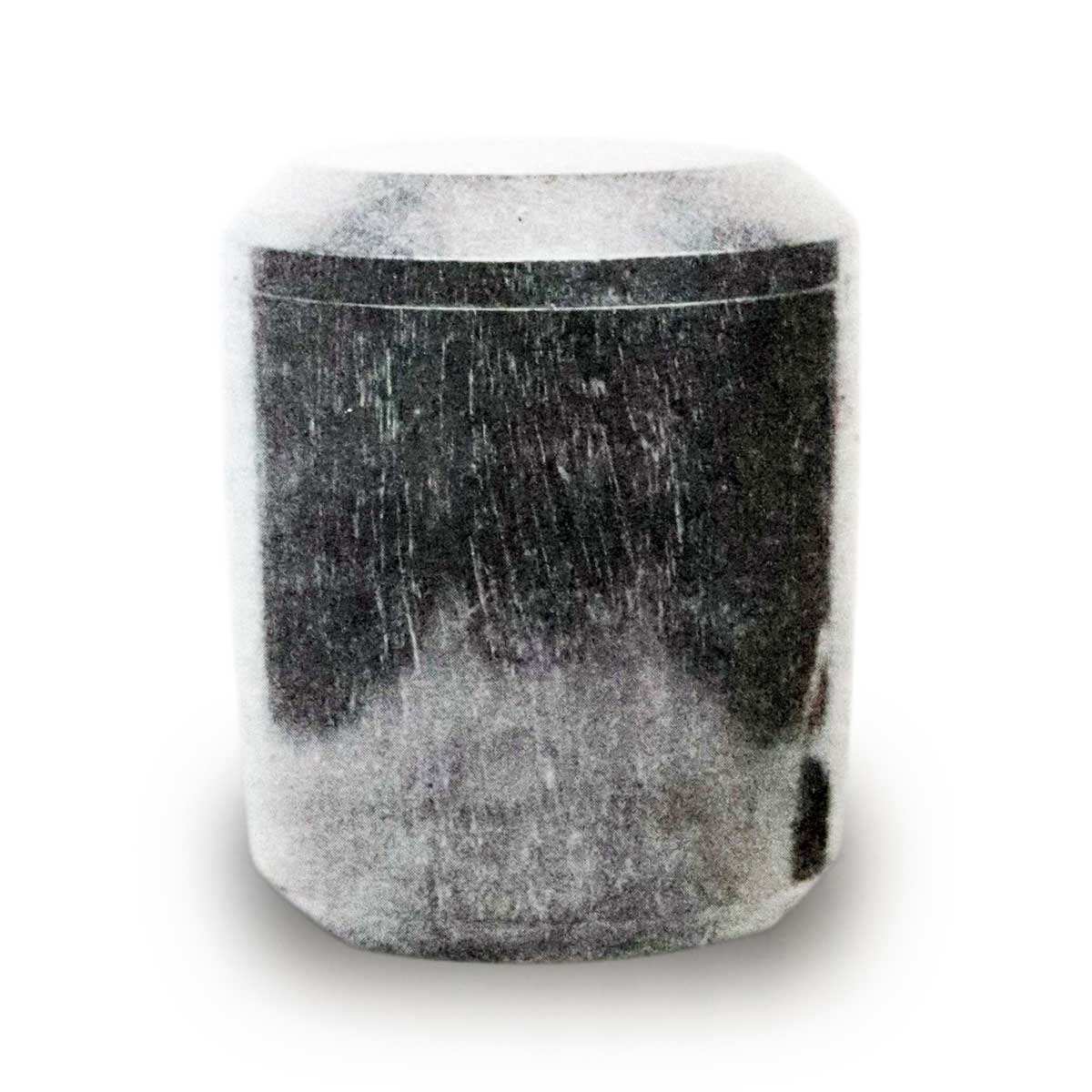
・Hikiya (tea caddy): Made of Tagayasan wood; interior features a gold-leaf pear-skin finish and gold-powdered ikake; the lid has a gold ground with vermilion lacquer inscriptions.
Pouch for this item: Satin with chrysanthemum and net patterns on an onado-iro (dark blue-green) ground; lined with brown kaiki; purple cord.
・Large Hikiya: Made of paulownia wood, with gold powder ikake and vermilion lacquer inscriptions.
Bag inscribed with the character “Kan”: Woven with wisteria-colored crests; the lining has a worn, aged appearance; the long cord is purple.
・Inner box: Black lacquer
The inscription on the paper affixed to the underside of the lid is as follows:
“Dimensions of the Shukō Bunrin
Height: approx. 6.97 cm (2 sun 3 bu)
Body diameter: approx. 6.97 cm (2 sun 3 bu)
Mouth diameter: approx. 2.58 cm (8 bu 5 rin)
Weight: approx. 83.3 g (22 monme 2 bu)
End.”
・Outer Box: Paulownia wood with Shunkei lacquer finish, equipped with a lock
The note written on the paper affixed to the underside of the lid is as follows:
“Notes on Juko Bunrin’s Tools
First, the lid and pouch are contained within a paulownia box.
Second, there are three tea scoops (one made of ivory by Juko, one made of horn by the same artist, and one made of bamboo by the same artist), all housed together in a single tube.
First, the Cloud and Dragon tray is housed in a black-lacquered box.
First, Juko’s letter is mounted as a hanging scroll and housed in a paulownia box.
First, there are four tea caddy boxes (two round ones and two square ones).
End.”
・Accompanying tray: A Chinese-made tray with a cloud-and-dragon pattern using the Zonsei (lacquer craft technique), entirely vermilion in color.
The central depression (mirror) features a cloud-and-dragon pattern, the rim features a pattern of chrysanthemum branches, and the bottom is black lacquered.
Dimensions
Diameter: Approx. 22.27 cm (7 sun 3 bu 5 ri)
Diameter of the center recess: approx. 17.42 cm (5 sun 7 bu 5)
Diameter of the base: approx. 18.18 cm (6 sun)
Height: approx. 3.03 cm (1 sun)
Bag: Brown satin
Box: Black lacquer
The handwritten note on the paper affixed to the underside of the lid reads as follows:
“Regarding the Zonsei (Zonsei) Tray
It is said that Lord Hosokawa Sansai presented this Cloud and Dragon tray to Juko Bunrin, so I am recording this here. That is all.
December 11“
・Accompanying hanging scroll
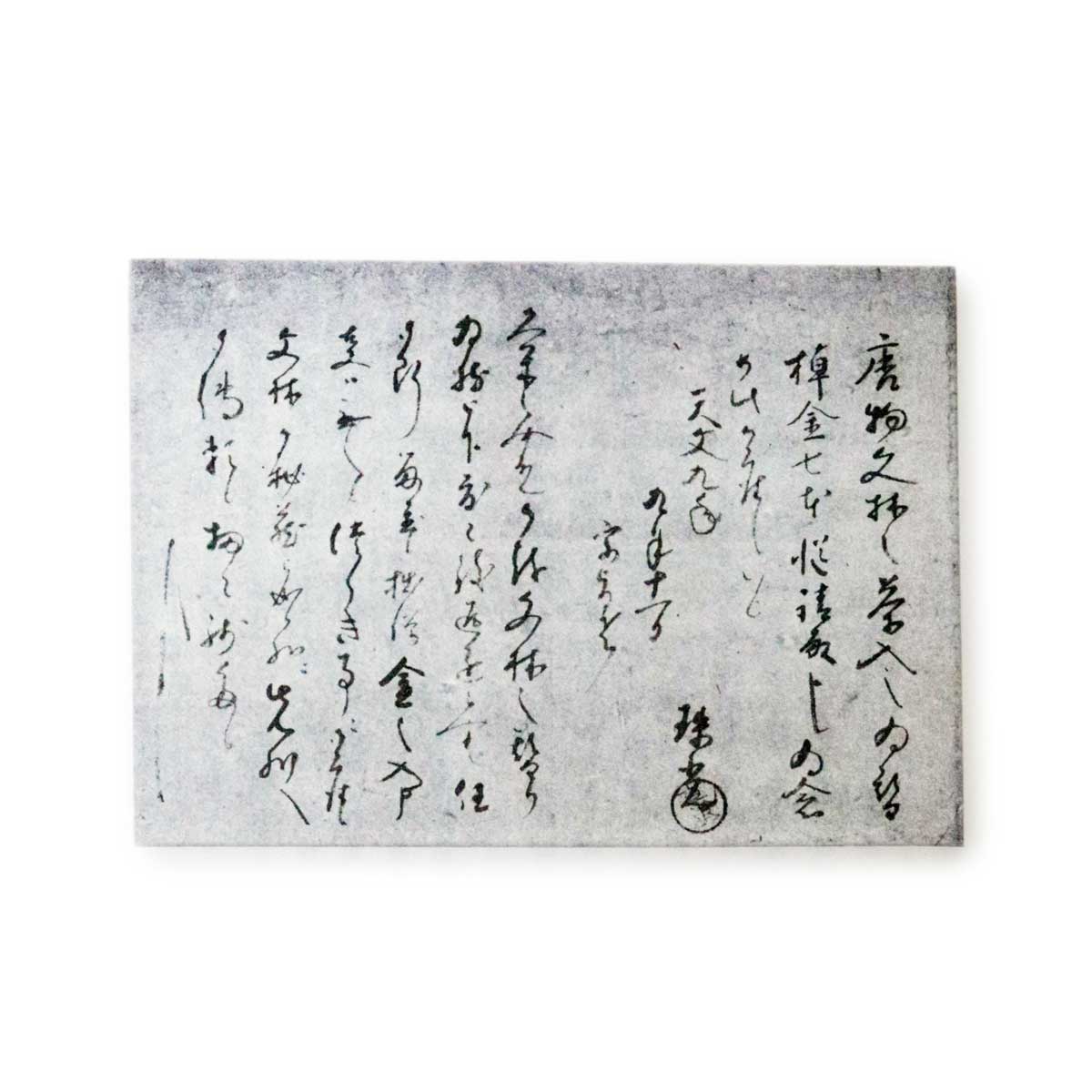
”I have indeed received seven gold bars (rod-shaped gold) as payment for the Chinese-made Bunrin tea caddy. I am recording this for the record. That is all.
September 11, Tenbun 9 (1540) Jukō (Seal)
To the Head of the Order
Lord Kume-no-suke paid a visit and brought this as a substitute for the Bunrin. I refused it several times, but was unable to decline and accepted it. As I had no intention of accepting money, this weighs heavily on my conscience. Please convey to the other party that they should treasure and keep the Bunrin in safe custody. I have many regrets. Respectfully submitted.”
Mounting (Hanging Scroll): Top and bottom are yellow-patterned satin; the middle band is silver Kinran; the one-character band and windband are old gold Kinran in a light blue-green hue.
Box: Unvarnished paulownia wood
“Letter Accompanying Bunrin, Written by Jukō”
Accompanied by an authentication certificate (appraisal) by the calligraphy expert Ryōchū.
・Accompanying notes: 1 letter (Written by Kuwayama Shuri)
“I have read your letter. As you mentioned, I was able to meet with you early the day before yesterday at the palace. Now, since you sent the promised tea caddy and flower vase, I examined them immediately. The tea caddy is a superb piece made in China; its shape is a particularly distinctive eggplant form, and it will look splendid when placed on a tray. I consider it truly magnificent.
As for the price, it is an item worth about 100 gold pieces even today. The flower vase is not made in China. I am returning both items to you. I have business to attend to in Ueno, so I am writing this reply in haste. Sincerely.
September 17, Ichigen (Seal)
(Addressee: Blank) “To Lord Mori”
・Enclosed note: 1 letter (written by Hakamada Koru)
“Regarding this Bunrin tea caddy, long ago, my grandfather, Hakamada Takumi, was living as a ronin in Sakai around the time the Toyotomi clan was destroyed during the Summer Campaign of Osaka. It is said that he received this item as collateral from a court noble at that time. Later, my adopted son-in-law gave it to me when I was a child, and I have cherished and preserved it for fifty years since it came into my possession. I shall share the details in person when we meet. Sincerely.
August 20, Hakamada Korui
To Mr. Toyama Denzaemon”
・Catalog: 2 letters
Memorandum
First, this Chinese-made Bunrin tea caddy was once owned by Murata Jukō, and later by Lord Hosokawa Sansai.
One set of three lids in the style of Jukō (one wooden, one made of horn, and one with a recessed design created by Hikiya).
One lid in the style of Shōō (bottle-shaped).
One lid in the style of Rikyū (recessed design).
One lid in the style of Lord Hosokawa Sansai.
One lid in the style of Furuta Oribe.
In addition to these, there is one more lid.
One set of Juko-style pouches (blue ground with Kinran and double crests).
One set of Shoo-style pouches (Kinran with a blue wave pattern).
One set of Rikyu-style pouches (satin with a treasure motif).
One set of Lord Sansai-style pouches (satin with a crane motif).
One set of Furuta Oribe-style pouches (made of Chinese fabric).
One Unryu tray (square shape).
One set of three tea scoops made by Juko (one ivory, one horn, one bamboo).
One letter by Juko (mounted as a hanging scroll).
The above
December 11, Genna 2 (1616)
Catalog of the Chinese-made Jukō Bunrin tea caddy and its accessories and utensils
One tea caddy with a lid that fits snugly inside; placed in a round, light green crepe bag and wrapped in a purple fukusa.
One first-layer container made of Hikiya wood. It is placed in a bag with a chrysanthemum crest pattern.
One: The second container is a Hikiya box made of Tang-kuwa wood. It is placed in a wisteria-patterned satin bag and wrapped in a purple fukusa.
One: The third container is a black-lacquered box. It is wrapped in a purple fukusa.
One: The fourth container is a box with a translucent lacquer finish. It has a lock and is wrapped in a dark reddish-brown (dark reddish-brown) fukusa.
One set of eight replacement lids.
One set of six replacement bags.
One set of various documents and one inventory list.
These three types (lids, bags, and documents) are housed in an unfinished paulownia wood box. However, the lids and documents are contained within a smaller inner box.
One square Chinese-made tray with a cloud-and-dragon design. It is in a brown satin bag inside a black-lacquered box.
One set of three tea scoops made by Jukō. They are in a tube inside a satin bag.
One letter from Jukō. It is in an unfinished paulownia wood box. A certificate of authenticity by the calligraphy expert Ryōchū is also inside the box.
One letter from Mr. Kuwayama Shūri.
As described above, please verify the contents before accepting them.
End
December 3 (Seal)
(Note) The three tea scoops by Jukō listed in this inventory are currently missing.
Miscellaneous Notes
Record of Jukō’s Meibutsu Tea Utensils
・Small Eggplant, Bunrin.
・Thrown Headscarf, Nitta Tea Caddy, En’o’s Calligraphy.
・A painting of sweets by Zhao Chang, a painting of returning sails by Muqi, and a painting of chrysanthemums by Yugan.
・Shiga Oshima vase, white Tenmoku tea bowl, tea bowl for cold water with smartweed.
・Kohari Katabira Tenmoku tea bowl, seven tea trays, and a tea scoop made of shallow bamboo.
・Imogashira water jar, Tenkaichi incense burner, drum sticks.
・Ten tea bowls
・Enza, Daikai (tea caddy).
・Xu Xi’s painting of a heron.
・Matsuka flower vase.
・Haikatsugi tea bowl.
・Ivory tea scoop.
・Gotoku incense box.
(From “Illustrated Catalog of Meibutsu Tea Utensils” by Kusama Waraku)
Jukō Bunrin. Owned by Nanbu Daizen-dayu. Height approx. 6.97 cm (2 sun 3 bu), mouth diameter approx. 2.58 cm (8 bu 5), body diameter approx. 6.97 cm (2 sun 3 bu and a little more), base diameter with tray approx. 2.73 cm (9 bu). The base glaze is persimmon-colored, appearing dark, with slight “dakatsu” (glaze crackling) patterns visible at the shoulders. These patterns seem to emerge from the dark base surface. The waist of the body is thick, and the turned rim is exceptionally well-defined (see illustration). It has a shape that curves upward in this manner. The Hikiya is made of ironwood; the underside of the lid has a pear-skin finish, and the top is inscribed with “Jukō Bunrin” in vermilion lacquer over gold powder. The bag is pale yellow. The upper Hikiya is made of Japanese yew with chamfered edges, and the top is inscribed with “Kan” in vermilion lacquer. The bag features a brown floral pattern with embroidered accents on a sea-green background, and the lining is navy-blue Hakata-shima. The inner box is black lacquered with a pale yellow Shimasanada cord. The upper box features a “tame-nuri” finish and is equipped with a lock. There are six pouches: one in pale yellow satin (Rikyu’s preference), one in Yuraku satin (Sansai’s preference), one in pale yellow ground with Kinran (Shoo’s preference), one in old Kinran (Juko’s preference, heavily worn), one in Guangdong weave (Oribe’s preference), and one in Shoo’s satin (Funakoshi Iyo-no-kami’s preference). There are eight lids. The accompanying tray is a square Zonsei tray with a dragon pattern. The accompanying documents include a hanging scroll containing Jukō’s receipt (text omitted; as mentioned above), a certificate of authenticity by Ryōchū in his old handwriting, and documents by Kuwayama Shūri and Ichigen. (Illustration of the tea caddy available)
(From the Makuan Bunko, Series A, No. 7)
Bunrin (Bunrin) was once owned by Jukō and was kept in a Guangdong pouch. It is said that “Bunrin” refers to a vessel with a narrow mouth. The glaze’s appearance is exceptionally beautiful, and it rests on a square tray. It was once owned by Tennoji-ya Soiku. These two tea caddies—Bunrin and Gyokkan Bunrin—are Meibutsu rivaling the Nasu tea caddy, though the clay and glaze are entirely different from those of the Nasu. Among connoisseurs, there are deeply guarded secrets regarding them, and oral traditions regarding the method of preparing tea.
(
From Yamagami Sōji Ki)
The name “Bunrin” (or “Bunrin”) derives from the shape of the rim. Even if the rim is turned back (curved outward), a Bunrin is defined as having a thick rim and an interior that appears to be hollowed out. The rim appears to be carved away, and the overall shape is not fixed. As proof of this, there are three Bunrin tea caddies—the Tamagaki Bunrin, the Juko Bunrin, and the Hamuro Bunrin—that are universally recognized, yet their shapes are completely different. It is said that Sen no Rikyu remarked, “It should be acceptable to call a tea caddy of indeterminate shape a ‘Bunrin.’ Since even these three representative Bunrin caddies have completely different shapes, anything that cannot be identified is a Bunrin.” This was recounted by Furuta Oribe. That is why, nowadays, people generally refer to anything and everything (whose shape is unclear) as a Bunrin. The Juko Bunrin and the Tennojiya Sōtatsu (Sōtatsu was the name Sōyuki adopted after changing his name; this appears in Imai Sōkyū’s diary) tea caddies are the same piece and are currently in the possession of the Shogunate (the Kōbō-sama).
(From the “Matsuya Diary”)
Jukō first owned the “Nitta” tea caddy, then the “Sōyuki Bunrin,” and later the “Kogashira” tea caddy. He never parted with this vessel, and at the end of his life, this “Tōtokin” shoulder-rest tea caddy and En’u’s hanging scroll remained even after his death.
(From the Chaki Meibutsu-shū in the Gunshū Ruijū collection)
Tennojiya Bunrin. Located in Sakai, owned by Tennojiya Sōyuki.
(From Tenshō Meibutsu-ki)
Sōyuki Bunrin. Owned by Tennojiya Sōyuki.
(From Higashiyama Go-mono Uchi Betsuchō)
On August 1, Tenshō 9 (1581), I attended the horse parade (military parade) at Azuchi Castle.
First, I watched the horse parade on August 1. Then, around 2:00 p.m. on the 2nd, Hasegawa Hōin was sent as an envoy of Lord Oda Nobunaga to convey his intention to “return the Bunrin tea caddy that was presented last year.” Immediately, the Honin brought the tea caddy with him and came to the residence of the Miyauchi Honin. Lord Nobunaga’s message was as follows: “After it was presented last year, I had intended to return it from the start, but I deliberately delayed it, thinking it would serve as a lesson for the future. I have kept you waiting until now, and I have been concerned about how this might appear to the public.” His words were extremely courteous. I departed Azuchi immediately, around 4:00 p.m. on the 2nd, and arrived in Sakai around 8:00 a.m. on the 4th. To express my gratitude, I returned to Azuchi on the 11th, having prepared gifts and other items, but Lord Nobunaga declined to accept them and sent them back. This was all the more gratifying.
(From Tsuda Sōyū’s Tea Ceremony Diary)
ーーーーーーーーーーーーーーーーーーーー
[File Name: ybf_00378.JPG]
■Text as in the original
On the night of the 28th day of the 11th month of the 10th year of Tenshō, I had the honor of presenting myself before Lord Bunrin at Yamazaki in Chiku Province. I presented two bags of tea and three tiers of sweets in a lacquered box. Lord Bunrin tasted the tea in the parlor at Chiku Province.
(Tsuda Sōyū’s Tea Ceremony Diary)
September 16, 1583 (Tenshō 11, Year of the Goat) The tools for Lord Hideyoshi’s journey were prepared. The number of people involved was five: the Minister of the Imperial Household, Hōin; Sōeki; Araki Dōkun; Mosuya Sōan; and Sōyuki. Those present to observe were Ikeda Katsunori and Yakushiin Tokun.
Four-and-a-half-mat display
On the tea table: Bunrin; square tray: Sōyuki
First flower arrangement; on the square tray: Imperial artifacts
Incense burner; incense box; on the long tray: Sōyuki
Incense burner; on the square tray: Sōeki
Hanging scroll: a painting of the evening bell at Tamabune; imperial artifacts; later, a Matsumoto eggplant-shaped Chiku-shu-style cover was brought out; in front of the tall folding screen, on a square tray with a headscarf and shoulder-rest, Soan; on a small shiba-style square tray with a shoulder-rest, Soeki; on a shoulder-rest tray, Miyao and Miyauchi Hoin (omitted); a 40-koku jar, pine flowers, and ten items; Kōgata jar, five Arami-style jars—all imperial items (omitted), including a large Oumi-style tea caddy, an Amago tenmoku, and an Ido tea bowl.
(Tsuda Sōyuki’s Tea Ceremony Diary)
February 25, Tenshō 13 (1585), Afternoon
Lord Nobuo attended; Lord Gengo; Hashiba Saburōbei
One tea setting: Starting with the boatman, I presented a Bunrin tea bowl for his inspection; the tea was not served. Later, I placed it on a tray on the tea table. I arranged seven kinds of sweets in a square formation. With my right hand, I held out a small jar for his inspection. I received a horse as a gift; it is a horse with a mottled coat.
(Excerpts from Tsuda Sōyuki’s Diary)
On the morning of September 7, 1542, at the Nishimaru in Edo; the guest was Sanza alone.
The Shogun (age 35) served tea. The previous day, the messenger Sakuma Shōkan had conveyed the Shogun’s command: “If you have any preferences regarding the tea utensils, please arrange the display accordingly.” The Shogun requested that the following three items be presented: the Tōchikin, Ankokuji Hotaru, and Tsuru no Ichisei. Matsudaira Izumino-no-kami greeted the guest at the entrance, in accordance with the Shogun’s instructions. On the way, Sanzai (then 76 years old) was escorted by Doi Daishokudo, etc. The tea room was decorated at his discretion with various items, including Teika’s Kokin, Zi’ang, inkstones, and Jukō Bunrin. Sanzai spoke at length, saying that while he understood the intent, he did not see the Shogun’s personal taste reflected in the arrangement.
(Matsuya Notes and Sakurayama Ichiyu Notes)
Jukō Bunrin: Imperial Possession
(Kobutsu-ki)
Eyukuwa Bunrin: Tea Caddy (Shomono-fu)
(Meibutsu-butsu-ki)
It is said that His Majesty later inquired about this matter, and Izu-no-kami was instructed to report that whenever tea ceremonies were held henceforth, he should advise which utensils were appropriate. Regarding hanging scrolls, En’u and Kyodo were suitable; for tea caddies, the “Throwing the Headscarf” and “On the Tray” designs were appropriate; and for tea ceremonies, the Jukō Bunrin design was deemed suitable. Although people generally place the tea caddy on a high stand, when the tea table is a Gokushin style, a small pot is used as the main vessel, so it is appropriate to store the Jukō and Bunrin in a single chest.
(From “Kokon Chawa” by Katagiri Iwami-no-kami Sadamasa, authentic autograph)
(Note) When Matsudaira Izumino-no-kami was ordered by the Shogunate to investigate tea utensils, he entrusted the task to Katagiri Sekishu, claiming he was unfamiliar with the matter. It is said that the terms “First Chest” (or “Ichiban O-nagahito”) and “Second Chest” (or “Niban O-nagahito”) found in the Shogunate’s Imperial Utensils and Sukiya Catalogues were classifications established by Sekishu at that time. Based on the preceding text, it is likely that Jukō Bunrin, along with Hatsuhana Katatsuki, was placed in the first chest.
On the night of November 28, Tenshō 10 (1582), I presented Bunrin to Hashiba Hideyoshi (Chikushū) at Yamazaki. I presented two bags of tea and offered sweets arranged in a three-tiered box. Lord Hideyoshi partook of the tea in the parlor.
(From Tsuda Sōyuki’s Tea Ceremony Diary)
On September 16, 1583 (Tenshō 11), Lord Hideyoshi arrived, and a tea gathering was held with a collection of Meibutsu tea utensils. The participants were five: Miyauchi-kyō Hōin, Sen no Rikyū (Sōeki), Araki Dōkun, Mozuya Sōan, and Tsuda Sōyuki. The spectators were Ikeda Tsuneoki (Katsunari) and Yakushiin Tokun.
Decoration of the 4.5-mat tea room:
In the tokonoma: Sōyuki’s Bunrin tea caddy (placed on a square tray).
A Hatsuhana Katatsuki tea caddy (from Hideyoshi’s collection), placed on a square tray.
Sōyuki’s incense burner and incense container, placed on a rectangular tray.
Rikyū’s incense burner, placed on a square tray.
The hanging scroll was Gyokkan’s “Picture of the Evening Bell” (from Hideyoshi’s collection). Later, Lord Hideyoshi brought the Matsumoto Nasu tea caddy. In front of the tall folding screen were Sōan’s Tōtokin Katatsuki (placed on a square tray), Rikyū’s Koshiba Katatsuki (placed on a square tray), and Miyauchi Hōin’s Miyaō Katatsuki (omitted). Furthermore, the five vessels—the Yonjū-koku Vase, Matsuka, Jūshi, Kōbō Vase, and Arami Vase—are Imperial Treasures (omitted). A large “Uchigumo” tea caddy, an Amago tenmoku tea bowl, and an Ido tea bowl were displayed.
(From “Tsuda Sōyuki’s Tea Ceremony Diary”)
February 25, Tenshō 13 (1585) – Afternoon
Lord Oda Nobuo paid a visit. Also present were Lord Gengo and Hashiba Saburōbei.
I had the Funako tea caddy displayed in the tokonoma from the start, and then brought out the Bunrin tea caddy to present it. I did not prepare tea, and later returned it to the tray in the tokonoma. I arranged seven varieties of sweets in a square dish. I carried out a small tea caddy placed on a tray made of katakunoki wood to present it. As a reward, I received a chestnut-colored horse.
(From Excerpts from the Diary of Tsuda Sōyū)
On the morning of September 7, 1638 (Kan’ei 15), at the Nishinomaru of Edo Castle. The only guest was Hosokawa Sansai.
At a tea gathering hosted by Shogun Tokugawa Iemitsu (then 35 years old), an imperial decree had been issued the previous day by the messenger Sakuma Shōkan: “Please let us know what utensils you prefer, and we will display them as you wish.” Sansai requested, “I would like to view three items: the ‘Thrown Headscarf’ (tea caddy), the ‘Fireflies of Ankokuji’ (tea bowl), and the ‘Crane’s Single Cry’ (flower vase).” On the day of the event, Matsudaira Izumino-no-kami served as the host to greet him at the entrance, and Sansai was granted special treatment, being exempted from shaving his sakayaki (the topknot).
In the roji (tea garden), Doi Daishu served as Sanzai’s (then 76 years old) guide. The kitchen (mizuya) was adorned with various Meibutsu, including Fujiwara no Teika’s Kokin Wakashū, calligraphy by Zhao Mengfu (Zi’ang), famous inkstones, and Jukō Bunrin. Sensai, having grasped the intention behind this, stood up and remarked, “I did not look at the utensils in the kitchen (for if I looked, I would want them),” as Lord Sensai himself recounted in detail.
(From Matsuya Hoki and Sakurayama Ichiyu Hoki)
Jukō Bunrin. Imperial possession (held by the Shogunate).
(From Komeibuki)
Eyukuwau Bunrin (referring to Jukō Bunrin). Imperial tea caddy (Treasure House).
(From Ganka Meibuki)
Later, upon hearing that the Shogun’s household had inquired again, Matsudaira Izumino-no-kami conveyed the Shogun’s directive: “Henceforth, whenever the Shogun’s household holds a tea ceremony, you are to offer your opinion on which utensils are most appropriate.”
“For hanging scrolls, calligraphy by En’gu or Kyodo would be best; for tea caddies, one should place a ‘tō-kubiki’ on a tray. When preparing tea, the Jukō Bunrin is most suitable. Regarding tea caddies, while the general public considers the katatsuki (a tea caddy with a broad, shoulder-like shape) to be of higher rank, the small, rounded caddy is the standard for the most formal tea ceremony (Gokushin) performed using a daishi (tea tray). Therefore, the Jukō Bunrin is an item that should be stored in the highest-ranking ‘First Nagamochi’.”
(Kokon Chawa [Tea Talks Through the Ages] by Katagiri Iwami-no-kami Sadamasa, in his own hand)
(Note) When Matsudaira Izu-no-kami was ordered by the shogunate to investigate tea utensils, he asked Katagiri Sekishu for assistance, claiming he was unfamiliar with the subject. It is said that the classifications of “First Nagamochi” and “Second Nagamochi” found in the shogunate’s “Jōgodo” and “Osukiya Mokuroku” were established by Sekishū at that time. According to the preceding text, the Jukō Bunrin should be an item placed in the highest rank of “First Nagamochi,” alongside the famous “Hatsuhana Katatsuki.”
History
Originally owned by Murata Jukō, the founder of the tea ceremony, when he sold this tea caddy to another person for seven bars of gold in September of Tenbun 9 (1540), a letter in Jukō’s own handwriting survives, stating: “Please convey to the recipient that they must treasure and keep Bunrin in secret. It pains me greatly to part with it.” It was subsequently passed down to Tsuda Sōyuki of Sakai, but for reasons unknown, in the 8th year of Tenshō (1580). However, on August 1 of the following year, Tenshō 9, it was returned to Sōyuki by Nobunaga during a horse parade at Azuchi Castle. Tsuda Sōyuki’s tea ceremony diary records that Nobunaga spoke to him in very polite terms, saying, “Ever since it was presented to me last year, I had intended to return it quickly, but I deliberately delayed it, thinking it would serve as a lesson for the future. I have kept you waiting all this time, and I have been concerned about how the world perceives this situation.” From this, it seems there were likely complex circumstances surrounding Nobunaga’s confiscation of this tea caddy.
Later, in the 11th year of Tenshō (1583), Muneyuki used it at a tea gathering hosted by Hideyoshi, and on February 25, Tenshō 13 (1585), he showed it to Oda Nobutaka and received a horse as a reward. It is believed that it was subsequently passed down to Hakamada Takumi, a rōnin from Sakai, then transferred from his grandson, Furuiri, to Hosokawa Sansai, and finally presented by Sansai to the Edo Shogunate. On September 7, 1638, Shogun Tokugawa Iemitsu hosted a tea ceremony at the Nishinomaru of Edo Castle with Sansai as his sole guest. He granted Sansai permission to view the three Meibutsu he had requested—the “Thrown Headscarf,” a calligraphy by Kyodo of Ankokuji Temple, and “The Single Cry of the Crane”—and it is said that the “Juko Bunrin” was displayed in the water room at that time. Furthermore, since it is recorded in a handwritten note by Katagiri Sekishū (Sadamasa) that he told the shogun, “This tea caddy should be placed in the ‘Ichino-nagamochi,’ the highest-ranking treasure of the shogunate,” it is clear that this tea caddy was kept in the shogunate’s treasury from 1638 until around the Kanbun era (1660s), when Sekishū was active. However, there are currently no documents to prove how it subsequently came into the possession of the Nanbu family (the daimyo of the Nanbu domain).
Record of Actual Viewing
On October 7, 1921 (Taisho 10), I had the opportunity to view this piece in person at the residence of Count Toshizumi Nanbu, located in Fujimi-cho 2-chome, Kojimachi Ward, Tokyo.
The mouth is small, the rim is rounded, and the flaring (curvature) is relatively shallow. The neck is low, and the area around it is slightly indented. The body is full-bodied, with a single, extremely thin ring of sunken wheel marks encircling it. From the rim downward, the unglazed clay surface appears in a vermilion-brown hue, with fine wheel marks running around it. The thread marks on the bottom are fine, with a few small “stone splinters” (small stones from the clay that popped to the surface during firing) scattered among them; there are slight scuff marks at the starting point of the thread marks and along their edges. Additionally, there is a long, narrow chip in the clay along the rim of the bottom.
The overall body color has a metallic sheen with a hint of persimmon, tinged slightly with gray, and some areas contain a slight bluish tint. A ring of black glaze encircles the neck, and some “snake-scorpion” (crazing) is visible on top of it. Black glaze flows down from both sides below the shoulder, intersecting to form a single line near the body’s ridges, and stops where it meets the base (near the bottom). There is also a slight “snake and scorpion” pattern where the glaze stops. Furthermore, the area around the waist where black glaze appears horizontally, like a haze, intersecting at a right angle with the flow of the black glaze, is a magnificent sight unparalleled except in the Meibutsu “Hatsuhana Katatsuki” style.
Furthermore, on the opposite side of the piece as it is displayed, a single streak of rich black glaze flows from the tip of the shoulder down to the rim, where it stops, and a slight “snake-and-scorpion” pattern appears at its tip. In addition to this, there are patches of uneven black glaze here and there, each with a faint hint of the “snake-and-scorpion” pattern. Furthermore, there is a spot around the middle where the glaze has not adhered, known as a “glaze omission.”
While the glaze color is subdued, various patterns emerge, making this a tea caddy with much to admire. Inside, glaze covers the rim of the mouth and has partially run down. The wheel marks on the interior are extremely faint, and there is a circular indentation (kagami-ochi) in the center of the base. Aside from a small lacquer repair (trace of restoration) on the rim of the mouth, there are absolutely no flaws. The overall construction is thick, and it feels substantial and heavy when held. In terms of its glaze color, patterns, and overall style, this is a Meibutsu that possesses a unique character even among Chinese Bunrin tea caddies.