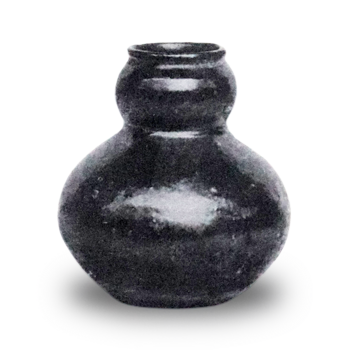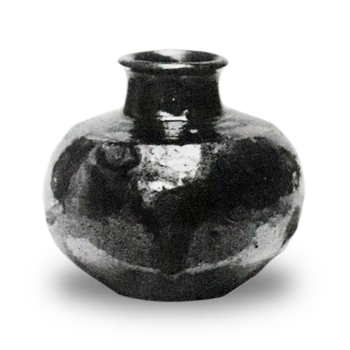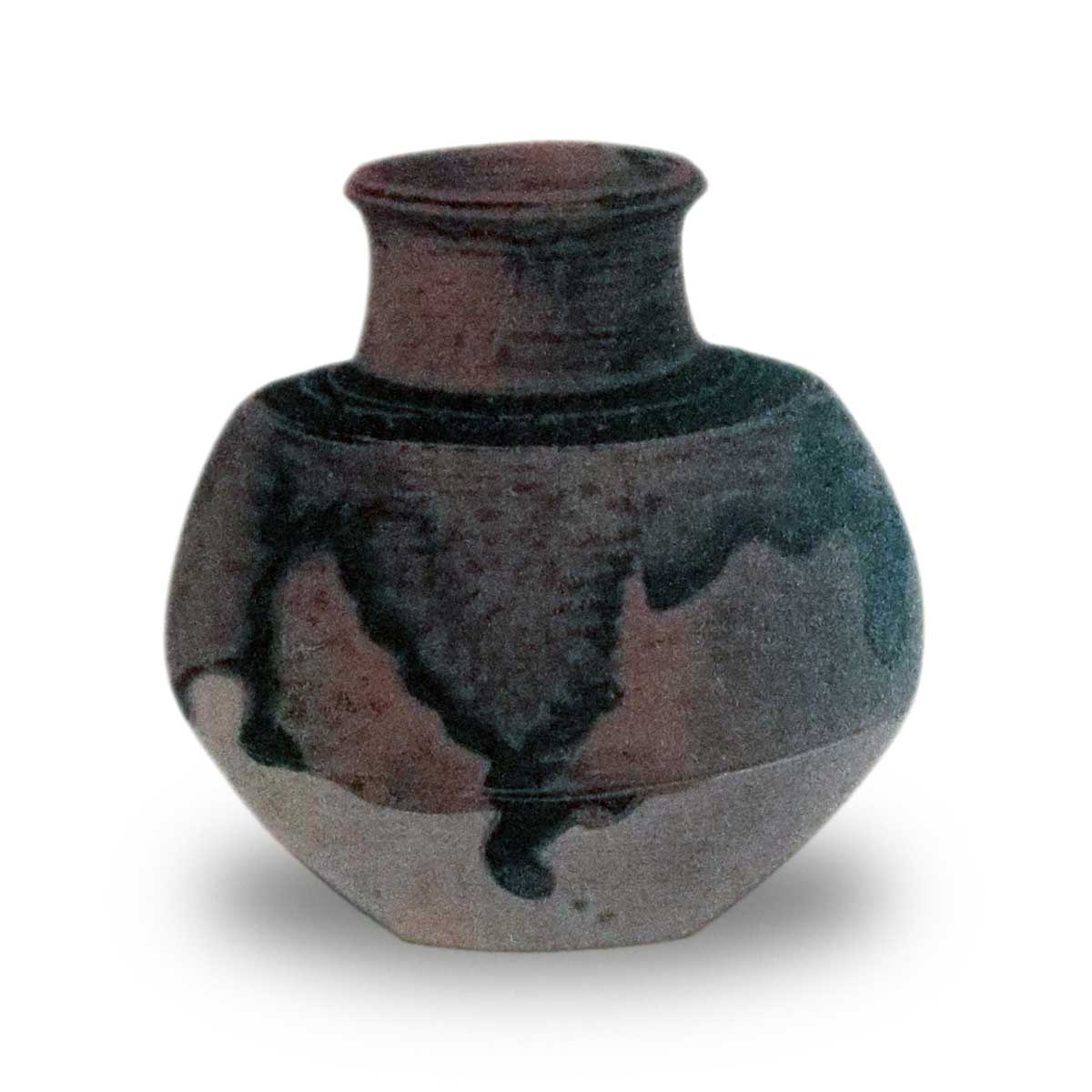
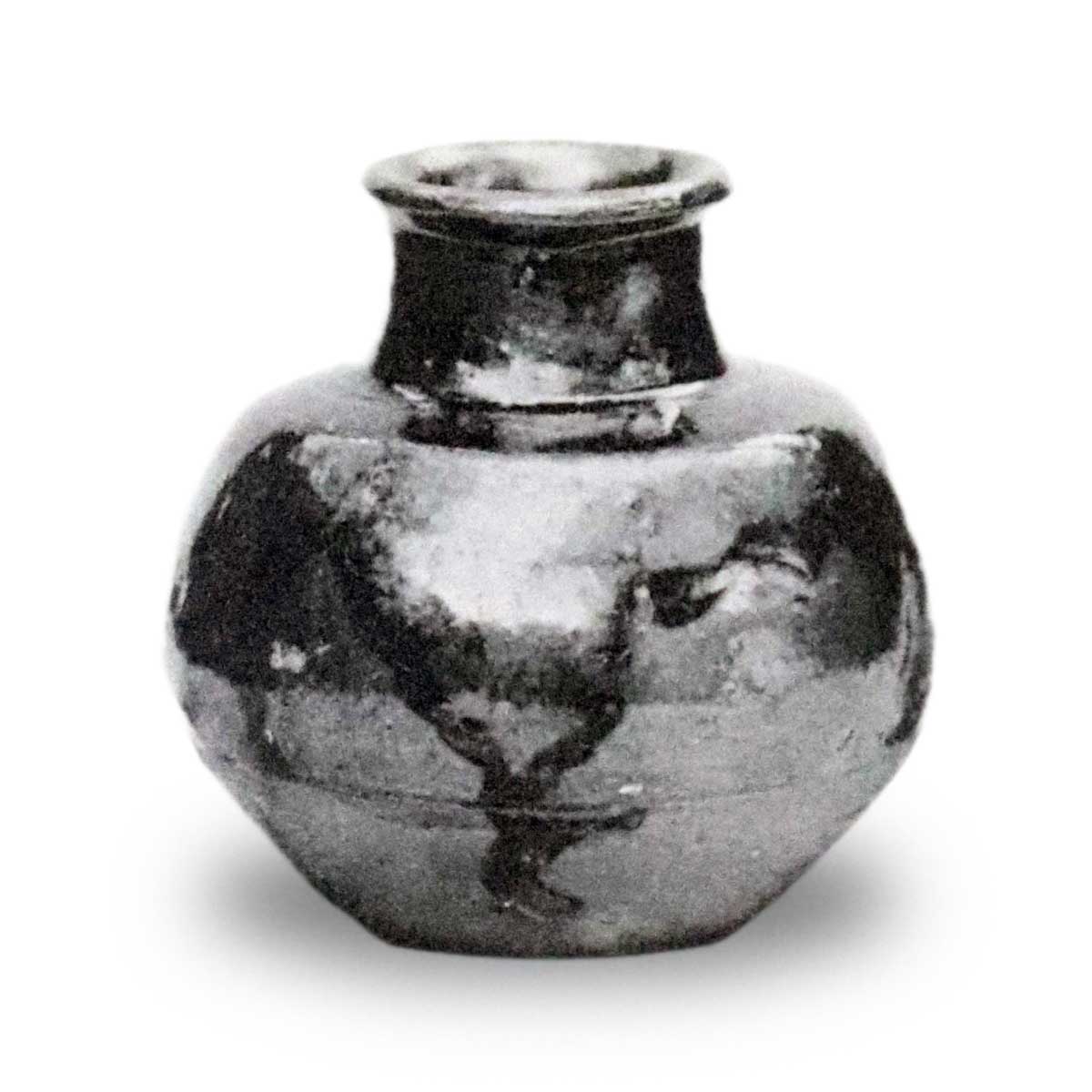
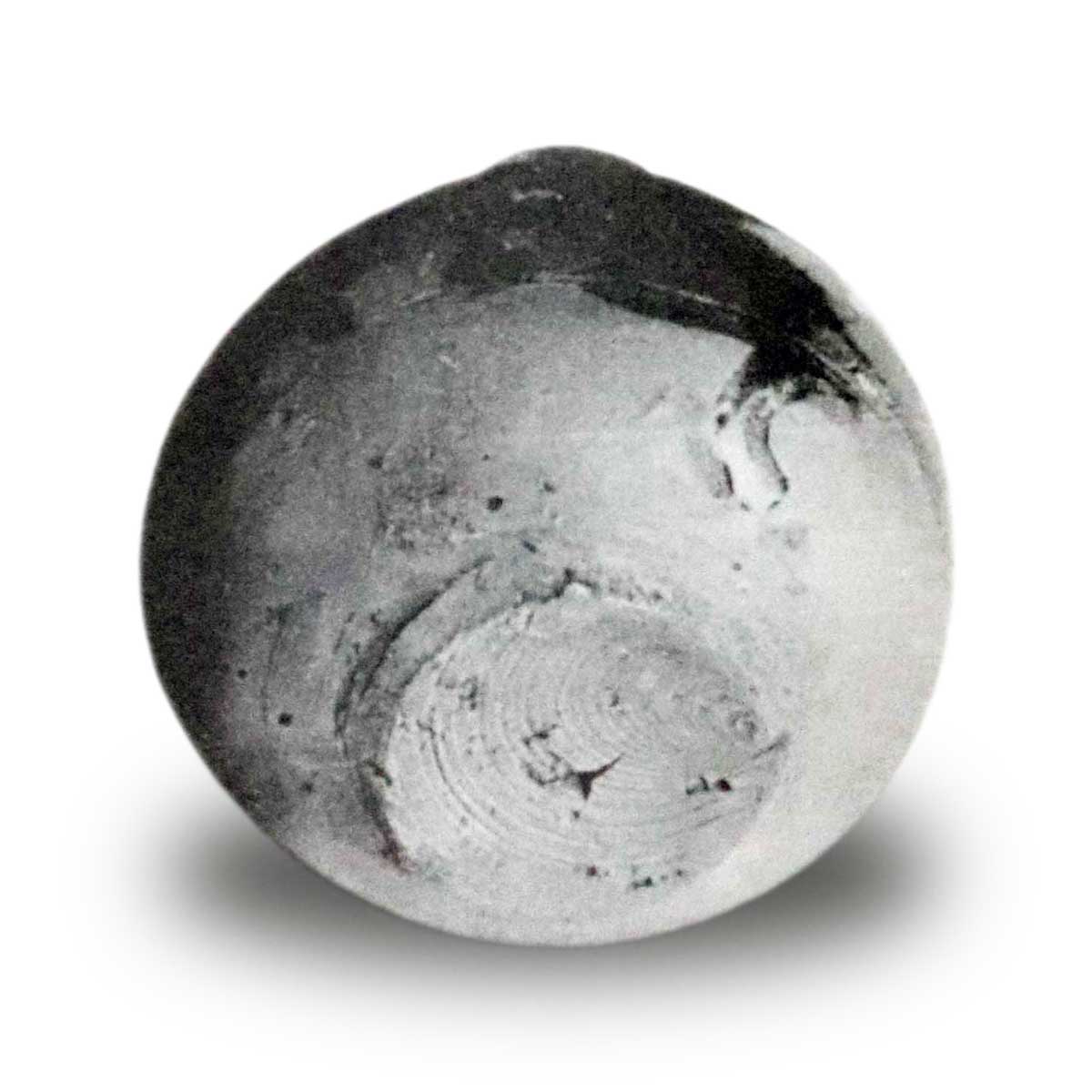
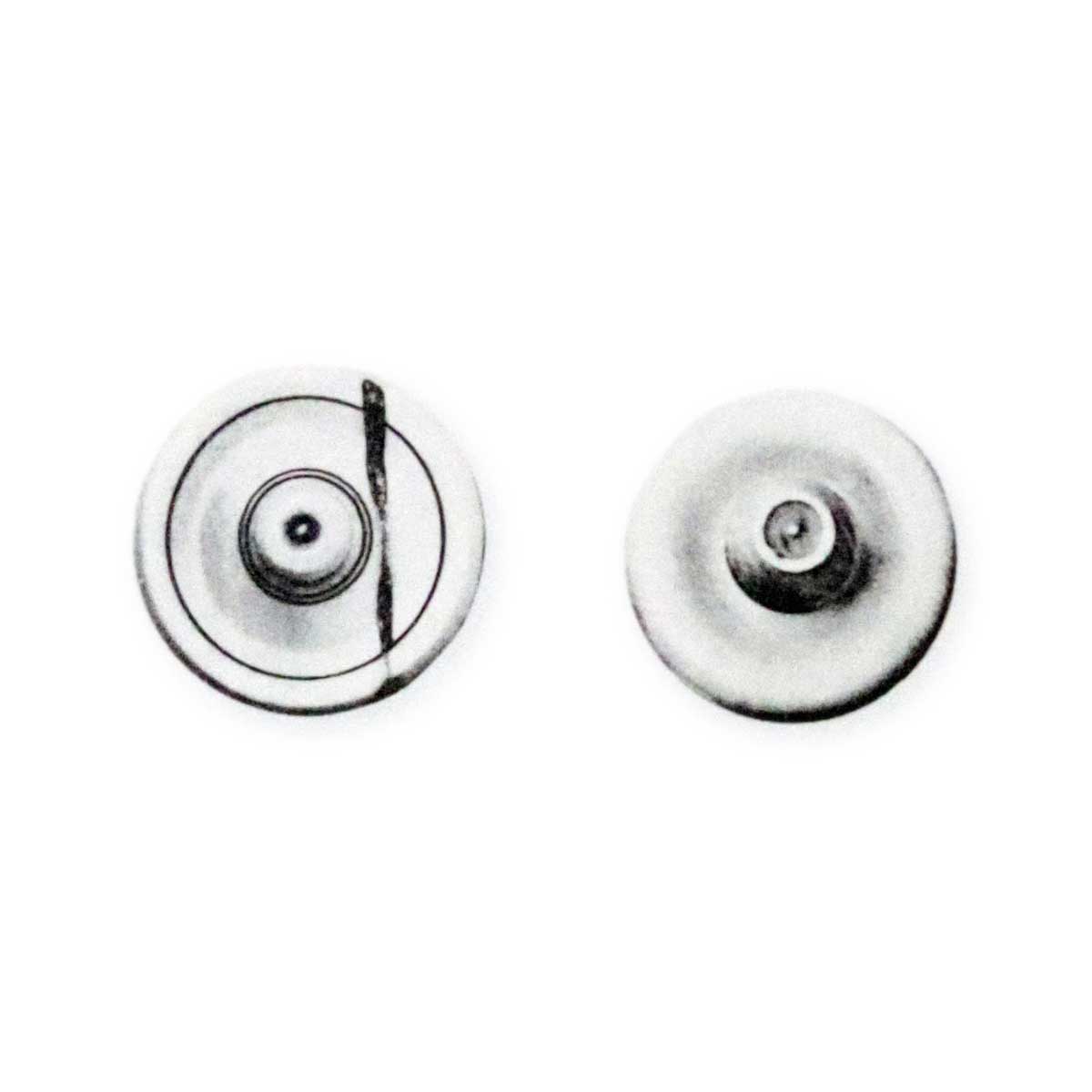

Made in China; Daimeibutsu; Collection: Mr. Masayoshi Kato, Tokyo
Origin of the Name
The name derives from the fact that it was once owned by Shino Munenobu. Munenobu was a tea master and also the founder of the Shino school of incense appreciation. The Comprehensive Genealogy of Tea Masters states: “He was a disciple of Murata Jukō and lived in Kyoto; his common name was Saburōemon. He mastered the art of incense appreciation and excelled in tea ceremonies. One theory holds that he was also the founder of the Shino School of Incense.”
Dimensions (Converted using 1 sun ≈ 3.03 cm and 1 monme ≈ 3.75 g)
Height: Approx. 6.36 cm (2 sun 1 bu)
Body Diameter: Approx. 6.51 cm (2 sun 1 bu 5 rin)
Mouth diameter: approx. 3.18 cm (1 sun 5 rin)
Base diameter: approx. 3.03 cm (1 sun) or slightly less than approx. 3.03 cm (1 sun)
Shoulder width: approx. 0.97 cm (3 bu 2 rin)
Height of the koshiki (rim): approx. 1.58 cm (5 bu 2 rin)
Weight: Just over approx. 72.0 g (19 monme 2 bu)
Accessories
・Lids: 2 (one of which has a dent)
・Storage pouch (for the tea caddy): White chirimen; white cord
・Storage pouches: 2
Shimotsuma junko (lining: light chestnut-colored Kai silk; cord: purple)
Aoki Koto-ori (lining: pine-needle-colored Jōdai-kita silk; cord: Enshū brown)
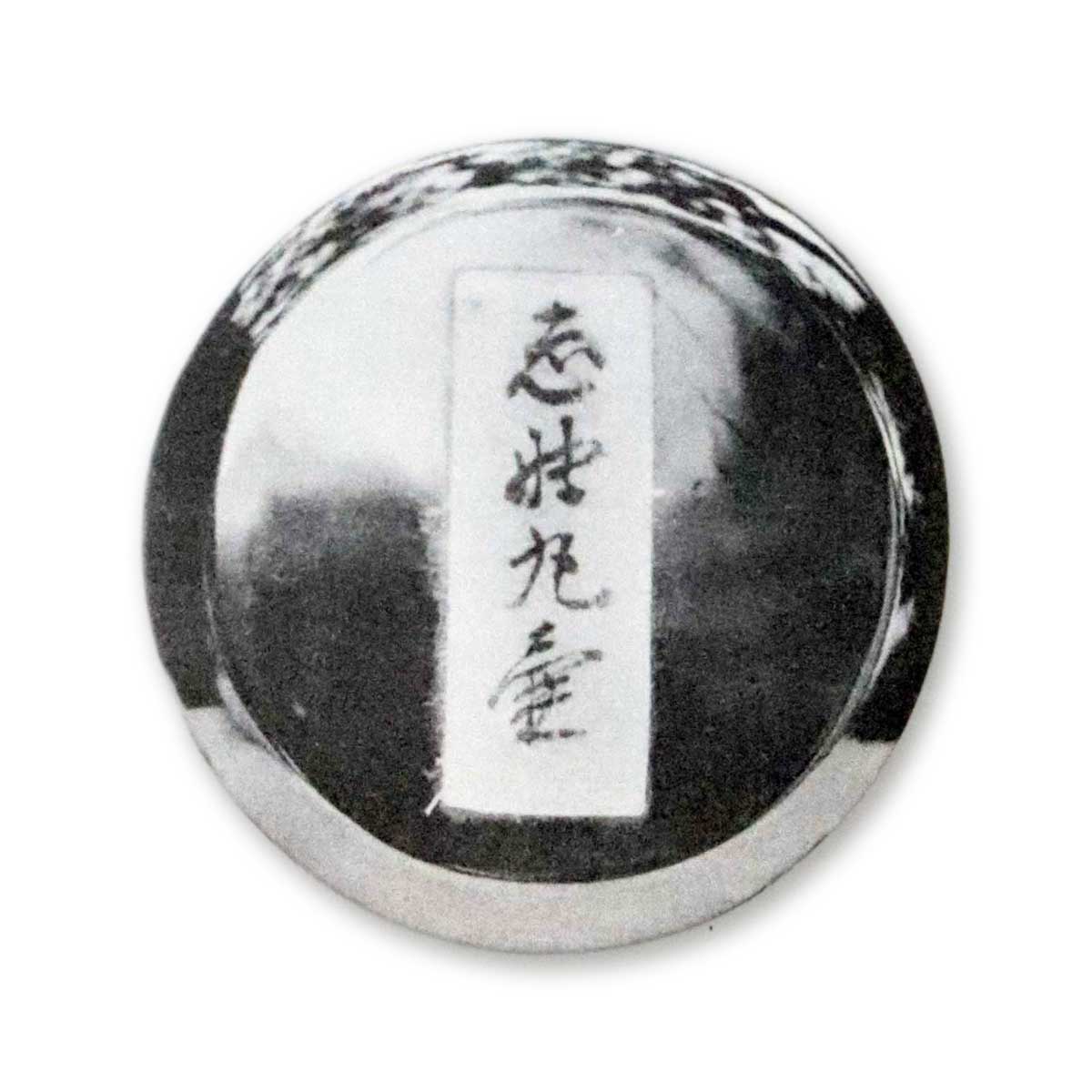
・Hikiya (cylinder for storing the tea caddy): Black lacquer. The lid is covered with paper and bears an inscription.
“Shino Maru-tsubo”
“Shino Maru-tsubo”
The pouch is made of crimson “ichigo-saki” fabric with a pattern of aligned circular crests (lining: light gray Chinese jacquard with a “Shoku-beni” pattern; cord: purple).
On the outside is a futon (mat), which, along with the cord, is made of Chinese jacquard featuring a light gray “Shoku-beni” pattern.
・Inner Box: Made of paulownia wood with chamfered edges (corners rounded). The interior is lined with Chinese satin featuring a gray “Amaryu-maru” pattern.
The bag is made of brown leather (lined with navy-blue Kaimono silk; the cord is light brown).
・Outer Box: Paulownia wood with Shunkei lacquer finish. The interior is lined with cloud-patterned paper.
・Outer Case: Vermilion lacquer with black chamfered edges. Features a sliding door (a type of sliding panel) with a brass latch.
・Accompanying Tray: Red-flower, green-leaf tray (a tray with a pattern of red flowers and green leaves)
Dimensions: Approx. 18.48 cm (6 sun 1 bu) on each side; approx. 13.64 cm (4 sun 5 bu) on each side of the base; approx. 12.73 cm (4 sun 2 bu) on each side of the mirror (central recess); height: approx. 2.88 cm (9 bu 5 rin)
・Certificate of Transfer: 1 copy
“Record
- Shino Round Teapot made in China
Bag: Shimotsuma satin, Aoki Guangdong weave
Price: 2,750 yen
The above item has been transferred at the aforementioned price in response to your earnest request. The payment has been received in full.
June 23, Meiji 34 (1901)
Kura Mataemon (Seal)
To Mr. Masayoshi Kato”
Miscellaneous Notes
Shino Round Teapot—owned by Takigawa (Ichimasu).
(From Higashiyama Go-mono Naibetsuchō)
Shino Round Teapot—owned by Takigawa Sakon.
(From Tenshō Meibutsu-ki)
Shino Round Teapot—in the possession of Sen’ya Sōetsu. Its value was 500 kan, but what is it worth now? Although this is not a “Meibutsu” (famous artifact), it is an excellent tea ceremony utensil. It is now an item with many owners.
(From Yamagami Sōji no Ki)
Shino Maru-tsubo: Made in China. It was produced during the same period as the Hasegawa Bunrin, Rikyu-jiri-hō, and Fukiage Bunrin.
(From Seto Tōki Ranshō by Matsudaira Fumai)
Shino Maru-tsubo: Height approx. 6.36 cm (2 sun 1 bu), mouth diameter approx. 3.09 cm (1 sun 2 rin), base diameter approx. 2.91 cm (9 bu 6 rin), “mikan” (presumably the thickest part of the body) diameter approx. 6.39 cm (2 sun 1 bu 1 rin), “koshi” (presumably the base) approx. 1.61 cm (5 bu 3 rin). A note arrived from Fujigen.
(From Meibutsu-ki)
Shino Maru-tsubo—Made in China—Daimeibutsu. The pouch is from Shimotsuma, made of komon-patterned satin. The tea caddy is black-lacquered with a velvet pouch and a purple cord. It has two lids, and the box is the same. (Illustration of the tea caddy included)
(From Rinpō-kiryū)
Shino Maru Pot—Made in China—A famous piece. Height: approx. 6.36 cm (2 sun 1 bu); mouth diameter: approx. 3.18 cm (1 sun and a half); body circumference: approx. 21.06 cm (6 sun 9 bu and a half); distance from shoulder to mouth: approx. 1.82 cm (6 bu); base diameter: approx. 3.03 cm (1 sun); weight: approx. 72.0 g (19 monme 2 bu). The original storage pouch is light green, with a cord of the same color. Two replacement pouches are included (one in Shimotsuma satin with a purple cord, and one in light yellow satin with a swastika and Chinese floral pattern, also with a purple cord). Hikiya is black, approximately 10.61 cm (3 sun 5 bu) tall and 6.97 cm (2 sun 3 bu) in diameter; the pouch is black velvet with a purple cord (with a light green satin lining). The body is persimmon-colored with a black glaze, and the clay is grayish-brown. However, it resembles an old Seto ware piece, with glaze present in one spot on the bottom and another spot where the glaze is missing (an unglazed area). (Includes illustrations of the exquisitely crafted tea caddy and its two lids)
(From the appendix of Mekirigusa)
Shino Round Jar—Fujigen (owner). Height: approx. 6.36 cm (2 sun 1 bu); body diameter: approx. 6.39 cm (2 sun 1 bu 1 rin); mouth diameter: approx. 3.09 cm (1 sun 2 rin); base diameter: approx. 2.91 cm (9 bu 6 rin); neck: approx. 1.52 cm (5 bu).
(From Enshū Shōji Meika-chō)
Shino (Shino) Round Vase—Matsudaira Kazusa-no-kami (owner). There is a note stating that it came from Fujigen. Height: approx. 6.36 cm (2 sun 1 bu); height to shoulder: approx. 7.27 cm (2 sun 4 bu); body approximately 6.36 cm (2 sun 1 bu), shoulder approximately 1.00 cm (3 bu 3 rin), mouth diameter approximately 3.09 cm (1 sun 2 rin), neck approximately 1.61 cm (5 bu 3 rin), base diameter approximately 2.91 cm (9 bu 6 rin).
Hikiya makes Nobunomaru Tsubo; it has two pouches (Shimoma-jyunshi and Jyunshi). (Illustration of the tea caddy available)
(From Chaki Meibutsu Zui by Kusama Waraku)
History of Ownership
Originally owned by Shino Munenobu, it was passed down to Sen’ya Sōetsu and then to Takigawa Sakon-shōgan Kazumasa. It subsequently became the property of Fujishige Fujigen and was later passed down to the Matsudaira Kazusa-no-kami family. After the Meiji Restoration, it came into the possession of Kuramata Uemon, a pawnbroker in Tokyo, and was purchased by Mr. Kato, the current owner, in Meiji 34 (1901).
Record of Actual Viewing
On July 17, Taisho 9 (1920), I had the privilege of viewing this piece in person at the residence of Mr. Masayoshi Kato in Motozono-cho, Kojimachi Ward, Tokyo.
The rim is chamfered on both sides, creating a curved edge shaped like the blade of a clam shell; the body is somewhat thick, with a tall neck and a flared lower section. A single sunken ridge runs around its circumference; the shoulders rise sharply, the body is broad, and it tapers toward the base. Near the rim, there is a sunken ridge extending to one-fourth the height of the tea caddy. The persimmon-colored glaze, which has a metallic luster (a hint of gold), takes on a purplish hue, and a black amber glaze is applied unevenly over it, creating a pattern. On the front view, a single streak of black amber glaze flows down to the exposed clay at the base, revealing a blue-lapis-lazuli hue where the glaze pools. A thick layer of black amber glaze covers the area from the rim of the neck to the tip of the shoulder. There is also a single streak of glaze flowing down the body away from the front, and at the tip of this streak, a hint of blue-lapis color is visible in some places. The glaze stops high up, revealing the vermilion-clay (reddish-brown) clay from the waist down. The thread-cutting is fine, with a slight misalignment at its starting point. There is also a firing crack in the center, and part of the rim at the base is worn down. Due to changes within the kiln, the red-clay color takes on a more pronounced reddish (ochre) or grayish hue, and there are several spots on the lower part of the body, about the size of a fingertip, where the clay has adhered to the kiln (hitsuki).
Although the craftsmanship is somewhat rough for a Chinese round teapot, its irregularity lends it an elegant charm, and the variations in the glaze color are intriguing; overall, it is a teapot with a deeply wabi-sabi aesthetic (in the style of Da Tuo). Inside, the glaze covers the rim of the mouth, while below that, the wheel marks are coarse and uneven. There is only one trace of lacquer repair on the underside of the rim; otherwise, it is in pristine condition.